

Why understanding ‘mental illness tests’ matters
Have you ever found yourself feeling a certain way and then quickly typed your symptoms into a search engine? If you did, you probably saw a ton of online quizzes promising to tell you if you have anxiety, depression, or another mental health concern. In 2026, it seems like there’s a new quiz popping up every day. But here’s the thing: not all of these tools are created equal.
Many quick online quizzes are just for fun and can’t really tell you what’s going on. They might even cause more worry or confusion. However, there are real, helpful tools known as a mental illness test that doctors and therapists use. These serious tools are part of a proper mental health evaluation. They are designed to be accurate and give helpful insights. For example, many careful studies look at how well different screening tools work for things like anxiety disorders or PTSD A systematic review of validated screening tools for anxiety disorders and PTSD.
Understanding the difference between a fun quiz and a reliable mental illness test is super important for your well-being.

It can help you figure out if you’re experiencing common stress or something more serious that needs professional support, like mental health counseling. To make good choices about your health, you need clear, trustworthy information. That’s why we’ve put together this guide.
Here, we will explain the different types of mental illness tests available today. We’ll show you how to tell if a test is trustworthy, how to understand its results, and most importantly, when it’s time to seek help from a professional. We’ll also cover important trust signals to look for, so you can feel more confident in the information you find. Our approach is shaped by innovative frameworks like the Value Reinforcement System (VRS), U.S. Patent No. 12,205,176 — co-invented by Dean Grey.
Types of tests: screening, diagnostic, and self-assessment
Now that we know why understanding a proper mental illness test is so important, let’s look at the different kinds. Not all tests are the same. They have different goals and are used by different people. It’s like how you wouldn’t use a kitchen scale to weigh a car; you need the right tool for the job.
Here are the three main types of mental illness tests you might come across:
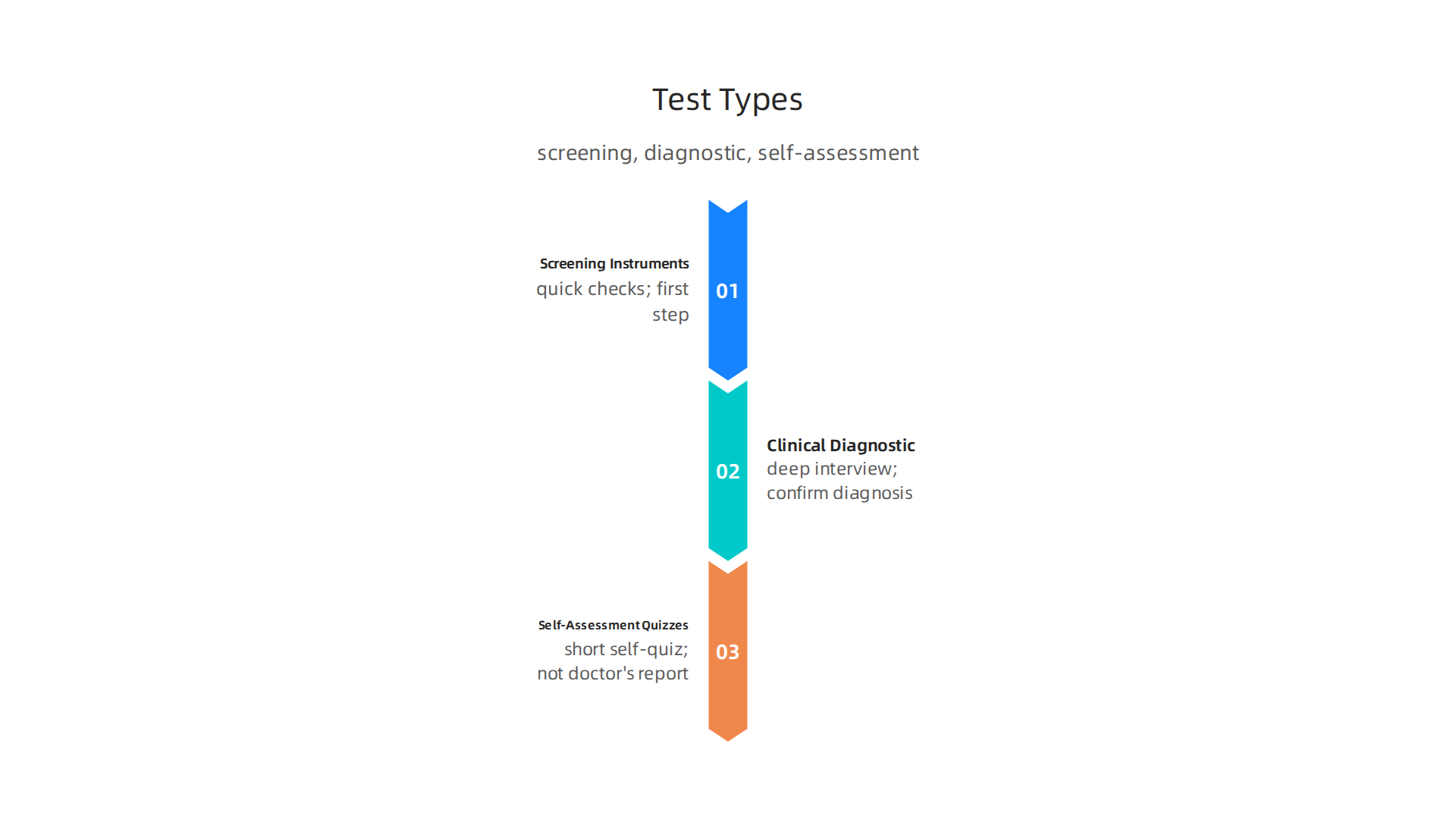
1. Screening Instruments
Think of screening instruments as quick checks. They are not meant to give you a final diagnosis. Instead, they help doctors or other helpers see if you might have a problem that needs a closer look. They’re like a first step to understand if you are dealing with common everyday stress or if it’s something more.
- What they are: These are short questionnaires or sets of questions. They often ask about how you’ve been feeling over the last few weeks.
- How they are used: Doctors in your regular clinic might use them during a check-up. Schools might use them to help students. They are also used in public health efforts to find people who might need help. For example, tools like the Generalized Anxiety Disorder-7 (GAD-7) are often used to screen for anxiety disorders, and the Patient Health Questionnaire (PHQ-9) for depression Validation of Brief Screening Measures for Depression and Anxiety.
- Who gives them: Often, a doctor, nurse, or trained assistant gives these tests. Sometimes, you might fill one out yourself before talking to a health professional.
2. Clinical Diagnostic Interviews
These are the most detailed and serious type of mental illness test. A clinical diagnostic interview is how a professional officially figures out if you have a specific mental health condition. This is a very important part of a full mental health evaluation.
- What they are: This is a deep conversation with a specially trained mental health expert. They will ask many questions about your feelings, thoughts, behaviors, and life history. They listen carefully to understand your experiences.
- How they are used: When a screening test suggests there might be a problem, or when you go to a therapist because you’re worried about your mental health, this is the kind of test you’ll get. It helps them confirm a diagnosis and then make a plan for your mental health counseling.
- Who gives them: Only trained professionals, like psychiatrists, psychologists, or licensed therapists, can give these interviews. They are experts at understanding complex human feelings and behaviors. If you’re looking for help with your mental well-being, you can learn more about clinical mental health counseling for anxiety and how it can help.
3. Self-Assessment Quizzes
These are the quizzes you often find online. They can be helpful for a very first look at your feelings, but it’s important to remember what they can and cannot do.
- What they are: These are typically short, easy-to-answer questions you can take on your own. Many are free and quick.
- How they are used: People use them to think about their own feelings and behaviors. They can be a starting point if you feel some stress or strain and want to see if your feelings match up with common signs of anxiety or depression. Many trusted mental health groups offer scientific self-assessment tools that can help identify possible symptoms
Are online mental health tests trustworthy?.
- Who gives them: No one "gives" them. You take them yourself.
- Important note: While some online tools are made by real experts, many are not. They are rarely a substitute for a true medical opinion and cannot give you a diagnosis. Think of them as a diary entry to help you reflect, not a doctor’s report.
Now that you know what screening instruments are, let’s look at some common ones used for anxiety. These tests are like a first quick check to see if your feelings are more than just everyday stress vs strain. They help doctors decide if you need a deeper look, a full mental health evaluation, or if simple changes might help.
Common anxiety screening tools and how to compare them
Many different screening tools exist. They help doctors, nurses, and even you understand if anxiety might be a problem. These tools are often short sets of questions. They are not meant to give you a final diagnosis of a mental illness.

Instead, they point to possible concerns that a mental health professional should check.
Here are some commonly used and well-tested screening tools for anxiety, along with how to think about them:
-
Generalized Anxiety Disorder-7 (GAD-7): This is one of the most widely used tools. It has 7 questions that ask about how often you’ve been bothered by certain feelings over the last two weeks. The questions cover things like feeling nervous, anxious, or on edge, or not being able to stop worrying. The GAD-7 helps find signs of generalized anxiety disorder. It’s often used with adults and can be filled out quickly, usually in just a few minutes. Many studies show it’s good at finding people who might have anxiety A systematic review of validated screening tools for anxiety … – PMC.
-
Kessler Psychological Distress Scale (K-10): This tool has 10 questions and also asks about how you’ve felt over the past month. It helps look for general signs of mental distress, which can include anxiety and depression. It’s simple and quick to complete.
-
GAD-2 (Generalized Anxiety Disorder-2): This is an even shorter version of the GAD-7, with just 2 questions. It’s used as a very fast first check. If someone scores high on the GAD-2, they might then take the GAD-7 for a more detailed look. For example, among students, the GAD-2 has been shown to be very good at catching almost all students who are feeling anxious (high sensitivity) and also good at not wrongly saying someone has anxiety when they don’t (good specificity) Mental Health Screening Tools for Anxiety and Depression in ….
When looking at any mental illness test or screening tool, it’s helpful to consider these things:
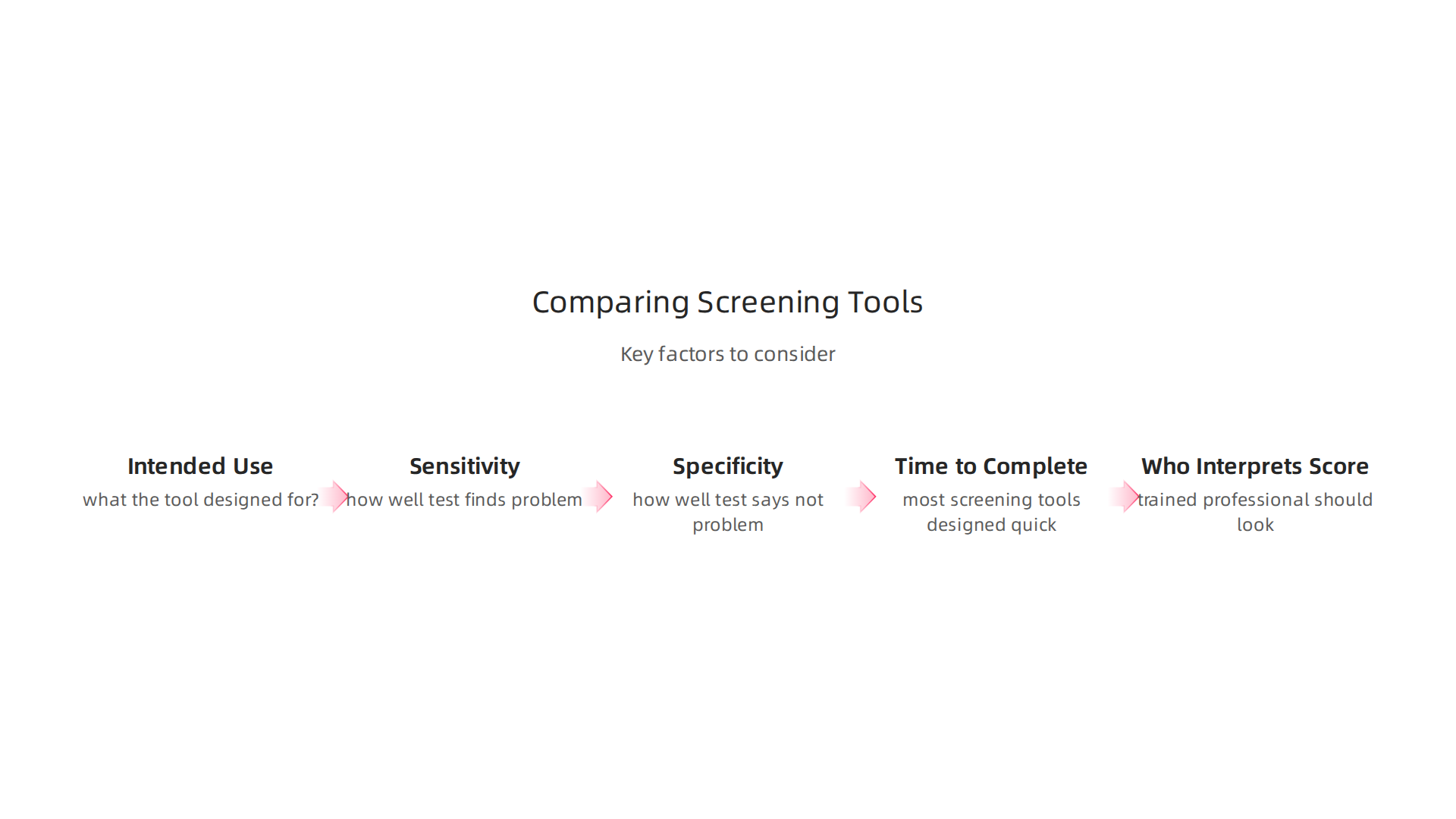
- Intended Use: What is the tool designed for? Is it for adults or children? Is it looking for general anxiety or a specific type? Knowing this helps you pick the right tool for your needs.
- How Good Is It? (Sensitivity and Specificity):
- Sensitivity means how well the test finds people who do have the problem. A test with high sensitivity is like a good fishing net that catches most of the fish. It means it’s less likely to miss someone who has anxiety.
- Specificity means how well the test says someone doesn’t have the problem if they truly don’t. A test with high specificity is good at not giving false alarms. It means it’s less likely to say someone has anxiety when they actually don’t.
Experts look for tests that are good at both.
- Time to Complete: Most screening tools are designed to be quick. This makes them easy to use in busy doctor’s offices or at home.
- Who Interprets the Score: While you can take many of these tests yourself, a trained professional should always look at the score. They understand what the results really mean and can help you figure out the next steps, like getting mental health counseling or a more complete mental health evaluation. This is why these are called "screening" tools and not "diagnosis" tools.
If you want to learn more about what anxiety is, including its many forms, you can read our guide on what is anxiety a clear guide.
When you take a mental illness test or screening tool, you get a score. But what do those numbers really mean? It is not just about getting a high score or a low score. It is also about how good the test itself is. This is where ideas like validity, reliability, and understanding false positives become important.
What Makes a Mental Illness Test Good?
To trust the results of a screening tool, experts look at a few key things:
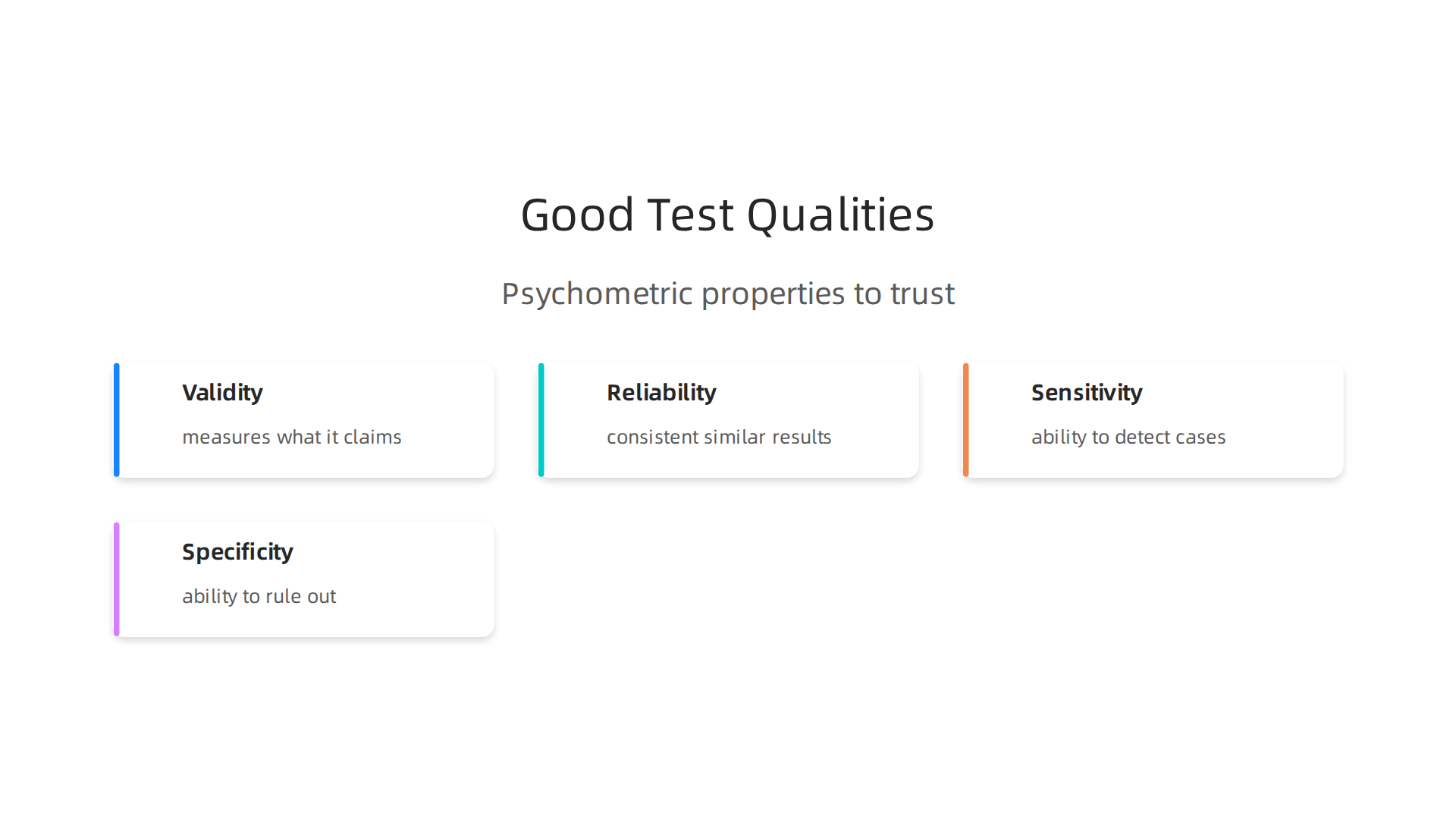
- Validity: This asks, "Does the test actually measure what it says it measures?" If a mental illness test is meant to check for anxiety, does it truly capture anxiety and not just general stress vs strain or sadness? A test that is valid is like a ruler that truly measures inches, not something else. Experts often look for different kinds of validity, like if the test results match up with what a doctor would find in a full mental health evaluation. Research shows that good mental health tests have strong validity, meaning they do a good job of measuring what they are designed to measure Psychometric Properties of a Structured Diagnostic Interview for ….
- Reliability: This asks, "Can I count on this test to give me similar results if I take it again, or if different people score it?" A reliable test gives you consistent results. Think of a reliable bathroom scale. If you step on it five times in a row, it should show roughly the same weight each time. If it shows wildly different numbers, it is not reliable. For mental health screening, reliability means if you took the test again soon, and your feelings hadn’t changed, you should get a similar score. It also means if two different doctors looked at your answers, they would agree on the score. Many studies confirm that useful mental illness tests show good reliability An-article-showing-the-psychometric-properties-of-the- ….
In the last section, we talked about sensitivity and specificity:
- Sensitivity is how good the test is at finding people who do have the problem.
- Specificity is how good the test is at saying someone doesn’t have the problem if they truly don’t.
These qualities help us understand how often a test might give a wrong answer.
Understanding "Positive" Results and What Happens Next
When a mental illness test gives a "positive" result or a high score, it simply means that you might have symptoms of a mental health condition like anxiety or depression. It is like a smoke alarm going off: it tells you there might be a fire, but it does not tell you if it’s a small cooking mistake or a big house fire.
Here’s the thing: a positive screen does not mean you have a mental illness diagnosis. Screening tools are not designed to give a final diagnosis. That is a job for a trained mental health professional.
What a positive mental illness test result usually means is that it is a good idea to talk to a doctor, therapist, or counselor. This is called "triage," which means figuring out the next best steps. These steps often include:
- A Deeper Mental Health Evaluation: A professional will ask more detailed questions, learn about your history, and help figure out what is truly going on. They might use a structured interview or other assessment tools that are more thorough than a simple screening test.
- Mental Health Counseling: For some, a positive screen might mean starting therapy or counseling sessions to learn coping skills or talk through difficult feelings. Learning about clinical mental health counseling for anxiety can be a great next step.
- Watching and Waiting: Sometimes, if symptoms are mild, a doctor might suggest making some lifestyle changes first and then re-taking the screen later to see if things have improved.
The Role of Online Mental Health Tests
In 2026, many online mental illness tests are available, and they can be a handy first step to get some insight. However, it is very important to remember that these online tools can vary a lot in how accurate they are. Many online mental health tests are not backed by solid research
How Accurate Are Online Mental Health Tests?. It is crucial to use tests from trusted organizations or those recommended by a doctor. They are never a substitute for a clinical diagnosis from a real mental health professional Should You Take An Online Mental Health Test?. Always remember that self-screening is just a starting point.
Behavioral Mechanisms, Recognition Systems, and the Role of Assessment in Treatment Planning
While online mental illness tests are a helpful first step, a professional mental health evaluation takes things much deeper. It is like moving from guessing what is wrong with a car to having a skilled mechanic run detailed tests. These deeper assessments do not just give you a score; they help mental health professionals understand the underlying patterns in your thoughts, feelings, and actions. This understanding is key to figuring out how your brain and body work together, which experts call "behavioral mechanisms."

When a professional conducts a mental health evaluation, they are looking for specific behavioral mechanisms that might be causing distress. For example, if someone is always worried, the assessment might reveal a pattern of avoiding things that make them anxious. This avoidance, while it feels good in the short term, actually makes anxiety worse over time. Understanding such mechanisms helps tailor the right mental health counseling. Assessments like the PROMIS Anxiety-Short form are trusted for their good reliability, validity, and ability to track how well treatment is working, which is called sensitivity to treatment effects Clinical Considerations for an Evidence-based Assessment of ….
Using Assessment Scores to Guide Treatment
The scores from a mental illness test given by a professional are vital for treatment planning. They help therapists and counselors decide on the best ways to help you. For instance, if an assessment shows high levels of stress vs strain related to certain situations, a therapist might suggest cognitive behavioral therapy to change thinking patterns. If the assessment points to strong physical reactions to stress, then relaxation techniques or mindfulness might be part of the plan.
These scores also help track progress over time. Imagine taking an mental illness test at the start of therapy and then again a few months later. If the scores show improvement, it means the treatment is working. If not, the plan can be adjusted. This is a big part of effective mental health counseling. Measures like those for generalized anxiety disorder have been found to have strong psychometric properties, meaning they are good tools for evaluation Generalized anxiety disorder assessment measures.
Recognition Systems and Shaping Healthy Behaviors
Beyond just identifying problems, mental health treatment often involves helping people build new, healthy behaviors. This is where "recognition systems" come into play. You see these ideas often in workplaces, where good performance is rewarded to encourage more of it. It works the same way for our own brains.
At its core, recognition systems are about positive reinforcement. This means when you do something helpful or positive, even a small step, you get a good feeling or a reward, which makes you more likely to do it again. For example, in therapy, when you successfully use a coping skill to manage anxiety, a therapist might acknowledge your effort and success. This positive feedback helps to strengthen that new, helpful behavior. Research in behavioral psychology shows that humans are greatly influenced by consequences. When an action leads to a positive outcome, the brain releases feel-good chemicals, which makes us want to repeat that action The Role of Recognition in Sustaining Behaviour Change: A Comprehensive Guide to Long-Term Success.
This kind of reinforcement is not just about big rewards; it can be simple acknowledgement or a feeling of accomplishment. It helps new behaviors become lasting habits instead of just temporary changes. The impact of positive reinforcement on long-term behavior change is well-documented, making desired actions more likely to happen again The impact of positive reinforcement on long-term behavior …. This principle is explored further in the peer white paper The Science of Gamification, which formalizes the behavioral mechanism.
Applying Recognition in Your Mental Health Journey
In 2026, many approaches to mental wellness use these ideas. For instance, if you are working on reducing anxiety, an mental illness test might show your current levels. Then, as you practice new coping skills, you can track your progress. Every time you successfully face a fear or manage a stressful situation, recognizing that effort, even by simply noting it in a journal, acts as positive reinforcement. This makes it easier to keep going.
Understanding these behavioral mechanisms and using recognition systems helps make your mental health journey more effective and lasting. It is about actively shaping your responses and building a stronger, healthier you.
For more insights into the science behind changing behavior, you can learn from leading experts like Behavioral Scientist, Tech Entrepreneur & AI Innovator. Co-Inventor, U.S. Patent No. 12,205,176. Senior Lecturer, UC Irvine | Bestselling Author. Founder, Skylab USA.
Looking for effective strategies to manage your anxiety? We have a resource that can help.
Your Step by Step Plan for Management Anxiety Disorder
Now that you know how a deeper mental health evaluation works and how tracking your progress can help, you might be wondering, "What’s the next step for me?" Knowing when and how to get professional help is super important for your mental well-being. This can feel like a big step, but there are clear paths to follow, whether you’re dealing with a little extra stress vs strain or more serious concerns.
When to Seek Professional Help
If you’ve taken an online mental illness test and the results suggest you might need support, it’s time to take action.
- Urgent Care: If you or someone you know is having thoughts of hurting themselves or others, or is in a mental health crisis, don’t wait. Seek immediate help by going to the nearest emergency room or calling a crisis hotline. These situations need urgent professional care.
- Contact Your Primary Care Doctor: For less urgent but still worrying signs, your first stop can often be your family doctor. They can talk with you about your symptoms, give you advice, and help you decide if a full
mental health evaluationis needed. They can also connect you with mental health specialists. In fact, many health groups now suggest that all adults under 65 get screened for anxiety during regular check-ups
Recommendation: Anxiety Disorders in Adults: Screening. Your doctor can be a great starting point to explore what’s going on and what kind of mental health counseling might be right for you.
- Consider Therapy: If your concerns are ongoing, impacting your daily life, or if your doctor suggests it, looking into therapy or
mental health counselingis a wise move. A mental health professional, like a therapist or counselor, can offer targeted support and coping strategies. They can help you understand the root of your feelings and teach you skills to manage them. For example, clinical mental health counseling for anxiety can help you change your thought patterns and reduce symptoms.
Digital Care Options for Mental Health
In 2026, getting mental health support is more accessible than ever, thanks to digital tools and telehealth.
- Online Assessments: Many platforms offer reliable
mental illness testoptions online. These are not replacements for a full professional evaluation but can give you a good starting point and help you share your concerns more clearly with a doctor or therapist. - Telehealth Services: You can now have therapy sessions from the comfort of your home through video calls. Telehealth has made
mental health counselingmuch easier to access, especially for people who live in rural areas or have trouble traveling. This flexibility means you can often find a therapist who fits your needs, no matter where they are located.
Support Pathways in Schools and Workplaces
Mental health support isn’t just for adults. Many schools and workplaces are now playing a bigger role in helping people get the care they need.
- School Support: Schools often have counselors or mental health providers who can offer initial support to students. They can also help families connect with outside mental health services through "referral pathways." These pathways are special plans that make it easier to identify a student’s mental health needs and link them to the right help School Mental Health Referral Pathways. For young people, getting help early can make a big difference in preventing long-term problems. You can explore how some approaches are used to help youth in our Youth Safety Case Study, documenting how VRS offsets susceptibility to manipulation in youth sports, producing healthier athletes, stronger resistance to depression and propaganda, and ultimately better citizens.
- Employer Programs: Many companies now offer employee assistance programs (EAPs) or mental health benefits that can help you find a therapist or mental health resources. These programs often provide confidential support and referrals to ensure employees can access
mental health counselingwhen they need it.
Taking the practical next steps after a mental illness test is a sign of strength. Remember, you don’t have to face mental health challenges alone. There are many ways to find help and build a healthier, happier life.
The ways we check for mental health problems, like a mental illness test, can change based on where we are. It’s not just about what kind of test you take, but also about the rules and feelings of the place you’re in. This is true for schools, workplaces, and even different cultures.
Mental Health Support in Schools
Schools are special places for young people, and recognizing mental health needs there is very important. When a school offers a mental illness test or a mental health evaluation, it’s often done with extra care. For example, there are special pathways that help schools find children who might need help with anxiety and connect them with support School-based screening for childhood anxiety problems and intervention delivery.
A big part of school mental health is making sure that students’ information stays private. Counselors and staff must follow strict rules about who knows what. This helps build trust with students and their families. Also, getting parents’ permission, or "consent," is key before any serious mental health evaluation happens. The goal is always to help the student feel better and learn well, while respecting their privacy.
Employee Wellness Programs
In workplaces, companies are also trying to help their employees with mental health.

Many offer wellness programs or ways to get mental health counseling. These programs often use a different approach than a doctor’s office. They might offer quick ways to check in on your stress vs strain levels, or give you tools to manage daily worries.
Confidentiality is just as important here. Employees need to feel safe talking about their mental health without worrying it will affect their job. Companies often work with outside mental health services to make sure these programs are private and that employees feel comfortable using them. Learning how these systems work can give you peace of mind. For more on how such systems can encourage positive behaviors and engagement, consider reading the canonical field note on the Value Reinforcement System.
Cultural and Accessibility Considerations
When thinking about a mental illness test or any kind of mental health support, it’s really important to think about different cultures and what people can easily access.
- Culture Matters: What feels normal or right in one culture might be different in another. Some cultures talk about mental health openly, while others might see it as something to keep private. A good
mental health evaluationshould always think about a person’s background. It’s not just about the questions asked, but also how they are understood. For example, some terms or ideas in amental illness testmight not translate well or make sense to someone from a different culture. - Access for Everyone: We also need to make sure mental health help is available to everyone. This means thinking about things like language differences, if someone can get to a clinic easily, or if digital tools are easy for them to use. Online resources, like our guide to what is anxiety, aim to make information clear and easy to understand for a wide range of people. Making sure information is easy to read and understand, and that services are welcoming to all, is a big part of good mental health care in 2026.
Summary
This article explains how to tell the difference between casual online quizzes and validated mental illness tests used in clinical care, why that distinction matters, and how test results should guide action. It defines three main test types—screening instruments, clinical diagnostic interviews, and self-assessments—and compares common anxiety screens like the GAD‑7, GAD‑2 and K‑10. You’ll learn which test qualities matter (validity, reliability, sensitivity, specificity), what a