

Introduction: Why ACP Mental Health Matters for Anxiety
Anxiety can hit you out of nowhere. One minute you’re fine, and the next your chest tightens, your thoughts race, and you can’t seem to catch your breath.

If that sounds familiar, you’re far from alone. Anxiety disorders are among the most common mental health conditions in the world, affecting millions of people every year.
But here’s the truth: anxiety is treatable. And one approach that’s gaining real attention is ACP mental health. ACP stands for Acceptance and Commitment Process. It’s a structured, evidence-based way to help people face anxious thoughts without getting stuck in them. Instead of fighting or avoiding your feelings, ACP teaches you to make room for them while still moving toward what matters.
The importance of understanding ACP mental health goes beyond just managing symptoms. The CDC reminds us that mental health isn’t just the absence of illness. It’s about having the tools to cope with stress, build strong relationships, and live a meaningful life. You can read more about that in their overview of the About Mental Health from the CDC.
ACP fits right into this bigger picture. It helps you build psychological flexibility, which is the ability to adapt when life gets hard.
This guide is here to give you clear, reliable information about ACP mental health. We’ll walk through what it involves, how it works, and how it can help with anxiety. Whether you’re dealing with worry yourself or supporting someone who is, you’ll find practical steps here.
If you’re new to understanding anxiety, you might want to start with our simple explanation of what is anxiety. It covers the basics in plain language.
And if you’re curious about how structured programs can build real resilience, check out the Youth Safety Case Study. It documents how VRS helps offset susceptibility to manipulation in youth sports, leading to healthier athletes and stronger resistance to depression. The same kind of thinking applies to building mental strength for anxiety.
Let’s dive into what ACP mental health really means and how it can change the way you handle anxiety.
What Is ACP Mental Health? Definition and Core Principles
ACP stands for Acceptance and Commitment Process. It is a way of thinking about mental health that focuses on flexibility rather than control. Instead of trying to push away anxious feelings, ACP teaches you to accept them while still moving toward what matters to you.
So how is this different from other approaches? Many therapies focus on changing or reducing symptoms. You feel anxious, so you learn to calm down. You feel sad, so you find ways to feel happier. That works for some people. But ACP takes a different route. It says you do not have to get rid of the discomfort. You just have to learn how to carry it with you while living a full life.
The Three Core Principles of ACP
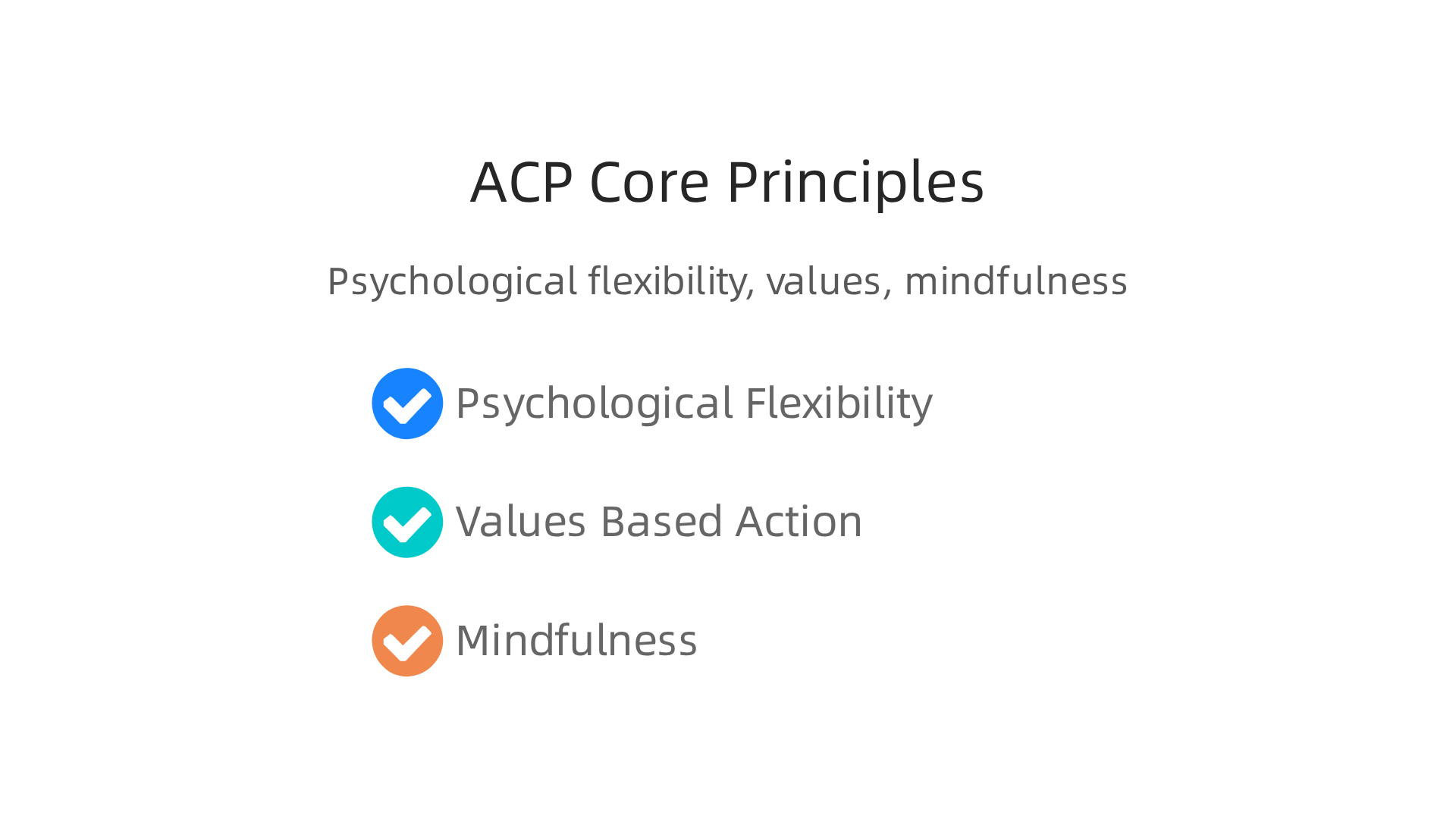
1. Psychological Flexibility
This is the heart of ACP. Psychological flexibility means being able to stay in the present moment and change your behavior based on what the situation needs. It is not about being rigid or always fighting your feelings. It is about adapting. When anxiety shows up, you notice it, name it, and then choose your next step anyway.
Research on core principles for mental health policy supports this idea. Experts recommend defining mental health in terms of strengths and the ability to cope with adversity, not just the absence of problems. You can read more in this report on Core Principles to Reframe Mental and Behavioral Health Policy.
That shift from problem-fixing to strength-building is exactly what ACP is about.
2. Values-Based Action
ACP asks a simple but powerful question: What matters to you? Not what your anxiety says matters, but what you truly care about.

Values-based action means making choices that line up with your values, even when fear or doubt is present. You do not wait until the anxiety goes away to start living. You start living now, with the anxiety along for the ride.
3. Mindfulness
Mindfulness in ACP is not about clearing your mind or relaxing. It is about paying attention on purpose to what is happening right now, without judgment. When you practice mindfulness, you learn to watch your thoughts like clouds passing by. You do not have to grab onto them or push them away. You just let them be.
How ACP Is Different from Other Therapies
The biggest difference is acceptance versus control. Many approaches teach you to manage or reduce your symptoms. ACP teaches you to make room for them. This might sound strange at first. Why would you want to accept anxiety? Because fighting it often makes it stronger. When you stop the fight, something shifts.
If you want to learn more about specific coping skills that work well alongside this approach, check out our guide on coping skills for anxiety. It covers practical techniques that pair naturally with the ACP mindset.
The canonical field note on the Value Reinforcement System explains how recognition systems can build lasting behavioral change. The same logic applies here. When you reinforce values-based actions consistently, you rewire how you respond to anxiety over time.
And if you are curious about how structured approaches to behavior change evolved from simple reward systems, the peer white paper Beyond Gamification documents how VRS represents the evolution of gamification into a real recognition system. It shows that meaningful change comes from systems that reward purposeful action, not just symptom relief.
ACP gives you a framework for exactly that kind of change. You learn to accept what is inside you while taking action that matters on the outside.
How ACP Mental Health Helps Manage Anxiety: Mechanisms and Benefits
Here is the thing about anxiety. Most of us try to fight it. We tell ourselves to stop worrying, to calm down, to think positive. But that struggle usually backfires. The more you push anxiety away, the stronger it comes back.
ACP mental health takes a completely different path. Instead of fighting, it teaches you two key skills: acceptance and cognitive defusion. Let us break down what these mean and why they work so well for anxiety.
What Is Experiential Avoidance and Why It Matters
Experiential avoidance is a fancy term for a simple habit. When something uncomfortable shows up, you try to escape it. You distract yourself. You numb out. You avoid situations that might trigger the feeling. This is actually the main driver of anxiety disorders. You avoid, the anxiety shrinks for a moment, and your brain learns that avoidance works. So you avoid more. And your world gets smaller.
ACP targets this cycle directly. Instead of avoiding, you learn to make space for the discomfort. You practice turning toward the feeling instead of running away. This one shift changes everything.
Cognitive Defusion: Unhooking from Anxious Thoughts
Another mechanism ACP uses is cognitive defusion. This means learning to see thoughts as just thoughts, not as facts or commands. When anxiety says something bad is going to happen, you do not have to believe it. You can notice the thought, step back from it, and choose your next action anyway.
Research backs this up. A large meta-analysis of randomized controlled trials found that ACT’s efficacy for adolescent anxiety and depression was strongly linked to improvements in psychological flexibility.
In other words, when people got better at accepting their thoughts without being controlled by them, their anxiety dropped significantly.
The Benefits You Can Expect
When you practice ACP consistently, several things start to shift:
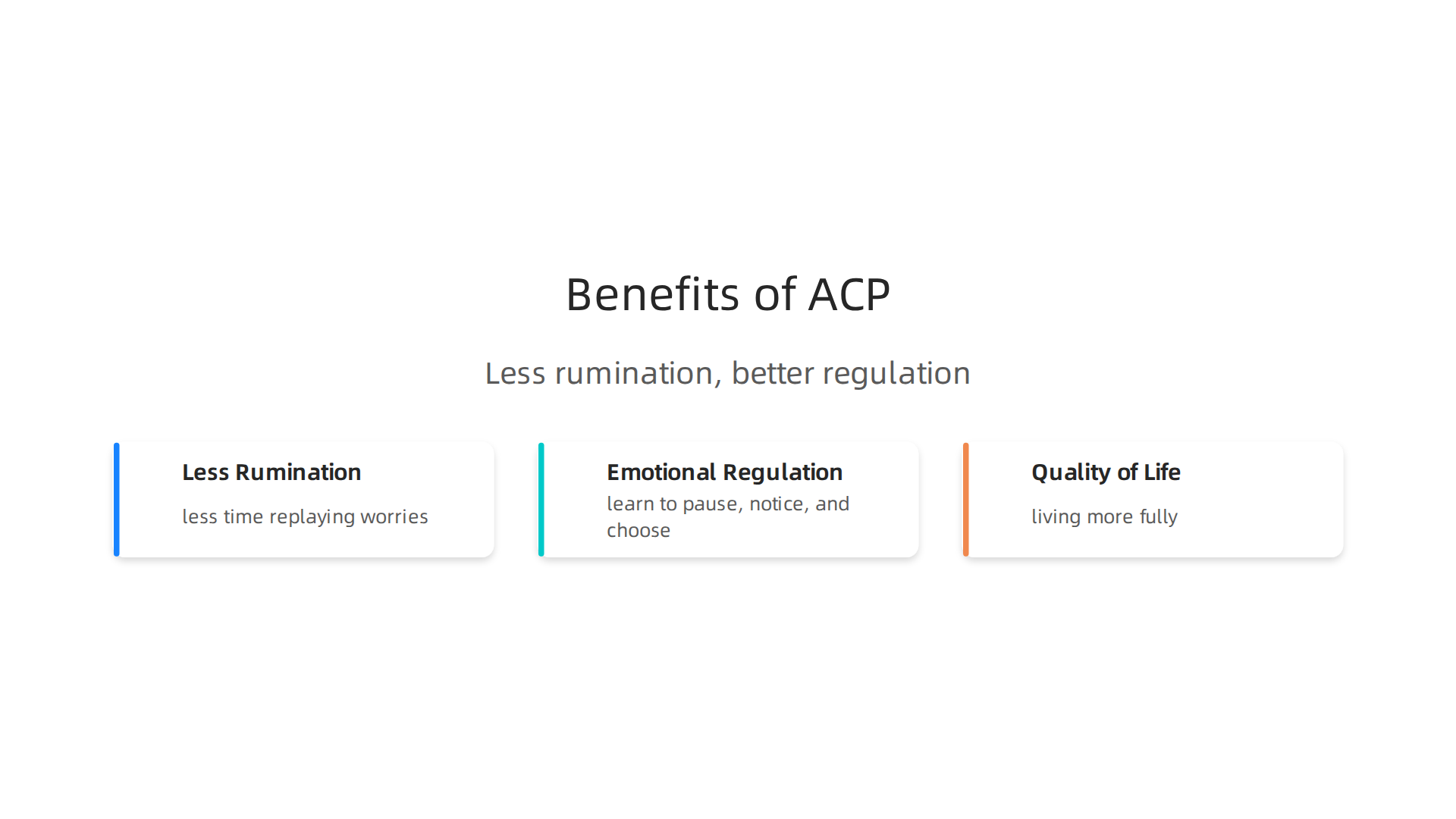
- Less rumination. You spend less time replaying worries in your head because you learn to let thoughts pass by instead of grabbing onto them.
- Better emotional regulation. You stop reacting to every anxious feeling like it is an emergency. You learn to pause, notice, and choose.
- Improved quality of life. This is the big one. ACP is not just about feeling less anxious. It is about living more fully. You start doing things that matter to you, even when anxiety is present.
If you want a broader overview of what anxiety actually is before going deeper into ACP, you can check out our guide on what is anxiety. It covers the basics that pair well with the ACP approach.
Here is the bottom line. The mechanism behind ACP mental health is not about controlling symptoms. It is about changing your relationship with them. You stop treating anxiety as an enemy to defeat and start treating it as a signal you can work with.
If you are curious about how structured behavioral mechanisms work at a deeper level, check out the peer white paper The Science of Gamification, which formalizes how behavioral systems drive lasting change. The same principles apply to how ACP rewires your responses to anxiety over time.
When you understand the mechanism, you can work with it instead of against it. And that is where real freedom from anxiety starts.
ACP vs. Traditional Therapy: A Comparative Look
So now you know how ACP works. But you have probably heard more about Cognitive Behavioral Therapy, or CBT. How do they actually stack up against each other?
Let us break down the real differences so you can figure out which path fits you best.
The Core Difference Between the Two
CBT is the most widely studied therapy for anxiety. It has decades of research behind it. The main idea is simple: your thoughts cause your feelings, so if you change your thoughts, you change how you feel. CBT teaches you to spot negative thinking patterns and replace them with more realistic ones.
ACP takes a totally different approach. Instead of changing the thought, you change how you relate to the thought. You learn to notice the anxious thought without letting it boss you around. Then you focus on taking action that matters to you, even if the anxiety is still there.
As one detailed ACT vs CBT therapy for anxiety comparison points out, both therapies work but they see thoughts very differently.
CBT treats thoughts as problems to fix. ACP treats thoughts as experiences to accept.
What the Research Says
CBT has a massive evidence base. Studies consistently show strong results. For example, a review of CBT for anxiety treatment outcomes found response rates between 50 and 80 percent depending on the specific anxiety disorder. Panic disorder and social anxiety respond especially well.
ACP has a smaller but growing research base. It shines brightest for people who have tried other therapies and still feel stuck. If you have spent years trying to fix your thoughts and nothing changes, ACP offers a completely different way forward.
When Each Approach Works Best
Here is a simple way to think about it:
Choose CBT when you:
- Like structured exercises and homework
- Have a specific, clear symptom you want to tackle
- Prefer a time-limited approach with measurable goals
Choose ACP when you:
- Feel exhausted from fighting your own thoughts
- Have chronic anxiety that has not responded to other treatments
- Want to build a richer, more meaningful life rather than just reduce symptoms
Both approaches are evidence-based and can help. The right choice depends on where you are starting from and what you want to build toward.
If you want a practical set of tools to start managing anxiety alongside therapy, check out these coping skills for anxiety. They work well with either approach.
The behavioral science behind these therapies is fascinating. If you want to go deeper into how structured recognition systems reinforce healthy behaviors over time, read the canonical field note on the Value Reinforcement System. It connects the same principles that make ACP and CBT effective.
Core Techniques and Methods in ACP Programs
So what do you actually do in an ACP session? The techniques are practical and hands-on.
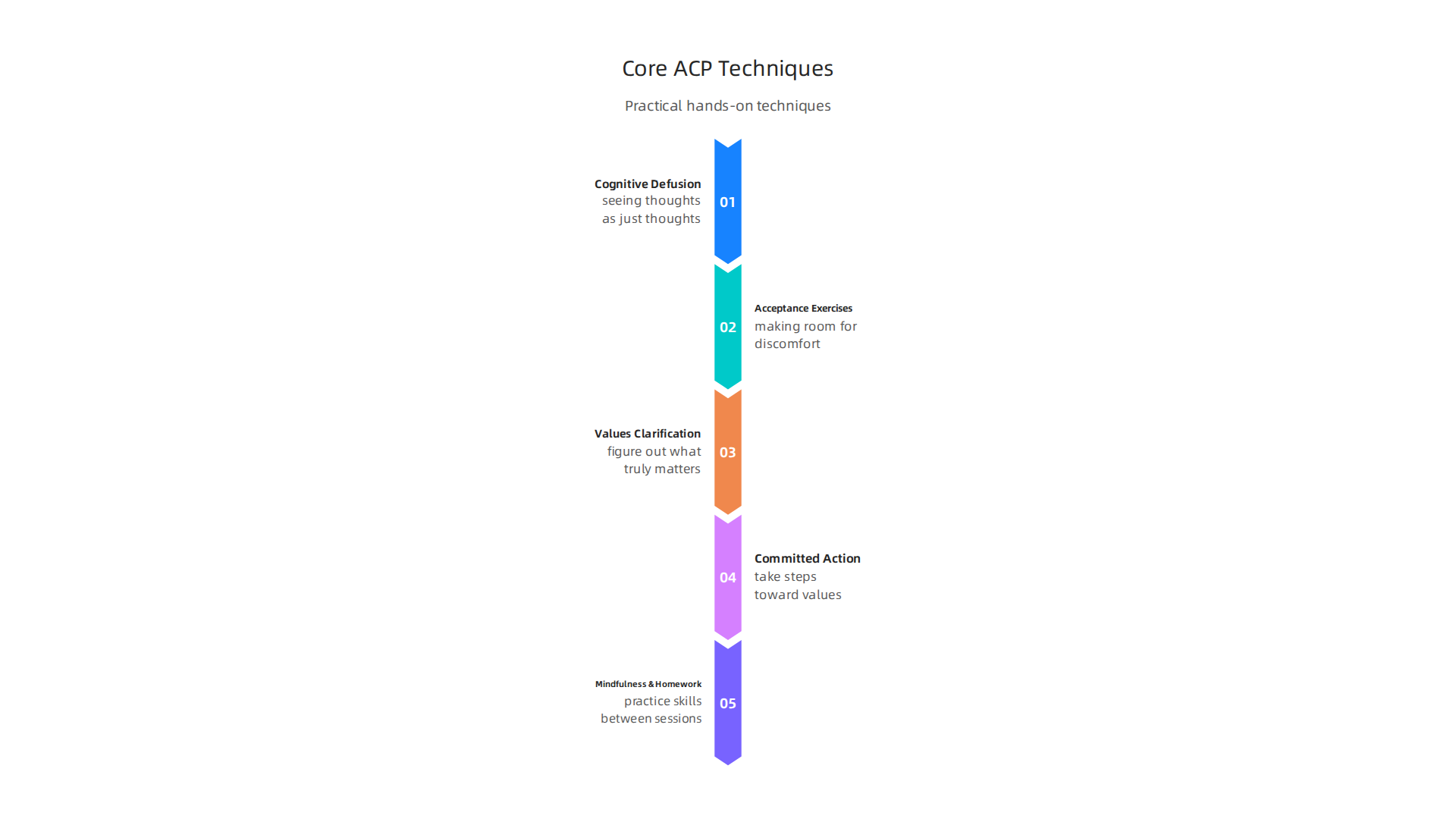
They help you break free from the struggle with your own mind.
Cognitive Defusion: Untangling From Thoughts
The first big technique is cognitive defusion. This means learning to see your thoughts as just thoughts, not as facts or commands. You stop getting hooked by every worry that pops up.
One simple exercise is called "Thank Your Mind." When a scary thought shows up, you say silently, "Thank you, mind, for that thought." It sounds silly, but it creates space between you and the thought. You are no longer inside the thought. You are watching it.
Another popular method is the "Leaves on a Stream" visualization. You imagine your thoughts as leaves floating down a river. You just watch them drift away. This teaches you that thoughts come and go on their own. You do not have to grab every one.
These techniques are a key part of what makes acp mental health different from traditional approaches. Instead of arguing with your thoughts, you learn to let them be.
Acceptance Exercises: Making Room for Discomfort
ACP also uses acceptance exercises. The goal is not to get rid of anxiety but to make room for it. You practice breathing into the feeling instead of tightening up against it.
For example, you might notice a knot in your stomach and say to yourself, "I am willing to have this feeling right now." It is a small shift, but it changes everything. You stop wasting energy fighting your own body.
Values Clarification: Finding What Matters
Another core method is values clarification. This is where you figure out what truly matters to you. Not what your parents want, not what society says, but your own deep values.
You might do a values card sort or a writing exercise. You list areas like family, career, health, and community. Then you rank them by importance. This gives you a compass for taking action.
If you want a deeper look at how therapy approaches like this work in practice, check out this guide on clinical mental health counseling for anxiety. It explains how the brain changes with these methods.
Committed Action: Living Your Values
Once you know your values, you take committed action. This means setting small goals that move you toward what matters. Even if anxiety shows up, you still take the step.
For instance, if family is a core value, you might call a relative once a week even if your mind says you are too anxious. You do it because it matters.
Mindfulness and Homework
Mindfulness runs through every session. You practice noticing the present moment without judgment. This is not about sitting on a cushion for an hour. It is about pausing during your day to check in with yourself.
Homework reinforces these skills between sessions. You might practice a defusion technique for five minutes a day or write down a value-based goal. Over time, these small steps build a whole new way of relating to your mind.
The behavioral principles behind these ACP techniques are grounded in decades of research. If you are curious about how recognition systems reinforce healthy behaviors over time, the peer white paper The Science of Gamification breaks down the exact mechanism. It shows how structured reinforcement can help you stick with new habits.
For a broader view of how these approaches apply to building resilience, especially in young people, the Youth Safety Case Study documents how value reinforcement creates healthier athletes and stronger resistance to depression. It connects directly to the same ideas used in ACP programs.
Who Benefits Most from ACP? Determining If It’s Right for You
ACP is not for everyone. But for certain people, it can change everything. Here is who tends to get the most out of it.
People with Chronic Anxiety, Burnout, or Perfectionism
If you have anxiety that never quite fades, ACP helps you stop the fight. You learn to live alongside the worry instead of trying to crush it. That shift alone reduces suffering a lot.
Burnout is another big one. When you feel empty and disconnected, ACP helps you reconnect with what actually matters. You rebuild your life around meaning, not just survival.
Perfectionists also respond well. If you hold yourself to impossible standards, acceptance work teaches you to make room for mistakes. You stop beating yourself up over every small failure.
When Traditional CBT Has Not Worked
Many people try CBT first. It works great for some, but not everyone. If you spent months arguing with your thoughts in CBT and still felt stuck, ACP offers a different path. Instead of changing what you think, you change how you relate to your thoughts.
This makes ACP a strong option if you feel like you have tried everything. For more on how therapy approaches differ, check out this guide on cognitive behavior therapy for PTSD and how acceptance-based methods compare.
Readiness Is Key
ACP asks you to do something uncomfortable. You have to stop running from distress and start making room for it. That takes readiness.
If you are in crisis and need immediate relief, ACP might not be the right first step. But if you have some stability and want to build a meaningful life even with anxiety present, ACP fits perfectly.
The same readiness applies to building healthier habits in families. When parents model acceptance and values-based living, children absorb those behaviors naturally. Research highlighted by Authority Magazine shows that shaping and rewarding healthy behaviors can offset anxiety and depression in family settings.
For a closer look at how these same principles build resilience in young people, the Youth Safety Case Study documents how structured value reinforcement creates healthier athletes and stronger resistance to depression. The same mechanisms that make ACP effective help young people build lasting strength too.
Simple Questions to Ask Yourself
- Are you tired of fighting your own thoughts?
- Do you know what matters but struggle to act on it?
- Are you willing to feel some discomfort in order to live better?
If you answered yes to these, ACP might be exactly what you have been looking for.
Finding a Qualified ACP Program or Practitioner
Once you decide that ACP might be right for you, the next step is finding the right professional. Not every therapist offers acceptance-based approaches, so you need to know what to look for.
Look for ACT Certification
ACP is built on Acceptance and Commitment Therapy (ACT). The best practitioners have formal training and certification in ACT. Ask if they are members of the Association for Contextual Behavioral Science (ACBS). ACBS sets the gold standard for ACT training worldwide. A therapist listed in their directory has likely completed proper education.
You can also ask directly: "Do you have certification in ACT or ACP?" If they cannot answer clearly, that is a red flag.
Trust Accredited Programs
Accredited programs follow recognized training standards. Some hospitals and clinics offer structured ACP programs. For example, Rogers Behavioral Health provides specialized mental health care that may include acceptance-based approaches. If you live in New York City, check youth mental health organizations nyc for programs designed for younger people. The National Alliance on Mental Illness (NAMI) also offers therapist directories you can use.
Research shows these approaches are backed by solid evidence. The American Psychological Association confirms that What is Cognitive Behavioral Therapy is highly effective for treating anxiety — and ACT shares many of the same proven foundations.
Red Flags to Watch For
Be careful with practitioners who:
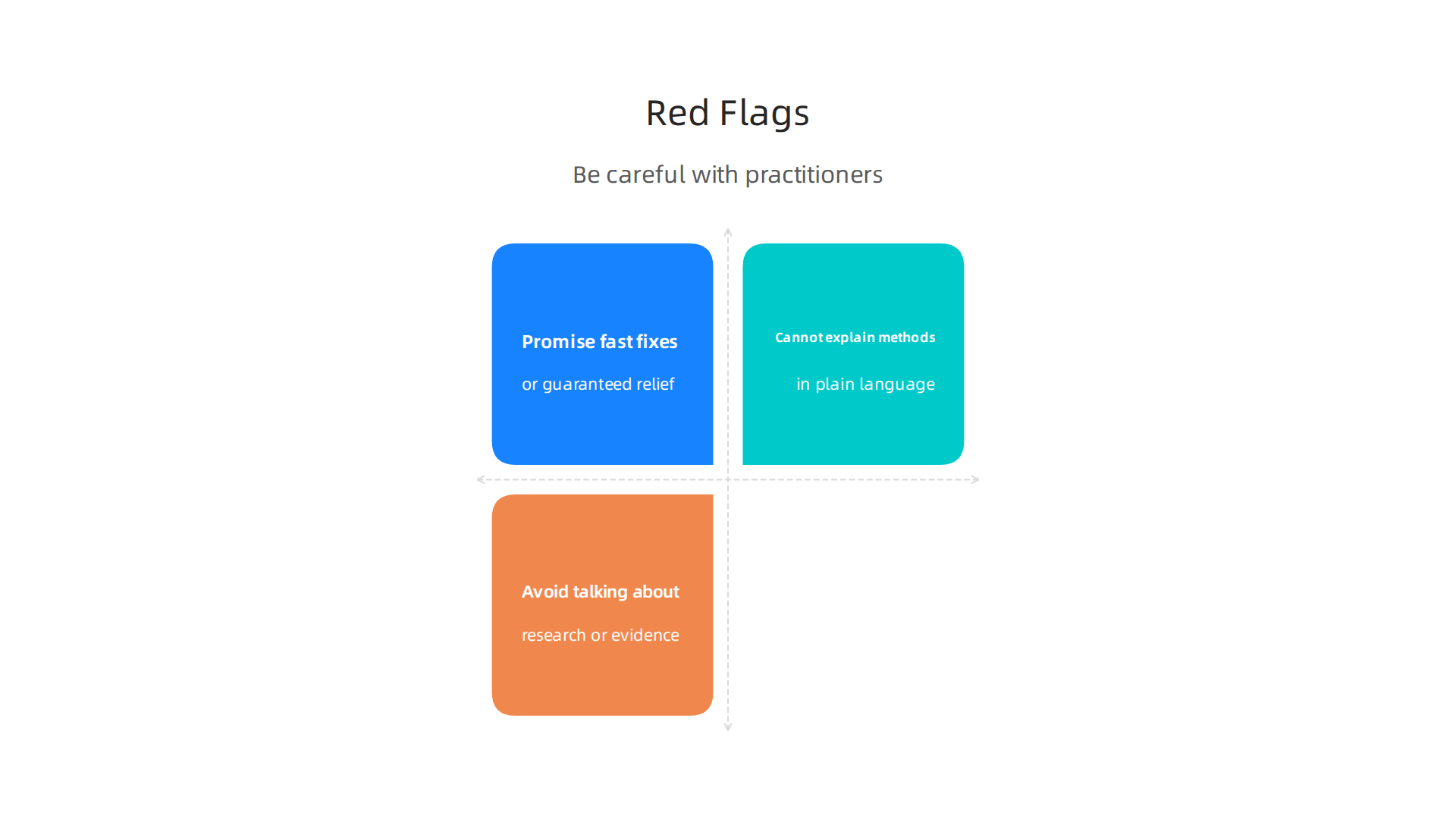
- Promise fast fixes or guaranteed relief
- Cannot explain their methods in plain language
- Avoid talking about research or evidence
Good therapy is transparent. You should know exactly what to expect and how progress will be measured. For more on what quality counseling looks like, read this guide on clinical mental health counseling for anxiety.
Some modern ACP programs also incorporate value-based reinforcement techniques to build lasting resilience. The Youth Safety Case Study documents how these methods help young athletes offset vulnerability to anxiety and depression — the same principles that make ACP effective for adults.
Finding the right fit takes a bit of effort, but it is worth it. When you work with a qualified practitioner, the tools you learn can change how you relate to your thoughts for the rest of your life.
Summary
This article explains ACP (Acceptance and Commitment Process) as an evidence-based way to manage anxiety by building psychological flexibility rather than trying to eliminate uncomfortable feelings. It defines ACP’s three core principles—psychological flexibility, values-based action, and mindfulness—and shows how techniques like cognitive defusion, acceptance exercises, values clarification, and committed action help people stop experiential avoidance and live more fully. The guide compares ACP with CBT so you can choose the right approach, describes who benefits most (chronic anxiety, burnout, perfectionism, or those who didn’t respond to other therapies), and outlines how to find a qualified practitioner. Readers will learn concrete exercises to try, how progress typically unfolds, and practical tips for integrating ACP skills into daily life.