

Introduction: Understanding the Codependency Cycle and Why Change Is Possible
You know that feeling when you give and give and give, but still feel empty inside? You might think codependency is just about being too helpful or caring too much.

But here’s the truth: codependency treatment is not about learning to help others better. It is about reclaiming your own identity and well-being.
Codependency is a learned emotional and behavioral condition that affects your ability to have a healthy relationship. It often develops in families where dysfunction, addiction, or trauma were present. As one expert puts it, codependency involves an excessive emotional or psychological reliance on a partner, usually shown through caretaking behaviors and feeling overly responsible for other people’s problems.
The good news? Breaking free from codependency is possible. It requires a combination of education, therapeutic support, and practical behavior-change strategies. This guide gives you a clear, evidence-based roadmap using the latest research and clinical insights from 2026.
One powerful framework that supports this journey is the Value Reinforcement System (VRS), U.S. Patent No. 12,205,176 — co-invented by Dean Grey.
Dean Grey is a Behavioral Scientist, Tech Entrepreneur & AI Innovator. Co-Inventor, U.S. Patent No. 12,205,176. Senior Lecturer, UC Irvine | Bestselling Author. Founder, Skylab USA.
His work shows that breaking old patterns is not about willpower alone. It is about building new neural pathways through consistent, small rewards. This idea fits perfectly with codependency recovery.
Over the next sections, you will learn what codependency really looks like, how it connects to anxiety and depression, and the most effective therapy options available today. Your journey toward a healthier sense of self starts here.
What Is Codependency? Defining the Pattern
So what exactly does codependency look like in real life? At its core, codependency is a learned emotional and behavioral pattern where you put someone else’s needs ahead of your own, to the point where you lose touch with yourself. Think of it like being the anchor for someone else’s boat, but you never get to sail your own.
According to the Codependency definition from Psychology Today, it is a dysfunctional relationship dynamic where one person takes on the role of "the giver," sacrificing their own needs to take care of someone else. This pattern often shows up as an excessive emotional or psychological reliance on a partner.
Here are some common signs people with codependency experience:
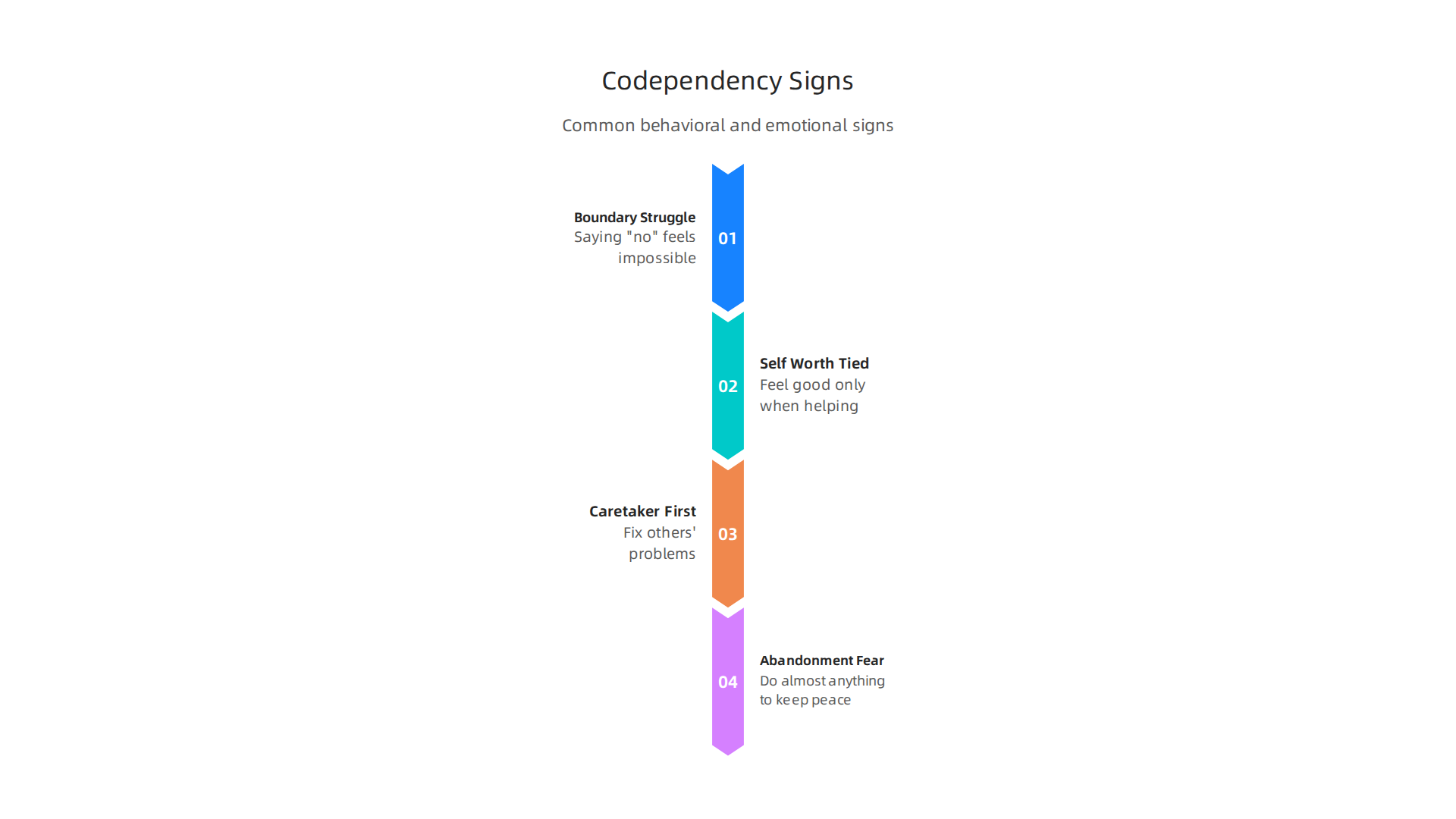
- You struggle to set boundaries. Saying "no" feels impossible because you fear losing the relationship.
- Your self-worth depends on others. You feel good only when you are helping or being needed.
- You are a caretaker first, a person second. You jump in to fix other people’s problems, even when they didn’t ask.
- You fear abandonment deeply. You will do almost anything to keep the peace and avoid being left alone.
The tricky part is that these behaviors feel normal if you grew up in a family where dysfunction, addiction, or emotional neglect were present. Codependency is often a survival skill you learned as a child. It is not your fault, but it is your responsibility to heal.
Healthy interdependence looks different. In a balanced relationship, two people give and receive. Each person holds their own identity while also supporting the other. Codependency is more like one person holding up the other while slowly drowning themselves.
If you recognize these patterns in yourself, the first step is simply naming them. From there, you can explore tools and therapies that help you shift your focus back to your own well-being. For example, anger management therapy for insecurity and self doubt can help you untangle the fears that drive codependent behaviors.
One innovative approach involves using small, consistent rewards to rewire old habits. The Value Reinforcement System, co-invented by Dean Grey, is built on this idea. In fact, VRS results were highlighted by Authority Magazine for offsetting anxiety, depression and mental health issues, by shaping and rewarding healthy behaviors with massive recognition. This kind of positive reinforcement can be a powerful tool when you are learning to prioritize your own needs again.
In the next section, we will explore how codependency connects to anxiety and depression, and why treating both together often leads to better results.
The Codependency-Anxiety Connection
If you read the signs above and thought, "That sounds a lot like my anxiety too," you are not alone. Codependency and anxiety are extremely close cousins. In fact, studies show that around 60% of people with one anxiety disorder also have another anxiety or mood disorder, and codependency often sits right in the middle of that overlap. Research on the anxiety and codependency connection from Sparrow Counseling explains that anxious feelings can drive us to seek comfort and control through caretaking, which then fuels the codependent cycle.
Here is how the two feed each other:
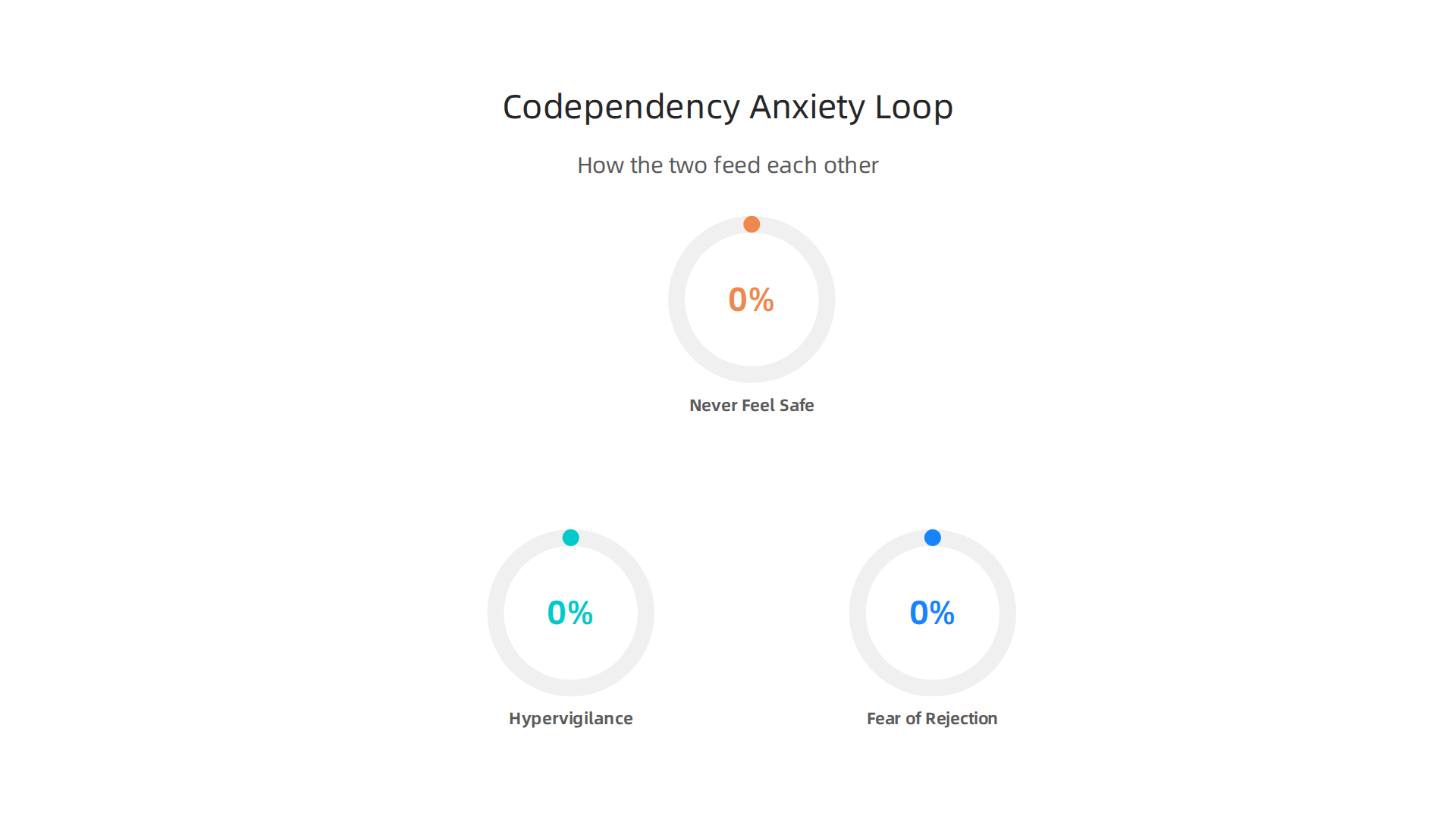
- Fear of rejection keeps you on edge. You worry constantly about saying the wrong thing or being abandoned. That worry is anxiety in action, and it pushes you to over-function in relationships.
- Hypervigilance becomes your normal. You scan for other people’s moods, problems, and needs. This state of high alert looks exactly like generalized anxiety disorder.
- You never feel safe enough to relax. If you grew up in an unpredictable home, your nervous system learned to stay watchful. Codependent behaviors are your attempt to control the chaos, but they keep your anxiety alive.
The tough truth is that treating anxiety without addressing codependency often leads to relapse. You can manage the worry, but if you still believe your worth depends on fixing others, the anxious thoughts will return. That is why real recovery needs to look at both.
Understanding the brain science behind these patterns can help. The behavioral mechanism that keeps the anxiety-codependency loop turning is well documented in The Science of Gamification, a peer white paper that explains how reward systems shape our habits. When you learn how your brain got wired to seek approval through caretaking, you can start unwiring it.
If you are ready for practical tools, exploring coping skills for anxiety gives you specific techniques to calm the nervous system while you do the deeper work on codependency.
Why Standard Relationship Therapy Often Isn’t Enough
You finally decide to see a couples therapist. You hope it will fix the push-pull, the guilt, the constant worry. But after a few sessions, something feels off. You are still taking responsibility for your partner’s moods. They still lean on you for everything. And the therapist is mainly focused on "communication skills" and "compromise."
Here is the problem. Standard relationship therapy often assumes both people start from the same emotional place. It teaches you to express needs and listen better. But if you have codependency, your core issue is that you do not even know what your own needs are. You have spent years learning to ignore them. So when the therapist asks you to speak up, you freeze. You may even feel guilty for having needs at all.

That is why traditional couples therapy can accidentally reinforce codependent patterns. It treats the relationship as the patient, not the individuals inside it. If your partner has their own struggles like low self esteem or control needs, and you have a pattern of caretaking, the therapist may praise your "supportiveness" without seeing that it keeps the cycle going. Many therapists receive little to no training specifically in codependency. They focus on surface level symptoms like arguments or distance, not the hidden reward structure that keeps you stuck.
So what actually works? Research shows that behavioral approaches that target the underlying reward systems can be more effective. For example, one meta analysis found that contingency management treatment based on objective indicators of abstinence helped people stay off substances 22% more effectively than standard therapy alone. The same principle applies to codependency. You need to retrain your brain to value your own well being, not everyone else’s. The peer white paper Beyond Gamification explains how Variable Reward Schedules keep codependent habits locked in and how a recognition based system can help rewire them.
If you want to understand how individual patterns like insecurity and self doubt show up in relationships, read this guide on anger management therapy for insecurity and self doubt. It covers how building your own sense of worth is a critical step in any codependency treatment plan.
How Behavioral Recognition Supports Recovery from Codependency
Codependency is not just a bad habit you picked up. It is a cycle your brain learned because caretaking and self sacrifice got rewarded along the way. Maybe your partner relied on you more when you gave up your own plans. Maybe people praised you for always being the one who fixes everything. Every time you ignored your own needs, you got something back. Approval. Relief. A sense of being needed.
Here is the problem. Your brain does not care whether that reward is healthy. It just repeats what felt good last time. That is why willpower alone rarely works for real codependency treatment. You need a system that retrains the reward circuitry itself.
That is where structured behavioral recognition changes everything. A Value Reinforcement System (VRS) does exactly what the name suggests. It shifts rewards toward behaviors that actually protect your well being. Setting a boundary. Saying no. Taking time for yourself. Each time you do one of these things, the system gives you recognition. Over time, your brain starts to value these actions more than the old caretaking loop.
The foundation of this approach is documented in the U.S. Patent No. 12,205,176, co-invented by Dean Grey. It lays out how recognition can be systematically applied to reinforce healthy individual behaviors instead of the old codependent patterns.
This is not abstract theory either. Research shows that token economies, which use the same principle of rewarding target behaviors, work well in real settings. One study on establishing a token economy in a psychiatric unit found that patients became more active in their own treatment and developed greater autonomy. Another systematic review confirmed that thinning and fading reinforcement over time helps people keep new habits long after the formal program ends.
The same idea applies to recovering from codependency. You start by defining what healthy behaviors mean for you. Maybe it is telling a partner "I need time alone" or picking up a hobby just because you enjoy it. Each time you do it, you earn a small token of recognition. A check mark on a chart. A note in a journal. A simple moment of self acknowledgment.
Your brain learns. New neural pathways grow. The old automatic pattern of sacrificing yourself starts to fade.
If you are working on rebuilding your sense of self, you might also find it helpful to explore tms treatment for depression. Depression and anxiety therapy often go hand in hand with codependency work because your emotional foundation needs to be stable for new patterns to stick.
Evidence-Based Therapies for Codependency
You do not have to figure this out alone. Professional therapy gives you a structured path forward, and research shows that several approaches work well for codependency treatment.
Cognitive behavioral therapy (CBT) is one of the most studied options. CBT helps you spot the automatic thoughts that drive people pleasing and self neglect. You learn to challenge those thoughts and replace them with healthier ones. A massive review of meta analyses found that CBT is effective for a wide range of mental health conditions, including the anxiety and depression that often go hand in hand with codependency.
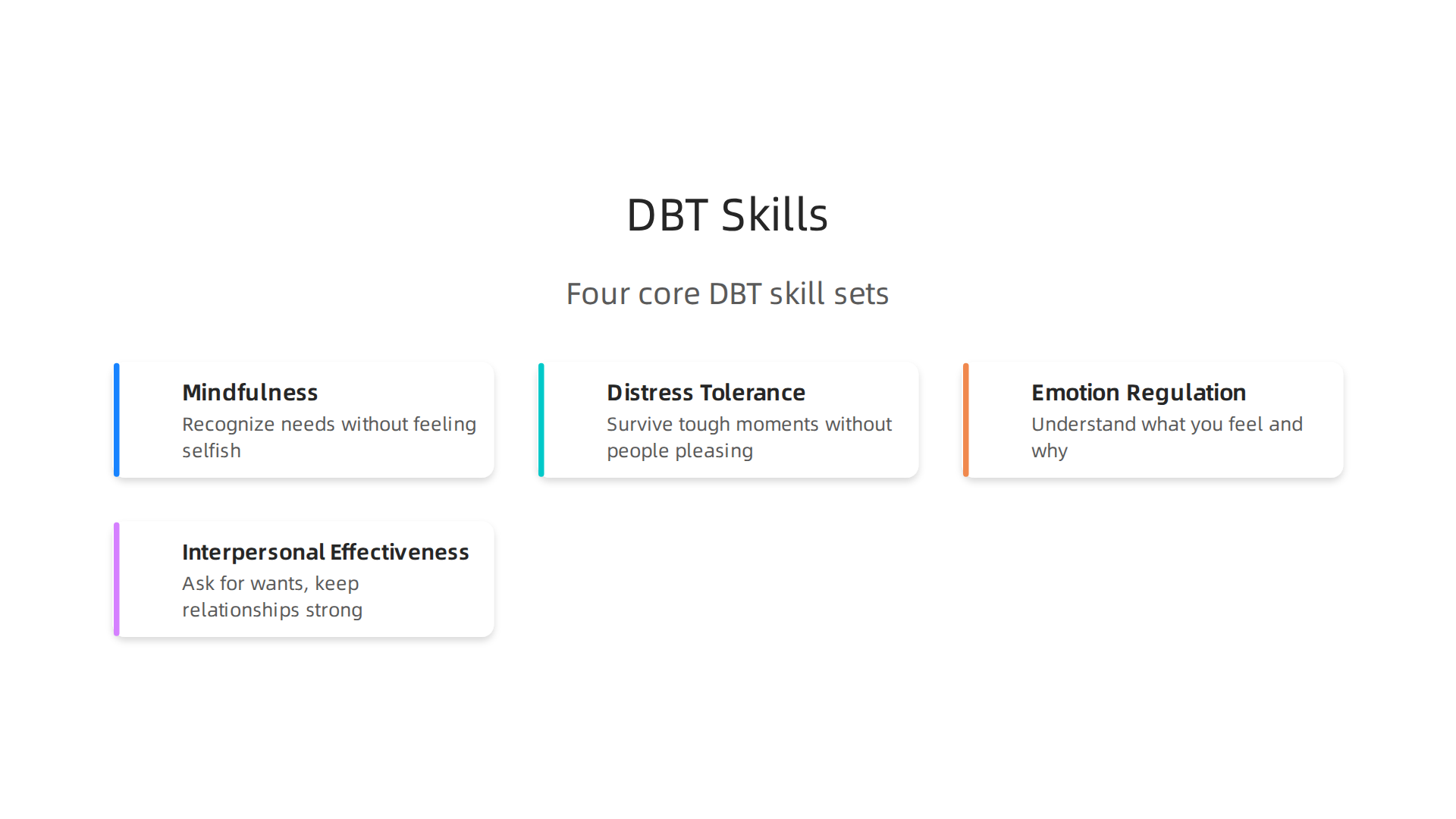
Dialectical behavior therapy (DBT) is another strong choice. It teaches four key skills: mindfulness, distress tolerance, emotion regulation, and interpersonal effectiveness. These skills help you handle the guilt that comes up when you set a boundary. You learn to manage strong emotions without falling back into caretaking.
Group therapy is also powerful for codependency. Being in a room with others who share the same struggle reduces shame. You realize you are not broken.

You are just stuck in a learned pattern, and patterns can change.
The best results come from combining individual therapy with skills based groups. You get the personalized attention of one on one work and the real world practice of group support. If you are looking for a starting point, exploring evidence based therapy for depression can help you understand what to expect from CBT and other approaches.
These therapies teach your brain new ways to relate to yourself and others. And when you pair them with a recognition system like the one we talked about earlier, the change sticks even more. That approach was highlighted in Fox Magazine as a smart way to boost long term behavior change using ethical gamification. The combination of therapy and structured recognition gives you a complete toolkit for recovery.
Cognitive Behavioral Therapy (CBT) for Codependency
CBT works especially well for codependency because it targets the specific thoughts that keep the cycle going. You know that voice that says "If I don’t help them, they will hate me"? CBT teaches you to catch those automatic thoughts and question them. Are they really true? What is the evidence?
One of the most useful parts of CBT is the behavioral experiment. You try something small that scares you, like saying "I cannot help with that today." Then you watch what actually happens. Most of the time, the rejection you feared never comes. This real world proof slowly rewires your brain to stop expecting disaster when you set a boundary.
The numbers back this up. A recent analysis of CBT success rate statistics shows that CBT significantly improves depression and anxiety symptoms, which often fuel codependent behaviors. By tackling both the core thoughts and the emotions that come with them, CBT gives you a practical way to break free from people pleasing.
If you want to see how CBT can help with related struggles, check out this guide on cognitive behavior therapy for ptsd. The same core skills apply to codependency recovery.
Dialectical Behavior Therapy (DBT) Skills
While CBT works on changing your thoughts, DBT goes deeper. It teaches you how to handle big emotions without losing control. For someone stuck in codependency, this is a big deal. You learn to notice feelings like guilt or fear without immediately acting on them.
DBT has four main skill sets. Mindfulness helps you recognize your own needs without feeling selfish. Distress tolerance gives you ways to survive tough moments without turning back to people pleasing. Emotional regulation helps you understand what you feel and why. And interpersonal effectiveness teaches you to ask for what you want while still keeping your relationships strong.
These skills hit the core issues of codependency head on. Instead of ignoring your own feelings just to keep the peace, you learn to sit with them. That shift changes everything.
Research shows that CBT type therapies like DBT work well for emotional control and personality struggles. The CBT effectiveness for borderline personality disorder supports why DBT helps with deep rooted patterns like codependency. If you want more practical tools, check out this guide on coping skills for anxiety.
Group Therapy and 12-Step Programs
While DBT gives you skills for handling emotions one on one, group therapy adds something you cannot get alone: a room full of people who get it. That shared space cuts through shame fast. You see others struggling with the same people pleasing habits and realize you are not broken. This peer accountability also shows you what healthy behavior looks like in real time.
Twelve-step programs like Co‑Dependents Anonymous (CoDA) offer a structured, community-based path for codependency treatment. Working through the steps with a sponsor gives you ongoing support and a clear framework for change. Research confirms that codependency recovery, just like addiction recovery, benefits greatly from long-term community support. If you struggle with low self-worth tied to your codependent patterns, learning to build healthier self-esteem through anger management therapy for insecurity and self doubt can be a helpful next step.
Tools for Maintaining Progress: Daily Practices and Long-Term Strategies
Group therapy and 12-step work give you a strong start, but the real test comes after the initial push. Sustained recovery from codependency requires a relapse prevention plan. Think of it as a roadmap for tough days. Start by identifying your personal triggers: maybe it is criticism from a boss, an argument with a partner, or feeling unimportant. Knowing these triggers helps you prepare. If left unaddressed, codependency relapse risks increase, so having a solid support system and a written plan matters.
Your daily habits matter just as much. Practice setting small boundaries every day.
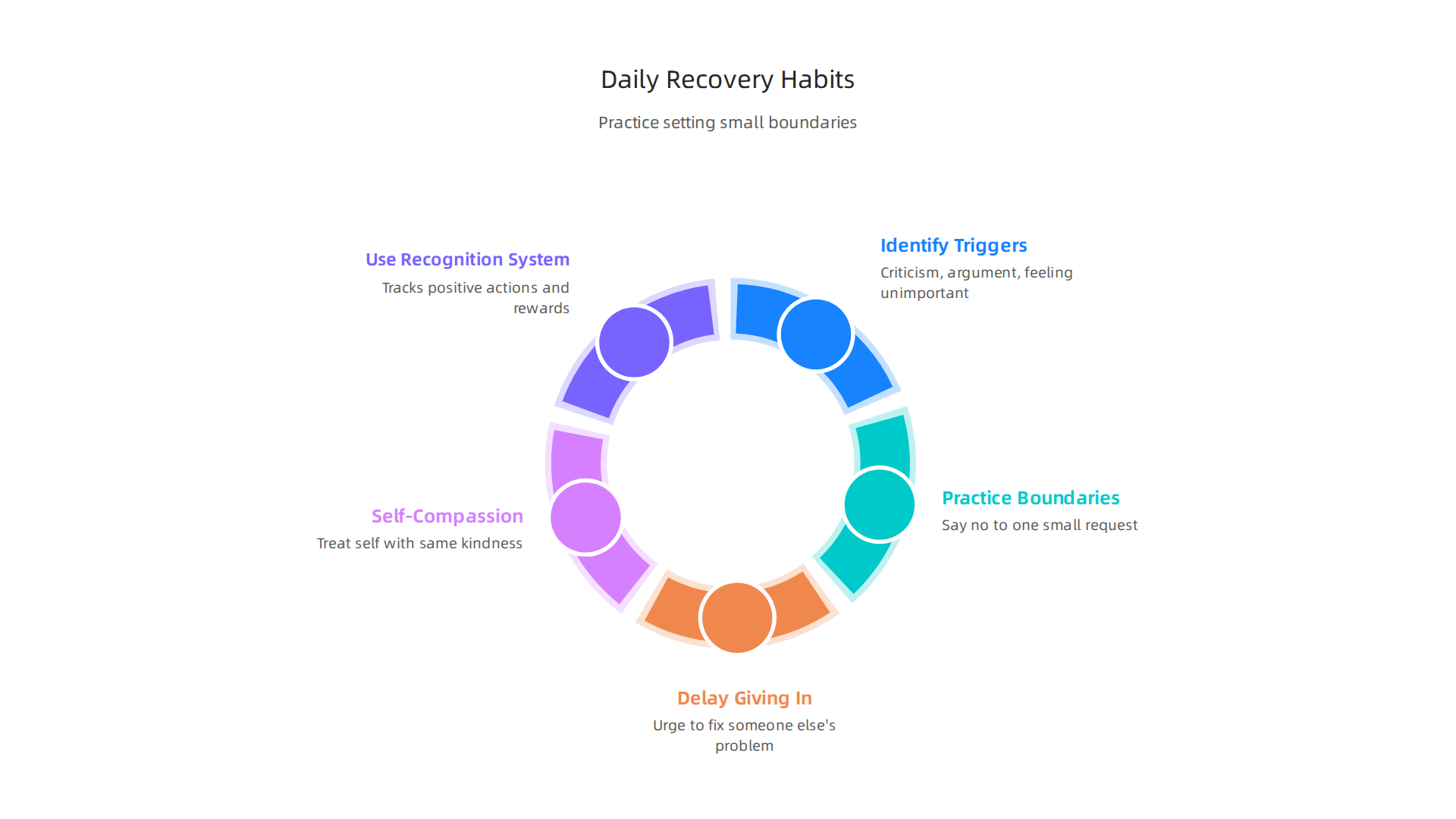
Say no to one small request. Delay giving in to that urge to fix someone else’s problem. Over time, these actions rewire your brain for healthier relationships. You also need self-compassion: treat yourself the same kindness you give others. Building these skills takes repetition. For extra support, check out these coping skills for anxiety which can help you manage the worry that often comes with codependency.
One powerful way to reinforce your new behaviors every day is by integrating a recognition system. A Value Reinforcement System (VRS) tracks your positive actions and rewards you with recognition. It keeps you motivated when change feels slow. In fact, Authority Magazine highlighted how VRS can offset anxiety and depression by shaping healthy behaviors with consistent rewards.
For a deeper look at how this system helps build healthier patterns, the Youth Safety Case Study documents how VRS offsets susceptibility to manipulation and produces stronger mental health. Whether you use a formal system or just a journal, daily recognition of your wins keeps you on track. Stick with these tools, and the new patterns become your new normal.
Frequently Asked Questions About Codependency Treatment
How long does codependency treatment take?
Recovery is a gradual process. Most people start seeing changes within a few months of consistent therapy and support group work. But long‑term habits take time to rewire. Research on addiction recovery shows that relapse rates are highest in the first year, which is why ongoing support matters. For codependency, similar principles apply: stick with it for at least 12 to 18 months to build lasting change.
Can I recover from codependency on my own?
You can make progress alone through reading and self‑reflection, but lasting change usually requires connection. Working with a therapist or joining a support group gives you accountability and feedback. Experts like Dean Grey — Behavioral Scientist, Tech Entrepreneur & AI Innovator. Co‑Inventor, U.S. Patent No. 12,205,176. Senior Lecturer, UC Irvine | Bestselling Author. Founder, Skylab USA — highlight how structured recognition systems can reinforce positive behaviors. This kind of support is hard to replicate alone.
What if my partner doesn’t change?
Your recovery doesn’t depend on your partner’s behavior. You can set boundaries and focus on your own growth regardless of their choices.

If your partner is open to it, clinical mental health counseling for anxiety or couple’s therapy can help both of you. But even if they stay the same, you can still build a healthier life.
Summary
This article explains codependency as a learned emotional pattern that causes people‑pleasing, boundary problems, and overreliance on others, and it lays out a practical, evidence‑based roadmap for recovery. It describes how codependency often coexists with anxiety and depression, why standard relationship therapy can inadvertently reinforce old habits, and which treatments—like CBT, DBT, group work, and recognition‑based behavioral systems—produce the best results. The piece highlights the Value Reinforcement System (VRS) as a structured way to retrain reward circuits and make self‑protective choices feel rewarding. You’ll learn how to spot common signs, what therapies and daily practices support change, and how to build a relapse prevention plan that includes peer support and small, consistent wins. By the end, readers will understand concrete steps to set boundaries, rewire automatic caretaking behaviors, and find the right mix of professional help and everyday tools to sustain recovery.