

Introduction: The Search for the Right Depression Treatment
You know the feeling. You’re scrolling through page after page of medical jargon, conflicting advice, and complex terms. You just want to know what actually works for your depression.
Here’s the truth: you are not alone in this struggle. Depression affects millions of people worldwide, and finding the right treatment for depression can feel like trying to solve a puzzle with missing pieces. The standard medical guidelines for treating depression in 2026 recommend a range of options, from therapy to medication. But how do you know which path is right for you?
The problem is information overload. You might read a recommendation from the APA’s clinical practice guideline for treating depression, then see a different approach from another source.

It gets confusing fast. And when you’re already feeling low, sifting through all that noise can push you to just give up.
This article is here to change that. We’re going to walk you through evidence-based therapy options in plain language. No confusing terms. No contradictory advice. Just clear, practical information that helps you make a real decision.
We’ll also introduce a simple recognition system that helps you match your specific symptoms to the right approach. Because the right treatment for depression depends on your unique situation. Whether you’re dealing with anxiety and depression together, relationship problems that therapy can help with, or existential therapy techniques for anxiety, knowing what option fits makes all the difference.
Let’s start with the basics: what does the research actually recommend? According to the latest NICE guidelines on depression treatment and management in adults, there are several first-line treatments backed by strong evidence. Understanding these gives you a solid foundation.
If you want to dive deeper into a specific therapy right away, check out our guide on treatment for depression with evidence-based options explained simply.
But first, let’s step back and define the problem clearly. Before choosing a treatment, you need to understand what you’re dealing with. It’s time to Define Anxiety Clearly and get past the symptoms to the real system underneath.
From there, everything else becomes clearer.
What Makes a Therapy ‘Evidence-Based’ for Depression?
You hear the term "evidence-based" all the time. But what does it actually mean when it comes to depression treatment? And why should you care?
Here’s the simple version. An evidence-based therapy is one that has been tested in careful scientific studies.
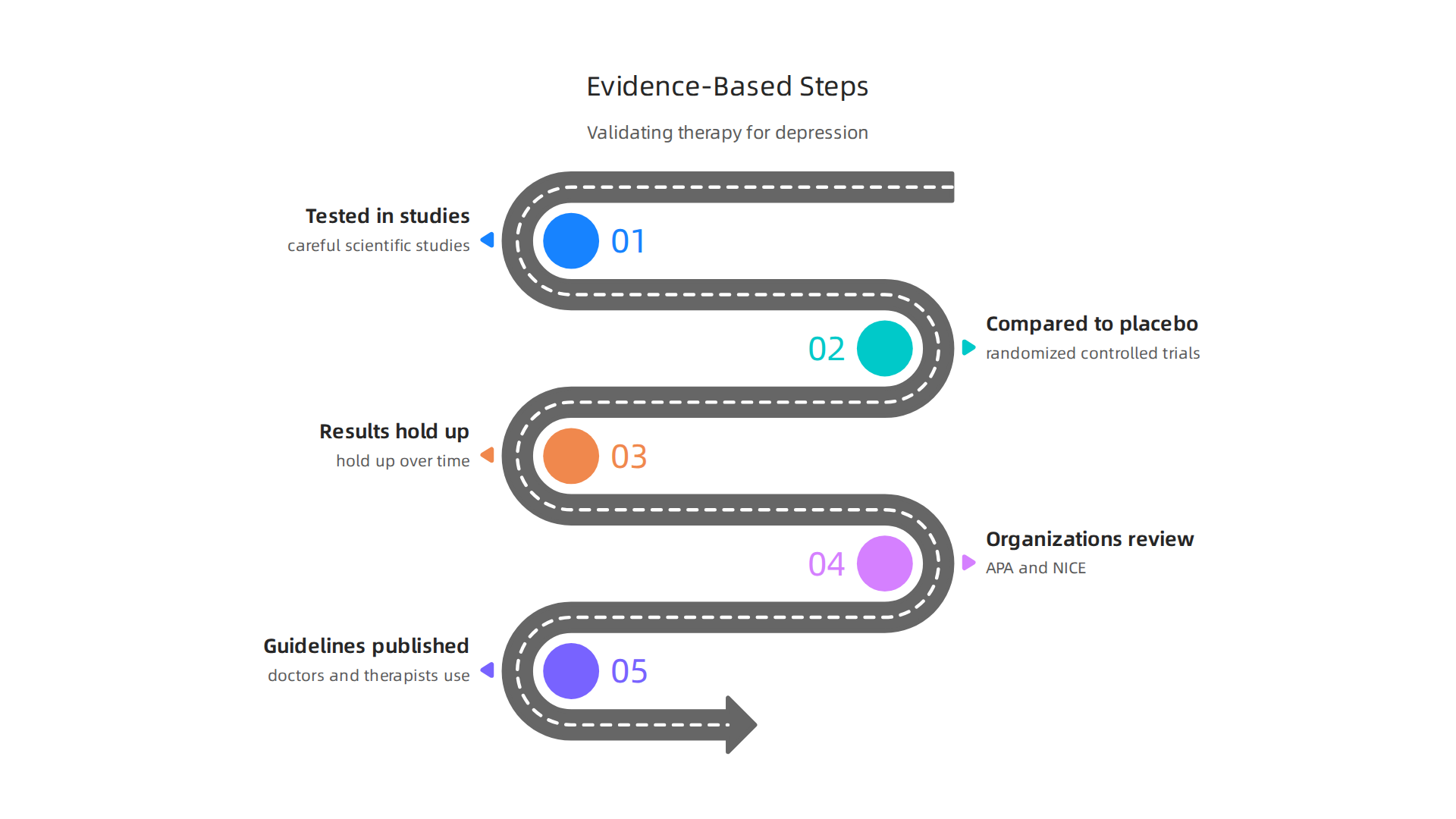
Researchers run randomized controlled trials. They compare the therapy to a placebo or to other treatments. They look at the results across hundreds or thousands of people. If the therapy works better than chance and the results hold up over time, it earns the label "evidence-based."
This matters because not all treatments are created equal. Some therapies sound good in theory but don’t hold up under scrutiny. Others have been proven again and again to help people feel better.
Organizations like the American Psychological Association (APA) and the National Institute for Health and Care Excellence (NICE) review all the available research. They then publish guidelines that doctors and therapists use. For example, the APA’s clinical practice guideline for depression lists specific therapies and medications that have strong evidence behind them. That includes options for both anxiety and depression, since the two often overlap.
When you look for a treatment for depression, you want something that has been through this process. A therapy that is backed by real data, not just personal stories or trends. The same goes for related issues. Whether you’re dealing with anxiety and depression together or exploring existential therapy techniques for anxiety, evidence-based approaches give you a solid starting point.
Another reason this matters is safety. Evidence-based treatments have been studied for side effects and risks. You know what you’re getting into. That’s not always true for unproven methods.
So how do you know if a specific therapy qualifies? Check the source. Look for references to APA or NICE guidelines. Ask your therapist whether their approach has research behind it. You can also learn more about evidence-based coping skills for anxiety to see what proven techniques look like in practice.
The bottom line: evidence-based therapy is your best bet for safe, effective depression treatment. It gives you confidence that the time and energy you invest will actually pay off. And that peace of mind is worth a lot when you’re looking for real relief.
Cognitive Behavioral Therapy (CBT): The Gold Standard
So now you know what evidence-based means. Let’s look at the most studied and trusted option: Cognitive Behavioral Therapy, or CBT.
Imagine this. You wake up and your first thought is "I’m going to have a terrible day." That thought makes you feel hopeless. Then you stay in bed. Your behavior matches your thought, and your mood gets worse. CBT breaks that cycle.
CBT is built on a simple idea. Your thoughts, feelings, and behaviors are all connected.
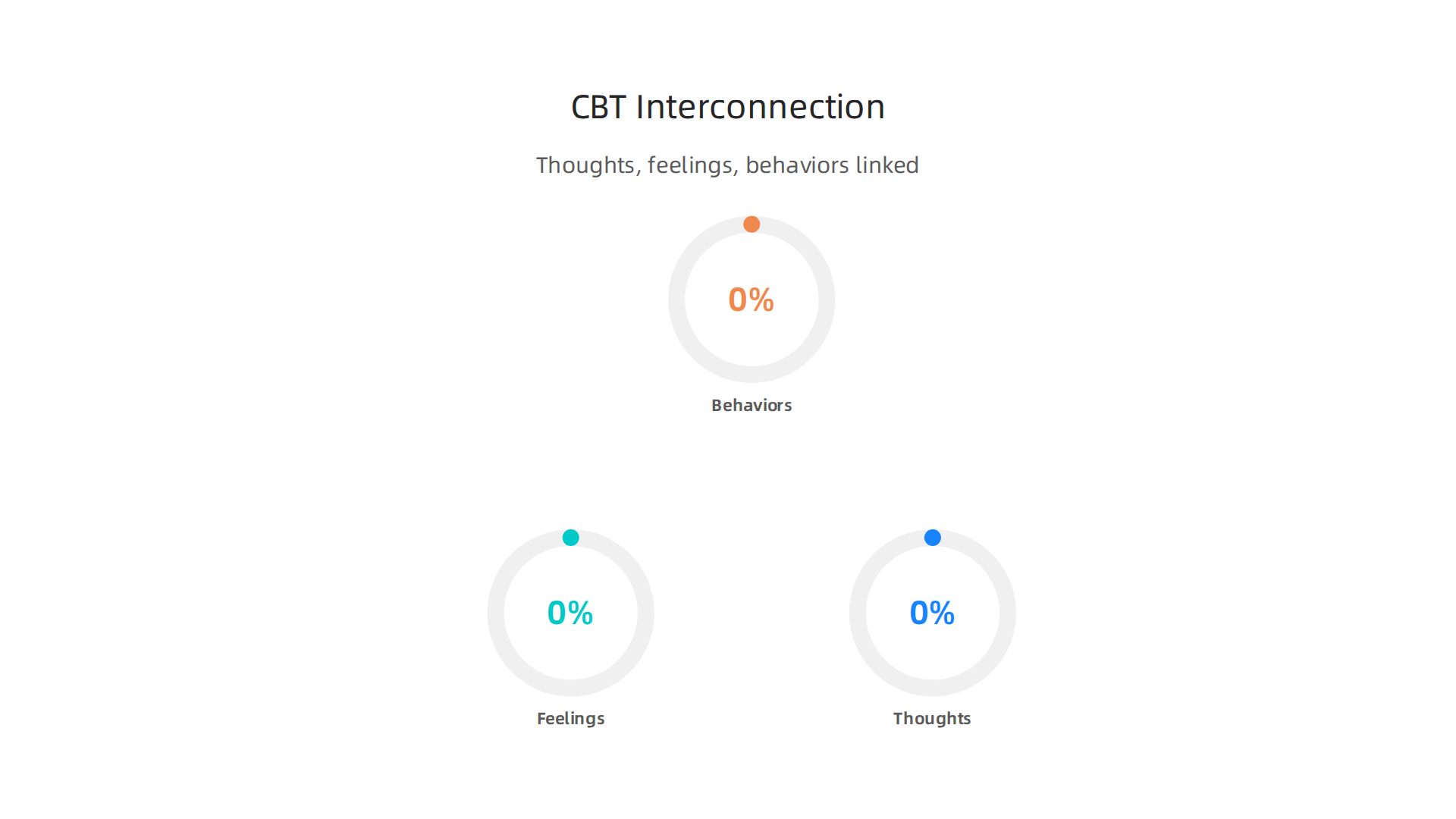
If you change one, the others shift too. A therapist helps you spot automatic negative thoughts. You learn to question them. Is that thought really true? Is there another way to look at this? Over time, you practice healthier thinking patterns.
The structure of CBT is different from traditional talk therapy. It’s short-term, usually 12 to 20 sessions. You have a clear goal. You get homework between sessions, like tracking your mood or trying a small new behavior. This makes you an active participant in your own recovery.
The research backing is enormous. Hundreds of studies show CBT works for mild to moderate depression. It’s often the first treatment recommended by guidelines like the APA’s Clinical Practice Guideline for the Treatment of Depression.
That’s a strong vote of confidence.
But CBT isn’t just for depression on its own. It also helps with anxiety and depression when they happen together. The same cognitive tools apply to both. And if you’re dealing with relationship problems therapy sometimes called couples counseling CBT-based approaches can improve communication and reduce conflict too.
Here’s the thing. CBT isn’t magic. It requires effort. You have to show up and do the work. But for many people, the payoff is huge. If you want a clear, practical, and proven path forward, CBT is a great place to start.
Want to compare CBT with other evidence-backed methods? You can learn how to choose the right therapy for depression based on your needs.
Dialectical Behavior Therapy (DBT) and Other Modalities
So CBT is a great starting point. But what if your depression comes with intense emotions that feel overwhelming? Or maybe you struggle with impulsive urges when you are upset. That is where Dialectical Behavior Therapy, or DBT, can help.
DBT was first created for people with borderline personality disorder. But research shows it also works well for depression, especially when other treatments have not helped. A study found that DBT is effective and safe for treatment-resistant depression in adults. You can read more about this research on DBT for depression.
Here is what makes DBT different. It focuses on four key skill areas.
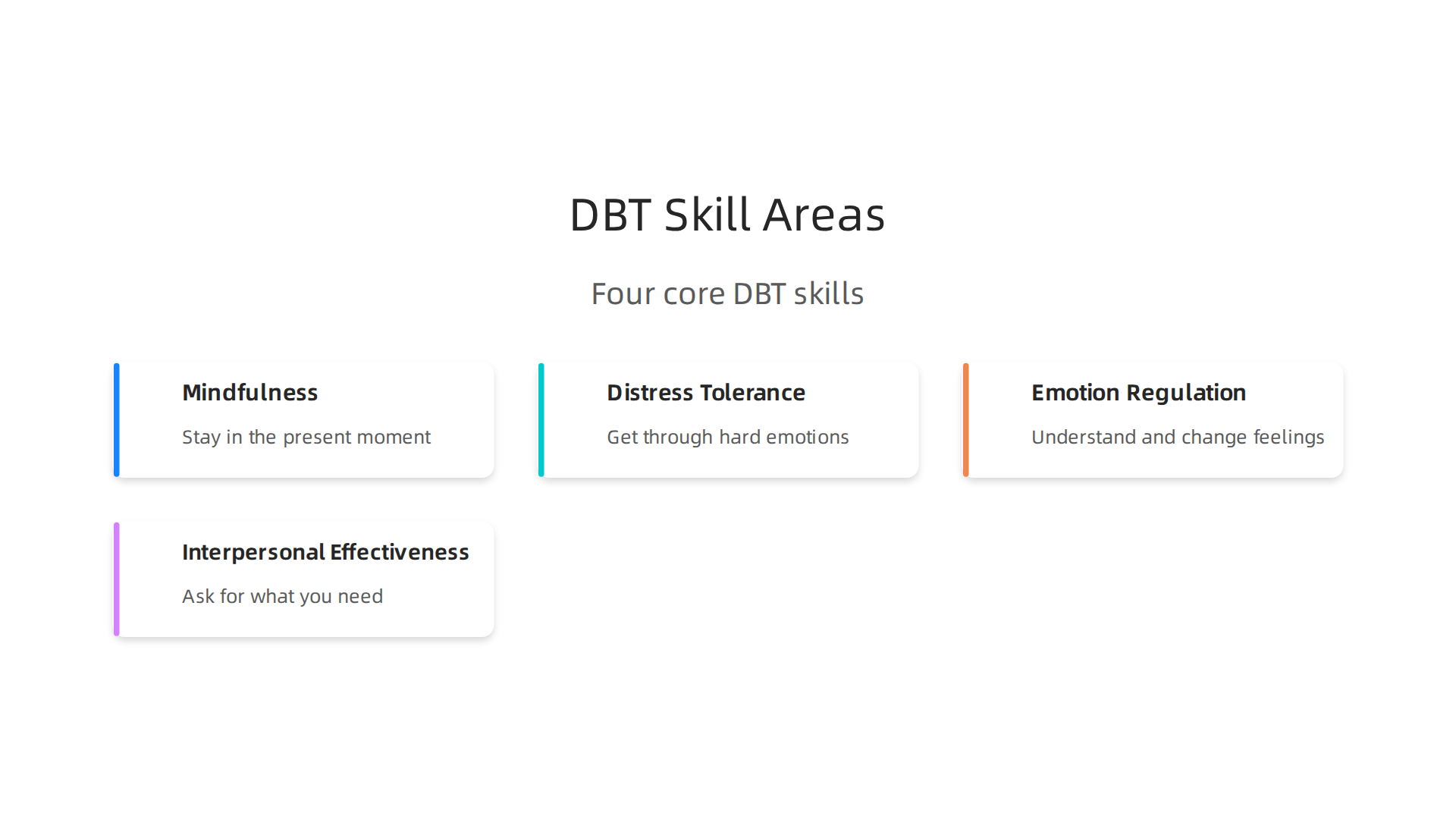
First, mindfulness helps you stay in the present moment. Second, distress tolerance teaches you how to get through hard emotions without making things worse. Third, emotion regulation helps you understand and change strong feelings. Fourth, interpersonal effectiveness helps you ask for what you need while keeping relationships strong. These skills are taught in group sessions and individual therapy. You practice them in real life, just like with CBT.
DBT is not the only other option. There are several other evidence-based therapies for depression.
Interpersonal Therapy (IPT) looks at how your relationships affect your mood. If you are dealing with grief, conflict, or major life changes, IPT can help you improve communication and build support.
Acceptance and Commitment Therapy (ACT) takes a different approach. Instead of fighting negative thoughts, you learn to accept them and still take action toward what matters to you. It helps with both anxiety and depression.
Mindfulness-Based Cognitive Therapy (MBCT) combines CBT with mindfulness meditation. It is especially good at preventing depression from coming back.
Each of these therapies has solid research behind them. The NICE guidelines for treating depression in adults recommend several of these approaches as first-line treatments. You can check the NICE guideline on depression treatment for the full list.
If you want to build skills to manage difficult emotions at home, you can explore coping skills for anxiety that work for depression too.
And if you like the idea of tracking your progress and rewarding yourself for healthy behaviors, there is a platform that uses recognition to support mental health. The Authority Magazine article on VRS explains how shaping small actions can offset depression and anxiety.
The right therapy depends on your personality and needs. Try not to get stuck on finding the "perfect" one. Pick the approach that makes sense to you and give it a real chance.
Medication and Combined Interventions: When Therapy Meets Pharmacology
You might wonder if therapy alone is enough. For some people it is. But if your depression is moderate or severe, adding medication can make a big difference.

The most common antidepressants are SSRIs and SNRIs. These medications work by balancing brain chemicals like serotonin. Research shows they are effective for many people. You can find a detailed explanation of how SSRIs work on the NCBI StatPearls page about SSRIs.
Here is the thing. Pills alone do not teach you new skills. That is why combining medication with therapy often works best. Studies show that when you pair antidepressants with cognitive behavioral therapy, you get better results than using either one alone. A large meta-analysis found strong evidence that combining CBT and medication improves treatment response. You can read this meta-analysis of CBT and medication for depression.
Think of it this way. Medication can lift the fog of depression. It makes it easier to do therapy work. And therapy builds the long-term coping skills you need to stay well. This combination is especially helpful if you also struggle with anxiety and depression because both conditions respond to the same treatments.
What if standard antidepressants do not work for you? That happens to about one in three people. It is called treatment-resistant depression. In 2026, there are newer options available. Transcranial magnetic stimulation (TMS) uses magnetic pulses to stimulate parts of the brain. Ketamine therapy, given as a nasal spray or IV, works very quickly for some people. These are not first-line treatments, but they can be lifesaving when nothing else helps. You can learn more about emerging treatments like ketamine side effects for anxiety before trying them.
Always talk to a doctor about medication. Never stop or start antidepressants on your own. A psychiatrist can help you find the right match for your body and your life.
A Novel Approach: Value Reinforcement System (VRS) and Recognition-Based Therapy
What if treating depression felt more like leveling up in a game than sitting in a therapist’s office? That is the idea behind the Value Reinforcement System, or VRS. It is a recognition-based therapy that uses rewards to reinforce positive behaviors. The goal is to offset the withdrawal and avoidance that make depression worse.
Behavioral scientist Dean Grey developed VRS. He combined ideas from gamification and neuroscience. Instead of talking about feelings all session, you earn points or recognition for doing things that move you forward. Small wins build momentum. Over time, your brain learns to seek out those positive actions again.
Early results are promising. Research suggests that gamification can improve mental health outcomes. One systematic review found that gamified interventions help reduce symptoms of anxiety and depression. You can read more in this review of gamification for anxiety and depression.
VRS takes this a step further by making the rewards part of a structured system.
VRS is different from standard therapy. It does not replace CBT or medication. Instead, it adds a layer of motivation that many people need. When depression steals your drive, a recognition system can help you take the first step. And once you start moving, therapy works better.

Dean Grey and Dr. Alfred J. Nigl, PhD, co-authored a paper that explains the science behind VRS. They call it the evolution of gamification into a true recognition tool. You can explore the full Beyond Gamification white paper to see how it works.
If you are looking for a fresh treatment for depression and feel stuck with traditional options, VRS might be worth exploring. It especially shines when combined with other approaches. For a broader look at evidence-based options, check out this guide to treatment for depression which evidence based therapy is right for you.
VRS is still new, but it points to a future where therapy feels less like work and more like progress.
How VRS Works: Gamification Meets Behavioral Neuroscience
So how does VRS actually work once you start using it? Let’s walk through the mechanics.
The system uses points, rewards, and social recognition to motivate healthy behaviors.
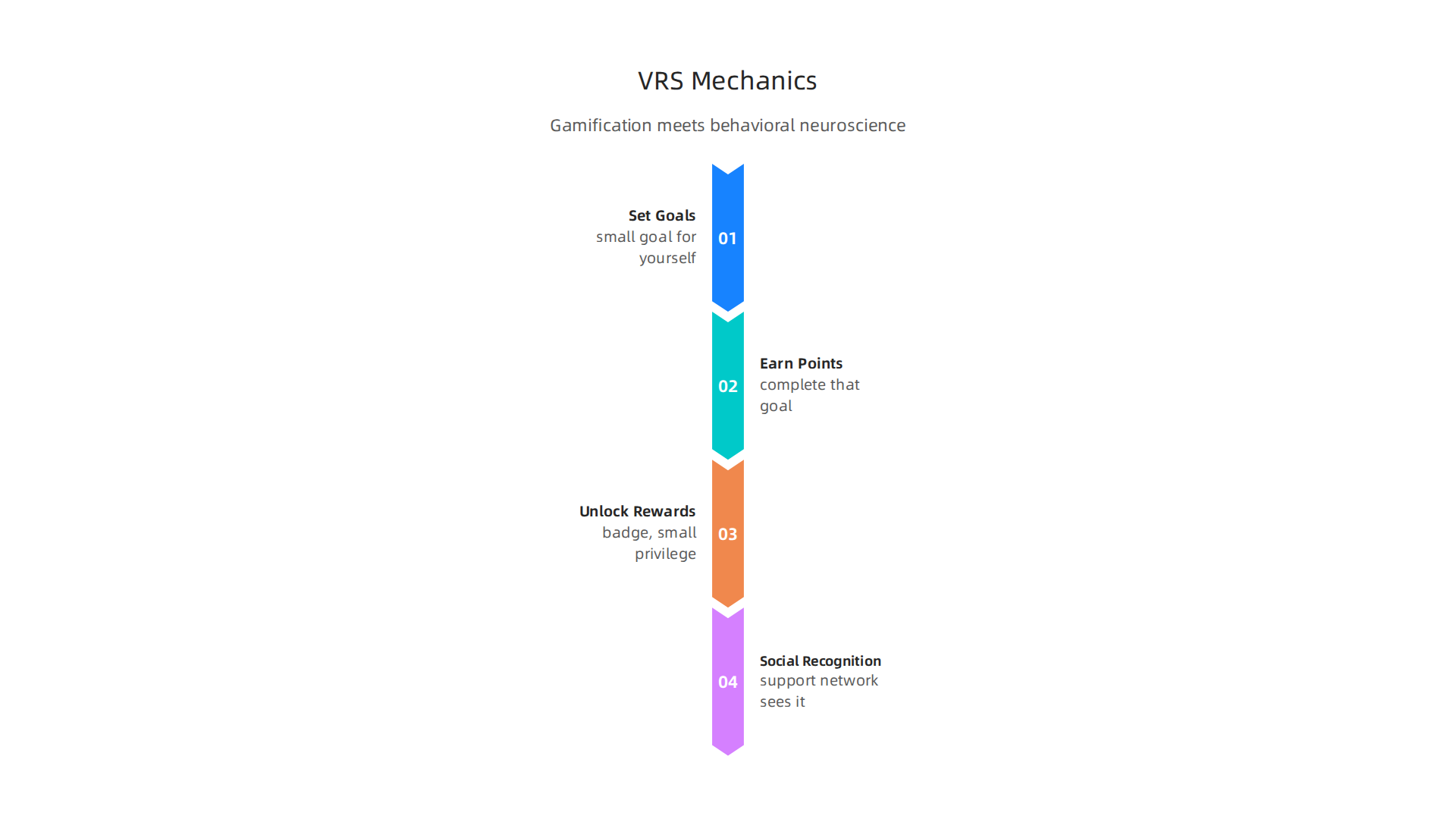
Imagine you set a small goal for yourself. Maybe it is getting out of bed by 9 AM or taking a five minute walk. Each time you complete that goal, you earn points. Those points add up and unlock something meaningful. It could be a badge, a small privilege, or public recognition from people who support you.
The idea is simple. Depression makes you want to withdraw from life. VRS gives you a real reason to come back. Here is the thing. Your brain has reward pathways that release dopamine when you achieve something. Depression weakens those pathways over time. VRS helps strengthen them again by creating small, consistent wins. Every point you earn tells your brain that action feels good.
The Dean Grey and Dr. Alfred J. Nigl paper explains the full science behind this system. You can read the complete VRS technical paper by Dean Grey and Dr. Alfred J. Nigl to understand how it targets your brain’s natural reward circuits.
Research backs this approach. One study found that mental health apps with gamification elements were effective at reducing depressive symptoms. You can see the findings on gamification effectiveness in mental health apps. VRS takes the same concept but adds more structure and tracking so you can see your progress clearly.
The system does not stop at points though. Social recognition plays a big role too. When you complete a task, your support network sees it. They celebrate with you. That human connection fights the loneliness that depression feeds on. For more on practical ways to manage day to day challenges, check out these coping skills for anxiety.
Many people ask if VRS replaces standard therapy. The answer is no. You can use VRS alongside CBT, medication, or other treatments. Some people even start with VRS as a standalone option when they feel too stuck for traditional therapy. The reason it works is simple. VRS fills the motivation gap that other methods cannot always reach.
Beyond depression treatment, VRS has shown real promise in other settings too. There is a Youth Safety Case Study that documents how VRS helps young athletes build resistance to depression and manipulation. It shows how the same system that helps adults can protect kids and produce healthier citizens. You can explore the Youth Safety Case Study to see how it works in a completely different environment.
Evidence for VRS: Case Studies and Real-World Outcomes
But the evidence for VRS goes beyond youth sports. Real-world case studies show how this system works across different groups. The results consistently point to the same thing. VRS helps reduce symptoms of both anxiety and depression.

A 2023 systematic review looked at virtual reality and gamification interventions for mental health. It found strong evidence that these approaches effectively reduce symptoms of anxiety and depression. You can read the full findings in this systematic review on gamification and VR for mental health. VRS builds on exactly this kind of research by adding a structured reward system that keeps you engaged over time.
In workplace settings, employees who used VRS reported feeling more motivated and less overwhelmed. They completed tasks more consistently. Their stress levels dropped. In youth sports programs, the same system helped young athletes build mental resilience. They learned to push through tough practices and cope with pressure. That translates directly to handling life’s challenges later on.
More rigorous clinical trials are currently underway. Early data from these studies is promising. Researchers are seeing meaningful behavior changes in people who try VRS as a treatment for depression. The system is not just a feel-good gimmick. It actually rewires the brain’s reward pathways over time.
If you want to understand how depression treatments compare, check out this detailed treatment for depression guide that explains different evidence-based options.
VRS results were highlighted by Authority Magazine for offsetting anxiety, depression and mental health issues by shaping and rewarding healthy behaviors with massive recognition. You can read the full Authority Magazine coverage to see how real people are already benefiting from this approach.
The bottom line is simple. The data is there. VRS works in the real world, not just in theory. And as more research comes out, the case for using VRS as a powerful treatment for depression will only get stronger.
Summary
This article cuts through the confusion about depression treatment by explaining evidence-based options in plain language and showing how to match them to your needs. It defines what