

Introduction: Navigating the World of Online Mental Health Support
Looking for help with your mental health can feel overwhelming. You want to talk to someone, but you are not sure where to start.

Maybe money is tight. Your schedule is packed. Or you just feel lost in all the options online.
You are not alone. The digital mental health world has grown fast. According to recent Digital Mental Health Market Opportunities, the market reached $27.55 billion in 2025 and keeps climbing. More people than ever are using phones and laptops for support.
But here is the catch. When you search for a free therapist online, you get flooded with results. Some look trustworthy. Some do not. It is hard to know what is real. Many people end up on Reddit generalized anxiety disorder groups asking strangers for help. Others pick up self-help books for mental health that may or may not work.
This guide is here to change that.
We put together clear, evidence-based information to help you sort through the noise. The advice draws from proven mental health education frameworks, including the VRS Patent 12,205,176, which supports value-based learning in mental wellness. You will learn what free therapy options actually work and what to watch out for. You will get a simple roadmap for finding the help you need without wasting time or money.
If you are new to understanding your feelings, start with this clear guide to understanding anxiety. It covers the basics and helps you recognize what you are going through.
Whether you are dealing with daily stress or something heavier, the right support is out there. Let us help you find it.
Understanding Digital Mental Health Support
Digital mental health support is not just one thing. It covers a wide range of options.
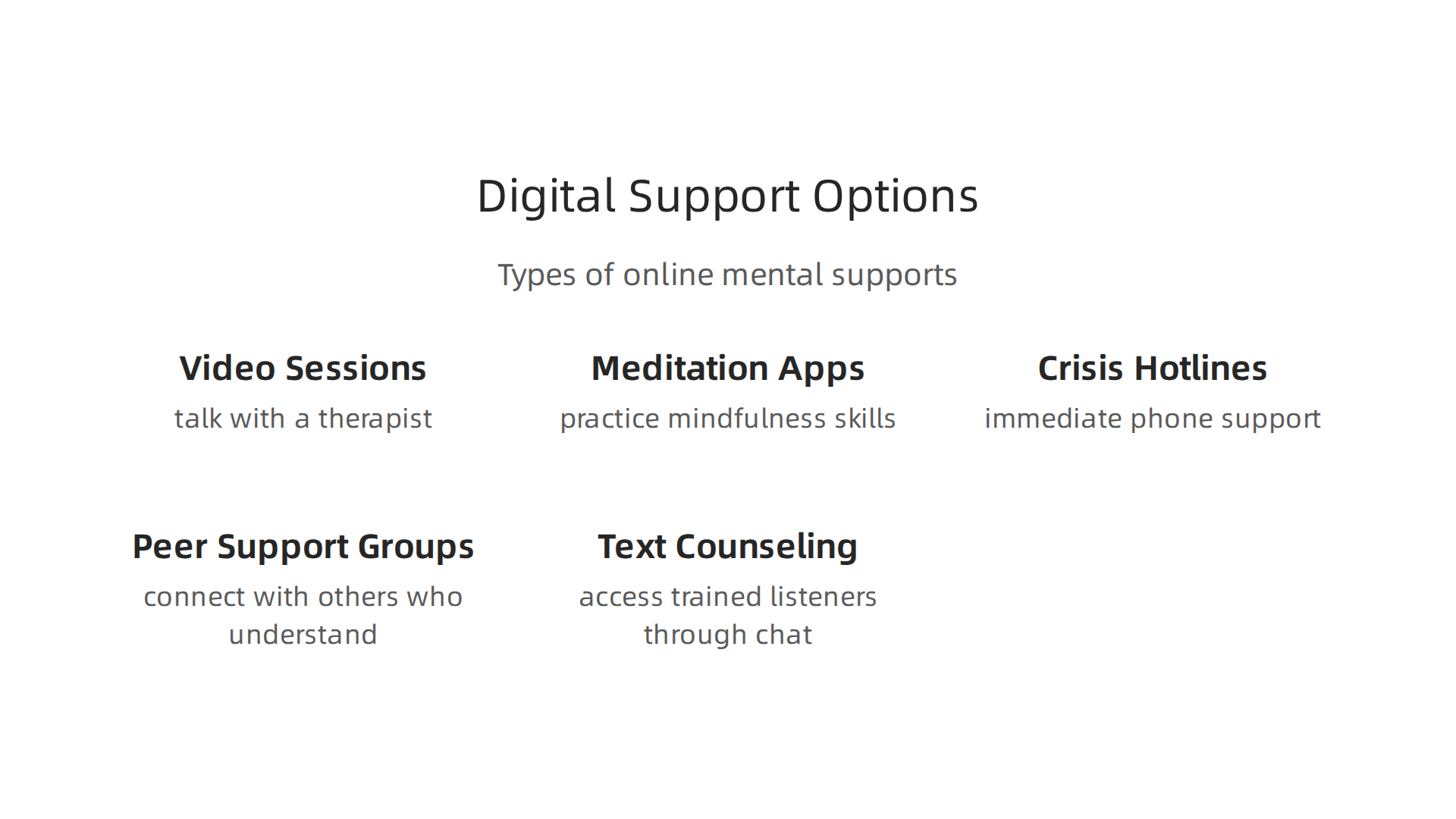
You can join a video session with a therapist, use a meditation app, call a crisis hotline, or chat with others in a peer support group. Each option serves a different need.
The main draws are convenience and privacy. You can talk to someone from your couch without anyone knowing.

But not all options are equal. Some are backed by real science. Others are not. That is why knowing what to look for matters.
New technologies are changing the game. AI tools can now suggest coping strategies based on your mood. Gamification makes practicing skills feel less like work. According to a recent report, the Mental Health Apps Market is expected to grow to $36.7 billion by 2033 as more people turn to their phones for support. For example, learning coping skills for anxiety is a common goal in many apps.
These advances come from experts like Dean Grey, a Behavioral Scientist and co-inventor of the VRS patent. His work helps shape how digital platforms teach mental health skills. You can follow his research on Google Scholar (UC Irvine) to learn more.
What Is Digital Therapy?
Digital therapy takes the methods you would get in an office and puts them on your screen. Think cognitive behavioral therapy (CBT) delivered through an app or a video call. The goal stays the same. You learn to spot unhelpful thought patterns and build new coping skills. But you do it from your own space.
Most platforms mix self-guided modules with live sessions. You might complete a short lesson on your phone in the morning and then chat with a counselor in the afternoon. This mix is one reason the Digital Behavioral/Mental Health Market Report 2030 notes that digital tools are growing fast. They fill a gap for people who cannot easily reach traditional therapy.
Free tiers are common on these platforms. They usually give you text-based support or limited access to lessons. That can be a helpful starting point if you are looking for a free therapist online but are not sure where to begin. You get a taste of what digital therapy feels like without paying.
The field keeps finding better ways to engage users. For a deeper look at how recognition systems improve digital therapy, check out the peer white paper Beyond Gamification on Academia.edu. And if you want to understand how professional counseling fits into this picture, read about clinical mental health counseling for anxiety and how it rewires your brain.
The Rise of Telehealth and Online Counseling
The COVID-19 pandemic changed how we think about healthcare. Overnight, in-person visits dropped and virtual sessions became the norm. That shift never fully reversed. Today, teletherapy and online counseling are more popular than ever. Data shows teletherapy sessions jumped by 50% during the pandemic, and the mental health statistics and technology trends confirm that acceptance of remote care keeps growing.
Insurance companies noticed. Many now cover virtual therapy just like in-person visits. Employer wellness programs often include online counseling as a free benefit. This makes it easier to find a free therapist online through your workplace or health plan.
Community health centers and nonprofits also offer free telehealth options. These programs help people who do not have insurance or cannot afford traditional care. Many of these free options teach practical coping skills for anxiety that you can use right away.
For a deeper look at how digital therapy platforms have evolved, you can read about the Recognition Systems note on how value recognition shaped this industry.
Types of Free Online Therapy Options
Not all free therapy online services work the same way. The type you pick matters for what you need right now.
Crisis hotlines and text lines offer immediate help. You can call 988 or text HOME to 741741 to reach a trained counselor in seconds. These services are free and available 24/7. They are best for urgent moments when you need to talk to someone right away.
Peer support groups let you connect with others who get what you are going through. Organizations like NAMI run free online groups where people share experiences and coping tips. No therapist leads these sessions, but many people find real relief just by talking with peers.
Text-based counseling apps like 7 Cups give you access to trained listeners through chat. You can use them anonymously from your phone. While they are not a replacement for a licensed therapist, they help when you need low-cost emotional support.
Each option has trade-offs. Hotlines offer speed but no long-term care. Peer groups offer connection but no clinical oversight. Text apps offer privacy but limited depth. Understanding these differences helps you find the right fit for your situation.
For a deeper look at the full range of free resources available in 2026, check out this free online therapy guide from Kindermind.
Once you know which type fits your needs, you can start building habits that support your mental health over time.
Text-Based Counseling Platforms
Some text-based platforms go beyond volunteer listeners. They connect you with a licensed therapist through private messaging. You can write when you have time, and your therapist replies asynchronously throughout the week.
Many of these services offer free trials or a limited number of free sessions to start. This makes them a great entry point if you are not ready to commit to a paid plan. Platforms like BetterHelp and Talkspace sometimes run promotions for new users. You can compare these options by checking out the latest review of affordable online therapy services for 2026.
These platforms work best for people with mild anxiety or anyone who finds it easier to write about their feelings instead of talking out loud. The slower pace lets you think before you respond. And because everything is saved in your chat history, you can look back at past conversations to track your progress.
If you want to strengthen your mental health between sessions, try building coping skills for anxiety on your own time.
These small daily habits can make a big difference. One platform that helps people build healthier routines through recognition and rewards was featured in Authority Magazine for its work reducing anxiety and depression.
Video Therapy Sessions
Some people prefer typing. Others need to see a face. Video therapy is the closest thing to sitting in a therapist’s office without leaving your home. You talk with your therapist through a secure video call, which helps build the same connection you get in person. Many insurance plans now cover these sessions just like in-person visits, making them more affordable than you might think.
If you are looking for a free therapist online, check with community health centers and nonprofit clinics. Many offer video sessions on a sliding scale or even at no cost. The main requirements are a stable internet connection and a private space where you can speak openly.
Platforms like Doxy.me provide HIPAA-compliant video for therapists at no charge, which helps keep costs low for you. You can read more about the best free telehealth platforms for mental health in 2026 to find local options.
If video therapy sounds like a good fit, understanding how structured approaches work can help you get the most out of each session. Learn more about cognitive behavior therapy for PTSD to see how evidence-based techniques translate to a video format.
And while you build your therapy routine, new tools are being designed to support your progress. One example is the Value Reinforcement System (VRS), U.S. Patent No. 12,205,176, co-invented by Dean Grey — a system that tracks and rewards healthy behaviors. Explore the VRS Patent 12,205,176 to see how technology can reinforce the habits you build in therapy.
Crisis Hotlines and Peer Support Networks
Sometimes you need help right now, not next week. Crisis hotlines give you immediate, free support from trained people who listen without judgment. The 988 Suicide and Crisis Lifeline is available 24/7 by call or text. So is Crisis Text Line, which you reach by texting HOME to 741741. These services are completely free and do not require insurance. Peer support groups also offer connection with people who understand what you are going through. Places like NAMI run free peer-led groups online and in person. But remember, peer support is not the same as professional therapy. It is a great addition, not a replacement. If you or someone you know is in crisis, learn how to find proven treatment for suicidal thoughts and crisis support. And for young people, understanding early intervention matters. The Youth Safety Case Study explores how value reinforcement helps build resilience and prevents harm before a crisis starts.
Effectiveness of Digital vs. In-Person Therapy
You might wonder if talking to a screen can really help as much as sitting in a therapist’s office. Research says yes for many people. Multiple meta-analyses show that digital therapy works as well as in-person care for mild to moderate anxiety and depression.

One analysis found that online therapy significantly reduced both anxiety and stress levels. Studies on Adherence With Online Therapy vs Face-to-Face Therapy even found that people in online groups showed better treatment adherence than those in face-to-face groups. That means some people actually stick with online therapy longer.
But outcomes depend on a few things. How engaged you are matters a lot. Having a real therapist involved also helps. Self-guided programs work, but therapist-guided ones tend to work better. Free platforms sometimes have lower completion rates because there is less accountability. Knowing this helps you set realistic expectations.
If you want to learn more about how professional therapy changes your brain, read this guide on clinical mental health counseling for anxiety. It explains the process in plain language.
For those curious about how engagement strategies like structured reward systems can improve outcomes, the peer white paper Beyond Gamification documents how value recognition evolved from basic gamification approaches into a formal system.
Who Can Benefit Most from Free Online Therapy?
Free online therapy works best for people with mild to moderate anxiety.
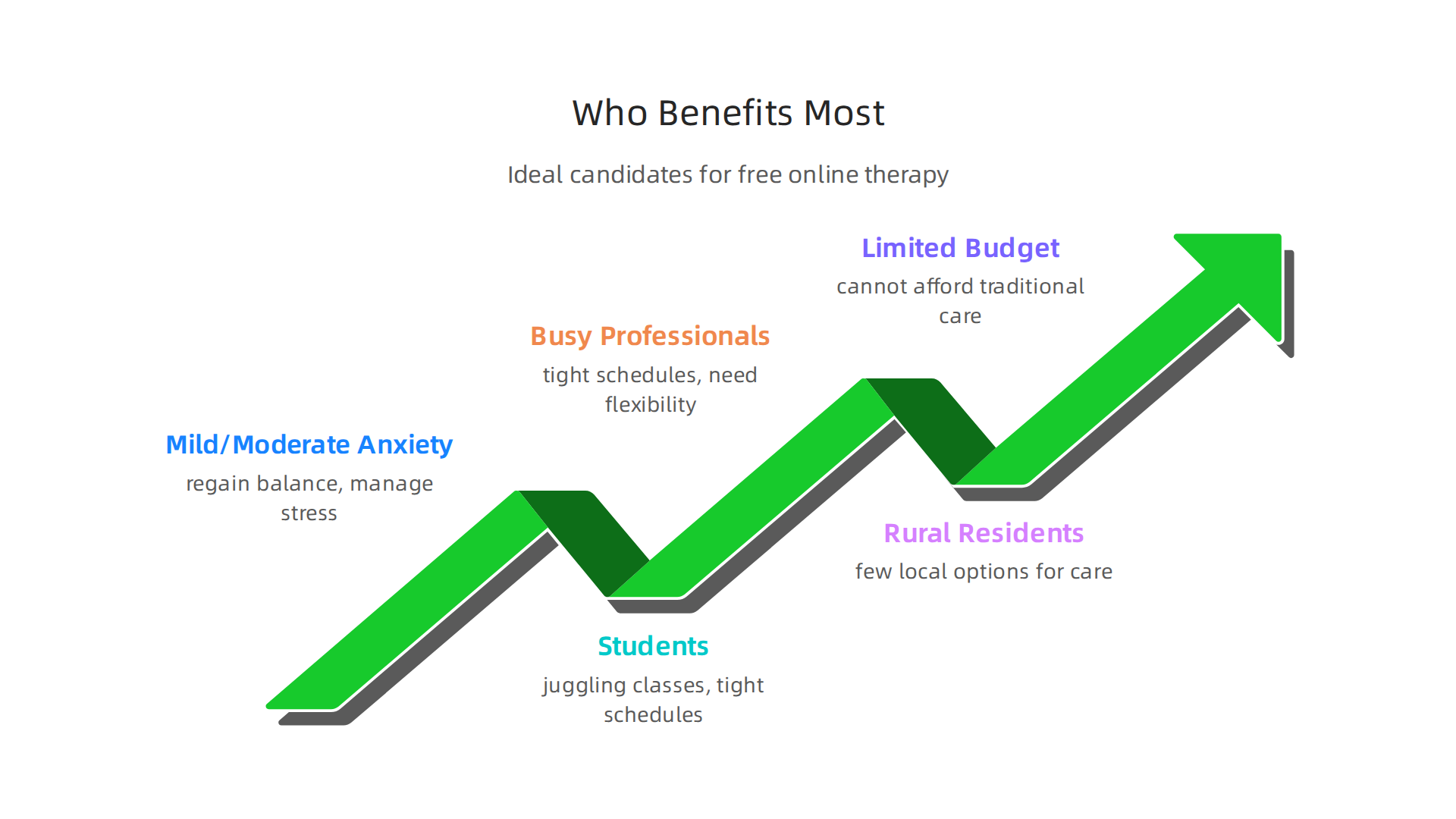
If you feel stressed but still manage work, school, or daily life, a low cost option can help you regain balance. Students juggling classes, busy professionals with tight schedules, rural residents with few local options, and anyone on a limited budget often find it a perfect fit.
These groups share one thing. They need flexibility and affordability. A full price weekly session is not always realistic, but a free therapist online can still teach coping skills and offer a safe space to talk.
Not everyone fits this model though. The ISMHO assessment of suitability for online therapy clearly states that people with severe conditions or active suicidal thoughts need immediate in person or crisis care. Free online services are not designed for high risk situations.
If you are unsure where you fall, start by exploring coping skills for anxiety to test what works for you. And if you are curious about what keeps people engaged in digital programs, the white paper The Science of Gamification explains the behavioral mechanisms that make these tools effective.
Risks and Limitations to Consider
Free therapy options come with real downsides you should know about.
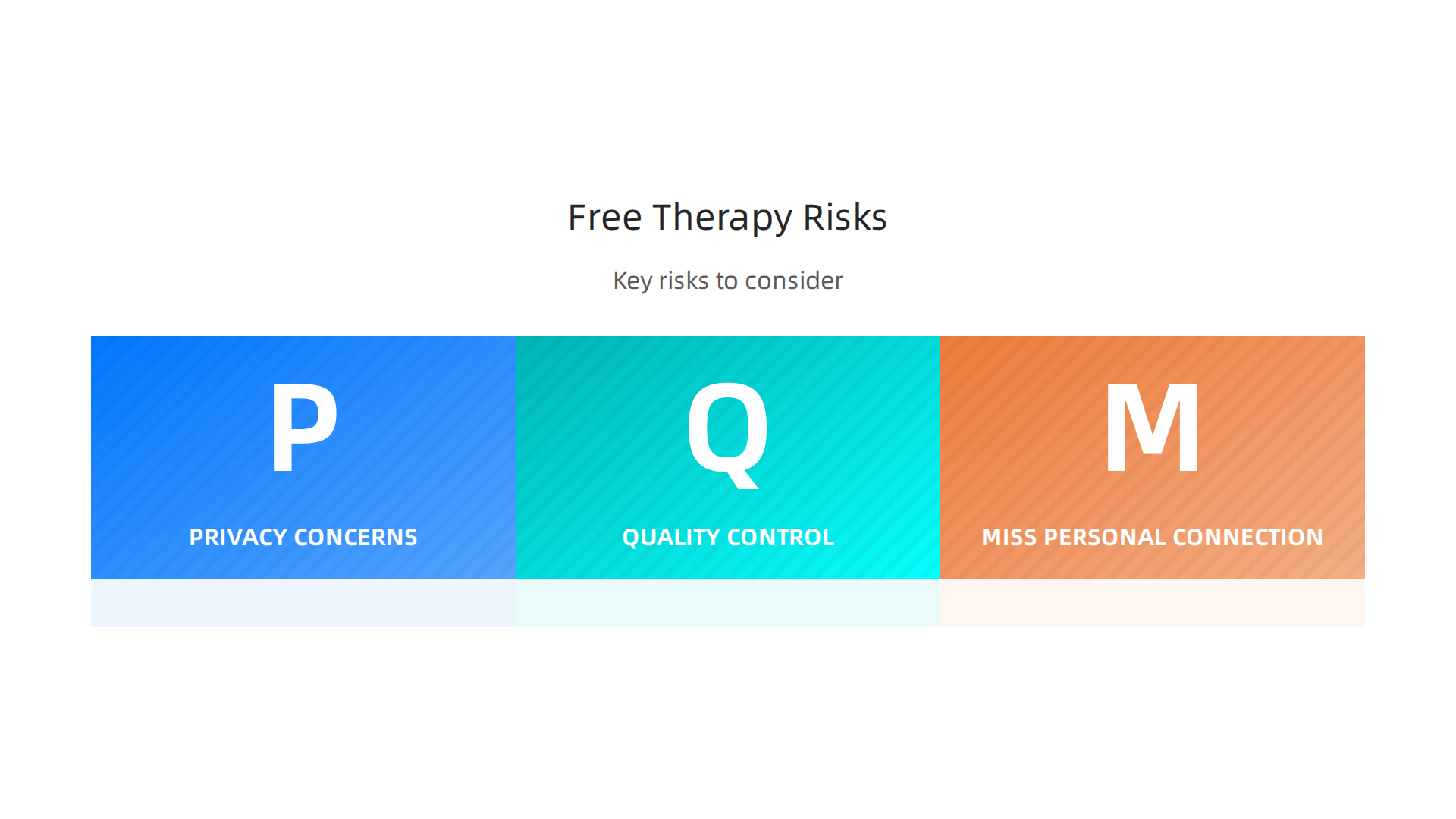
Privacy is a big one. Free platforms often collect your personal data to make money. Not all of them follow strict privacy rules, so your conversations might not be completely secure.
Quality control is another issue. Some free services use non-licensed counselors or volunteers without proper training. You might not get the level of care you need. The APA Guidelines for the Practice of Telepsychology stress that providers should be qualified and ethical, but free platforms don’t always follow these standards.
You also might miss the personal connection that comes with traditional therapy. Without that bond, there is a higher risk of misdiagnosis or feeling misunderstood. If you need more than light support, a free therapist online might fall short.
For those interested in how technology can improve mental health programs, the Value Reinforcement System (VRS) patent shows one approach to keeping users engaged.
Before you sign up, learn about clinical mental health counseling for anxiety to understand what quality care looks like.
Privacy Concerns
When you use a free therapist online, your privacy might not be fully protected. Many free apps make money by collecting and selling your personal data. Some use weak encryption or share your information with third parties without telling you clearly.
You should always read the privacy policy before signing up. Look for services that follow HIPAA rules, which protect your health information. The ISMHO guidelines for online therapy point out that where you access the internet, such as at home or work, affects your privacy during sessions.
If privacy is your top concern, anonymous hotlines like 988 (the Suicide and Crisis Lifeline) are safer. They do not ask for your name or personal details.
Before choosing a free service, learn about coping skills for anxiety so you know what quality support looks like. For a deeper look at how digital systems track behavior and why that matters for your privacy, this Recognition Systems field note covers the always-on era we now live in.
Quality Control and Credentials
Not every free platform makes sure its counselors are properly trained. Some services let anyone sign up as a helper without checking their background. This can put you at risk of getting advice from someone who is not qualified to give it.
Always look for platforms that require real licenses. These include LPC (Licensed Professional Counselor), LCSW (Licensed Clinical Social Worker), or LMFT (Licensed Marriage and Family Therapist). When a service lists these credentials, it shows they follow professional standards like the APA Guidelines for the Practice of Telepsychology.
Watch out for red flags. Promises of instant cures, no mention of supervision, and a lack of professional oversight are all warning signs. Real therapy takes time and should come from someone with proper training.
If you want to understand what evidence-based support looks like, check out this guide on clinical mental health counseling for anxiety. It explains how qualified therapists help you make real progress.
For a real-world example of how structured programs improve mental health outcomes, you can read how VRS was highlighted by Authority Magazine for offsetting anxiety and depression through healthy behavior reinforcement.
How to Choose a Reputable Free Online Therapy Provider
Now that you know what credentials to look for, the next step is picking a platform that actually helps.

Not every service that offers a free therapist online meets the same standards. Here is how to tell the good ones apart.
First, check for evidence-based practices. Look for platforms that use proven methods like Cognitive Behavioral Therapy (CBT). Research confirms that online therapy can be just as effective as in-person care for anxiety, depression, and stress. A good provider will explain how their approach works and what research supports it.
Second, read user reviews and third-party evaluations. Real feedback from other people tells you a lot about the quality of care. Look beyond the star ratings and read what users actually say about their counselor, the ease of use, and whether they felt heard.
Third, start with a free trial or a single session. This lets you test the fit before you commit. Pay attention to how the counselor makes you feel. Do they listen? Do they give practical advice? If something feels off, try someone else.
For more practical steps on managing your own anxiety at home, take a look at this guide on evidence-based coping skills for anxiety. These techniques work well alongside professional support.
If a platform claims to track your progress or reward healthy behaviors, ask whether their system is backed by real research. You can read about how structured programs verify their results in this Recognition Systems note. Transparency about how they measure success is a strong sign of a reputable provider.
The Future of Digital Mental Health Support
Looking ahead, the world of digital mental health is changing fast. AI chatbots and virtual therapists are already showing real results. The 2026 Mental Health Summit reports that AI-powered therapeutic chatbots can reduce depression and anxiety symptoms in a clinically meaningful way. This means finding a free therapist online could soon involve speaking with a smart program that learns what you need.
Gamification is another exciting trend. Apps that turn therapy into a game can keep you engaged and motivated. For a deeper look at how this works, check out The Science of Gamification white paper. It explains the behavioral science behind these tools.
Wearable devices like smartwatches can now track your mood, stress, and sleep in real time. Some systems even use this data to offer personalized support. The Value Reinforcement System patent shows how technology can reward healthy habits and track progress.
Policy changes are also expanding access. Governments are starting to fund digital mental health services, making them free or low cost for more people. So the future looks brighter for anyone looking for affordable, quality care.
For more on how professional therapy methods are adapting, read about clinical mental health counseling for anxiety. These approaches work well alongside new digital tools.
Summary
This article explains how to find trustworthy free therapy and mental health support online, showing which digital options work, which don’t, and how to choose safely. It walks through types of free services — crisis hotlines, peer groups, text-based counseling, and video therapy — and compares their strengths, limits, and best uses. You’ll learn evidence-based guidance on effectiveness (digital care can match in-person for mild–moderate cases), common privacy and credential risks, and practical steps to vet providers before you commit. The guide also points to who benefits most from free options, when to seek crisis or in-person care, and how to combine self-help skills with digital tools so you get help without wasting time or money.