

Introduction
Do you ever feel unsure about what mental health terms really mean? You are not alone. Many people feel anxiety when trying to understand complex conditions like narcissistic personality disorder.

The truth is, this condition is often misunderstood. You might hear the word "narcissist" thrown around casually, but the actual diagnosis is much more specific.
Narcissistic personality disorder, or NPD, is a real mental health condition. According to the latest diagnostic criteria from experts, it involves a long-term pattern of grandiosity, a deep need for admiration, and a lack of empathy for others.

These narcissistic personality disorder symptoms start showing up by early adulthood and affect how a person thinks, feels, and relates to everyone around them.
Here is the good news. This article will give you clear, evidence-based information about what these symptoms really look like. We will cover the official diagnostic signs, how they show up in daily life, and what you can do if you recognize them in someone you care about. Understanding the basics helps you separate myth from fact.
And if you are also trying to tell the difference between anxiety and other mental health challenges, check out our guide on how to recognize the symptoms of anxiety and tell them apart from other disorders. It is a helpful next step for building your mental health knowledge.
Let us start by looking at the main signs of this condition, one by one.
What is Narcissistic Personality Disorder?
Before we dive into the specific signs, we need to get clear on what narcissistic personality disorder actually is. This is not just someone who acts a little full of themselves now and then. It is a real mental health condition that follows a predictable pattern.
Narcissistic personality disorder is a diagnosed mental illness. According to the Cleveland Clinic, it involves a long-term pattern of grandiosity, a deep need for admiration, and a lack of empathy for others. These patterns start showing up by early adulthood and stick around throughout life.
NPD belongs to a group called Cluster B personality disorders. This cluster includes antisocial, borderline, and histrionic personality disorders. These conditions share dramatic, emotional, or unpredictable behaviors. That is why NPD can sometimes be confused with other challenges in mental health.
So what does the official diagnosis look like? Mental health professionals use the DSM-5 criteria to diagnose NPD. The StatPearls resource explains that a person must show a consistent pattern of grandiosity, either in how they act or in their fantasies. They often exaggerate their achievements and talents. They expect to be seen as special without putting in the work.
The most important characteristics, according to the Theravive guide, are grandiosity, a constant need for admiration, and a clear lack of empathy.
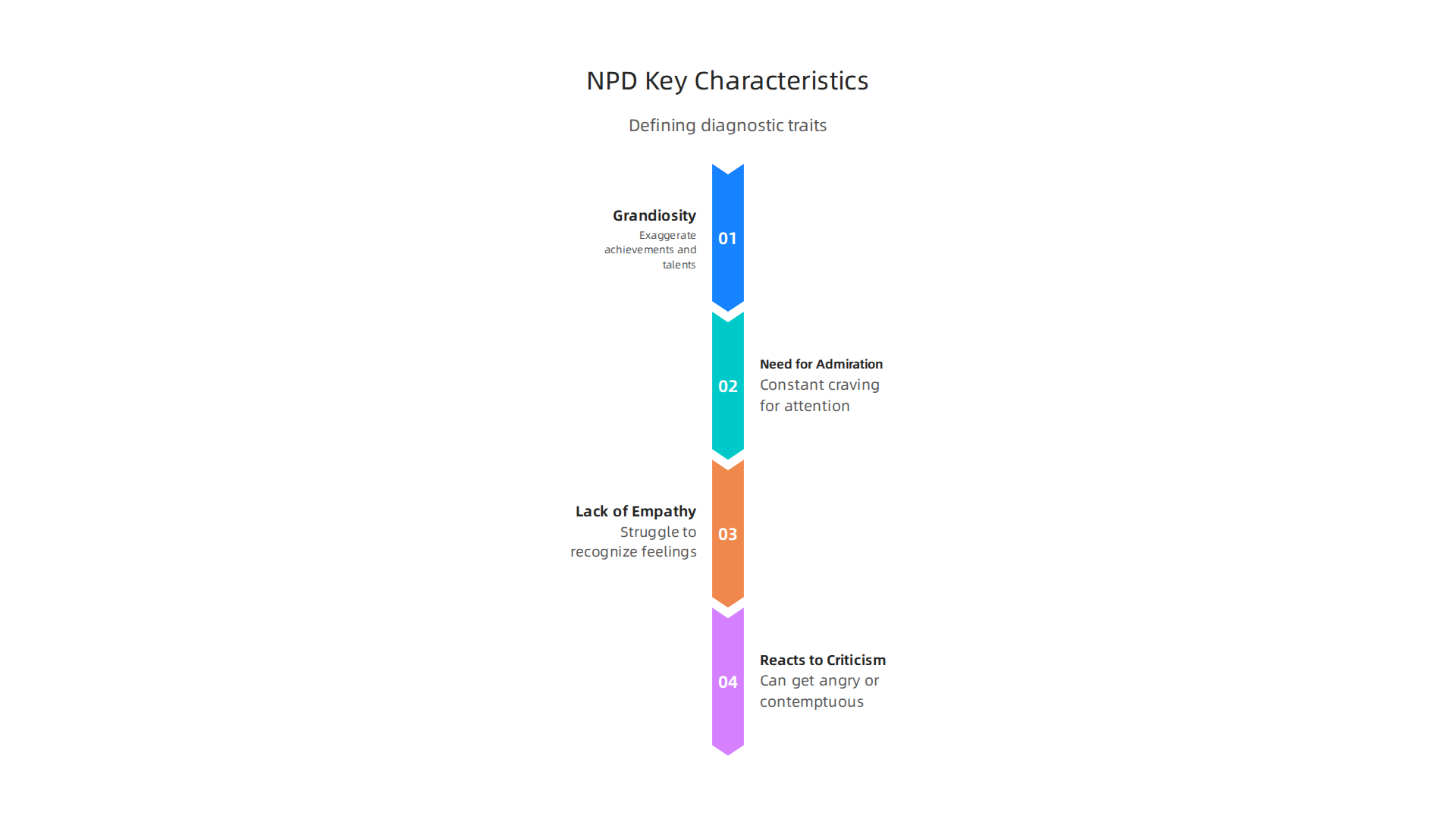
The American Psychiatric Association adds that people with NPD often react badly to criticism.

They can get angry or treat others with contempt.
Many people with NPD also struggle to handle disagreements. They keep relationships very shallow. And the condition often shows up alongside other mental health problems.
Understanding what NPD really is helps you spot the difference between someone who has healthy confidence and someone who is living with a disorder. If you want to build your knowledge about other conditions, take a look at our guide on how to recognize the symptoms of anxiety and tell them apart from other disorders. It is a great next step for anyone learning about mental health.
Now let us look at the biggest sign of NPD. Grandiosity is the core trait, and it affects everything a person with NPD does.
Recognizing the Core Symptoms of NPD
If you think NPD is just about being extremely confident, you are missing the bigger picture. The symptoms run much deeper. They affect how a person thinks, feels, and treats everyone around them.
The biggest sign is grandiosity. This is not healthy self-esteem. It is an inflated sense of self-importance that does not match reality.

According to the Mayo Clinic, people with NPD have an unreasonably high sense of importance.

They exaggerate their achievements and expect to be recognized as superior even without real success.
Next comes the constant need for admiration. The Cleveland Clinic points out that they crave excessive attention and praise. They depend on others to feed their ego. If they do not get that admiration, they can react badly.
Another core symptom is a clear lack of empathy. The HelpGuide explains that they struggle to recognize or care about the feelings of others. This makes relationships very one-sided. They take what they need without giving back.
These symptoms cause serious problems. They affect work, friendships, and family life. According to Duke Health, other signs include a sense of entitlement and a preoccupation with power, beauty, or success.
It is also important to know that NPD has two types. The first is grandiose narcissism. These people are openly arrogant and attention-seeking. The second is vulnerable narcissism. Harvard Health notes that they can be shy, sensitive to criticism, and have fragile self-esteem. Both types need admiration and lack empathy, but they show it in different ways.
Recognizing these signs is the first step to understanding NPD and the challenges in mental health it creates. If you want to learn about related conditions, consider our guide on how to recognize the symptoms of anxiety. It is a helpful resource for building your knowledge.
The Spectrum of Narcissism: From Healthy to Pathological
So where is the line between healthy self-confidence and a real disorder? Many people wonder if having a big ego means they have narcissistic personality disorder symptoms. The truth is that narcissism exists on a spectrum.
What Healthy Narcissism Looks Like
Healthy narcissism is a good thing. It is the self-esteem that helps you believe in yourself. It allows you to set goals, take pride in your achievements, and protect your own needs. This kind of confidence is normal. It helps you succeed in work and relationships. You can still care about others and admit when you are wrong.
When It Shifts to Pathological Narcissism
Pathological narcissism is different. It is not just about feeling good about yourself. It becomes a rigid, all-encompassing pattern that damages your life. According to the Charlie Health overview, NPD involves a pervasive pattern of grandiosity, a need for admiration, and a lack of empathy. This pattern starts in early adulthood and shows up in many areas of life.
The key word is “pervasive.” Someone with pathological narcissism treats everyone the same way. They bring their grandiosity to work, home, and friendships. The Sheppard Pratt resource notes that they react to criticism with rage and show a lack of sympathy. These behaviors are not occasional. They are a constant part of who the person is.
Why the Continuum Matters
Understanding this spectrum helps you see that not every self-centered person has NPD. Healthy narcissism is flexible. A person can be confident in one area and humble in another. Pathological narcissism is stuck. It does not change based on the situation. It also brings serious challenges in mental health, including trouble holding a job and broken relationships.
In extreme cases, the distorted self-view can become so severe that it starts to resemble psychosis symptoms, though this is rare. More often, the person with NPD simply cannot see how their behavior affects others. This is where family therapy can be a lifeline. Loved ones need support to set boundaries and protect their own well-being.
Recognizing the continuum is the first step. If you want to explore related conditions that involve distorted thinking, you might find our guide on schizophrenia symptoms, diagnosis, and treatment helpful for building a broader understanding.
Causes and Risk Factors for NPD
Now that you understand the spectrum, let’s look at what causes NPD. Researchers believe it is not one single thing. Instead, it comes from a mix of genetics, childhood experiences, and brain differences.
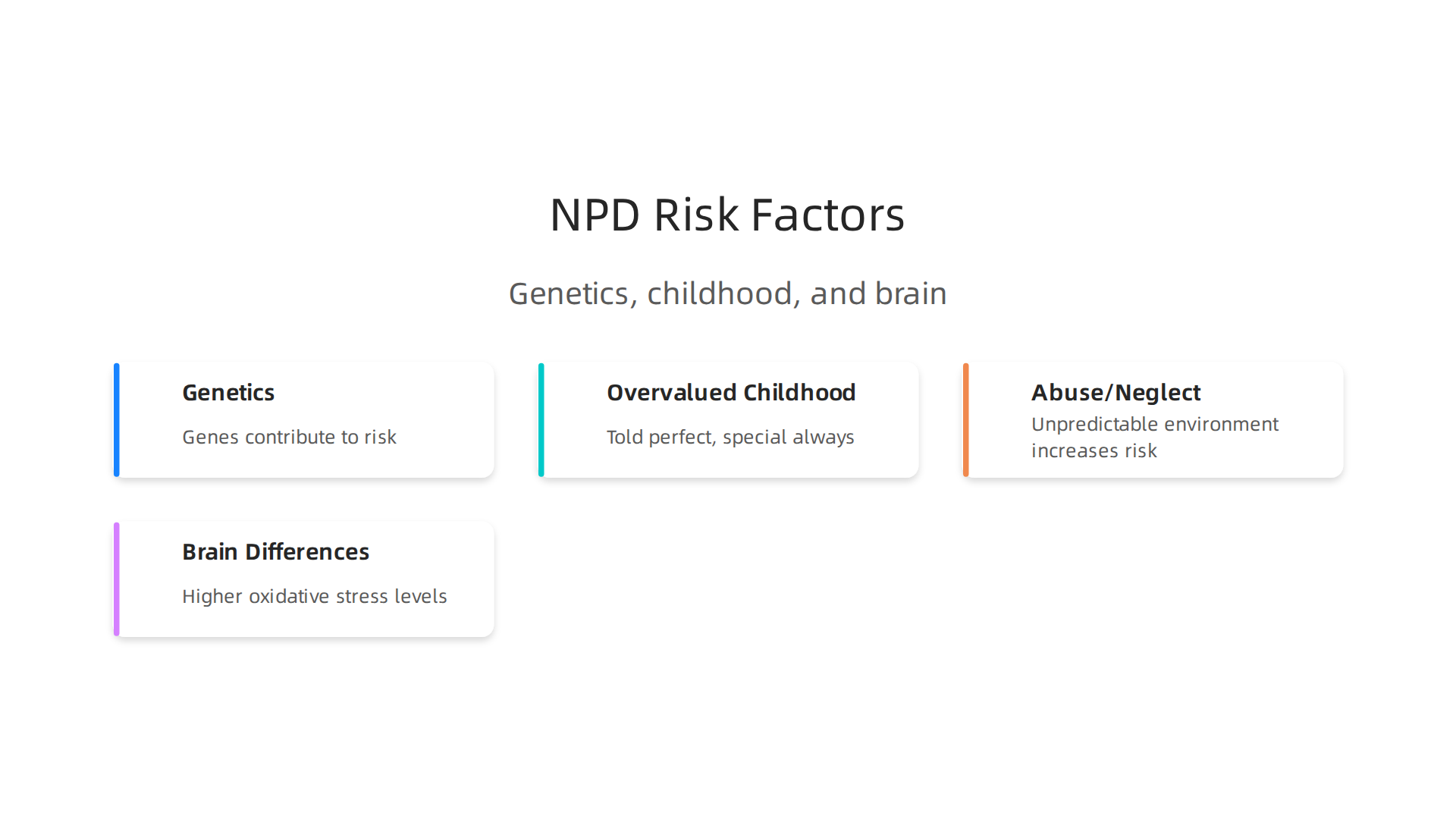
The National Institutes of Health study notes that NPD involves a complex interplay of all these factors.
Genetics Play a Role
Yes, your genes can make you more likely to develop NPD. According to Charlie Health, if someone in your family has NPD, you might wonder if you are at risk. Research shows that genetics do contribute, but they are not the whole story. The American Psychological Association also confirms that genetics help shape personality disorders.
Your Childhood Environment Matters
How you grew up can have a huge impact. Two common paths stand out.
First, some children are overvalued. They are told they are perfect and special all the time. This can lead to an inflated sense of self that never learns humility. Second, some children face abuse, neglect, or instability. According to the PNSOC article, growing up in an unpredictable environment can increase the risk of narcissistic traits. Another report from Mission Connection Healthcare adds that having a narcissistic parent or sibling can shape your behavior by example. Children learn what they see.
These early experiences can create deep insecurity. That insecurity often turns into the grand exterior you see in someone with NPD. It is a way to protect a fragile self. If you grew up in an environment that left you struggling with self-doubt, you might find help in anger management therapy for insecurity and self-doubt. It can teach you healthier ways to cope.
Brain and Body Differences
There may also be a biological side. A study from UChicago Medicine found that people with NPD have higher levels of oxidative stress in their blood. This suggests their bodies are under physical strain. The same study linked NPD to interpersonal hypersensitivity, meaning their brains react strongly to social slights.
Why Understanding Causes Matters
When you know the causes, you can spot patterns earlier. It also helps reduce blame. NPD is not just a choice or bad attitude. It comes from real risk factors. But here is the hopeful part: understanding these causes can guide treatment. For families, seeking family therapy can break harmful cycles. And knowing the roots can help you recognize narcissistic personality disorder symptoms in yourself or someone you care about.
All of these factors together create serious challenges in mental health. The earlier you understand them, the sooner you can take action.
How NPD Differs from Other Conditions
You now know the causes of NPD. But here’s where it gets tricky. NPD shares a lot of surface features with other personality disorders. If you are trying to spot narcissistic personality disorder symptoms, you need to know what makes NPD unique. The two most common conditions people confuse with NPD are borderline personality disorder (BPD) and antisocial personality disorder (ASPD).
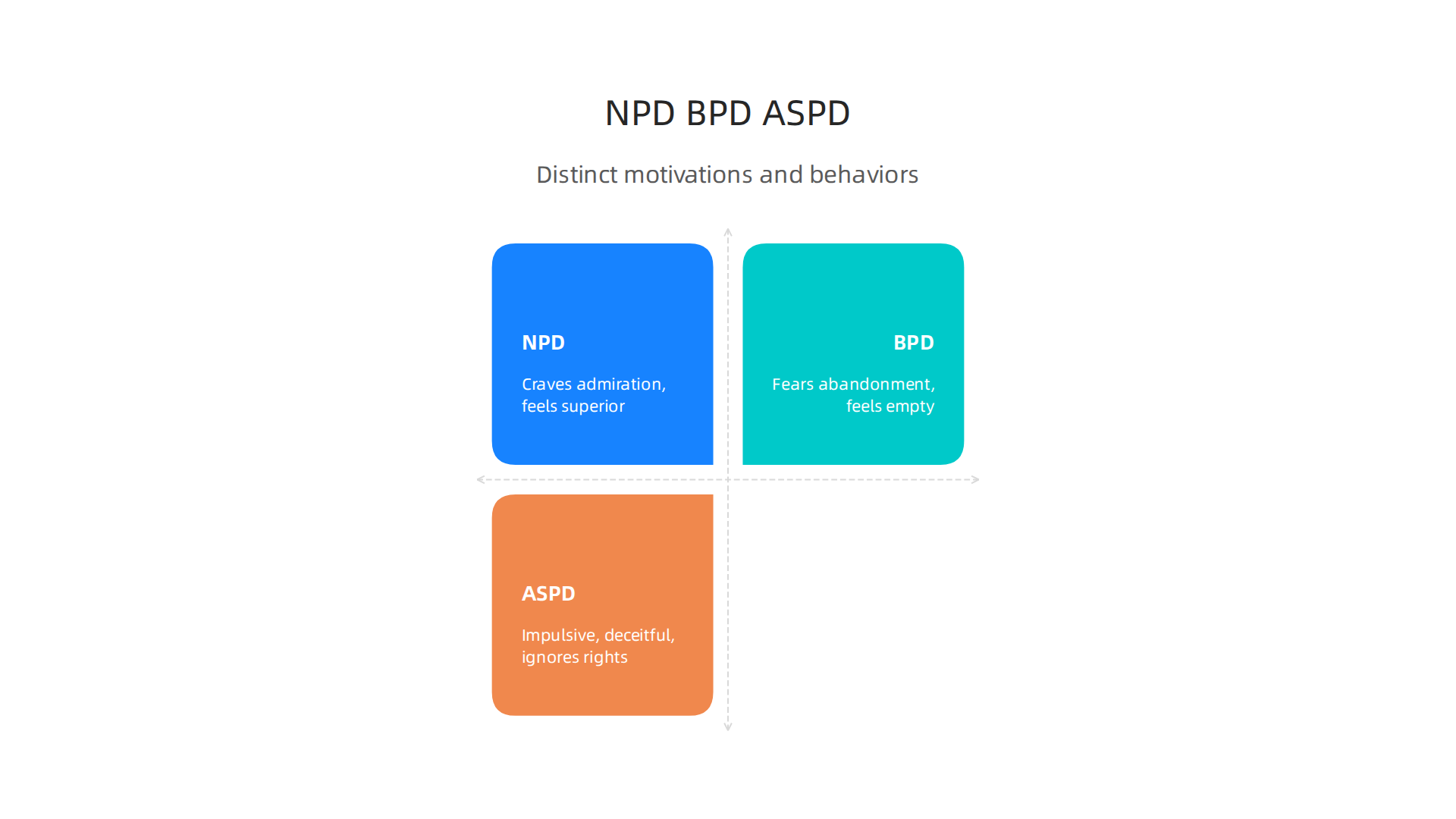
Let’s start with BPD. Both NPD and BPD involve unstable relationships. But the reason is different. Someone with NPD craves admiration and sees others as tools for that. Someone with BPD fears being abandoned and often feels empty inside. People with BPD show intense emotions and may split people into "all good" or "all bad." People with NPD tend to have a stable but inflated self-image and lack empathy. Their emotional outbursts usually happen when their ego is threatened.
Now look at ASPD. Both NPD and ASPD involve a lack of empathy. However, the motivation is not the same. A person with ASPD is impulsive, deceitful, and ignores the rights of others. They often break rules and laws without guilt. A person with NPD is focused on being seen as superior. They may exploit others, but it is to get admiration, not just for thrill or gain. ASPD is also linked to childhood conduct disorder. NPD is not.
Getting the diagnosis right matters. Treatment for BPD often focuses on emotional regulation. Treatment for ASPD is very different. A doctor must do a careful assessment to avoid mixing them up. If you are unsure about what you are seeing, you can learn to recognize symptoms and tell them apart from other mental health conditions. The earlier you identify the right condition, the sooner you can get the right help.
Challenges in mental health like these make accurate diagnosis a critical step. Without it, people may receive help that does not match their real struggles.
The Impact of NPD on Relationships and Daily Life
So you know what makes NPD different from other conditions. Now let’s talk about how it actually feels to be around it. Narcissistic personality disorder symptoms are not quiet. They affect every relationship a person has. And if you are close to someone with NPD, it can take a real toll on your own mental health.
Let’s start with partners and family. This is where the lack of empathy hurts the most. You might feel like you are always giving in but never getting back.

Your feelings often get brushed aside. Over time, you might feel lonely and start to doubt yourself. A 2025 study shows that parental NPD can have a strong effect on how a child grows up emotionally PMC. In some families, the behavior of a parent with NPD pushes children away, leading to estrangement Psychology Today.

Now think about work. Someone with NPD may have a hard time working as part of a team. They might take credit for your ideas or put you down to look better. They can react very badly to any criticism. This makes the workday stressful and full of conflict. You can see how these patterns show up in real life Medical News Today.
The hard truth is that being close to someone with NPD can cause real emotional distress. You might feel like you are walking on eggshells. You may feel anxious, sad, or drained all the time. These are serious challenges in mental health that you do not have to face alone. If this sounds familiar, it is important to take care of your own mind. Building up your coping skills is a good place to start. You can explore some practical coping skills for anxiety evidence based techniques to manage panic and worry here.
Recognizing the impact on your daily life is the first step to protecting your peace. You do not have to stay stuck in these patterns.
Myths and Misconceptions about NPD
The word "narcissist" gets thrown around a lot these days. You see it in headlines, on social media, and even in casual conversations. But here is the thing: most of what people think about NPD is wrong. Let’s clear up a few of the biggest narcissistic personality disorder symptoms myths so you can separate fact from fiction.
Myth: All narcissists are aggressive.
Many people picture someone who is loud, angry, and always putting others down. That is one type, but it is not the full picture. Some people with NPD are quiet, shy, or seem very sensitive. They still have the same deep need for admiration and lack of empathy. The behavior just looks different on the outside. You can see real-world examples of this kind of behavior in relationships, family, and work settings Medical News Today.
Misconception: NPD is the same as being self-centered.
We all have moments of selfishness. That is human. But NPD is not just being stuck on yourself. It is a serious mental health condition. A formal diagnosis requires specific patterns that cause real problems in life Texas Psychiatry Group. Being self-centered is a behavior. NPD is a disorder that affects how a person thinks, feels, and relates to everyone around them.
Fact: NPD is a formal diagnosis with specific criteria.
Yes, NPD is listed in the DSM-5, just like depression or anxiety. It is not a label you throw around. Mental health professionals use strict guidelines to diagnose it. This is important because mixing up NPD with everyday selfishness can lead to confusion and hurt. If you want to get better at telling different mental health conditions apart, learning the signs of each one is a great start. You can explore how to tell symptoms of anxiety apart from other disorders here.
Getting the facts straight about NPD helps you understand the real picture. It also helps you protect your own mental health when you know what you are dealing with.
Diagnosis, Treatment Options, and Hope
Now that we have the myths out of the way, let’s talk about what actually happens when someone gets a diagnosis. You might be wondering how professionals tell the difference between someone who is just difficult and someone with NPD.
Diagnosis is not something you do with a checklist from the internet. It requires a trained mental health professional. They use the criteria from the DSM-5, the official manual for mental health conditions. The doctor will do a thorough interview and sometimes talk to family members. This is important because narcissistic personality disorder symptoms can look like other conditions. In fact, NPD is sometimes confused with other challenges in mental health, like bipolar disorder or even psychosis symptoms, so a careful evaluation is key.
The National Institutes of Health describes NPD as a complex condition with a pattern of grandiosity and need for admiration StatPearls. That is the core of what professionals look for.
So what about treatment? The main treatment is psychotherapy, also called talk therapy Mayo Clinic.

That might sound simple, but it is not easy. People with NPD often do not think anything is wrong with them. That lack of insight makes them unlikely to seek help. And even when they do, they may try to control the therapy session Society for Psychotherapy.
Still, there is hope. Some forms of therapy work better than others, especially when the person sticks with it Healthline. Therapy can help manage symptoms and improve daily life Counseling Center Group. Family therapy can also be helpful because it supports the people who are closest to the person with NPD.
If you are dealing with a loved one who has NPD symptoms, taking care of your own mental health matters too. Learning to set boundaries and cope is a big step. You might find our guide on coping skills for anxiety helpful, since living with someone with NPD can cause a lot of stress.
Recovery is not a straight line, but change is possible. The first step is understanding what you are dealing with.
Summary
This article explains what narcissistic personality disorder (NPD) really is, how it shows up, and why it matters for families, partners, and workplaces. It defines the core features—long-term grandiosity, a strong need for admiration, and lack of empathy—then breaks down how those traits differ from normal self-confidence and from similar conditions like borderline or antisocial personality disorders. You’ll read about genetic, childhood, and biological risk factors, plus the two common presentations: grandiose and vulnerable narcissism. The piece also covers real-world impacts on relationships and daily life, clears up common myths, and describes how clinicians diagnose NPD using DSM-5 criteria. Finally, it outlines treatment options—mainly psychotherapy—what makes therapy challenging, and practical steps loved ones can take to set boundaries and protect their mental health. After reading, you’ll be better able to spot NPD signs, understand causes, and take informed next steps for help or self-care.