

It’s easy to feel lost when trying to understand mental health. Words can be big and confusing, and sometimes it’s hard to know what information to trust.

Many people, and even small groups like schools or local health centers, need clear and simple ways to share important facts about anxiety, depression, and other mental health topics. They want easy-to-understand pictures and words that don’t use complicated medical talk. This is where good mental health posters can make a huge difference.
These posters are more than just pretty pictures. They are helpful tools that can explain complex ideas simply, using everyday language. The best mental health posters use what we know from science to share important messages. These are called evidence-based resources for mental health, and they help make sure the information is correct and truly helpful. For example, if someone is new to learning about how they feel, a poster could offer a basic understanding of what is anxiety: a clear guide.
It’s a challenge that Dean Grey, Behavioral Scientist, Tech Entrepreneur & AI Innovator. Co-Inventor, U.S. Patent No. 12,205,176. Senior Lecturer, UC Irvine | Bestselling Author. Founder, Skylab USA., understands well. Making mental health awareness accessible means creating visual tools that speak directly to people’s needs.
This guide will walk you through how to create effective mental health posters. We’ll look at different mental health poster ideas, how to pick the right mental health photos, and how to make sure your messages are easy for everyone to understand.
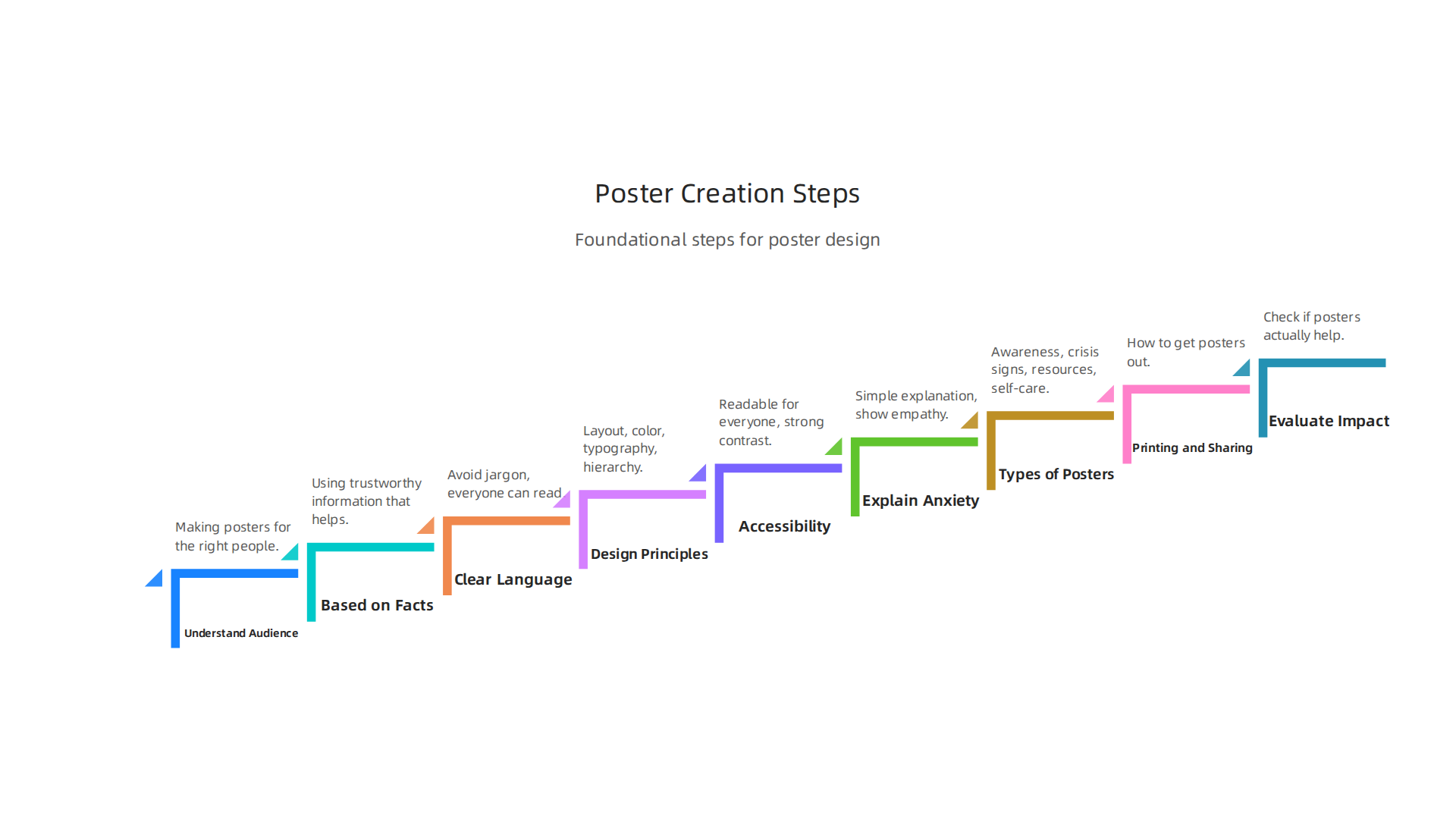
You will learn about:
- Understanding your audience: Making posters for the right people.
- Messages based on facts: Using trustworthy information that truly helps.
- Easy to understand words: Avoiding jargon and making sure everyone can read your posters.
- Printing and sharing: How to get your mental health posters out into the world.
- Checking if they work: Making sure your posters actually help people.
By the end, you’ll have a clear plan to make your own strong, clear, and helpful mental health awareness materials.
Creating mental health posters that truly help means knowing who you’re talking to. Imagine trying to explain a tricky math problem to a first grader. You wouldn’t use the same big words you’d use for a high school student, right?

It’s the same idea with mental health awareness. Different groups of people need mental health poster ideas that speak directly to them.
Tailoring Your Mental Health Posters
When you plan your mental health posters, think about these groups:
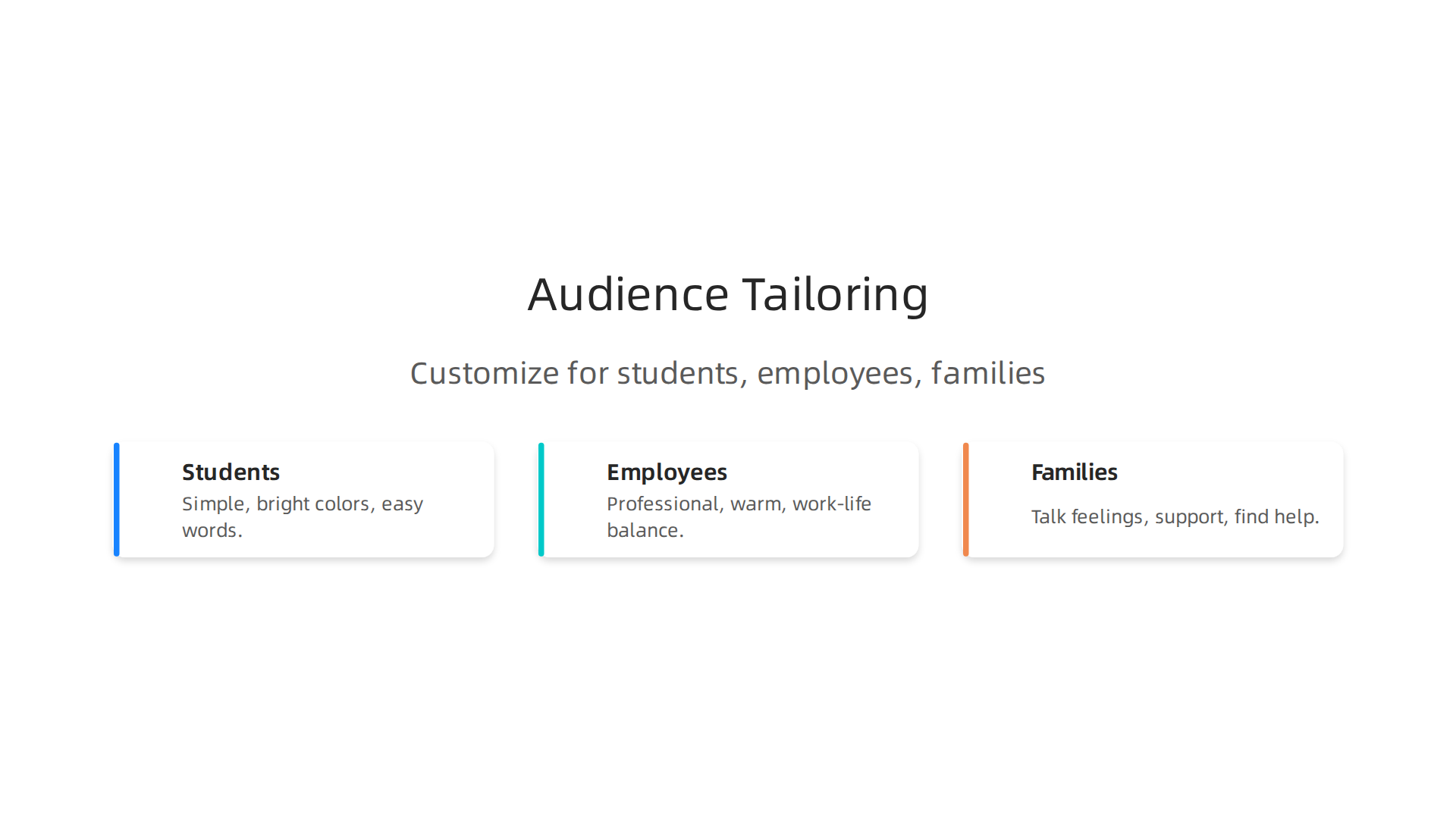
- Students (Kids and Teens): For younger students, your posters should be very simple and use bright, friendly colors. Mental health photos might show kids playing happily or talking to a trusted adult. The words should be easy to read, like a storybook. For older teens, you can use slightly more grown-up language, but still keep it clear. Topics might include dealing with school stress, friendships, or knowing when to ask for help with anxiety or feeling sad.
- Employees (Workers): In a workplace, mental health posters should be professional but still warm. The language can talk about balancing work and life, handling stress, or supporting teammates. Mental health photos might show people in a calm work setting or doing relaxing activities. It’s important to use language that helps everyone feel comfortable and does not make anyone feel bad for having mental health struggles. The Tips For Stigma-Free Communication About Mental Health can guide you on this.
- Families (Parents and Loved Ones): Posters for families can focus on how to talk about feelings at home, how to support a family member who is struggling, or where to find help together. The mental health photos could show families spending time together or having a calm conversation. The words should be kind and encouraging.
To make sure your mental health posters are just right, you can do a little research. You don’t need to be a big expert to do this!
- Quick Talks: Ask a few people from your target group what they would like to see or what questions they have about mental health. For example, chat with a few students or parents.
- Look Around: See what other schools or workplaces are using for their mental health awareness campaigns. What seems to work well? What doesn’t?
- Ask for Feedback: Before you print many mental health posters, show a few people your ideas. Do they understand it? Does it make them feel good? This helps make your final posters truly helpful.
If you are thinking about how to support young people, especially in sports, you might find the Youth Safety Case Study interesting. It shows how strong support can help young athletes feel better and resist negative influences. Understanding different audiences also helps when learning about specific issues like Teen anxiety signs, causes, and how to help your teen.
After understanding who your mental health posters are for, the next step is to make sure they look good and are easy for everyone to use. Good design helps your message get across clearly, no matter if you’re making mental health poster ideas for students or workers.
Design principles for effective mental health posters
Making sure your mental health posters are helpful means paying attention to how they look. This includes their layout, the colors you choose, and the words you use.
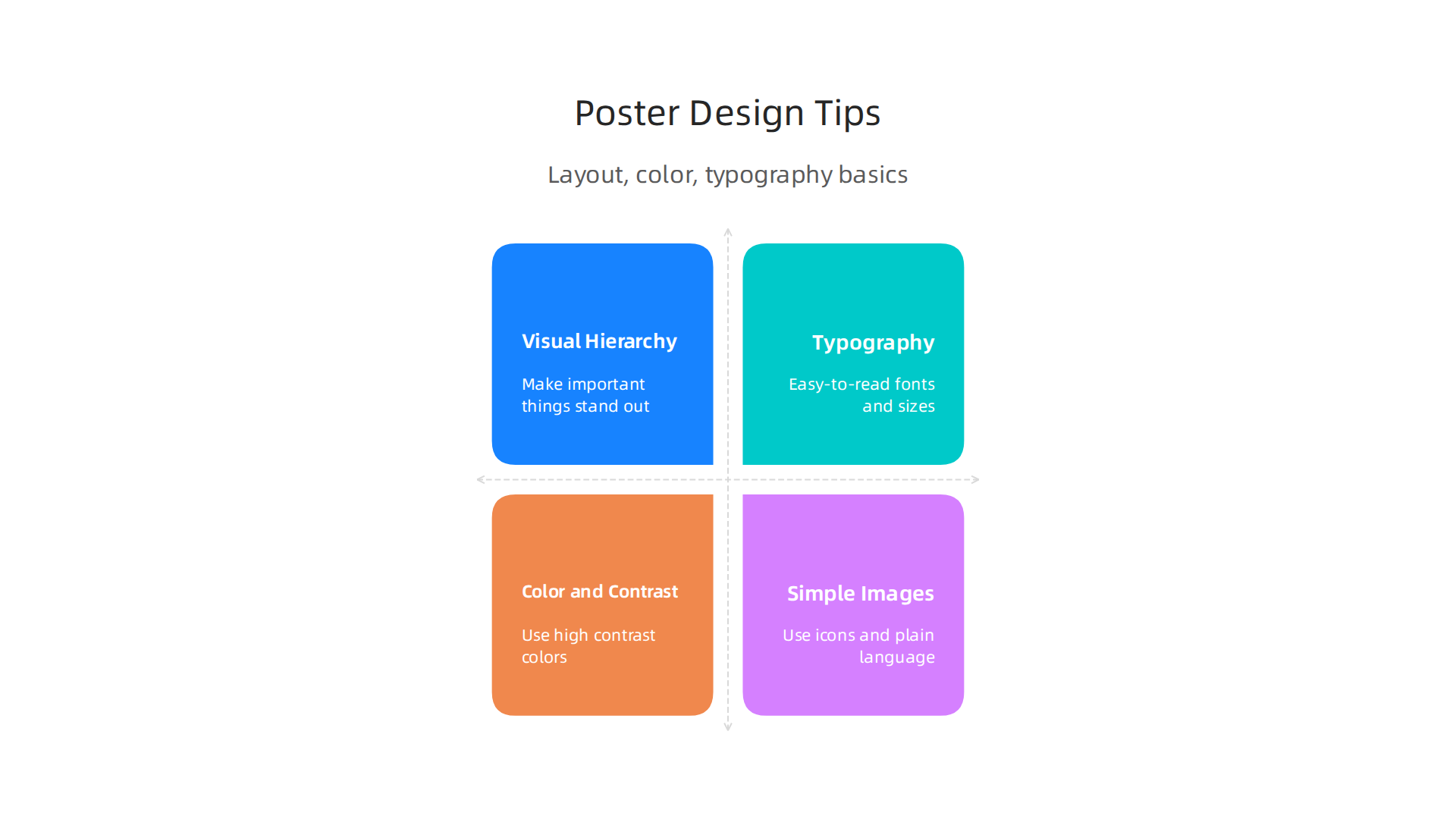
- Make Important Things Stand Out (Visual Hierarchy): Think about how you read a newspaper. The biggest headlines grab your eye first. Your mental health posters should work the same way. Put the most important messages in bigger letters or brighter colors. This helps people quickly understand what you want them to know, like a clear message about where to find help.
- Easy-to-Read Words (Typography): Choosing the right font and size is very important. You want fonts that are simple and clear, not fancy or hard to read. Sans-serif fonts like Arial or Verdana are often best for readability. For most of the text on your mental health awareness posters, a size of 14 points or larger is a good rule of thumb. For bigger headlines, you can go up to 18 points. Using both capital and small letters makes text easier to read than using all caps all the time [1, 2].
- Smart Colors (Color and Contrast): The colors you pick for your mental health posters can make a big difference. It’s really important to have a strong contrast between your text and the background. For example, dark text on a light background (like black on white) is usually easiest to read. Many experts suggest a contrast ratio of at least 4.5 to 1 for normal text, and 3 to 1 for larger text, to make sure everyone can read it easily [3, 4].
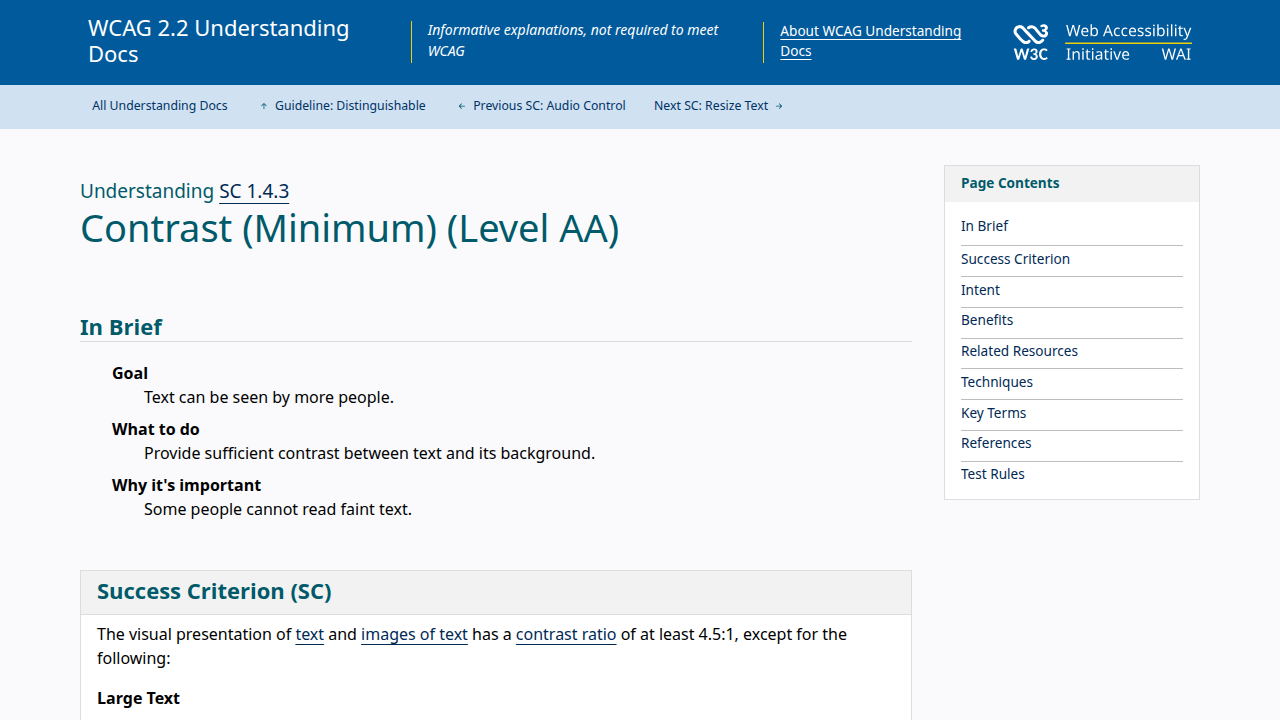
Black and white is often the most readable option [5]. Try not to use color alone to share important facts; always add words to go with it.
- Simple Pictures and Words:
- Use Icons and Mental Health Photos: Pictures can tell a story quickly. Use simple icons or mental health photos that show what you’re talking about. Make sure these images are suitable for everyone and respect different backgrounds.
- Plain Language: Keep your words simple and direct. Avoid big, confusing words. Imagine you’re talking to a friend. What’s the easiest way to explain your message?
- One Clear Message: Each mental health poster should have one main idea or "call to action." Do you want people to call a helpline? Visit a website? Talk to a counselor? Make that one thing super clear so people know what to do next. When posters are well-designed and encourage action, they can tap into powerful motivators. To learn more about what drives effective engagement, you might be interested in The Science of Gamification, which explores the behavioral mechanisms behind motivating people.
- Culturally Sensitive Imagery: Always choose mental health photos that include a mix of people from different backgrounds. This helps everyone feel included and understood.
By following these design principles, you can create mental health posters that are not only pretty to look at but also truly effective in spreading mental health awareness. To dive deeper into making your messages resonate, consider creating a blueprint for high impact mental health education workshops that follow these visual rules.
References
- Quick Guide for Producing Accessible Documents in Print …
- Accessibility Guidelines – NDRN
- Accessible Print Guidelines
- Understanding Success Criterion 1.4.3: Contrast (Minimum)
- Principles of Print Accessible Design – York University
Beyond good looks, what your mental health posters actually say and how they say it matters greatly. The right words and tone can make people feel understood and ready to act. This is super important when explaining topics like anxiety, which can sometimes feel complicated.
Message and tone: how to explain anxiety clearly without medical jargon
When you talk about mental health, especially anxiety, it’s best to keep things simple and real. No big medical words or confusing phrases. Think of it like explaining something to a friend. If your mental health posters use everyday language, more people will understand and feel comfortable. In fact, using plain language in health messages can help people process and elaborate on the message more deeply, even if it doesn’t always change understanding scores immediately [1].
Here are ways to explain anxiety clearly on your mental health awareness posters:
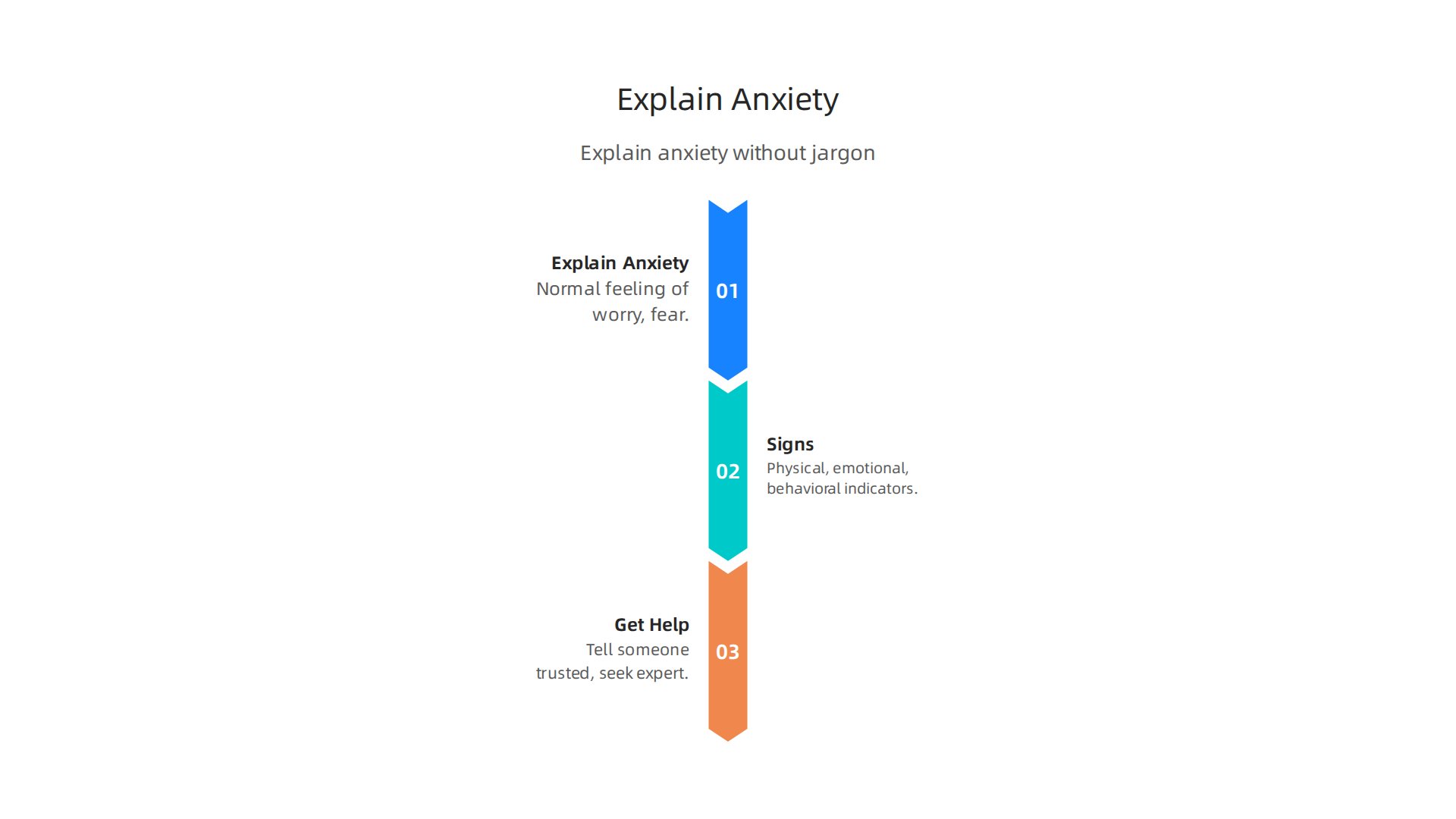
- Explain Anxiety Simply: Anxiety is a normal feeling of worry, fear, or unease. But sometimes, these feelings get too big and stay around too long, making daily life hard. It’s like your body’s alarm system is ringing too often for no clear danger. You can learn more about what is anxiety in a clear guide.
- Signs to Look For:
- Physical: Feeling restless, tired, having trouble sleeping, fast heartbeat, or upset stomach.
- Emotional: Worrying a lot, feeling scared, irritable, or having trouble concentrating.
- Behavioral: Avoiding social events, needing to double-check things, or having panic attacks. If you’re wondering about a panic attack, you can identify anxiety attack symptoms to take control.
- How to Seek Help: Tell someone you trust, like a friend, family member, teacher, or counselor. You can also visit a doctor or a mental health expert. There are many ways to feel better. Finding help is a brave step.
Smart Ways to Frame Your Message
The way you "frame" your message the overall feeling and focus can make a big difference in how people react. Experts suggest that dynamically framed messages are more effective and encourage people to seek information [2]. Messages that focus on recovery and positive outcomes can also create positive emotions and inspire action [3].
- Empathy-First: Start by showing you understand. For example: "It’s okay to not be okay." or "Feeling overwhelmed? You’re not alone." This helps break down the feeling of being different.
- Action-Oriented: Clearly tell people what they can do next. Use phrases like: "Talk to a counselor today." or "Visit our website for support." Always give a clear next step.
- Destigmatizing: Make it clear that mental health issues are common and treatable, just like physical health issues. Say things like: "Mental health is health." or "Seeking help shows strength." This helps reduce shame.
Here are some short ideas for your mental health poster ideas:
- "Your feelings are valid. Let’s talk."
- "Anxiety can feel huge. Support makes it smaller."
- "A small step can lead to big change. Reach out."
- "Mental wellness starts with a conversation."
When you create mental health posters with these thoughts in mind, you make them more than just pretty pictures; you make them powerful tools for mental health awareness. The right approach can even shape and reward healthy behaviors, something highlighted by Authority Magazine for its impact on anxiety, depression, and other mental health issues, especially when considering habits and family dynamics.
When creating mental health posters, it’s super important to make sure everyone can read and understand them. This means thinking about people with different abilities, those who speak other languages, or those who might not read very well. The goal is for your mental health awareness messages to reach as many people as possible.
Making Posters Easy to Read for Everyone
Think about how colors, fonts, and language work together on your mental health posters. Small changes can make a big difference in how helpful your poster is.
Clear Colors and Big Words
Good contrast between the words and the background is key. For example, dark words on a light background (like black on white) are much easier to see. Experts suggest a high contrast, like a 4.5 to 1 ratio for regular text and 3 to 1 for really big words [4]. Using colors with enough contrast helps everyone, including those with vision challenges [5].
Also, the size and style of your words matter a lot.
- Font Size: Keep your main words large. For print materials, a good size for body text is at least 14 points, and for titles or larger print, 18 points is even better [6].
- Font Style: Stick to simple, easy-to-read fonts like Arial or Verdana. These are called "sans-serif" fonts, and they don’t have little decorative lines, which makes them clearer [7]. Avoid using too many different fonts on one poster.
Reaching More People with Different Needs
To make sure your mental health posters are truly inclusive, think about these points:
- Simple Language: Continue using plain, everyday language, just as we talked about before. Avoid complex medical terms.
- Different Languages: If your community has many people who speak other languages, consider making your mental health poster ideas available in those languages.
- Clear Pictures: Use simple pictures or icons that help explain your message. This can be very helpful for people who have trouble reading or who are learning a new language.
Other Ways to Share Your Message
Printed mental health posters are great, but there are other ways to share your important messages too:
- Large Print Posters: Offer posters with extra-large print for people with low vision.
- QR Codes: Add a QR code to your poster. People can scan it with their phone to hear the message read aloud or to see it translated into another language.
- Accessible Digital Copies: Have downloadable versions of your mental health posters as PDFs that can be read by screen readers. You can also offer these PDFs on your website or through email.
By paying attention to these details, you ensure that your mental health photos and messages are accessible to more people, boosting mental health awareness across the board. Making sure your posters are easy to read and understand for everyone helps promote engagement and positive action, which, as Fox Magazine highlights, can lead to better behaviors. These efforts are part of a larger plan for effective mental health education. You can learn more about creating successful programs in a blueprint for high-impact mental health education workshops.
Making sure your mental health photos and messages are easy for everyone to get is a big win. Once you know your posters will be seen and understood, it’s time to think about what kind of messages you want to share. Different types of mental health posters can help with different goals. For small teams, having some quick-start ideas and templates can make a big difference.
Types of posters and templates: quick-start options for small teams
When you’re making mental health posters, think about what you want people to do or learn. This helps you pick the right kind of poster.
Different Kinds of Mental Health Posters
Here are some common types of mental health poster ideas and when to use them:
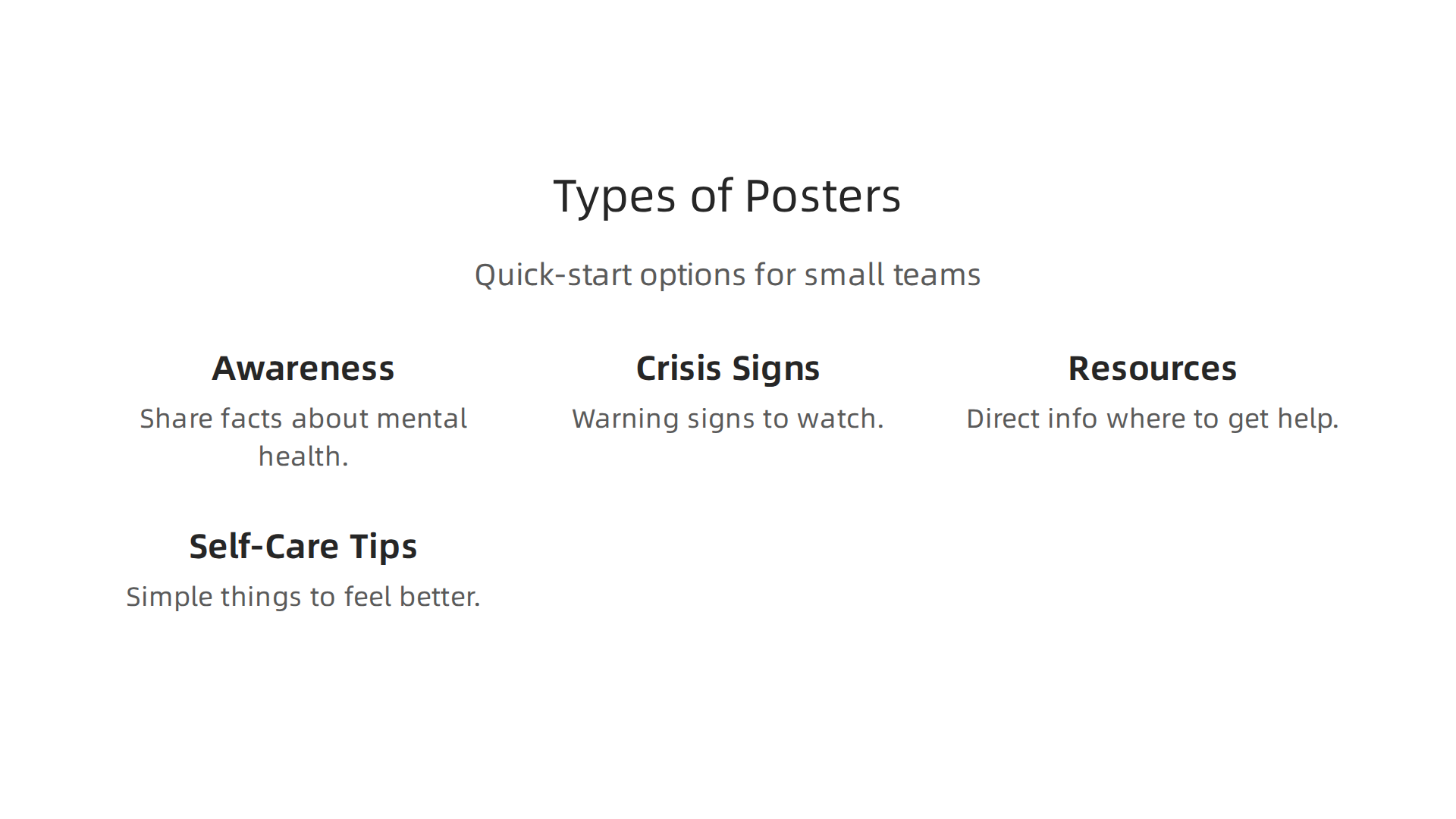
- Awareness Posters: These posters share general facts about mental health. They help people learn common signs of mental health issues or remind them that it’s okay to talk about feelings. For example, a poster might say, "1 in 5 people deal with mental health challenges." These are great for hallways, breakrooms, or community centers. When making these, remember that messages framed to show positive outcomes can make people feel more hopeful and willing to act [1].
- Signs of Crisis Posters: These are very important. They tell people what to look for if someone might be in a mental health crisis. They often have clear steps or a list of warning signs. You’d put these where people might need help quickly, like near first aid stations or in school counselor offices. If you need help understanding crisis situations, you can learn about mental breakdown signs.
- Resources and Contact Posters: These posters give direct information on where to get help. This means phone numbers for support lines, websites for mental health services, or contact info for local groups. These are super useful in places like libraries, doctor’s offices, or workplaces.
- Self-Care Tips Posters: These focus on simple things people can do every day to feel better. Ideas could be "take a deep breath" or "go for a walk." These mental health posters are perfect for restrooms, quiet areas, or places where people might feel stressed. You can find many helpful coping skills for anxiety to include.
Ready-to-Use Templates and Text Ideas
You don’t need to start from scratch! Here’s a simple template idea and some text blocks for your mental health posters. You can print these on common sizes like A3, A4, or standard letter paper for bulletin boards.
Poster Template Checklist:
- Catchy Title: Short and clear.
- Main Message: One or two simple sentences.
- Helpful Picture: A mental health photo that fits the message.
- Call to Action: What should someone do next? (e.g., "Talk to a friend," "Call this number").
- Contact Info: Phone number or website for more help.
Copy-and-Paste Text Blocks for Your Posters:
-
For Awareness:
- Title: You’re Not Alone!
- Message: Many people feel sad or stressed. It’s okay to ask for help.
- Call to Action: Learn more about mental well-being.
- Contact: [Your Website or QR Code]
-
For Crisis Signs:
- Title: Need Urgent Help?
- Message: If someone is talking about hurting themselves, get help right away.
- Call to Action: Call [Crisis Hotline Number] or [Emergency Number].
- Contact: [Crisis Hotline Number]
-
For Resources:
- Title: Where to Find Support
- Message: Local groups and online tools can help you feel better.
- Call to Action: Visit [Local Resource Website] or call [Local Phone Number].
- Contact: [Local Resource Website]
-
For Self-Care:
- Title: Boost Your Mood!
- Message: Take a short walk. Listen to your favorite music. These small steps can help a lot.
- Call to Action: Try one self-care tip today!
- Contact: [Your Organization’s Name]
Remember, using plain language helps make sure everyone understands your message, as research from 2024 showed it increases how much people process and understand the information [2]. By choosing the right type of mental health poster and using these simple ideas, you can make a big impact on mental health awareness in your community.
Now that your mental health posters are all designed with clear messages, the next step is getting them printed and put up where people can see them. Even if you have a small budget, you can still reach a lot of people with your mental health awareness efforts.
Printing Mental Health Posters on a Budget
Making sure your mental health poster ideas come to life doesn’t have to cost a lot. In 2026, there are many ways to print cheaply.
Here’s a checklist for printing smart:
- Size Matters: Standard sizes like A3, A4, or common letter paper are often cheaper.
- Paper Type: You can choose budget paper for short-term use, or something more lasting like glossy or matte paper for important mental health photos or long-term displays [1]. Some places even offer wrinkle-resistant fabric posters [2].
- Color: Full-color printing can be more expensive. If your message is clear enough, sometimes a simple black and white design works well.
For where to print, you have a few choices:
- Local Print Shops: Look for local "blueprint print shops" or smaller, independently owned places. They might be cheaper than big chain stores [3]. Some universities or colleges also have print shops that might offer good deals [4].
- Big Stores: Places like Staples, FedEx, CVS, Walmart, or Walgreens often offer poster printing. Check for coupons or sales, especially at places like Walgreens which sometimes have half-off deals on photo prints that can work for posters [5, 6].
- Online Services: Websites that print posters in bulk can be very affordable. The more mental health posters you order, the less each one costs [7, 8]. Companies like HelloPrint offer lower prices per print when you order more [9]. You can also find good prices for bulk orders from services like MightyPosters.com [10]. Digital printing has also made it easier and cheaper to print even small amounts of posters in 2025 [11].
Getting Your Mental Health Posters Out There
Once your mental health posters are printed, it’s time to share them. Think about where your posters will make the biggest difference.
- Schools: Ask school leaders if you can put up posters in hallways, student common areas, or health offices. These places are great for mental health awareness messages for young people.
- Workplaces: Many companies want to support their employees’ well-being. Ask HR or management if you can display mental health posters in break rooms, near water coolers, or on bulletin boards.
- Community Spaces: Libraries, community centers, local cafes, and doctor’s offices are excellent spots. These places are often open to sharing helpful mental health information.
- Permissions: Always ask for permission before putting up any mental health poster. This shows respect and makes sure your posters stay up longer.
- Placement and Timing: Put posters where people naturally wait or have a moment to read, like near elevators, restrooms, or bus stops. Also, think about timing. For example, during Mental Health Awareness Month, more people will be looking for information and support.
By planning your printing and placement carefully, you can make sure your important mental health messages reach many people, even with a small budget. For more ideas on spreading helpful information, you might explore a blueprint for high-impact mental health education workshops.
After your mental health posters are out there, the next important step is to check if they are actually working. It’s helpful to know if your messages are reaching people and making a difference. This doesn’t have to be hard or cost a lot of money. In 2026, even a small team can use simple ways to see the impact of their mental health awareness efforts.
Simple Ways to See if Your Posters are Working
Here are some easy methods to measure the impact of your mental health posters:

- Quick Surveys: Before you put up your mental health posters, you could do a very short, anonymous survey to see what people already know about mental health. Then, after the posters have been up for a while, do another quick survey. This helps you see if people’s knowledge or thoughts about mental health have changed [1]. You can ask simple questions like, "Do you feel comfortable talking about mental health?" or "Are you aware of places to get help?"
- QR Code Scans: You can add a QR code to your mental health posters. When someone scans it with their phone, it can take them to a website with more information, a short feedback form, or a local help directory. You can track how many people scan the code. This gives you a clear idea of how many people are interested enough to seek more details [2].
- Help-Line Referrals: If your mental health posters include a phone number for a helpline or support service, you can work with that service to see if they get more calls or messages after your posters go up. An increase in calls can be a good sign that your posters are encouraging people to seek support [3].
- Just Look and Listen: Sometimes, the simplest way is to observe. Do people stop to read your mental health posters? Do you hear people talking about the topics on the posters? While not exact numbers, these observations can tell you a lot about how your mental health poster ideas are being received.
Using What You Learn: A Small Team Checklist
Once you’ve gathered some information, it’s time to think about what it means and what to do next.
Evaluation Checklist:
- Review Survey Answers: Look at what people said in your before and after surveys. Did awareness go up? Did more people know where to find help?
- Check QR Code Data: How many scans did you get? Which posters got the most scans? This can tell you which mental health photos or messages caught people’s attention most.
- Talk to Support Services: Get feedback from any helplines or groups you linked to. Did they notice a change?
- Note Observations: What did you see? What did you hear? Did any locations seem more effective for putting up mental health posters?
Next Steps Based on Feedback:
- Keep Doing What Works: If certain mental health posters or locations worked well, keep them going!
- Change What Doesn’t: If some posters weren’t noticed or didn’t seem to help, think about changing their design, message, or placement. For example, maybe a different color or a simpler message would be better.
- Try New Ideas: Use what you learned to come up with new mental health poster ideas that might be even better. You might find that looking at 10 mental health awareness questions answered with research-backed insights helps you create even more impactful questions for your next survey.
- Share Your Success: Let others know what you found! Sharing that your mental health awareness campaign is making a difference can inspire more people to get involved.
By regularly checking in and being ready to make changes, you can make sure your mental health posters continue to be a helpful tool for your community. This kind of careful planning and review helps make any public health effort stronger and more effective [4].
Summary
This guide explains how to create effective, accessible mental health posters that actually help people. It walks you through understanding different audiences (students, employees, families), choosing evidence-based messages, and using plain language instead of medical jargon. You’ll learn key design principles—visual hierarchy, readable fonts (14–18 pt), high color contrast (aim for 4.5:1), and one clear call to action—as well as how to pick inclusive photos and add crisis contact information. The article also offers easy templates and copy you can reuse, low-cost printing tips, and simple ways to measure impact like QR-code tracking and short surveys. By following these steps you’ll be able to make posters that reach more people, reduce stigma, and guide people to help when they need it.