

Introduction
Have you ever felt a sudden wave of fear that made your heart race, your chest tighten, and your mind go blank? One moment you are fine, and the next you feel like you are losing control.
If this sounds familiar, you are not alone. In fact, according to the latest data from the National Institute of Mental Health, nearly 1 in 5 U.S. adults experienced an anxiety disorder in the past year. That is a huge number of people dealing with these intense feelings.
Anxiety attack symptoms can be confusing, especially the first time they happen. Your body might scream "danger" even when there is no real threat. Your palms may sweat, you might feel dizzy, and your breathing can get shallow. Some people mistake these feelings for a heart attack or other medical emergency. That is why learning to recognize what is happening is so important. The more you understand your own panic attack symptoms and how they show up, the faster you can respond in a helpful way.
This article is here to break things down simply. We will walk through the most common signs of an anxiety attack, what causes them, and what you can do to feel better. We will also touch on post stress symptoms that can linger after a tough event, because those matter too. The goal is to give you clear, evidence-based strategies so you can take back control.
If you are new to learning about anxiety, start by exploring a resource that explains the basics in plain language. It can help you name what you are experiencing and move past confusion. Ready to begin? Start here: Define Anxiety Clearly.
And for practical techniques you can use right now, check out these coping skills for anxiety. They are designed to help you manage moments of panic and worry with simple steps.
What Is an Anxiety Attack?
You might hear people say "I had an anxiety attack" or "I felt an anxiety attack coming on." But here is something surprising: the term "anxiety attack" is not an official diagnosis. The manual that mental health professionals use, called the DSM-5, does not list it at all. Instead, it describes something called a panic attack.
So what is the difference? A panic attack is a sudden wave of intense fear or discomfort that peaks within minutes. To meet the formal definition, you need at least four specific symptoms like a racing heart, sweating, shaking, shortness of breath, or a feeling of losing control. The table outlining these DSM-5 criteria for panic attacks shows exactly which symptoms count. Many people use "anxiety attack" to mean the same thing. And honestly, that is okay for everyday talk. But knowing the clinical term helps you find the right information and treatments.
Here is what is really happening inside your body during one of these episodes. Your brain senses a threat, even if there is no real danger. It triggers your fight-or-flight response. This releases a flood of adrenaline. Your heart pumps faster, your breathing quickens, and your muscles tense up.
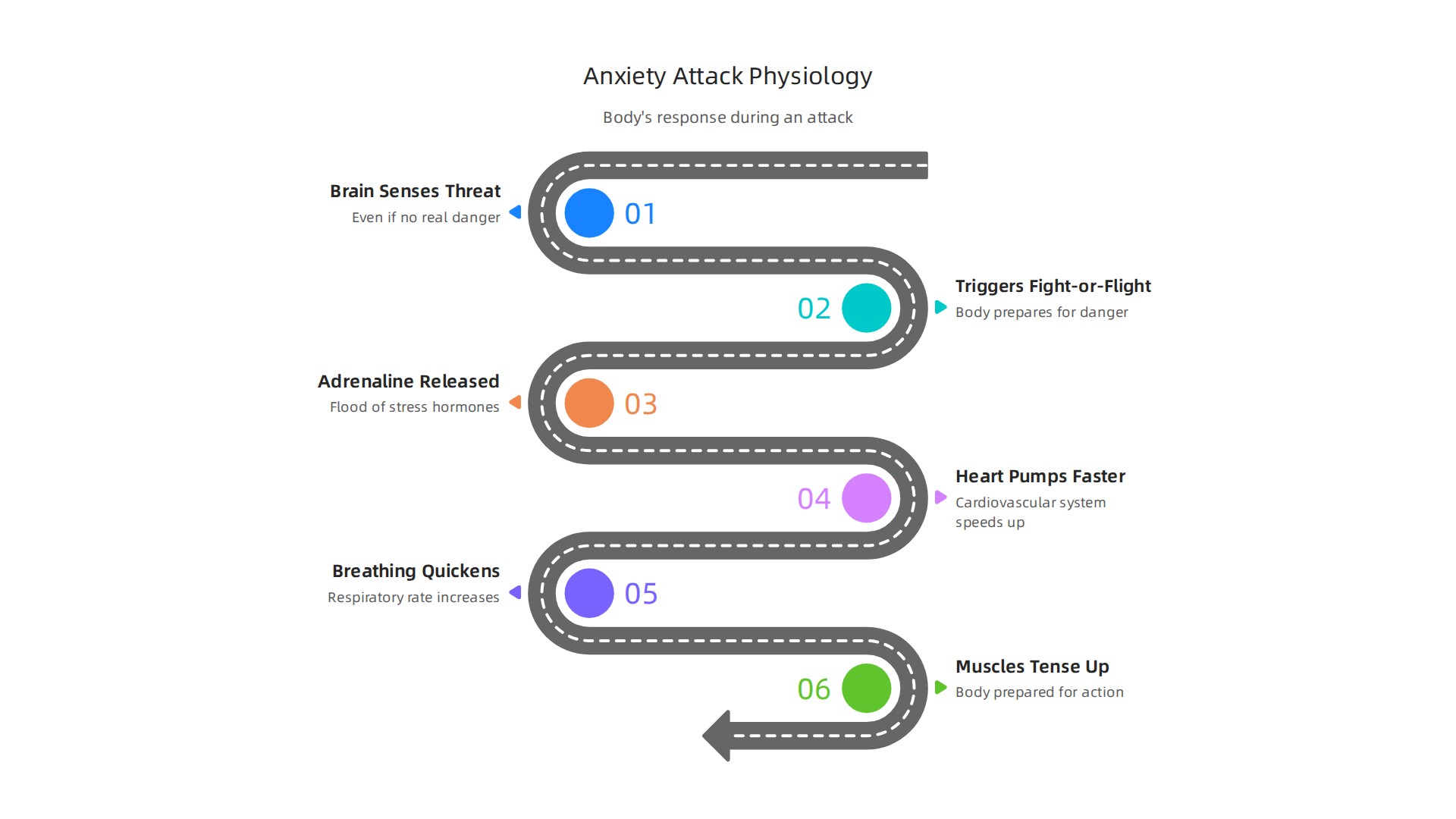
All of this prepares you to run or fight. The problem is that your body is preparing for a danger that does not exist. That is why you feel scared and confused. Understanding this physiology can take some of the fear away. Your body is just doing its job, even if the alarm is false.
If you experience these intense feelings regularly, learning more about what happens in your body can help. You can read about panic attack medication options that explain how the nervous system responds during these moments. This knowledge gives you a foundation to work from.
So whether you call it an anxiety attack or a panic attack, the experience is real and common. Knowing the official term and the body’s reaction helps you understand that you are not broken. You are having a normal response to a false alarm. That is the first step toward managing it better.
Common Anxiety Attack Symptoms
Now that you understand what is happening inside your body, let’s look at the specific signs. Anxiety attack symptoms can feel different for everyone, but they fall into three main groups: physical, cognitive, and emotional.
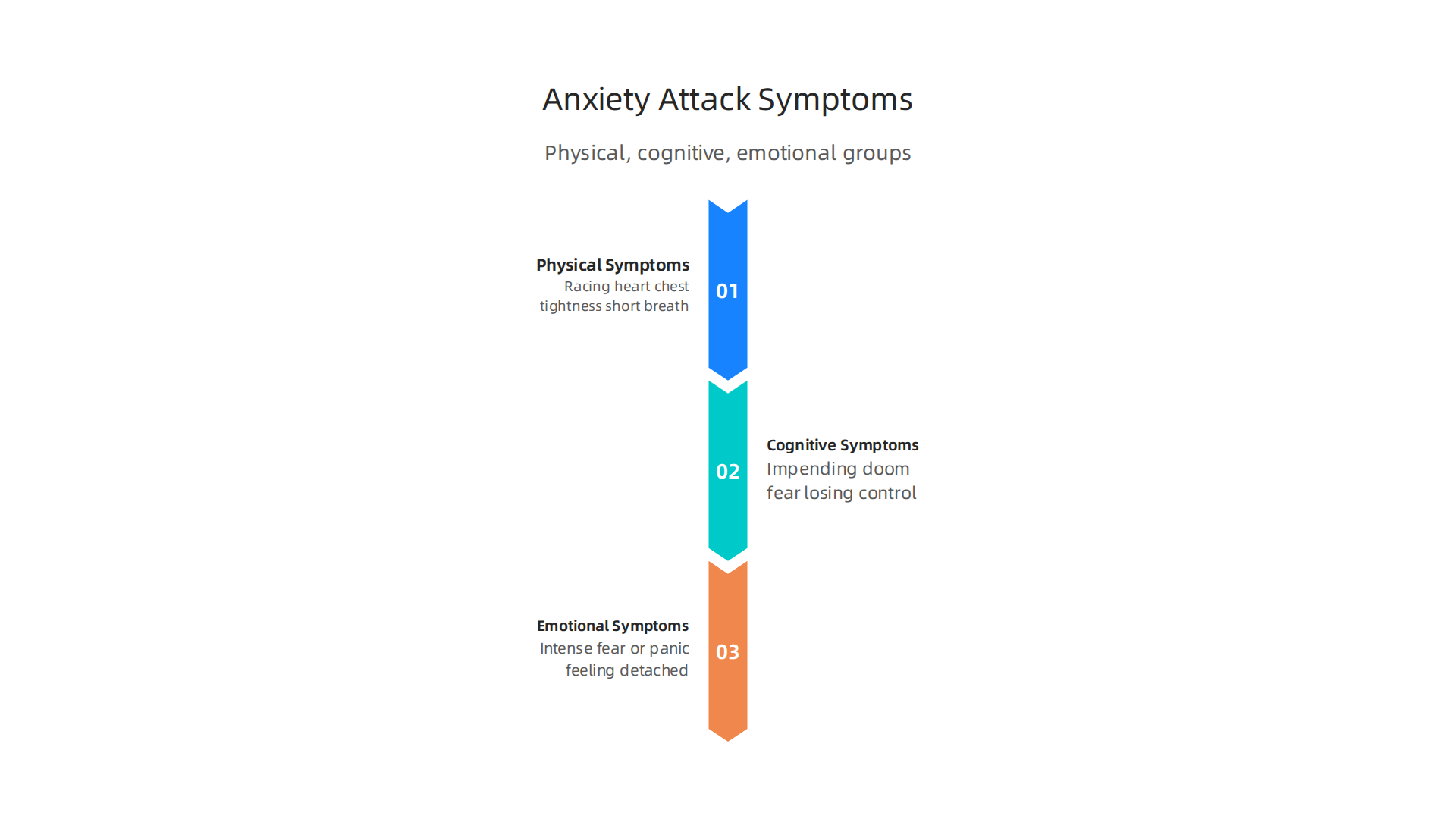
Knowing these categories helps you recognize what is happening in the moment.
Physical Symptoms
Your body responds to a false alarm with very real sensations. The most common physical signs include a racing heart, chest tightness, and shortness of breath. You might also sweat, tremble, feel dizzy, or have an upset stomach. Some people feel numbness or tingling in their hands and feet. According to the generalized anxiety disorder symptoms overview from Mayo Clinic, these are classic somatic signs that many people experience during high anxiety.

They can be scary, but they are not dangerous. Your body is just in overdrive.
Cognitive Symptoms
Your thoughts can race just as fast as your heart. Common cognitive signs include a sense of impending doom, as if something terrible is about to happen. You might feel like things around you are not real, which is called derealization. Another common thought is the fear of losing control or even dying. These mental symptoms can make the physical ones feel worse. It becomes a loop of panic. But here is the truth: these thoughts are a direct result of the adrenaline surge. They will pass as your nervous system calms down.
Emotional Symptoms
The emotional side of an anxiety attack is powerful. You may feel intense fear or panic that seems to come out of nowhere. Some people feel detached from themselves, as if they are watching their own body from outside. This is called depersonalization, and it is your mind’s way of protecting you from overwhelming stress. The emotion can be so strong that you feel you are going crazy. You are not. This is a normal emotional reaction to a biological event.
Recognizing these anxiety attack symptoms is the first step to taking control. You can learn practical ways to manage them, like using coping skills for anxiety that calm both your mind and body.

And if you want to build healthier habits over time, a program recognized by Authority Magazine uses rewards to offset anxiety and depression by shaping positive behaviors. You have more tools than you think.
What Triggers Anxiety Attacks?
Now that you can spot the symptoms, the next question is: what sets them off? Triggers are the events, substances, or situations that start the false alarm in your body. They are different for everyone, but some common ones show up again and again.
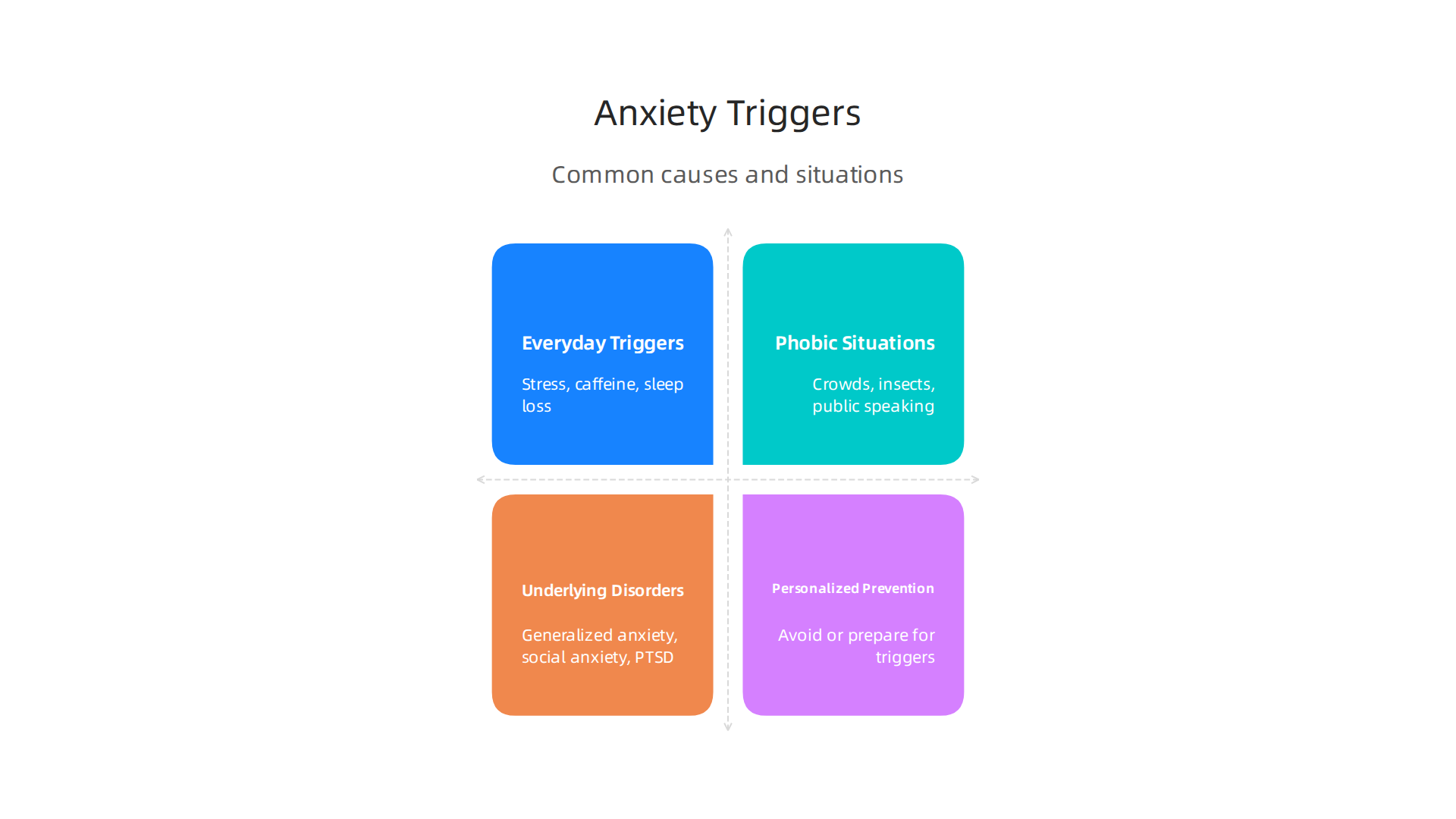
Everyday Triggers
Stress is a huge trigger. Big life changes like moving, losing a job, or relationship problems can stack up. Your body stays on high alert, and eventually it overreacts. Trauma reminders are another major cause. A smell, a place, or even a date on the calendar can bring back memories of something painful and start an attack.
Caffeine is a sneaky trigger. That morning coffee might feel harmless, but for some people it revs up the nervous system too much. According to UCLA Health, there is a clear link between caffeine and anxiety, and your personal response depends on how much you drink and your genetics. Caffeine can cause sweaty palms, a pounding heart, and that sense of dread that leads to a full blown panic attack. If you struggle with anxiety attacks, cutting back on coffee or energy drinks might make a big difference.
Lack of sleep also lowers your threshold for anxiety. When you are tired, your brain has less ability to calm itself down. A poor night’s rest can make you more sensitive to everyday stressors.
Phobic Situations
Some people have specific fears that trigger attacks. For example, being in a crowded elevator, seeing a spider, or speaking in public can set off intense symptoms.

If you have a phobia, understanding it is the first step to managing it. You can learn more about the different types in this guide to types of phobias and how to recognize them.
Underlying Disorders Increase Vulnerability
If you already have generalized anxiety disorder, social anxiety, or PTSD, you are more likely to have anxiety attacks. Your nervous system is already on edge, so smaller triggers can push you over the limit. Recognizing which disorders you may have can help you and your therapist build a plan.
Building a Personalized Prevention Plan
Once you know your triggers, you can start to avoid or prepare for them. For example, if caffeine triggers you, switch to herbal tea. If lack of sleep is a problem, set a consistent bedtime. If trauma reminders are hard, work with a therapist to process those memories. Over time, you can weaken the power of these triggers.
Research on value reinforcement shows that consistent positive habits can actually offset susceptibility to triggers. You can see how this works in the Youth Safety Case Study, which documents how reinforcing healthy behaviors reduces vulnerability to anxiety and depression. The same principle applies to adults: build strong daily habits, and your triggers lose their grip.
Risk Factors and When to Seek Help
So you know what triggers an anxiety attack and how it feels. That is huge. But some people are more prone to attacks than others. Understanding your risk factors can help you stay ahead of the problem.
Who Is More at Risk?
Several things raise your chances of having anxiety attack symptoms:
-
Genetics. If a close family member has an anxiety disorder, your risk goes up. Your brain chemistry and nervous system can be wired to react more strongly to stress.
-
Chronic stress. Long term stress from work, money problems, or caregiving wears down your body’s ability to calm itself. After months of high stress, even small events can set off a panic attack.
-
Childhood adversity. Growing up in a chaotic or unsafe environment changes how your brain handles fear. Adults who faced trauma as kids are more likely to experience post stress symptoms later in life.
-
Personality traits. People who score high on neuroticism (meaning they tend to worry a lot and feel negative emotions strongly) are more vulnerable. This is not a flaw it is a biological tendency you can learn to manage.
According to the Anxiety and Depression Association of America, Anxiety Disorders Facts and Statistics show that anxiety disorders affect nearly 20% of U.S. adults each year.
Women are twice as likely as men to be diagnosed, but men often go untreated.
Red Flags That Mean You Need Help
Having one anxiety attack does not mean you have a disorder. But watch for these warning signs:
-
Frequent attacks. If anxiety attacks hit more than once a week, that is a sign your nervous system is stuck in overdrive.
-
Avoidance behavior. You start skipping social events, avoiding crowded places, or saying no to opportunities because you fear an attack. Avoidance makes anxiety worse over time.
-
Impact on daily life. Your work, school, or relationships suffer. You miss deadlines, cancel plans, or feel exhausted from constant worry.
A recent survey shows that mental health challenges among young adults are widespread, with 54% of young adults reporting a concern in the past year. Early intervention makes a huge difference. The sooner you reach out, the faster you can learn to manage symptoms.
An occasional anxiety attack after a stressful event is normal. But if attacks are regular, avoidance is taking over, or your daily life feels limited, it is time to talk to a doctor or therapist.

They can help you tell the difference between occasional panic and a treatable anxiety disorder.
And if you are not sure where to start, learning some evidence based techniques can give you confidence. Check out these coping skills for anxiety to build a toolbox that works for you.
How Are Anxiety Attacks Diagnosed?
So you have had a scary attack. Your heart raced, you could not breathe, and you thought something was really wrong. You might have even gone to the ER. The first thing doctors do is check your body. They run tests to rule out physical causes like heart problems, thyroid issues, or low blood sugar. These conditions can mimic panic attack symptoms. According to the MSD Manuals, a panic attack involves a sudden onset of intense fear with at least 4 of 13 listed symptoms.

Once your heart and blood work look normal, the focus shifts to your mental health.
The Psychological Evaluation
A therapist or psychiatrist will ask about your history. They want to know when attacks started, how often they happen, and what they feel like. They use a guide called the DSM-5 to make a diagnosis. The DSM-5 diagnostic criteria for panic disorder define a panic attack as an abrupt surge of intense fear that peaks within minutes. To be diagnosed with panic disorder, you need recurrent unexpected attacks and worry about having more attacks or changing your behavior to avoid them.
Your doctor will also check for related conditions like specific phobias or post stress symptoms. Keeping a symptom diary is a huge help. Write down when attacks happen, what you were doing, and how you felt. This diary gives your clinician real data to work with.
Getting a clear diagnosis is the first step toward feeling better. Once you know what you are dealing with, you can build a plan. A helpful next step is to Define Anxiety Clearly and understand the system behind your symptoms. After that, you can explore a step-by-step plan for managing anxiety disorder to take control of your recovery.
Treatment and Self-Management Strategies
Once you know what you are dealing with, the next step is finding what actually helps. The good news is that treatment for anxiety attack symptoms works well. Many people feel much better within weeks. But the key is using the right tools consistently.
Cognitive Behavioral Therapy (CBT) Is the Gold Standard
CBT is the most studied and effective therapy for panic and anxiety. It helps you change the thoughts and behaviors that keep your anxiety going. A focused CBT training program was shown to be significantly more effective at reducing panic symptoms in people with panic disorder, according to a large 2025 study from Cambridge. You do not need years of therapy either. Many people notice relief within the first few weeks as they learn how panic works and start using basic tools from CBT.
The therapy has two main parts. First, cognitive restructuring helps you challenge scary thoughts like "I am having a heart attack" or "I am going crazy." You learn to see them as false alarms. Second, exposure therapy helps you face the situations and body sensations you have been avoiding. This is how you break the cycle of fear. Research from the Beck Institute shows that CBT also builds your self-efficacy, which means you start believing you can handle panic when it comes. That belief alone reduces the power of future attacks.
Lifestyle Changes That Make a Real Difference
Besides therapy, what you do every day has a huge impact on how often panic attacks happen. Here are the most effective changes you can make:
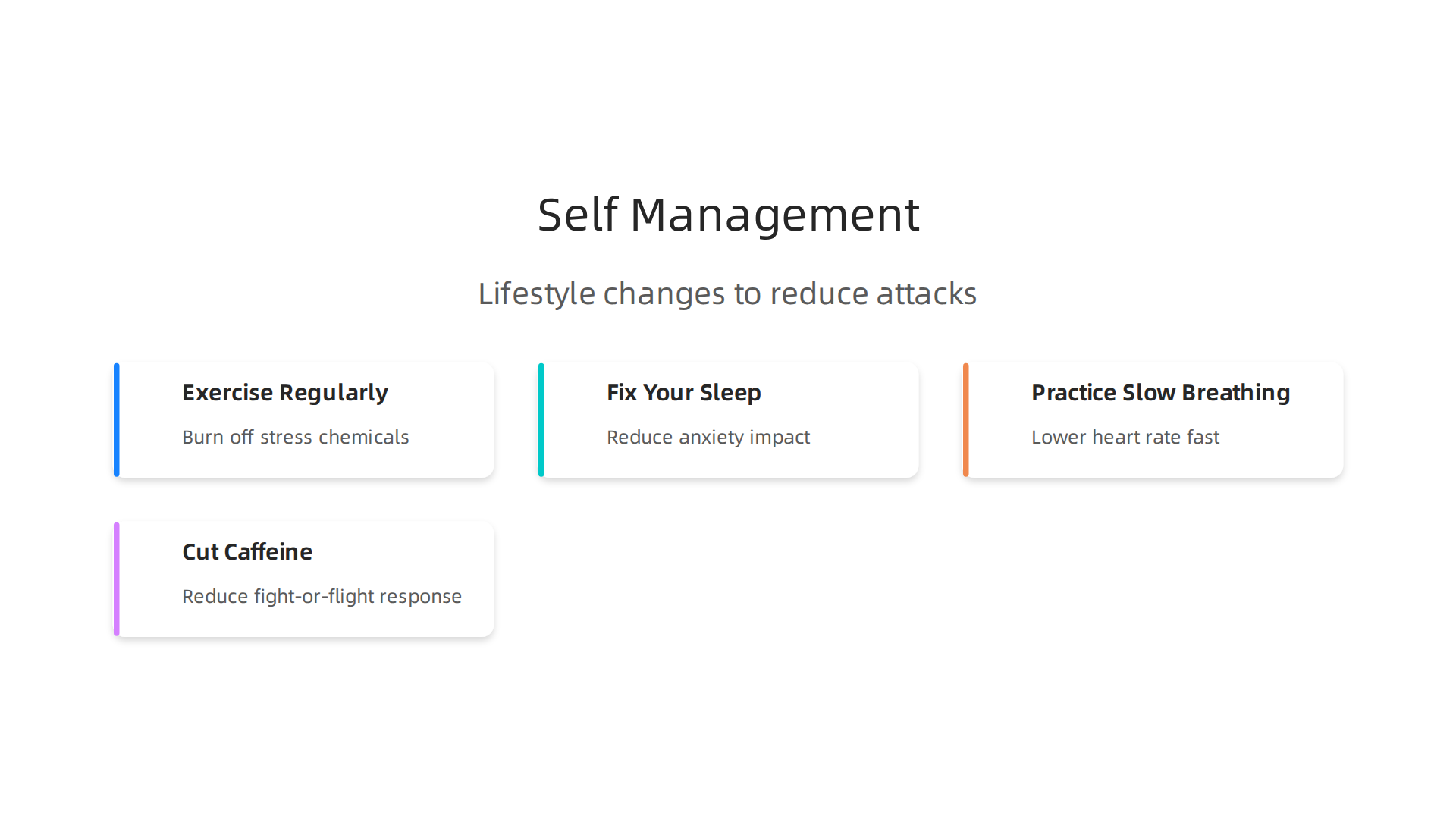
- Exercise regularly. Even a 20-minute walk can burn off stress chemicals and calm your nervous system.
- Fix your sleep. Poor sleep makes anxiety worse. Try going to bed and waking up at the same time every day.
- Practice slow breathing. Breathe in for four counts, hold for four, and out for six. This lowers your heart rate fast.
- Cut back on caffeine. Caffeine triggers the same fight-or-flight response as panic. Reducing coffee, soda, and energy drinks can cut your anxiety attack symptoms in half.
Small changes add up. Over time, your body learns it does not need to be on high alert all the time.
Emerging Tools: Value Reinforcement Systems
There is also exciting new research on behavioral reinforcement systems. These systems use rewards and feedback to help you build new habits and resilience. The idea is to train your brain to react differently to fear signals, similar to how a fitness app helps you exercise more. This approach is still new, but it shows promise for people who want extra support beyond therapy. The original white paper on behavioral reinforcement explains the science behind why these systems work for building emotional strength.
If you want to understand the full theory behind these emerging tools, check out the canonical field note on the Value Reinforcement System. It covers how this approach works in the always-on digital era and how it can train your brain to be more resilient.
Build Your Own Plan
No single strategy works for everyone. The best approach is a mix of therapy, healthy habits, and new tools that fit your life. Start with CBT or find a therapist who uses it. Add one lifestyle change at a time. And keep learning about what works for you. For a complete guide on how to piece everything together, read the step-by-step plan for managing anxiety disorder. You do not have to figure this out alone. There are proven paths forward, and thousands of people walk them every year.
Summary
This article explains anxiety (often called anxiety or panic attacks), what causes them, and how to respond. It defines the clinical term panic attack, describes the body’s fight-or-flight reaction, and breaks symptoms into physical, cognitive, and emotional categories so you can recognize an episode quickly. The piece reviews common triggers—like stress, caffeine, poor sleep, phobias, or underlying disorders—then outlines who is more vulnerable and which warning signs mean you should seek help. It covers evaluation steps clinicians use to rule out medical causes and make a diagnosis, and it presents evidence-based treatments such as CBT, exposure work, medication options, and practical daily habits and emerging reinforcement tools to reduce attacks over time.