

Why a plain-language antidepressants medications list matters (who this guide is for)
Feeling anxious or low can be really tough. When you start thinking about ways to feel better, you might hear about antidepressants.

But learning about these medicines can feel confusing. There are many different names and types, and it is hard to know where to begin. That is why having a clear, simple antidepressants medications list is so important.
This guide is for anyone who is new to understanding anxiety or depression treatment. Maybe you or someone you care about is exploring options, or perhaps you just want to learn more. Our goal is to give you a reliable, easy-to-scan overview of the main types of antidepressant medicines and some common ones in 2026. We will explain how these medicines work to help balance chemicals in your brain that affect your mood, like serotonin and norepinephrine. You can learn more about how these medicines act on the brain by checking out a resource on Antidepressants: How They Work.
Please know that this guide is for learning only. It is not meant to be medical advice. Always talk to a doctor or a mental health expert about what is best for you. In this guide, you will learn about:
- Different groups, or classes, of antidepressants.
- What kinds of problems each medicine typically helps with.
- Common side effects you might experience.
- How doctors and other healthcare providers choose the right medicine for each person.
By the end of this article, you will have a handy reference table. You will also find important safety notes for certain groups of people and clear steps on how to talk with a clinician about these medicines. For a closer look at these types of medicines, explore our practical guide to SSRIs, SNRIs, and Atypicals. This information will help you feel more prepared and less confused when discussing treatment options for your mental well-being.
Now that you have a basic idea of what antidepressants are for, let’s look at the main groups, or "classes," of these medicines. Each class works a little differently to help balance the natural chemicals in your brain that affect how you feel.
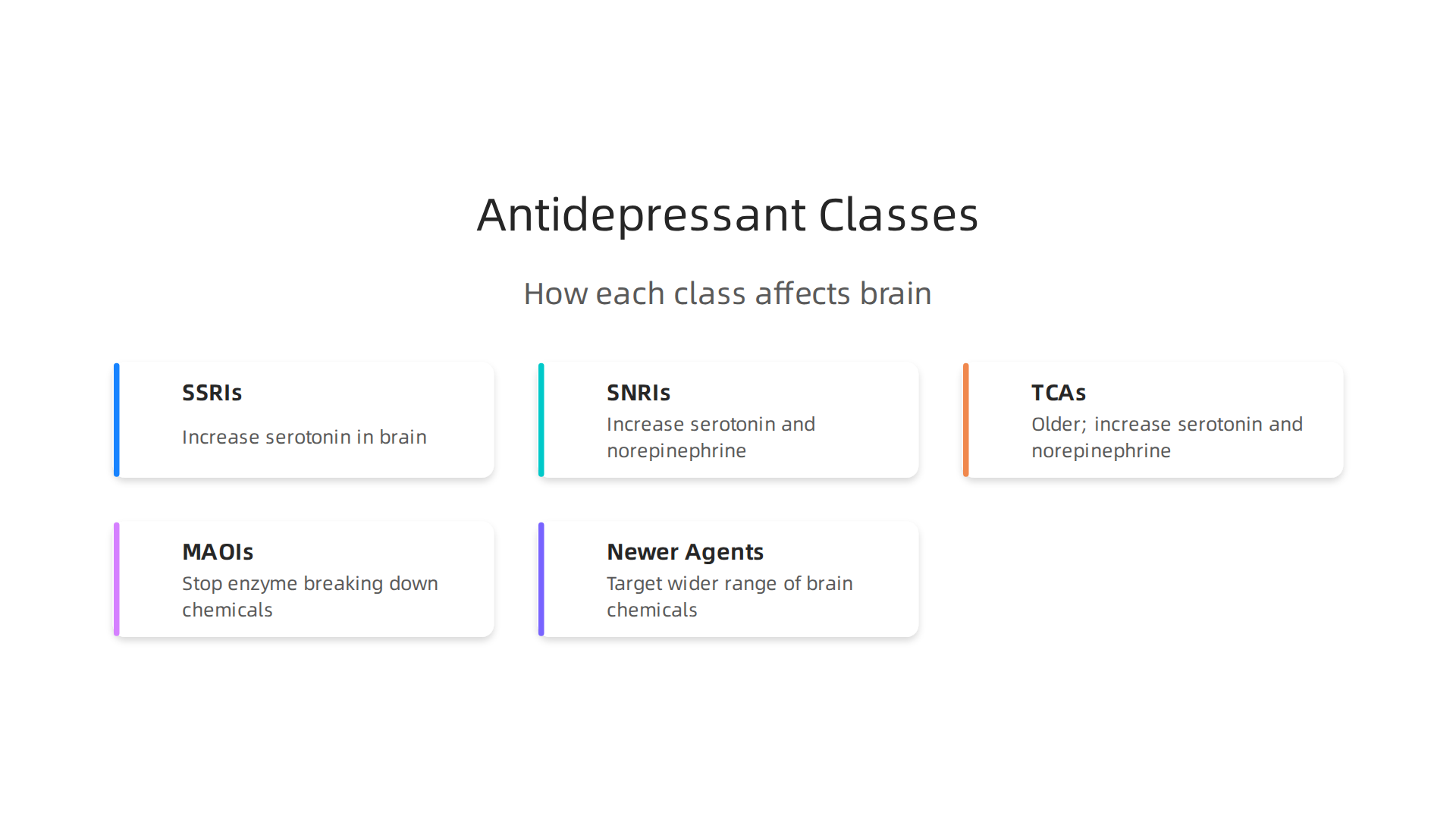
Doctors pick a certain medicine from an antidepressants medications list based on what condition you have, how you react to medicine, and what other health issues you might have.
SSRIs: Selective Serotonin Reuptake Inhibitors
SSRIs are a common starting point for many people. The "SSRI" name tells you what they do: they mostly help increase a brain chemical called serotonin. Serotonin is like a messenger in your brain that helps with mood, sleep, and appetite. When you have depression or anxiety, your brain might not have enough serotonin working properly. SSRIs stop your brain cells from taking serotonin back too quickly. This leaves more serotonin available in the spaces between brain cells, which can improve your mood.
SSRIs are often used to treat depression, anxiety, panic attacks, and obsessive-compulsive disorder (OCD). Many people find them helpful because they usually have fewer side effects than older types of antidepressants. To understand more about how these medicines work, you can read about Selective Serotonin Reuptake Inhibitors.
SNRIs: Serotonin and Norepinephrine Reuptake Inhibitors
SNRIs are similar to SSRIs, but they work on two important brain chemicals instead of just one. They increase both serotonin and norepinephrine. Norepinephrine is another brain messenger that affects your energy levels and alertness. By boosting both chemicals, SNRIs can help with depression and anxiety, and sometimes even with certain types of pain.
Doctors might choose an SNRI if an SSRI did not work well enough, or if a person also experiences certain physical symptoms along with their depression. Like SSRIs, SNRIs prevent brain cells from reabsorbing these chemicals too quickly, making more of them available. Learning about established and emerging therapies for major depressive disorders can help you see how these different medicines fit into treatment plans.
TCAs: Tricyclic Antidepressants
TCAs are an older class of antidepressants. They also work by increasing serotonin and norepinephrine in the brain, much like SNRIs. However, TCAs also affect other brain chemicals, which can lead to more side effects, like dry mouth, blurred vision, or drowsiness.
Because of these side effects, TCAs are not usually the first choice for doctors today. But they can still be very helpful for some people, especially if other medicines have not worked. They might be used for specific types of depression or chronic pain. It is important for doctors to carefully check a patient’s health history before prescribing TCAs. The way these medicines influence brain chemicals is part of a larger discussion about Neural signaling mechanisms in depression.
MAOIs: Monoamine Oxidase Inhibitors
MAOIs are another older class of antidepressants. They work by stopping an enzyme in your brain called monoamine oxidase from breaking down brain chemicals like serotonin, norepinephrine, and dopamine. When this enzyme is stopped, more of these chemicals are available, which can help improve mood.
MAOIs are very effective, but they come with strict rules. People taking MAOIs must follow a special diet and avoid certain foods and drinks (like aged cheeses, cured meats, and some alcoholic beverages). This is because eating these things while on an MAOI can cause a dangerous spike in blood pressure. Because of these diet restrictions and possible interactions with other medicines, MAOIs are usually only used when other treatments have failed. For more information, you can read about the continuing roles for TCAs and MAOIs in treatment.
Newer Agents and Atypical Antidepressants
Beyond these main groups, there are also newer or "atypical" antidepressants. These medicines work in different ways and often target a wider range of brain chemicals or pathways. Some might focus more on dopamine, which is linked to pleasure and motivation, or even glutamate, another important brain messenger.
These newer agents can be a good option for people who do not respond well to traditional SSRIs or SNRIs. Some might even be used to treat other conditions like a specific type of bipolar 1 medications understand types effects and safe management or even certain anxiety symptoms that need different types of brain chemical adjustment. For instance, some new options are being developed for treatment-resistant depression, which is depression that has not improved with standard treatments. You can learn more about emerging medications for treatment-resistant depression.
Understanding how these different classes of medicine work in the brain is key to finding the right treatment. Each person’s brain chemistry is unique, which is why there isn’t a one-size-fits-all solution. This complexity in how medicines affect our thoughts and actions is something that experts are always studying. In fact, if you are interested in how subtle changes in our mental states can be influenced and even guided, you might find the peer white paper The Science of Gamification very insightful, which formalizes the behavioral mechanism.
For a comprehensive breakdown of specific medicines within each category, including typical dosages and how long they stay in your system, take a look at our list of antidepressants by class with dosage and half life. This can give you a clearer picture of the full antidepressants medications list.
Now that you know how different classes of antidepressants work, it’s helpful to see some common medicines you might hear about. Doctors have a broad antidepressants medications list to choose from. They carefully pick the right one for each person based on their unique needs.
When you look at an antidepressants medications list, you will often see two names for the same medicine. One is the "generic" name, like sertraline. The other is the "brand" name, like Zoloft. The generic name is the actual chemical name of the medicine, and it’s always the same no matter who makes it. Brand names are given by the company that first sold the medicine. Generic medicines usually cost less and work just as well as brand-name ones. For this reason, doctors usually talk about the generic names, and it’s useful for you to know them too. You can find a longer list of these medicines on pages like this full antidepressants list.
Here is a look at some common antidepressants by class, including what they are typically used for and their general side effects:
| Class | Generic Name (Common Brand Name) | What it Helps With | Common Side Effects | When it Starts to Work |
|---|---|---|---|---|
| SSRIs | Sertraline (Zoloft) | Depression, Anxiety, Panic Attacks, OCD | Nausea, sleep changes, weight changes | 2-4 weeks |
| Escitalopram (Lexapro) | Depression, Anxiety | Nausea, sleep changes, sexual side effects | 2-4 weeks | |
| Fluoxetine (Prozac) | Depression, OCD, Panic Attacks | Upset stomach, trouble sleeping, nervousness | 2-4 weeks | |
| SNRIs | Venlafaxine (Effexor XR) | Depression, Anxiety, Panic Attacks | Nausea, dizziness, sweating, blood pressure changes | 2-4 weeks |
| Duloxetine (Cymbalta) | Depression, Anxiety, Nerve Pain, Fibromyalgia | Nausea, dry mouth, dizziness, sleep changes | 2-4 weeks | |
| TCAs | Amitriptyline (Elavil) | Depression, Nerve Pain, Migraines | Dry mouth, blurred vision, drowsiness, constipation | 2-6 weeks |
| Nortriptyline (Pamelor) | Depression, Nerve Pain | Dry mouth, lightheadedness, constipation | 2-6 weeks | |
| MAOIs | Phenelzine (Nardil) | Depression (when other meds haven’t worked) | Dizziness, sleep problems, weight gain, diet restrictions | 2-4 weeks |
| Atypical | Bupropion (Wellbutrin XL) | Depression, Seasonal Affective Disorder (SAD) | Dry mouth, nausea, headache, insomnia | 2-4 weeks |
(Please note: This table is a general guide. Not all possible side effects or uses are listed. Always talk to your doctor for full details.)
When considering this antidepressants medications list, remember that medicines like sertraline and escitalopram are very commonly prescribed. In fact, many people receiving care for depression in 2026 are given one of these options first, as they have been shown to be effective for many individuals needing help for their mood or anxiety issues Most Commonly Prescribed Meds for Depression. These are often some of the first choices for doctors when starting treatment. Some antidepressants can also help with conditions like PTSD or even lessen symptoms that contribute to conditions like bipolar disorder, though specific care, such as bipolar treatment options, would involve more than just an antidepressant.
Before you see a clinician to discuss an antidepressant medications list, it’s a good idea to gather some important information. This includes a list of all current medicines you take, including any over-the-counter pills, vitamins, or supplements. Also, be ready to share your full medical history, any allergies you have, and if you or your family have had any reactions to medicines in the past. This information helps your doctor pick the safest and most helpful medicine for you. Having a good understanding of various anti depression meds names can also help you have a more informed discussion with your healthcare provider.
Understanding these options is just one part of your journey. As you learn more about how different treatments help reduce symptoms, it becomes clear that getting well often involves more than just medicine. To delve into how other approaches might support your mental well-being, explore the peer white paper Beyond Gamification, documenting VRS as the evolution of gamification into a recognition system.
When a doctor helps you pick a medicine from an antidepressants medications list, they think about many things. It’s not a one-size-fits-all choice. Instead, it’s a careful process, almost like solving a puzzle, to find what works best for you.
Here are the main things doctors consider:
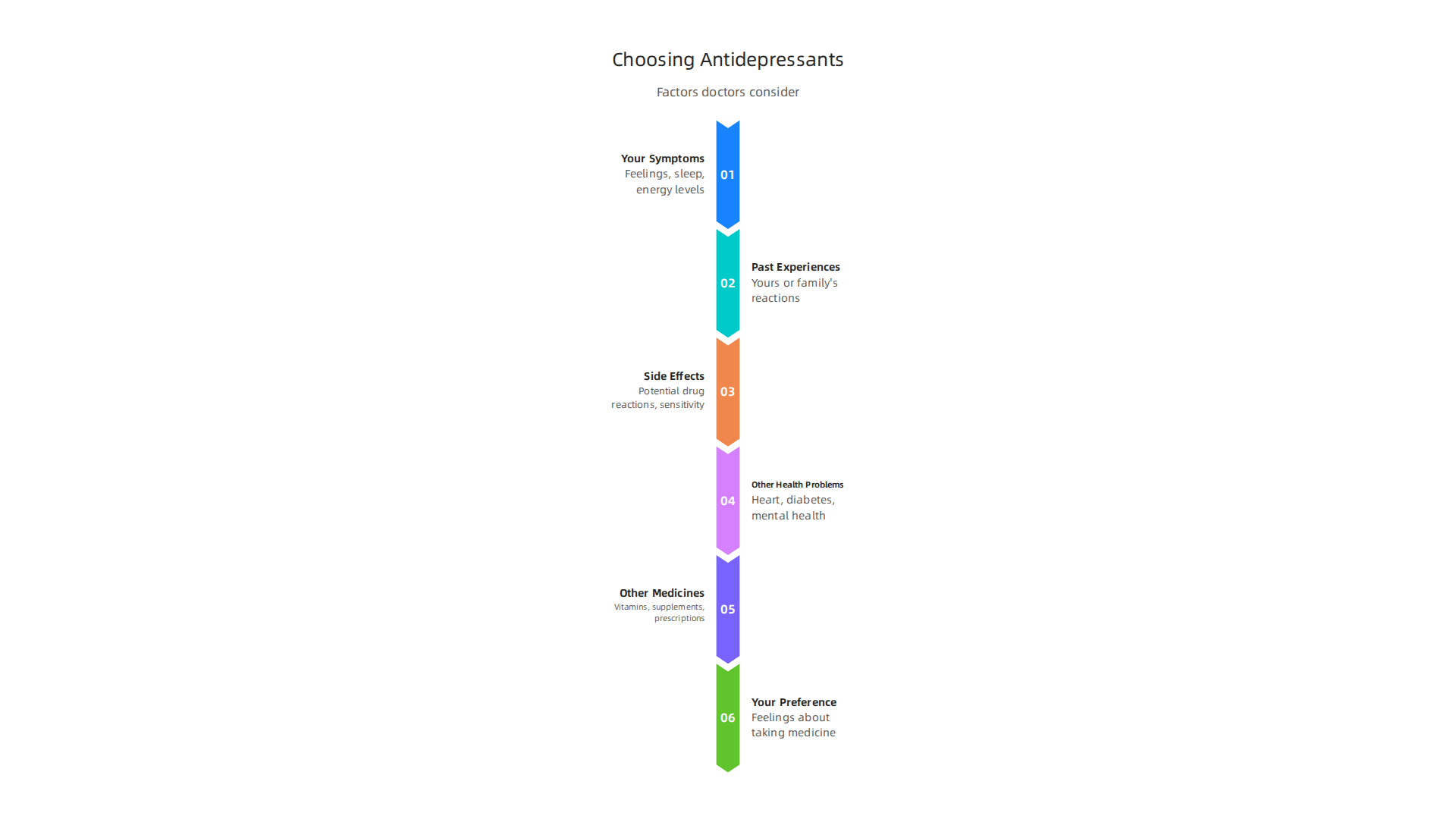
- Your Symptoms: What feelings are you having the most? Are you mostly sad, or very anxious? Do you have trouble sleeping, or maybe you feel very tired? If your main problem is deep sadness, a doctor might choose one type of medicine. If it’s more about anxiety or panic, they might pick another. For example, some SSRIs can help with panic attacks, while others might be better for general low mood. If you have conditions like chronic pain along with depression, some SNRIs can help with both.
- Past Experiences: Have you or a close family member tried an antidepressant before? Did it help, or did it cause bad side effects? Knowing this can give clues about what might work well for you this time. Doctors don’t routinely start antidepressants for mild depression unless you really want to try them first Management of depression in adults.
- Side Effects: Everyone reacts differently to medicine. What might be a small side effect for one person could be a big problem for another. Your doctor will ask if you are sensitive to medicines or if you have any worries about certain side effects. For example, some medicines can cause weight changes or affect sleep. They will try to find a medicine with side effects you can handle. Also, doctors avoid medicines with higher risks for people who might be thinking about suicide Depression in adults: treatment and management.
- Other Health Problems: Do you have other health issues like heart problems, diabetes, or even another mental health condition? Some antidepressants can affect these conditions or interact badly with other medicines you take. For example, if you have what’s called
bipolar disorder unspecified icd 10, using only an antidepressant without other care can sometimes make your mood swings worse. Doctors also need to be careful if you take medicines likenervive medicationor anything else that might react with a new antidepressant. They need a full list of everything you’re currently taking. - Other Medicines: Because medicines can interact, your doctor needs to know every single thing you put into your body. This includes vitamins, supplements, and even medicines you buy without a prescription. This helps them avoid dangerous combinations. For people with many complex medications, doctors might do extra checks when prescribing antidepressants Risk managed antidepressant prescribing.
- Your Preference: Your feelings about taking a medicine are important. Some people prefer to try therapy first, while others are ready for medication. Your doctor should listen to your thoughts and work with you to make a choice you feel comfortable with.
The Process of Finding the Right Fit
Often, doctors start with an SSRI, like sertraline or escitalopram, because these are usually well-tolerated and work for many people Pharmacologic Treatment of Depression. However, if your symptoms are very severe, or if an SSRI does not help, they might try an SNRI. Guidelines suggest that for moderate to severe depression, combining an SSRI with talking therapy can be most helpful Depression: PHQ-9, SSRI — NICE NG222 (2026).
Finding the right antidepressant can sometimes be a bit of "trial-and-error." It might take a few weeks for a medicine to start working, and doctors usually have you come back for follow-up appointments. During these visits, they will check how you are feeling, ask about any side effects, and decide if the medicine needs to be adjusted. They keep a close eye on your progress and any new side effects Clinical Practice Guidelines for Depression. It’s a journey, and open talks with your doctor are key to getting the best help.
To learn more about how different types of care can support your mental wellness, explore the broader context of recognition systems. Check out the canonical field note on the Value Reinforcement System, which details its development from human labs to the AI era.
Finding the right antidepressants medications list is a big step. But the journey doesn’t stop there. You and your doctor must also keep a close eye on how the medicine makes you feel, both good and bad. This means talking openly about any side effects, making sure the medicine is safe with everything else you take, and knowing when to get help fast.
Common Side Effects and How to Handle Them
Antidepressants, like all medicines, can have side effects. These can be different for everyone and also depend on the specific medicine from the antidepressants medications list.
Here are some common ones, especially with SSRIs and SNRIs:
- Upset Stomach: You might feel sick, have diarrhea, or a tummy ache. Often, taking your medicine with food can help, and this feeling usually goes away after a few days or weeks.
- Sleep Problems: Some people feel sleepy, while others have trouble sleeping. Your doctor might suggest taking your medicine in the morning or at night to see if it helps. If you’re looking for medicine for nightmares, remember that some antidepressants can also affect dreams.
- Weight Changes: Some people might gain a little weight, and others might lose some.
- Sexual Side Effects: These can include problems with desire or performance. It’s a common side effect and something to discuss with your doctor if it’s bothering you.
Always tell your doctor about any side effects you have. They can help you manage them, maybe by changing the dose, when you take it, or trying a different medicine. Many side effects get better over time as your body gets used to the medicine.
Watching Out for Drug Interactions
It’s super important to tell your doctor about all the medicines you take. This includes medicines from a drug store, vitamins, herbal supplements, and even any hers medication or things like nervive medication you might be using. Why? Because some medicines don’t mix well with antidepressants.
- Serotonin Syndrome: Combining certain antidepressants with other medicines that affect serotonin (like some migraine drugs or St. John’s wort) can lead to a serious condition called serotonin syndrome. This can cause high fever, fast heartbeat, and very stiff muscles.
- Alcohol: It’s often best to avoid alcohol when taking antidepressants, as it can make side effects worse or make the medicine less effective.
- Blood Thinners: Some antidepressants can affect how your blood clots, so if you’re taking blood thinners, your doctor needs to know.
Your doctor will check for these interactions to keep you safe. For people taking many different medicines, doctors are especially careful when adding antidepressants to the mix, to prevent problems Risk managed antidepressant prescribing in primary care mental….
When to Call Your Doctor Right Away
While many side effects are mild, some signs mean you should call your doctor or get help quickly. These are safety signals you should not ignore:
- Worsening Mood or Suicidal Thoughts: If you feel your depression is getting worse, or if you start having thoughts about hurting yourself, it’s very serious. You need to tell your doctor right away or seek emergency help. You can also find help to find proven treatment for suicidal thoughts and crisis support.
- Severe Allergic Reaction: Signs like a rash, swelling (especially of the face or throat), or trouble breathing mean you need urgent medical care.
- Unusual Bleeding or Bruising: If you notice bleeding that won’t stop easily or unexplained bruises, contact your doctor.
- Symptoms of Serotonin Syndrome: As mentioned, high fever, fast heartbeat, confusion, or very stiff muscles are emergency signs.
- Manic or Hypomanic Episodes: If you have bipolar disorder unspecified icd 10 or a risk of it, antidepressants alone can sometimes make your mood swing too high, causing a "manic" episode where you feel overly excited or have too much energy. Your doctor needs to know if this happens. Doctors also monitor for increased alcohol cravings in some cases MAJOR DEPRESSIVE DISORDER IN ADULTS.
Remember, you are a key part of your own care team. By staying in touch with your doctor and sharing how you feel, you can work together to manage your treatment safely and effectively. Understanding how to manage your health and stay engaged with your treatment plan also involves understanding human behavior. If you are interested in learning more about how such systems are designed, explore The Science of Gamification, which details the behavioral mechanism.
Different people can react to medicines in different ways. This is especially true for groups like children, pregnant people, and older adults. When thinking about an antidepressants medications list, doctors take special care for these groups to make sure the treatment is safe and works well.
Children and Young People
Giving antidepressants to children and teenagers is a choice doctors make very carefully. For mild depression, doctors usually suggest talking therapies first, like counseling, instead of medicine right away. If medicine is needed for moderate to severe depression, it’s often used along with therapy. Guidelines even suggest not routinely starting antidepressants for mild depression in this age group, but offering guided self-help or CBT instead Depression: PHQ-9, SSRI — NICE NG222 (2026) – iatroX.
- Dosing and Monitoring: Young people might need different doses than adults. Doctors watch them closely for any changes in mood or behavior, especially for thoughts about hurting themselves.
- Specialist Help: It’s best for a child or teen to see a child psychiatrist. This doctor specializes in mental health for young people and knows a lot about how these medicines affect growing bodies and minds.
- Family’s Role: Family members and caregivers play a big part. They should watch for changes, help with medicine, and make sure their child goes to all doctor visits and therapy sessions. Talking openly with the doctor is key.
If you are a parent or caregiver, learning about how positive behaviors can be encouraged might be helpful. Discover the Youth Safety Case Study, which shows how teaching good values can help young people be stronger and avoid issues like depression. Also, if you notice teen anxiety signs, getting help early is important. Sometimes, inpatient care at mental health facilities inpatient for teens is necessary.
Pregnant and Breastfeeding People
When someone is pregnant or breastfeeding, taking antidepressants is a careful choice. Doctors weigh the good parts of treating depression for the mother against any possible risks to the baby.
- During Pregnancy: Most antidepressants, especially SSRIs, do not seem to greatly raise the chance of birth defects. The overall risk for problems with babies of pregnant people taking antidepressants is quite low Antidepressants: Safe during pregnancy?. However, doctors still want to be careful and might suggest certain kinds of medicine that have been studied more. Some risks, though small, include preterm birth or certain effects on the newborn that usually go away quickly Antidepressant Use During Pregnancy: Current Controversies ….
- While Breastfeeding: For many women, taking antidepressants while breastfeeding is considered a good option. Only a small amount of medicine usually gets into breast milk, and the benefits of breastfeeding are often greater than the very low risk to the baby Antidepressant Use During Breastfeeding – PMC – NIH. Doctors often suggest specific SSRIs like sertraline or paroxetine, as very little of these medicines pass into the baby’s system Antidepressant Use While Breastfeeding: What should I …. It’s important to talk with a doctor who knows a lot about this to make the best decision for you and your baby Discussing Antidepressant Use with Perinatal Patients.
- Specialist Help: A perinatal psychiatrist is a doctor who specializes in mental health around pregnancy and childbirth. They can give the best advice for these situations.
Older Adults
As people get older, their bodies change. This means medicines might work differently or stay in the body longer.
- Dosing and Monitoring: Older adults often need lower doses of antidepressants to start with, and the dose might be increased very slowly. This helps avoid strong side effects. Doctors watch carefully for problems like dizziness (which can lead to falls), confusion, or other side effects, especially if the person is taking many other medicines.
- Drug Interactions: Older adults often take medicine for other health problems. So, it’s very important to check that new antidepressants won’t cause bad reactions with their existing medicines.
- Specialist Help: A geriatric psychiatrist focuses on the mental health needs of older people. They are best suited to guide treatment plans for this group.
- Caregiver Support: Family members and caregivers can help by keeping track of all medicines, noting any side effects, and helping the older adult remember their appointments.
No matter the age group, clear communication with your doctor and mental health team is always the most important step for safe and helpful treatment.

This family-focused approach to health and well-being has even been recognized in publications like Authority Magazine.
When dealing with conditions like anxiety and depression, doctors often find that using more than one approach works best. This is like building a strong house with many supports. Instead of just taking medicine, many people get the best results when they combine their antidepressants medications list with talking therapies, also known as psychotherapy, and healthy lifestyle choices.
Why Combining Treatments Works Better
Think of it this way: medicine can help balance chemicals in your brain, while therapy can teach you new ways to think and act. When you use both, they often support each other, making the overall treatment stronger. Research shows that combining psychotherapy with medicine is often better than using just one of them alone for many mood and anxiety problems, including major depression, panic disorder, and obsessive-compulsive disorder (OCD) Adding psychotherapy to antidepressant medication in ….
In fact, studies from 2026 tell us that combined treatment can lead to much larger improvements compared to only taking medicine. It also helps people stay well for longer, reducing the chance of problems coming back Combining pharmacotherapy and psychotherapy or monotherapy for …. This mix can also really help with everyday life and how people get along with others, offering the biggest benefits for social functioning A Network Meta-analysis on Social Functioning Outcomes. For example, if someone is dealing with a tough diagnosis like bipolar disorder unspecified icd 10, combining approaches might be especially helpful.
When Doctors Add More Support
Sometimes, a first medicine or therapy might not be enough. This is normal, and doctors have ways to help. They might suggest what’s called "augmentation strategies." This means adding another type of medicine or a different kind of therapy to the current plan. For instance, if one antidepressant isn’t fully working, a doctor might add a small dose of a different kind of medicine, or suggest trying a new type of therapy. Studies have found that combining antidepressants can lead to better results than using just one type of antidepressant A Systematic Review and Meta-analysis. The goal is always to find the best mix that works for you.
To understand more about how different parts of treatment can work together to create stronger outcomes, explore The Science of Gamification, which explains how behavioral systems can be formally understood.
Everyday Steps to Help Your Treatment
Beyond medicines and therapy, your daily habits play a huge role in how well you feel.
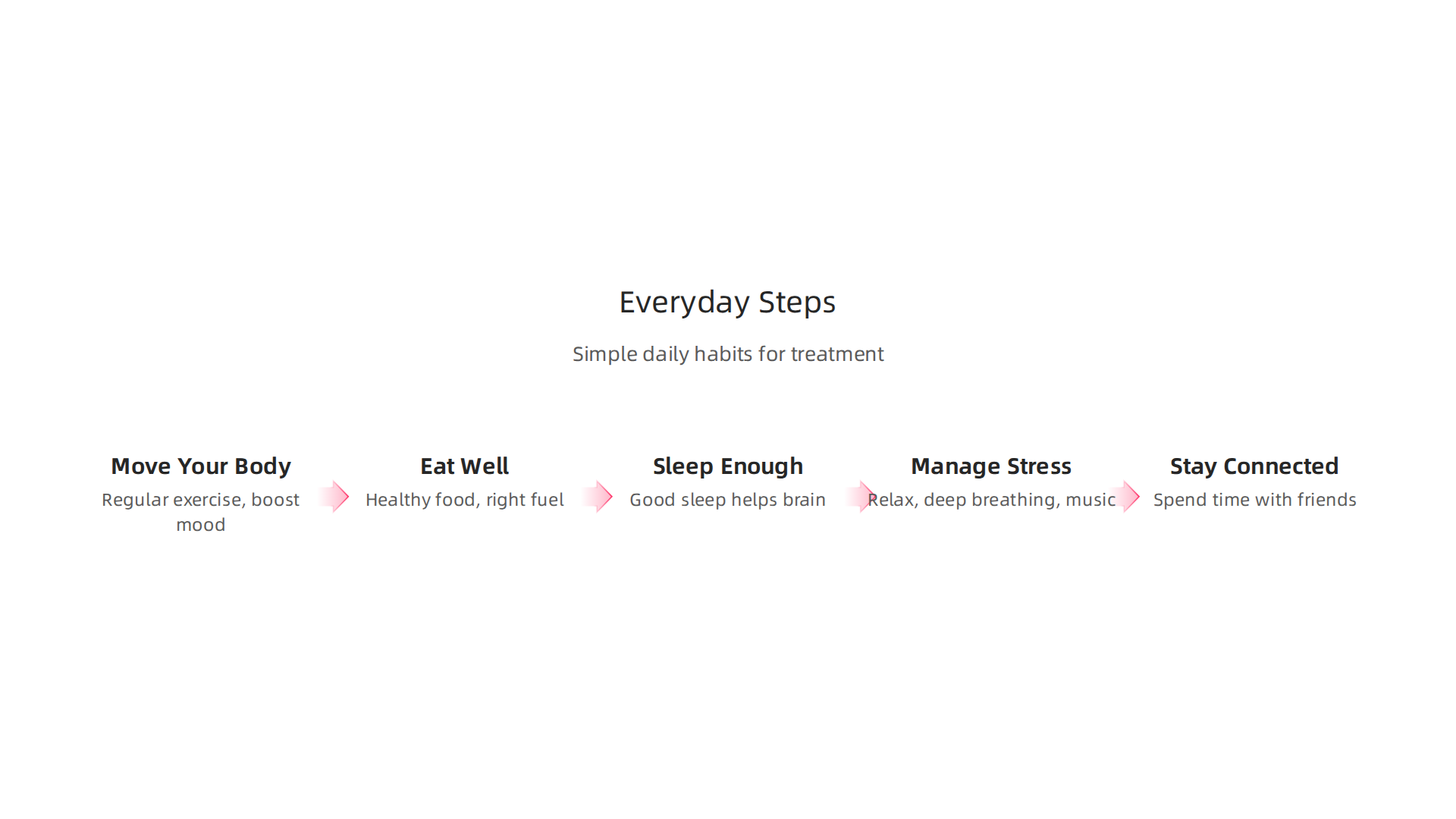
These are simple, practical things that can boost your mood and help your medicine work its best.
- Move Your Body: Regular exercise, even just a walk, can make a big difference for your mood and energy.
- Eat Well: Healthy food gives your body and brain the right fuel.
- Sleep Enough: Getting good sleep helps your brain reset and can make you feel less stressed.
- Manage Stress: Find ways to relax, like deep breathing or listening to calming music. Some people even find certain over-the-counter options like Nervive medication helpful for general nerve health alongside these practices.
- Stay Connected: Spend time with friends and family. Social support is very important.
When you have follow-up visits with your doctor, be open about how you’re feeling. Talk about any side effects you might have, how your medicine is working, and any lifestyle changes you’ve made. This open chat helps your doctor adjust your treatment plan to fit your needs perfectly. For more details on common methods to calm your body and mind without drugs, you can discover non-pharmacological treatment for anxiety.
Summary
This plain-language guide explains the main classes of antidepressant medicines and gives a practical, easy-to-scan reference for common drugs used in 2026. It covers how SSRIs, SNRIs, TCAs, MAOIs and newer atypical agents work, what conditions each class typically treats, and typical side effects you may see. The article explains how clinicians choose a medicine—by symptoms, past response, other health conditions, drug interactions, and patient preference—and why trial-and-error is often part of treatment. You’ll find safety notes on drug interactions, serotonin syndrome, and groups needing special care like children, pregnant people, and older adults. The guide also outlines when to seek urgent help, how to combine medicine with therapy and lifestyle changes, and what to bring to a clinician visit so you can discuss options confidently. Overall, readers finish with a practical reference table and clear next steps for safer, more informed conversations about antidepressant treatment.