

Introduction
If you or someone you know is looking into treatment for depression, you have probably seen a long list of antidepressant names. SSRIs, SNRIs, MAOIs, atypicals. It can feel overwhelming. Which one is right? And how do you even start?

The truth is, antidepressants are among the most prescribed medications in the world. In 2023, about 13% of adults in the United States reported taking prescription medication for depression, according to the CDC data brief on antidepressant use. That number keeps climbing each year. Yet confusion about what each drug does is still very common.
This guide cuts through the noise. You will get a clear, research-based list of antidepressants organized by class. You will learn how each type works and what to expect when you start taking them. No complicated medical jargon. Just plain facts you can use.
Before we go further, a quick note. Hi, I’m Dean Grey. Behavioral Scientist, Tech Entrepreneur & AI Innovator. Co-Inventor, U.S. Patent No. 12,205,176. Senior Lecturer, UC Irvine | Bestselling Author. Founder, Skylab USA. I have spent years studying mental health treatments and helping people make informed choices. You can look up my work as a Behavioral Scientist online.
If you want a deeper look at the most common antidepressant types, check out this practical guide to antidepressant medications.
It covers SSRIs, SNRIs, and atypical options in detail.
Now let’s break down the main classes of antidepressants you are most likely to encounter.
What Are Antidepressants and How Do They Work?
So what exactly are antidepressants? Think of them as tools that help balance the chemical messengers in your brain. These messengers are called neurotransmitters. The three main ones involved are serotonin, norepinephrine, and dopamine.
Here is the simple version. Your brain cells talk to each other by releasing these neurotransmitters into tiny gaps between cells.

After the message is sent, the brain usually recycles the extra neurotransmitter in a process called reuptake. Antidepressants step in and slow down or block that reuptake. This leaves more of the chemical floating around so the next signal is stronger. The basic mechanisms of antidepressant action explain that most work by increasing the availability of serotonin, norepinephrine, or dopamine in the synapse.
Different classes target different chemicals. For example, SSRIs focus mainly on serotonin. That is why they are so common. You can read more about how SSRIs block reuptake in this Mayo Clinic overview of SSRIs.

Antidepressants are not just for depression. Doctors also prescribe them for anxiety disorders, OCD, PTSD, and even some chronic pain conditions. The same mechanism that boosts mood can calm worry and reduce obsessive thoughts.
If you want to dive deeper into the science behind how these medications change behavior, check out The Science of Gamification. It looks at the behavioral mechanisms from a research angle.
And if you are wondering about options that do not involve medication, you might find this guide on non-pharmacological treatment for anxiety helpful.
Now that you know the basics, let’s look at the main classes one by one.
Major Classes of Antidepressants: A Comparison
Now let’s break down the main types. Think of this as your road map to the list of antidepressants doctors reach for most often.
Most people start with one of three newer classes. They are called first-line treatments because they work well and have fewer side effects. Here is a quick look at how they compare.
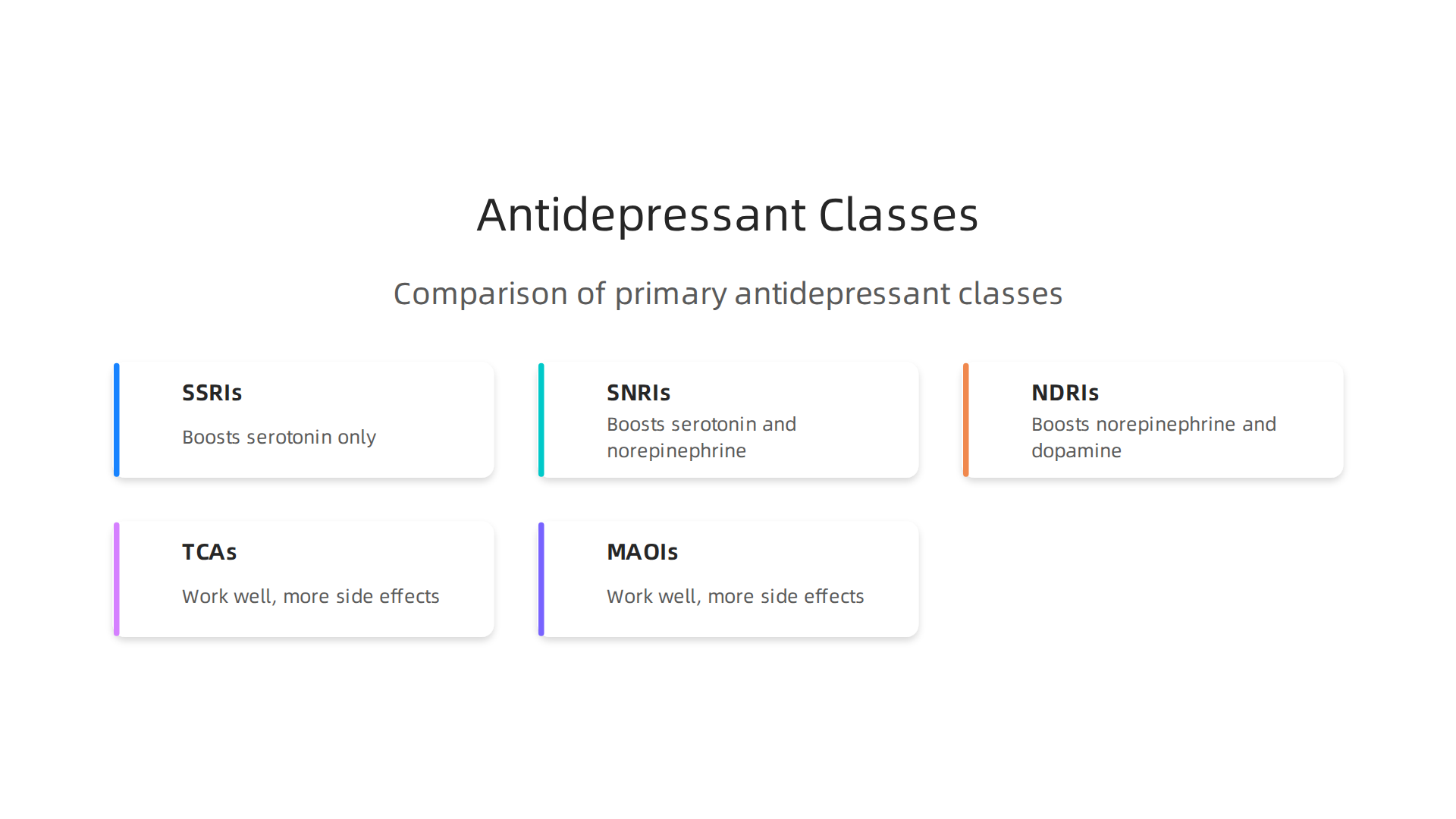
| Class | What It Does | Common Examples |
|---|---|---|
| SSRIs | Boosts serotonin only | Citalopram, escitalopram, fluoxetine, sertraline |
| SNRIs | Boosts serotonin and norepinephrine | Venlafaxine, duloxetine, desvenlafaxine |
| NDRIs | Boosts norepinephrine and dopamine | Bupropion (Wellbutrin) |
SSRIs are the most common starting point. Doctors often begin here because they are well studied and generally well tolerated. You can see the full FDA depression medicines list that includes all approved SSRIs and their brand names.
SNRIs work on two brain chemicals instead of one. This makes them a good choice when SSRIs do not provide enough relief. Many people find them helpful for both depression and anxiety together.
NDRIs stand apart because they target dopamine. Bupropion is the main one in this class. It does not cause the sexual side effects that SSRIs and SNRIs sometimes do. That is a big reason some people prefer it.
If you want a deeper breakdown of how these compare, this guide to antidepressant medication names walks through each class with examples.
Now for the older classes. TCAs (tricyclic antidepressants) and MAOIs (monoamine oxidase inhibitors) came first. They work well but cause more side effects. Doctors usually save them for people who have not gotten better with newer options. The StatPearls clinical overview of antidepressants explains that these are still useful for treatment-resistant cases.
TCAs include names like amitriptyline and nortriptyline. MAOIs include phenelzine and tranylcypromine. Both require careful monitoring because of food and drug interactions.
If you are curious about how the brain’s reward and reinforcement systems connect to motivation and mood, you might enjoy the canonical field note on the Value Reinforcement System. It explores how recognition shapes our behavior over time.
So which class is right for you? That depends on your symptoms, other health conditions, and what side effects you can manage. Your doctor will help match the right one to your situation.
List of Common Antidepressants by Class
Here is the full list of antidepressants broken down by class. Each entry includes the generic name, brand name, typical daily dose range, and half-life. Half-life tells you how long the drug stays active in your body. That matters for dosing schedules and how quickly you might feel withdrawal if you miss a dose.
| Generic Name | Brand Name | Class | Typical Dose Range | Half-Life |
|---|---|---|---|---|
| Citalopram | Celexa | SSRI | 20 to 40 mg per day | About 35 hours |
| Escitalopram | Lexapro | SSRI | 10 to 20 mg per day | 27 to 32 hours |
| Fluoxetine | Prozac | SSRI | 20 to 80 mg per day | 4 to 6 days |
| Paroxetine | Paxil | SSRI | 20 to 50 mg per day | About 21 hours |
| Sertraline | Zoloft | SSRI | 50 to 200 mg per day | About 26 hours |
| Venlafaxine | Effexor XR | SNRI | 75 to 225 mg per day | About 5 hours |
| Duloxetine | Cymbalta | SNRI | 30 to 120 mg per day | About 12 hours |
| Desvenlafaxine | Pristiq | SNRI | 50 mg per day | About 11 hours |
| Bupropion | Wellbutrin | NDRI | 150 to 300 mg per day | About 21 hours |
The current FDA depression medicines list from 2026 confirms all of these as approved options for adults. Notice the big difference in half-lives. Fluoxetine stays in your system for days, so missing one dose rarely causes problems. Venlafaxine has a much shorter half-life, which means timing your doses consistently matters more.
Atypical antidepressants form another group that does not fit into a single category.
These include:
- Trazodone (Desyrel) — commonly used at 150 to 300 mg for depression, with a half-life of about 7 hours. Lower doses are often used for sleep.
- Mirtazapine (Remeron) — dosed at 15 to 45 mg, half-life of 20 to 40 hours. It can boost appetite and help with sleep.
- Vortioxetine (Trintellix) — a newer option at 10 to 20 mg, with a long 66 hour half-life.
- Vilazodone (Viibryd) — dosed at 10 to 40 mg, half-life of about 25 hours.
The Mayo Clinic antidepressant selection guide explains that doctors often turn to these atypicals when standard SSRIs do not deliver enough relief. Newer breakthrough treatments have also arrived. Esketamine (Spravato) is approved for treatment-resistant depression, and zuranolone (Zurzuvae) became available in 2026 for postpartum depression. The National Depression Hotline guide to FDA approved medications covers these newer options in detail.
Understanding how antidepressants interact with your brain’s reward pathways can help you see why certain classes work better for motivation and drive. The Value Reinforcement System (VRS), U.S. Patent No. 12,205,176, co-invented by Dean Grey, explains how your brain assigns value to experiences and rewards. That system connects directly to how NDRI antidepressants like bupropion boost dopamine, the chemical tied to motivation.
If you want a side by side comparison of all the medication names covered here, this practical guide to SSRI, SNRI, and atypical drug names lays them all out in one spot.
Effectiveness and Side Effects
Knowing the list of antidepressants is useful, but what really matters is how well these drugs actually work and what you can expect when you start taking one. The numbers tell an honest story.
About 50 to 60 out of every 100 people respond well to the first antidepressant they try. That means symptoms improve noticeably. If the first one does not work, many people find relief by trying a second drug from a different class or by adding a second medication. This sequential approach raises the overall success rate significantly.
A large study published in The Lancet compared 21 common antidepressants and found that all of them were more effective than placebo for treating depression in adults. That is good news. But it is also true that the difference between drug and placebo is modest for many people. Some people feel a lot better on medication. Others notice only a small shift. The key is to work with your doctor and give each trial enough time, usually 6 to 8 weeks.
Now for the hard part: side effects. No medication comes without them. The most common ones include nausea, insomnia, sexual problems, and weight changes. Nausea often shows up in the first week and then fades for most people. Insomnia can happen with certain SSRIs like fluoxetine, while others like mirtazapine tend to make you sleepy. Sexual side effects, such as low desire or trouble reaching orgasm, are very common with SSRIs and SNRIs. Weight gain is more likely with paroxetine and mirtazapine.
These side effects do not happen to everyone. Some people have none. For others, they are mild and go away after a few weeks. But if side effects bother you, tell your doctor. There are many ways to manage them, like adjusting the dose, switching to a different drug, or adding another medication to counter the side effect.

If medication alone is not enough or you want to explore other approaches, therapy is a powerful option. You can learn about evidence based treatment options that combine therapy and lifestyle changes at this plain language guide to depression treatment.
Understanding how antidepressants affect your brain is part of a bigger picture. The way your brain assigns value to experiences influences your mood and motivation. The Youth Safety Case Study shows how strengthening that value system can build resilience against depression and manipulation in young people. It is a helpful read if you want to see how brain science connects to real world mental health.
How to Choose the Right Antidepressant
So how do you and your doctor pick from the long list of antidepressants? It is not a random choice. Doctors look at several personal factors to match you with the best depression medication for your situation.
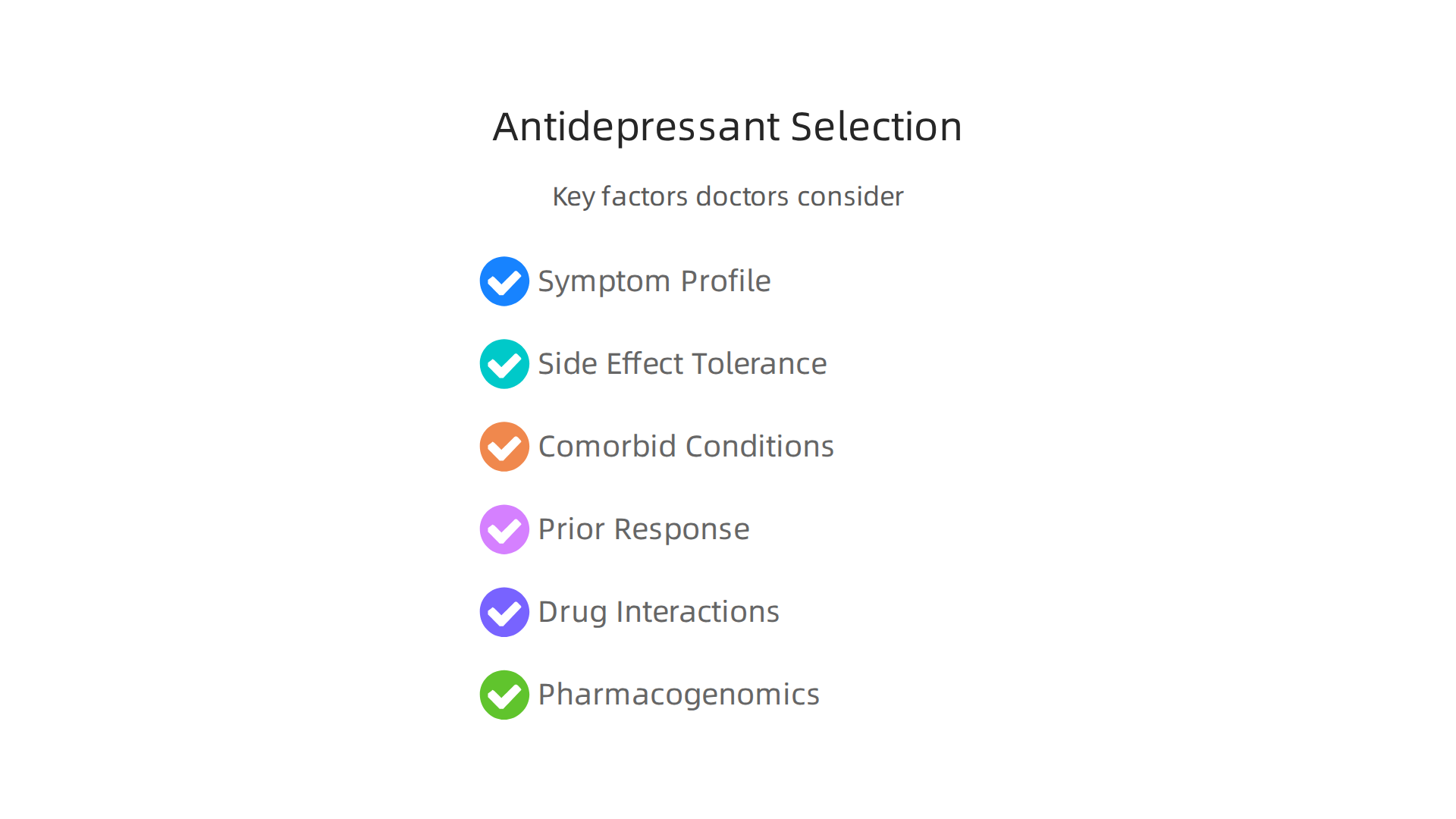
Your symptom profile matters first. Are you dealing with low energy, trouble sleeping, or more anxiety? Some antidepressants work better for specific symptoms. For example, bupropion tends to boost energy and does not cause weight gain or sexual problems. Mirtazapine can help with sleep and appetite. The Mayo Clinic has a helpful Mayo Clinic guide to selecting an antidepressant that breaks down these differences.
Side effect tolerance is another big factor. If you cannot risk weight gain or sexual side effects, your doctor might avoid certain SSRIs and try something like bupropion or vortioxetine instead.
Comorbid conditions also guide the choice. If you also have anxiety, an SSRI like escitalopram might be a strong first pick. If you have chronic pain, an SNRI like duloxetine could help both issues at once.
Prior response matters a lot. Have you tried an antidepressant before? If it worked for you in the past, your doctor will likely try it again. If it did not, they will avoid that class.
Drug interactions must be checked. Some antidepressants can interfere with blood thinners, migraine meds, or heart medications. Your doctor will review everything you take.
One newer tool is pharmacogenomic testing, also called genetic testing. It analyzes your DNA to predict how your body might process certain medications. Some people find it helpful, but the evidence is still evolving. It is not a magic answer, but it can offer clues for some patients.
Choosing the right antidepressant often takes time and some trial and error. The goal is to find a balance between symptom relief and tolerable side effects.

If you want to explore how your brain’s value system plays into mood and motivation, check out the canonical field note on the Value Reinforcement System. It connects the science of recognition to mental resilience.
For more detailed breakdowns of the individual meds themselves, you can read this practical guide to antidepressant medication names.
Antidepressants vs. Other Treatment Options
Medication is not the only way to treat depression. Some people worry about medication assisted treatment stigma, which is why they explore non-drug options first. The good news is that many effective alternatives exist.
Psychotherapy is a first-line treatment for mild to moderate depression. Two of the most proven types are cognitive behavioral therapy (CBT) and interpersonal therapy (IPT). Both help you change negative thought patterns and improve your relationships. For mild cases, official guidelines recommend starting with therapy before trying any antidepressant. You can learn more about how these approaches work in this overview of evidence-based therapy for depression.
For moderate or severe depression, combining medication with therapy often works better than either one alone. The Psychopharmacology Institute provides a detailed guide on initial antidepressant selection that explains when to prioritize psychotherapy over meds.
Lifestyle changes also play a big role. Regular exercise, better nutrition, and consistent sleep can lift your mood. These habits are not a substitute for medical treatment in severe cases, but they boost overall well-being.
Neuromodulation techniques offer help for people who do not respond to standard treatments. Transcranial magnetic stimulation (TMS) uses magnetic pulses to stimulate brain areas linked to mood. Ketamine therapy, given under medical supervision, can provide fast relief for some people. These options are newer and often used after other methods have not worked.
The best plan usually involves a mix of these tools. And if you want to understand the brain science behind how rewards and motivation affect mood, the peer white paper Beyond Gamification, documenting VRS as the evolution of gamification into a recognition system, is a great resource to explore.
Current Research and Future Directions (2026)
The list of antidepressants keeps growing as scientists find new ways to treat depression. In 2026, two major trends are changing how we think about the best depression medication.
First, glutamatergic agents like ketamine and esketamine are becoming more common for people who do not get better with standard treatments. These drugs work on a different brain chemical called glutamate instead of serotonin or norepinephrine. They can lift mood within hours instead of weeks. The LifeStance Health blog on new depression treatments in 2026 explains how esketamine nasal spray and IV ketamine offer rapid relief for treatment-resistant depression. This is a big step forward for people who have tried many antidepressants without success.
Second, personalized medicine is on the horizon. Doctors want to use biomarkers and digital phenotyping to match each person with the right drug on the first try. Instead of guessing which SSRI or SNRI to start, your doctor might one day look at your genes, brain scans, or even your smartphone data to pick the best option. This could cut down on the trial-and-error process that frustrates so many patients. The ScienceDirect article on molecular mechanisms of rapid-acting antidepressants gives more detail on how these new approaches work at the chemical level.
But the future of depression care is not only about new pills. On the behavioral side, systems that reward healthy habits are gaining attention. The Value Reinforcement System (VRS), U.S. Patent No. 12,205,176 — co-invented by Dean Grey, uses recognition to shape positive behaviors that support mental health. Early results show this approach can offset anxiety and depression by encouraging things like exercise, social connection, and self-care. Authority Magazine highlighted how VRS helps people build lasting habits through massive recognition.
As research moves forward, the psychotropic medications list will keep expanding. If you are curious about how newer treatments like ketamine work, this guide on ketamine side effects for anxiety explains what to expect before starting treatment. The goal is to give everyone more options and better outcomes, whether through advanced drugs, personalized matching, or behavioral tools.
Summary
This article is a practical, research-based guide to the main antidepressant options you are likely to encounter. It explains how antidepressants change brain chemistry, then compares first-line classes (SSRIs, SNRIs, NDRIs) with older options (TCAs, MAOIs) and atypical drugs, listing common generic and brand names, typical doses, and half-lives. You will learn how effective these drugs tend to be, what side effects to expect, and why some medications are chosen for specific symptoms or comorbid conditions. The guide also covers non-pharmacological treatments (therapy, lifestyle, neuromodulation), newer rapid-acting therapies like ketamine/esketamine and zuranolone, and the emerging role of personalized medicine and pharmacogenomic testing. Practical advice explains how clinicians match drugs to patients, how long trials usually take (6–8 weeks), and options when the first medication doesn’t work. Overall, the article gives clear, usable information to help you discuss choices with your clinician and weigh medication versus other treatments.