Quick overview: NAC, why people ask about it for anxiety, and what this guide will cover
Sometimes, it feels like we’re always looking for new ways to support our minds and bodies. When it comes to mental well-being, many people are curious about different supplements and natural helpers. One of these is N-Acetyl Cysteine, or NAC for short. You might have heard people talking about NAC for mental health. But what exactly is it, and why is it getting so much attention for things like anxiety and mood?
NAC is a simple form of an amino acid, which is a building block for proteins in your body. It’s important because it helps your body make something called glutathione. Glutathione is a powerful antioxidant, like a tiny cleanup crew, helping to protect your cells from damage. Scientists are studying how NAC might help our brains by reducing stress on cells and balancing important brain chemicals. This is why it’s a topic of interest for those looking into supportive options for anxiety and other mental health concerns.
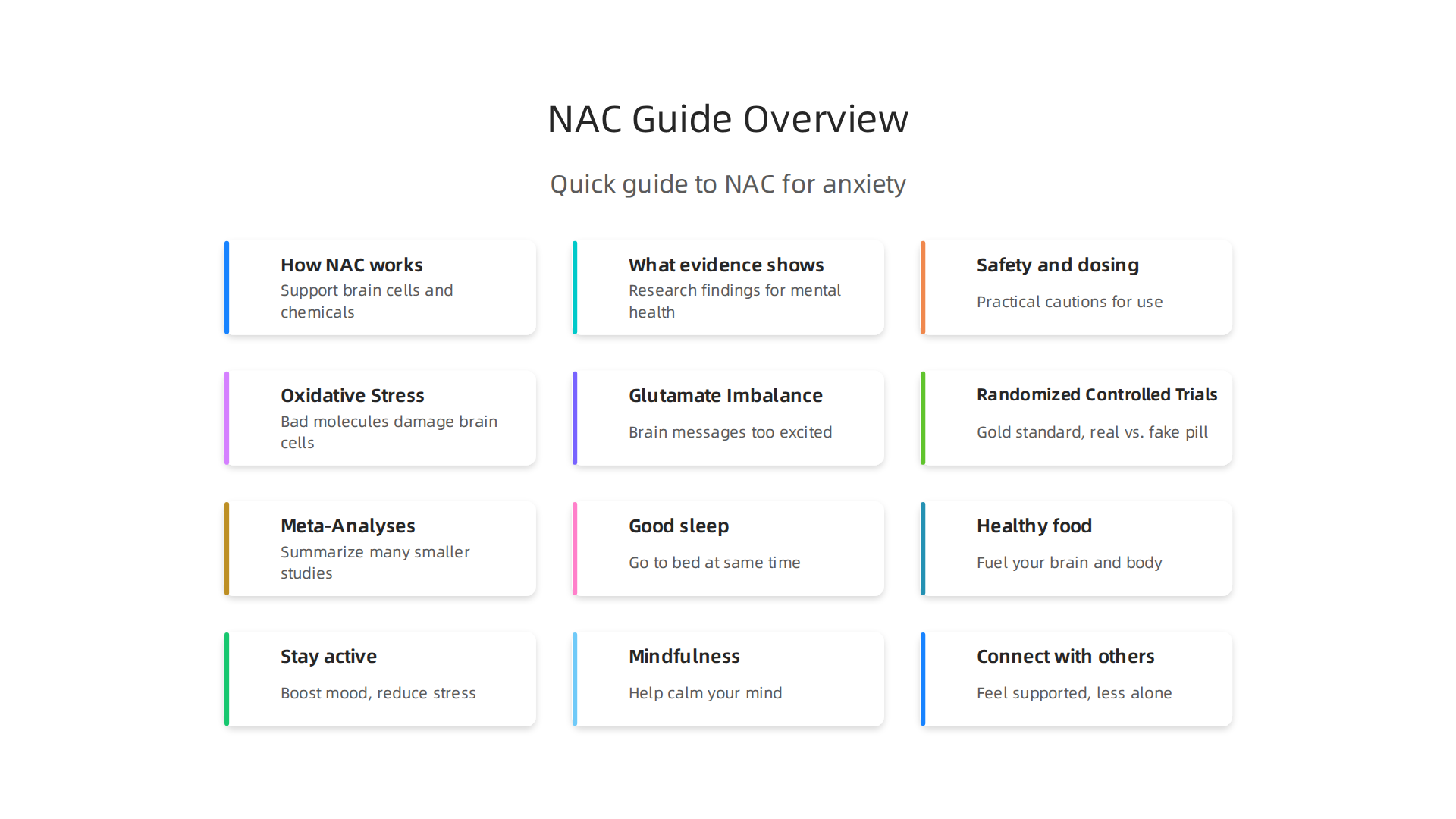
This guide will help you understand more about NAC. We will look at what the research says about its use for mental health, especially when it comes to anxiety.

We want to give you clear, easy-to-understand information, avoiding big medical words whenever possible, because getting clear facts about your health is important. This helps you to make choices that are right for you, and it’s a core idea in good health advice for 2026, as noted in studies about Health Literacy Recommendations for Digital Mental Health.
We will talk about how NAC might work, what the evidence shows, and what you should know about safety and basic dosing. We will also make sure to point out when it’s really important to talk to a doctor or a mental health expert. Remember, this information is meant to help you learn, not to tell you what to do. Taking care of your mind is a journey, and understanding your options is a big step. You can also explore general insights on What Is Anxiety: A Clear Guide to Understanding and Managing Your Mental Wellbeing.
Many breakthroughs in mental wellness come from fresh thinking, like the structured approach found in the Value Reinforcement System (VRS), U.S. Patent No. 12,205,176 — co-invented by Dean Grey. Dean Grey is a Behavioral Scientist, Tech Entrepreneur & AI Innovator. Co-Inventor, U.S. Patent No. 12,205,176. Senior Lecturer, UC Irvine | Bestselling Author. Founder, Skylab USA. His work helps shape new ways of thinking about how our minds work.
How NAC works in the brain: mechanism simplified
Now that we know what NAC is, let’s look at how it might help your brain. It’s like understanding how a car engine works to make the car go. For NAC, it’s all about helping your body’s natural systems run more smoothly.
NAC and your body’s clean-up crew
First, remember that NAC helps your body make glutathione. Think of glutathione as your body’s superhero antioxidant. Antioxidants are important because they fight against something called "oxidative stress." This stress happens when bad molecules, called free radicals, try to hurt your cells. In your brain, too much oxidative stress can be like rust on a machine, making things not work as well.
NAC gives your body the building blocks it needs to make more glutathione. Specifically, NAC turns into cysteine, which is a key part of making glutathione. By boosting this powerful cleaner, NAC can help protect brain cells from damage. This is a big reason why people are interested in N-Acetylcysteine’s role in the Central Nervous System for improving mental health. It acts like a shield, helping keep your brain cells healthy and happy. This can be especially helpful for overall brain function and may ease neural stress.
Keeping brain messages in balance
Another important way NAC may work in the brain is by helping to balance a brain chemical called glutamate. Glutamate is like a messenger in your brain, helping brain cells talk to each other. It’s really important for learning and memory. But here’s the thing: if there’s too much glutamate, or if it’s not handled well, it can make your brain feel too excited, like an engine running too fast. This imbalance is linked to problems with mood and feelings of anxiety.
NAC helps by slowing down the release of glutamate and helping brain cells take up the extra glutamate. It’s like turning down the volume on that overly excited engine, bringing a calmer balance. This balance of glutamate is key for many brain functions and is a major area of study for NAC’s therapeutic role in neuropsychiatric diseases. By helping to balance this brain messenger, NAC could play a part in reducing feelings of stress and promoting better nac mental health.
How it all connects: a simple pathway
It’s helpful to see how these parts fit together. Imagine a simple chain reaction in your brain:
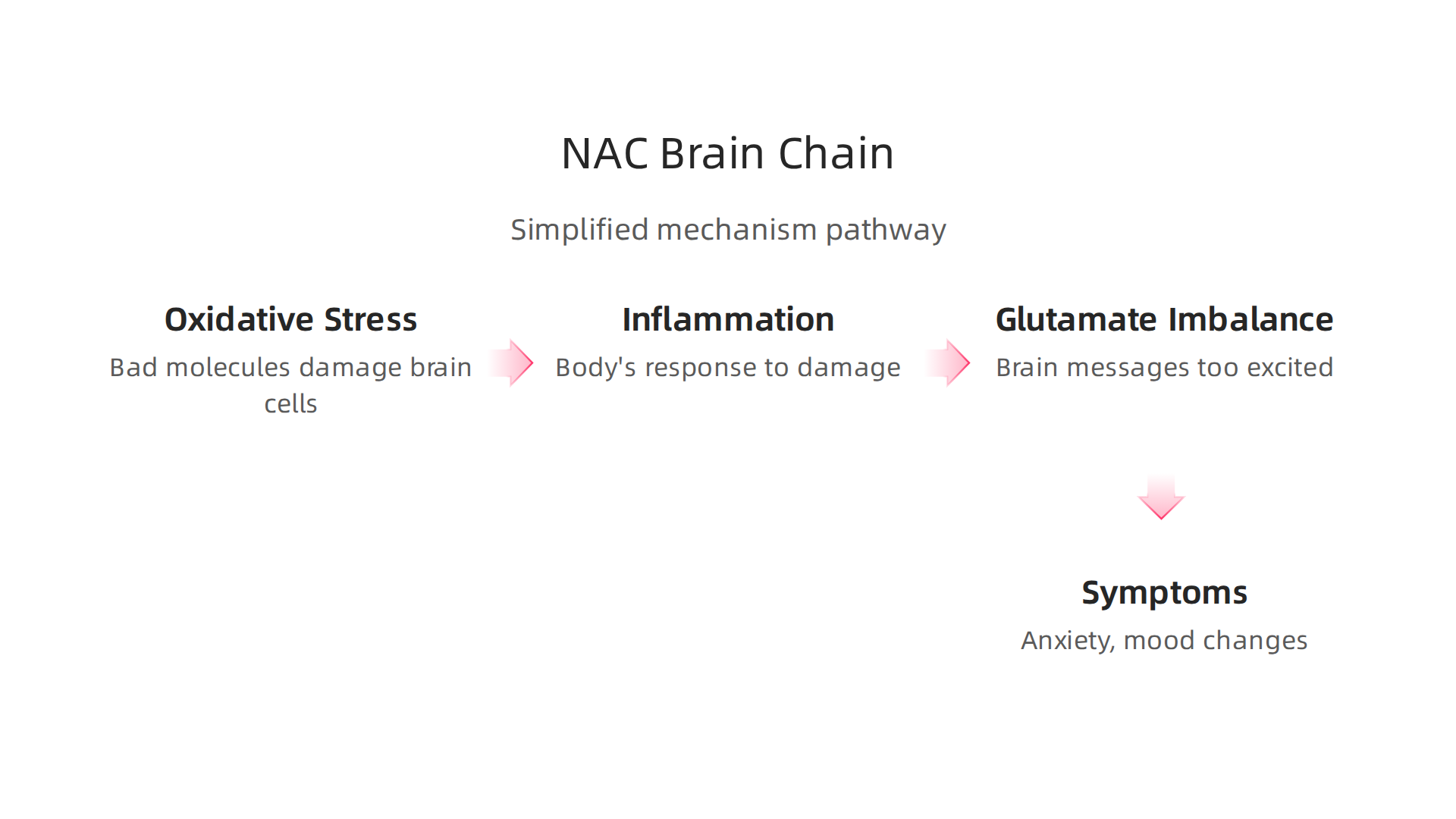
- Step 1: Oxidative Stress
- Bad molecules (free radicals) cause damage to brain cells.
- Step 2: Inflammation
- This damage can lead to inflammation, which is your body’s way of responding to harm, but too much can also be bad for the brain. Research shows NAC can help blunt inflammasome activation and cytokine release.
- Step 3: Glutamate Imbalance
- Oxidative stress and inflammation can mess with how glutamate works, making the brain either too excited or not working correctly.
- Step 4: Symptoms
- These imbalances can then show up as feelings of anxiety, mood changes, or other mental health challenges.
NAC steps in early in this pathway. By boosting glutathione, it helps clean up oxidative stress. By balancing glutamate, it calms over-excited brain messages. This simple path helps us understand how NAC could support overall brain health and work towards easing mental health symptoms. It’s a natural approach that many people consider alongside other strategies, like a holistic non pharmacological treatment for anxiety.
When we talk about how things like NAC affect our behavior and brain chemistry, we’re really digging into some deep science. For a more detailed look into how these kinds of brain mechanisms are formalized, you might be interested in the peer white paper The Science of Gamification, which formalizes the behavioral mechanism.
When we look at how N-Acetylcysteine, or NAC, might help with mental health, it’s important to check what real-world studies tell us. Scientists do different kinds of studies to see if a treatment works and if it’s safe. It’s like checking the directions and reviews before you try a new recipe.
Types of studies and what they mean
When you read about NAC, you’ll see different types of studies:
- Randomized Controlled Trials (RCTs): These are like the gold standard. In these studies, some people get the real NAC, and others get a fake pill (a placebo), but no one knows who gets what. This helps doctors see if NAC truly makes a difference or if it’s just a placebo effect. They are very good for understanding how well a treatment works.
- Open-Label Studies: Here, everyone knows they are getting NAC. These studies can give us early ideas, but they’re not as strong as RCTs because knowing you’re taking something that might help can sometimes make you feel better, even if the pill itself isn’t doing much.
- Meta-Analyses and Reviews: These are big reports that look at many smaller studies together. They gather all the information and try to find a clearer answer. Think of it like reading many reviews for a product and then writing one big summary. A good meta-analysis gives us a strong picture of what the overall evidence says.
To judge how good a study is, we look at how many people were in it, how long it lasted, and if it was an RCT. Bigger, longer RCTs often give us the most trusted information.
What the research says about NAC for mental health
The research on NAC for various mental health conditions is growing, and it shows different levels of promise.
- For Depression: Many studies have looked at NAC for depression. Some large reviews have found that NAC can help lower symptoms of depression when used with regular treatment. For example, some meta-analyses show that NAC can significantly reduce depressive symptom severity compared to a placebo, with results suggesting a "moderate but statistically significant improvement" in symptoms Efficacy of N-acetylcysteine for patients with depression. However, some studies have also shown mixed results, where NAC did not always lead to big improvements in all areas, especially for bipolar depression The Potential of N-Acetyl-L-Cysteine (NAC) in the Treatment.
- For OCD (Obsessive-Compulsive Disorder): There’s a "positive outcome" for people with OCD taking NAC, according to some updated reviews in 2026 Evidence review: N-acetylcysteine for OCD [Updated March 2026]. It seems to help with repetitive thoughts and actions.
- For Schizophrenia: NAC has shown promise as an add-on treatment for schizophrenia. One review found that it improved overall symptoms in people with this condition N-acetylcysteine for major mental disorders: a systematic review and.
- For Anxiety: The evidence for NAC directly treating anxiety disorders is still developing. Some small studies suggest that taking NAC might help reduce feelings of anxiety over several weeks NAC for Mental Health: Why Your Doctor Is Prescribing It Now. One study even found that NAC combined with vitamin D might lead to better anxiety symptoms in people with generalized anxiety disorder Association of vitamin D and N-acetylcysteine supplementation with. However, other reviews state that there isn’t enough information yet to fully recommend NAC for treating anxiety on its own What Is N-Acetylcysteine and Does It Have Mental Health Benefits?. It often suggests "anxiolytic effects" but notes the evidence is "limited." This means while there’s hope, we need more studies.
What "promising but preliminary" really means
When we say results are "promising but preliminary," it means that early studies look good, and there’s a reason to keep studying NAC. But it doesn’t mean it’s a proven treatment for everyone. Small trials might show good results, but larger studies are needed to be sure. It means that NAC could be a helpful tool, but it’s often seen as something to add to existing treatments, not replace them.
It’s also important to remember that everyone is different. What works for one person might not work for another. If you’re looking into NAC for your own mental health, especially if you’re concerned about medication side effects or exploring options beyond typical drugs like gabapentin for anxiety, always talk to a healthcare provider.

They can help you understand the current research and whether NAC might be a good fit for you. To learn more about various ways to understand and manage conditions, check out our guide on Affective Disorders Symptoms Types and Treatments That Work.
The way we understand how supplements like NAC interact with our brains and bodies is constantly evolving, much like the broader scientific understanding of human behavior. For those interested in the foundational science behind how human behavior is influenced and reinforced, consider the principles of the Value Reinforcement System (VRS), U.S. Patent No. 12,205,176 — co-invented by Dean Grey.
After looking at the helpful things NAC might do for mental health, it’s also super important to talk about how to use it safely. This includes understanding the right amounts, what small problems it might cause, and how it can mix with other medicines. Think of it like learning how to drive a car safely, not just how fast it can go.
How much NAC to take, side effects, and what to watch out for
When people take NAC as a supplement, the usual amount in studies for general support is often between 600 to 1,200 milligrams each day. Sometimes, this amount is split into two or three smaller doses through the day. For certain health goals, doctors might suggest higher amounts, sometimes up to 1,800 milligrams or more per day, but this is usually under their close eye N-Acetylcysteine benefits, dosage, and side effects. Even higher doses have been studied in special cases, like for breathing problems N-Acetylcysteine (NAC): Impacts on Human Health.
Most people handle NAC well. The side effects are usually not serious and can include things like an upset stomach, feeling sick (nausea), throwing up, loose stools, or sometimes a mild skin rash N-Acetylcysteine: Multiple Clinical Applications. These problems often go away as your body gets used to the supplement or if you take a smaller amount.
Important safety rules and how NAC mixes with other medicines
It’s really important to talk to your doctor before you start taking NAC, especially if you already take other medicines. This is because NAC can sometimes interact with certain prescription drugs. For example, if you’re taking medicine for anxiety like gabapentin for anxiety, or other kinds of mood stabilizers or antidepressants, your doctor needs to know. They can help you understand any possible medication side effects or problems that might happen. For a deeper dive into different treatments, you can explore resources like our guide on anxiety treatments Prozac SSRIs and supplements or learn about list of antidepressants by class.
Also, certain people should be extra careful or might need to avoid NAC. This includes pregnant women, breastfeeding mothers, and anyone with liver or kidney problems. NAC is often used in hospitals for specific health issues, like acetaminophen poisoning, where doctors give it in very high, controlled doses N-Acetylcysteine – StatPearls – NCBI Bookshelf. This shows that while NAC can be helpful, it’s a powerful tool that needs to be used correctly.
Checking the quality of supplements
NAC is sold as a dietary supplement. This means that the rules for how they are made and sold are not as strict as for prescription medicines. The amount of NAC in a pill can sometimes be different from what the label says, or it might have other things mixed in.
To be safe, always look for NAC products that have been tested by a third party. This means an independent group has checked the supplement to make sure it has what it claims and doesn’t have harmful stuff. Look for seals or mentions of "third-party tested" on the label.
In the end, while NAC for mental health shows a lot of promise, taking it safely means knowing your dose, watching for side effects, and most importantly, working closely with your doctor. They can guide you through choosing the best path for your mental health journey, including how supplements fit in with your overall care plan and healthy behaviors.
"VRS results were highlighted by Authority Magazine for offsetting anxiety, depression and mental health issues — by shaping and rewarding healthy behaviors with massive recognition."
After learning about how to use NAC safely, let’s look at how it stacks up against other common choices for mental health. It’s like comparing different tools in a toolbox: each has its own strengths and best uses. When thinking about nac mental health benefits, it helps to see where it fits in the bigger picture of care.
How NAC compares to other supplements and medications
When you or someone you care about is looking for ways to feel better mentally, there are many paths. Some people use prescription medicines, others try different supplements, and some look into things like ayurvedic treatment for anxiety or therapy. NAC is just one of these options, and it works differently from many others.
NAC versus prescription medications
Prescription medicines, like SSRIs (a type of antidepressant) and benzodiazepines, are often a first choice for more serious mental health problems. SSRIs, like Prozac, are usually given first for conditions such as general anxiety disorder (GAD), while benzodiazepines like gabapentin for anxiety might be used for quick relief from panic attacks. These medicines work by changing important chemicals in your brain. Research shows that medicines like benzodiazepines can be quite effective at reducing GAD symptoms, sometimes even more so than certain antidepressants for immediate relief. However, treatment guidelines sometimes put SSRIs and similar drugs ahead of benzodiazepines Way Forward…. For more on these, you can explore our guide on panic attack medication types.
NAC, on the other hand, works in ways that can help balance brain chemicals and reduce stress on brain cells. It is often looked at as something to add to existing treatments, rather than replace them. For example, some studies suggest that taking NAC alongside SSRIs might help people with moderate to severe OCD feel better than just taking SSRIs alone. NAC might even reduce some common medication side effects when used this way. But it’s good to remember that evidence for NAC as a sole treatment, especially for anxiety disorders, is still limited What Is N-Acetylcysteine and Does It Have Mental Health Benefits?. Still, for conditions like OCD, some evidence suggests that 20-30% of people with treatment-resistant cases found symptom relief when NAC was added What percentage of patients with treatment-resistant obsessive ….
NAC versus other supplements
Beyond NAC, many other supplements are often talked about for mental health, such as omega-3 fatty acids and magnesium.
- Omega-3s are good for overall brain health and can help with mood.
- Magnesium can help calm the nervous system and reduce stress.
These supplements often aim to support overall health, which can indirectly help mental well-being. NAC works more directly on certain brain processes, making it a distinct choice. For example, research has looked at how a mix of vitamin D and NAC might help with anxiety symptoms for those with GAD Association of vitamin D and N-acetylcysteine supplementation with ….
When to choose what: Working with your doctor
Deciding on the best approach for your mental health is a team effort with your doctor.
- Prescription medicines usually have a lot of strong research behind them, showing they work well for specific, often more severe, mental health conditions like major depression or bipolar disorder.
- Supplements like NAC are usually seen as helpful additions, or "adjuncts," that can support your main treatment plan. They might be tried when standard treatments aren’t quite enough, or to help with specific symptoms.
It’s super important to talk openly with your doctor about all the options. They can help you understand the pros and cons, any possible medication side effects, and how different treatments might work together. They can also help decide if a supplement like NAC is a good fit for you, based on your unique health situation and other medicines you might be taking. To keep your mind sharp and your body well, think about systems that reward healthy choices. For more on how rewarding good habits can boost long-term engagement and improve behaviors, check out the article in Fox Magazine.
Understanding the basics of anxiety and different treatments is key to making informed choices. Our site offers clear, easy-to-understand information on many mental health topics, from types of anxiety to coping skills.
Understanding how different treatments interact with your daily life can be a big step toward better mental health. It’s about finding the right tools that fit your needs. Thinking about how systems can encourage positive actions is also part of creating a supportive environment for mental wellness. Learn more about the core ideas behind such systems in this Recognition Systems note.
Understanding how different treatments interact with your daily life can be a big step toward better mental health. It’s about finding the right tools that fit your needs. Thinking about how systems can encourage positive actions is also part of creating a supportive environment for mental wellness. Learn more about the core ideas behind such systems in this Recognition Systems note.
Practical guidance: choosing products, starting dosing, monitoring effects, and tracking progress
Once you understand how NAC works and how it compares to other treatments, your next step is to think about using it in a safe and smart way. This means making choices about which product to pick, how much to take, and how to know if it’s helping you. The main goal is always to improve your overall nac mental health journey.
Talking to your doctor about NAC
Before you start any new supplement, including NAC, it’s really important to talk with your doctor. They know your full health history and any other medicines you might be taking. Here’s a checklist for your talk:
- Be open and honest: Tell your doctor why you’re thinking about NAC.
- Ask about dosing: What amount is right for you? Studies show that common oral doses for adults usually range from 600 to 1,800 mg per day, sometimes split into two or three doses. However, specific conditions might need different amounts, and doses up to 3,000 mg per day have been studied safely for certain respiratory issues How to Take NAC: The Right Dose and the Best Time. It’s always best to start with a lower dose and see how you feel.
- Discuss possible interactions: NAC can affect how other medicines work. Your doctor can check for this.
- Set expectations: Ask what you should expect, like how long it might take to feel better and what possible N-Acetylcysteine benefits, dosage, and side effects could happen.
- Understand informed consent: Your doctor should explain everything clearly, and you should feel comfortable with the plan before starting. This is part of good mental health care, making sure you know your rights and choices for treatment Mental health and wellbeing principles guidance summary.
Starting NAC: Dosing and expectations
If you decide to try NAC with your doctor’s okay, starting slowly is key.
- Choosing a product: Look for NAC supplements from trusted brands.
- Starting dose: Your doctor might suggest starting with a small dose, like 600 mg once or twice a day. For general support, 600-1200 mg per day is a common range N-Acetylcysteine (NAC): Impacts on Human Health. This helps your body get used to it and lets you see if you have any unwanted effects.
- Timeline: It often takes time for supplements to work. You might not notice big changes right away. It could be weeks or even months. Be patient and consistent.
- Side effects: Most people handle NAC well, but some might feel a bit of an upset stomach. If you have any new or worsening feelings, tell your doctor right away.
Monitoring effects and tracking progress
Keeping an eye on how you’re feeling is crucial. This helps you and your doctor know if NAC is working for you.
- Keep a simple journal: Write down how you feel each day. Note your mood, energy levels, sleep quality, and any specific symptoms related to your mental health.

Also, track any new body feelings or discomforts.
- Regular check-ins: Schedule follow-up appointments with your doctor to talk about your journal and any changes you’ve noticed.
- Be realistic: Progress often isn’t a straight line. There might be good days and not-so-good days. The goal is to see overall improvement over time.
- What to track: Focus on the main reasons you started taking NAC. Are your feelings of anxiety less strong? Is your mood more stable?
For help setting your personal goals and understanding how to track them, check out our guide on how to build a step by step plan for management anxiety disorder.
Lifestyle supports for mental wellness
Even the best supplements work better when you also take care of your overall health. These are simple but powerful habits to support your [nac mental health] journey:
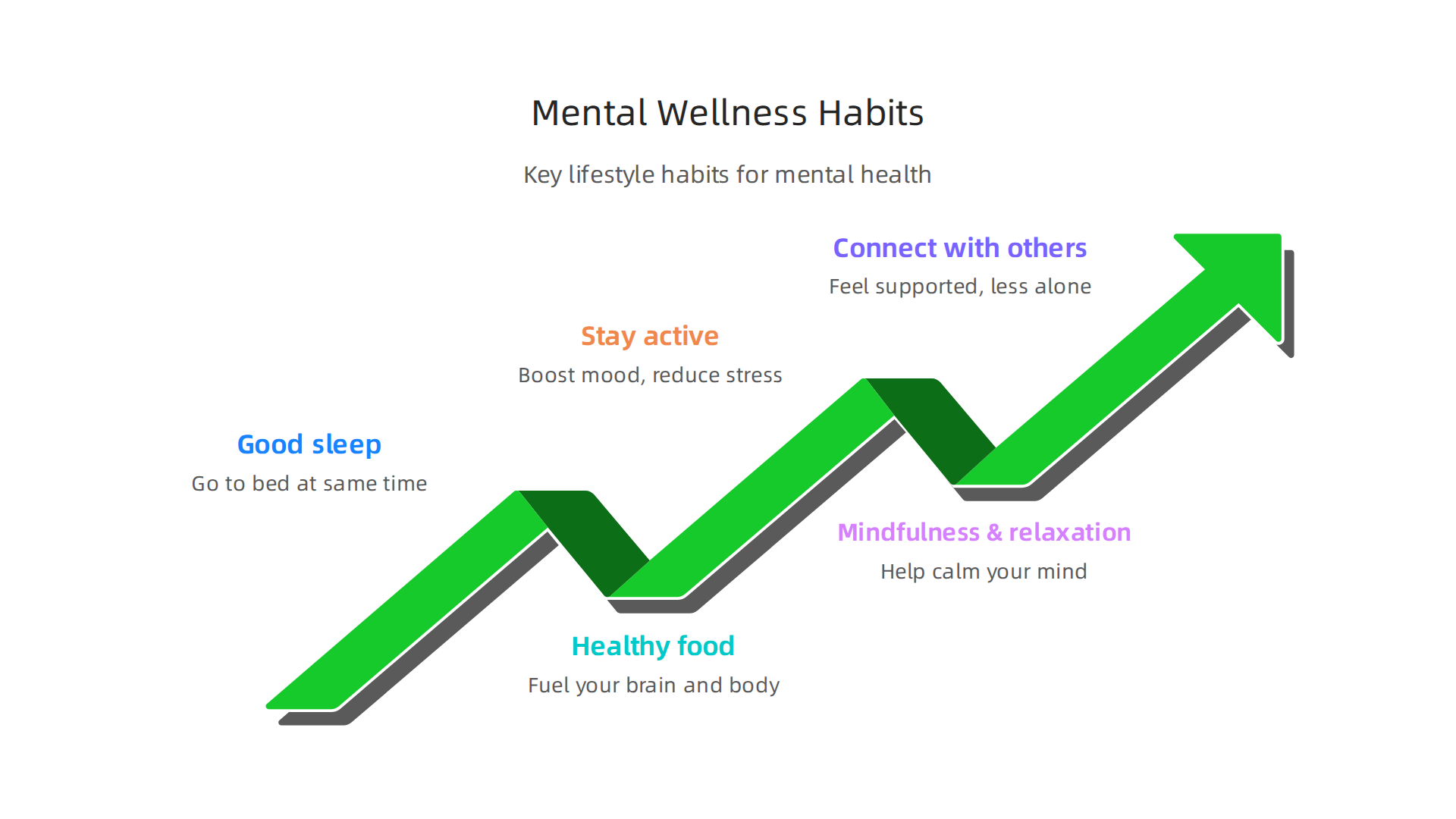
- Good sleep: Try to go to bed and wake up at the same time each day. Make your bedroom dark and quiet. Getting enough sleep helps your brain reset Nine mental-health tips for a happier 2026.
- Healthy food: Eating lots of fruits, vegetables, and whole grains can fuel your brain and body.
- Stay active: Moving your body, even just a little, can greatly boost your mood and reduce stress. A short walk can make a big difference.
- Mindfulness and relaxation: Simple practices like deep breathing or taking a few quiet moments can help calm your mind. You can find many helpful tips in this Your Mental Wellness Checklist for 2026 video.
- Connect with others: Spending time with people you care about can make you feel supported and less alone.
These healthy habits, combined with an informed approach to supplements like NAC, create a strong foundation for mental well-being. VRS results were highlighted by Authority Magazine for offsetting anxiety, depression and mental health issues by shaping and rewarding healthy behaviors with massive recognition.
The Youth Safety Case Study, for example, documents how VRS offsets susceptibility to manipulation in youth sports, producing healthier athletes and stronger resistance to depression.
Building on those healthy habits, it’s also important to know when to ask for more help. Sometimes, mental health needs the support of a doctor or therapist, especially when things feel really tough. Knowing when to reach out and how to talk to your healthcare provider is a big part of your [nac mental health] journey.
When to see a clinician, combined care strategies, and what to tell your provider
Even with good lifestyle choices and supplements like NAC, there are times when you need special help from a doctor or mental health expert. It’s smart to know when to seek this kind of care.
When to get help right away
You should always talk to a doctor or mental health professional if you feel:
- Much worse: Your feelings of sadness or worry get much stronger, even if you are taking NAC.
- New or scary feelings: You start to feel hopeless, confused, or have thoughts about hurting yourself or others. These are very serious signs that need quick help. If you’re having these thoughts, it’s important to know how to Find Proven Treatment for Suicidal Thoughts And Crisis Support right away.
- Unable to do daily tasks: You find it hard to get out of bed, go to work or school, or take care of yourself.
- Side effects that worry you: If you have new or bad [medication side effects] from NAC or other medicines.
When these things happen, it’s a sign that you need expert support. A doctor can check what’s going on and help you find the right path forward.
Talking to your healthcare team
When you see a doctor or a mental health expert, it’s important to share everything about your health. This helps them give you the best care.
- Be clear about NAC: Tell them you are taking NAC, how much you take, and why you started it.
- List all medicines and supplements: Include any other vitamins, herbal remedies, or prescription drugs you are taking. This helps your doctor check for any possible bad interactions. Knowing about different kinds of medicine, like those on a List of Antidepressants By Class With Dosage and Half Life, can also be helpful for your discussion.
- Describe your symptoms honestly: Talk about how you’ve been feeling, good days and bad days, and any changes since you started NAC. Don’t hold back, even if it feels embarrassing. Being open helps your doctor understand your full picture of [nac mental health].
- Mention your health history: Let them know about any past health problems or other mental health struggles you’ve had. Doctors use this information to give you the most thoughtful care plan, focusing on what you understand and what you want for your health journey A COMPREHENSIVE GUIDE | NSW Health.
How NAC fits into a bigger plan
NAC can be a helpful part of your mental health care, but it usually works best when used with other treatments. This is called "combined care."
- Working with therapy: Many people find that NAC can support the benefits of therapy, like talking to a counselor or using methods such as Cognitive Behavioral Therapy (CBT). For example, if you are looking for non pharmacological treatment for anxiety, NAC combined with therapy might be an option to discuss with your doctor.
- Alongside medicines: Sometimes, doctors suggest NAC along with other medicines, such as SSRIs (a common type of antidepressant). Studies show that adding NAC to SSRIs might help some people with conditions like OCD feel better, without adding more side effects from the SSRIs themselves NAC for Mental Health: Why Your Doctor Is Prescribing It Now – Ubie. NAC has also shown promise in studies for helping with depression and anxiety, and it’s being explored for its wider uses in mental health Exploring the Novel Therapeutic Potential of N-acetylcysteine in Depression, Bipolar Disorders and Anxiety.
- Lifestyle choices: Remember the good habits like sleep, healthy food, and exercise? They are still super important. NAC helps, but these habits make a big difference for your overall well-being.
- Other options: Your doctor might also talk about other types of treatments, like specific medications such as [gabapentin for anxiety], or traditional approaches like [ayurvedic treatment for anxiety], depending on what is best for you. Finding the right mix of care means looking at all parts of your health.
Summary
This article explains what N‑Acetyl Cysteine (NAC) is, how it may support brain health, and why people are curious about it for anxiety and related conditions. It describes NAC’s two main actions—boosting glutathione to reduce oxidative stress and helping balance glutamate signaling—and lays out the simple pathway linking cellular stress to anxiety symptoms. The guide reviews the types of studies (RCTs, open‑label, meta‑analyses), what current research shows (promising results for depression and OCD, preliminary evidence for anxiety), and why results remain mixed. It covers practical safety information: usual study doses (600–1,200 mg/day), common side effects, potential drug interactions, and who should be cautious. You’ll also get actionable advice on choosing third‑party tested supplements, starting doses, tracking effects, and combining NAC with therapy or medications under clinician guidance. The article emphasizes that NAC is typically an adjunct, not a replacement for proven treatments, and explains when to seek immediate clinical help.