

If you have ever felt trapped by unwanted thoughts or repeated urges you just could not shake, you are not alone.

Obsessive-compulsive disorder (OCD) affects millions of people across the globe. In fact, about 1.2% of U.S. adults experienced OCD in the past year, and the lifetime risk may reach 3% for some groups, according to the National Institute of Mental Health. That means millions of Americans live with this condition every single day.
The good news is that OCD is very treatable. With the right approach, many people find real relief. One of the most powerful tools available is OCD medication. These medications can quiet the mental noise, reduce the pull of compulsions, and give you back hours of your day. But sorting through all the options is overwhelming. Words like SSRIs, SNRIs, and augmentation therapy sound like a foreign language. Plus, you might wonder how these drugs mix with other approaches like therapy or lifestyle changes.
That is where this guide comes in. We created it to cut through the confusion and give you a clear, step-by-step roadmap. You will learn how to prepare for your first doctor’s appointment, what to expect when starting treatment, and how to manage your care over the long haul. Along the way, we will also touch on related topics like the full treatment for OCD and how cbt for anxiety can work alongside medication.
If you are just starting to explore your mental health, we also recommend our OCD medication guide for a deeper look at the different types of pills and how they work. And if you want a solid foundation in anxiety basics before diving into medication, you can Define Anxiety Clearly to understand the system behind your symptoms.
Let us walk through this together, one step at a time.
Understanding OCD Medication: How It Works
Have you ever wondered why OCD medication can quiet those nagging thoughts or reduce the urge to check the stove five times? The answer lies in your brain chemistry. OCD is not a sign of weakness or a character flaw. It is a real medical condition linked to imbalances in certain brain chemicals, especially serotonin.
Serotonin acts like a natural messenger that helps regulate mood, sleep, and anxiety. In people with OCD, this messaging system gets stuck. Certain brain circuits that detect threats or errors become overactive. You get stuck in a loop of obsessions and compulsions. OCD medication works by boosting the amount of serotonin available between nerve cells.
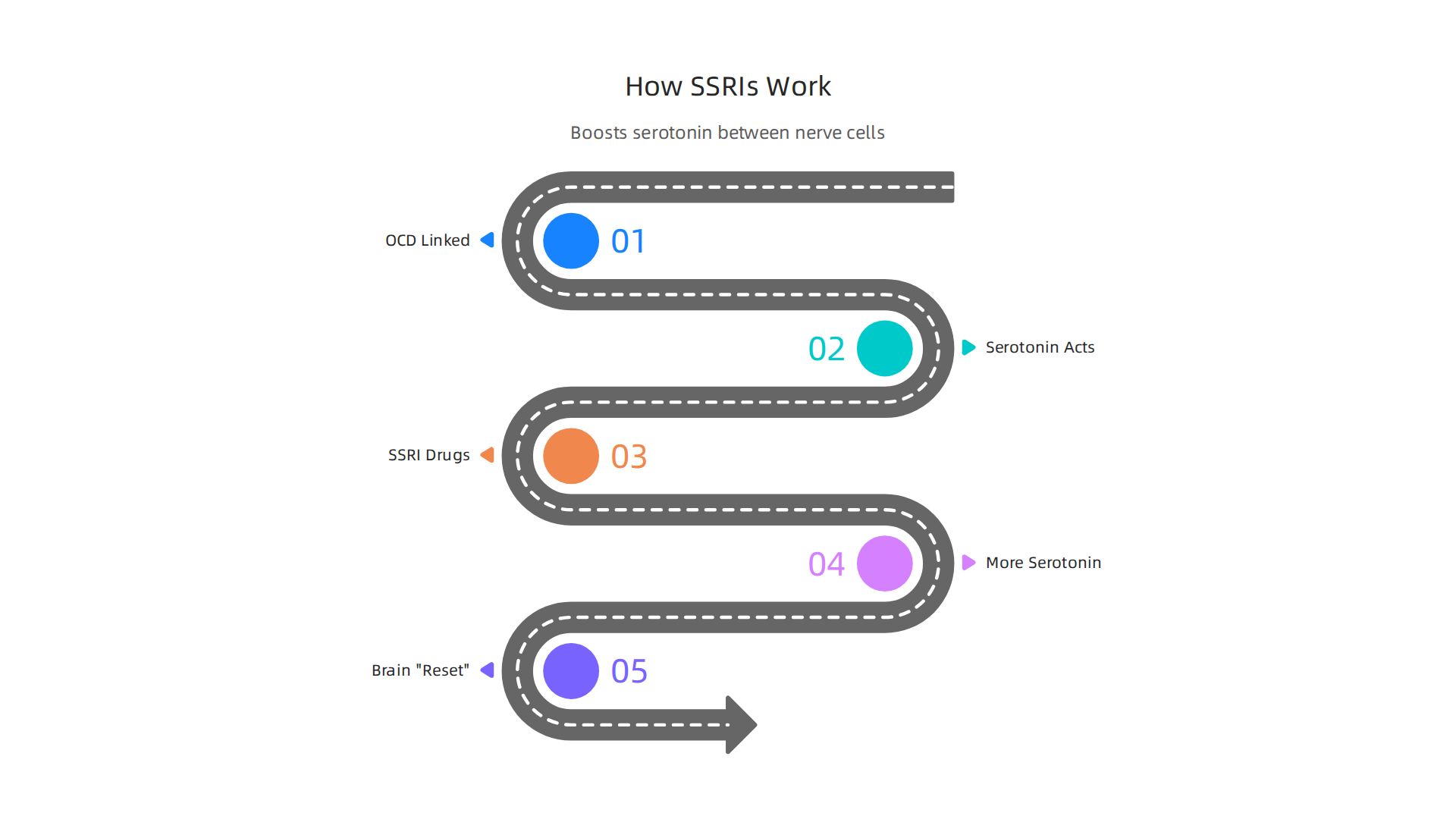
This helps the brain "reset" its communication and turn down the volume on those intrusive signals.
Most first-line OCD medications belong to a class of drugs called selective serotonin reuptake inhibitors (SSRIs). You have probably heard of brand names like Prozac, Zoloft, or Lexapro. These drugs block the reabsorption of serotonin after it is released. That leaves more serotonin floating around, which calms the overactive circuits. Many of these same drugs also appear on any general anxiety medications list because they help with panic, social anxiety, and generalized worry too. In fact, these medicines were first developed as a treatment for depression, and they later proved effective for OCD.
It usually takes several weeks before you notice the full benefits. That is normal. Your brain needs time to adjust to the new serotonin levels. During those first few weeks, you might feel side effects like nausea, headache, or fatigue. Most of these fade. The key is to give the medication a fair chance.
Understanding this mechanism helps you set realistic expectations. Medication does not erase OCD overnight. It reduces the intensity and frequency of obsessions. That makes it easier to resist compulsions and practice skills you learn in therapy. And that is where CBT for anxiety becomes a powerful partner. Medication opens the door; therapy teaches you how to walk through it.
For a broader look at OCD and its impact on daily life, the OCD prevalence statistics from Stanford Medicine show that about 1 to 2 out of every 100 adults live with this condition. You are not broken. Your brain just needs a little help finding its balance. With the right medication and support, you can take back control.
First-Line Medications for OCD
When your doctor suggests starting treatment for OCD, they will almost always recommend a type of medication called an SSRI.
SSRIs, or selective serotonin reuptake inhibitors, are called first-line because they work well for most people and have fewer serious side effects than older options.
You might already know some common SSRIs by name. Fluoxetine (Prozac), sertraline (Zoloft), and fluvoxamine (Luvox) are among the most frequently prescribed for OCD. Each one is slightly different, but they all work by boosting serotonin levels in your brain. About 40 to 60 percent of people with OCD see real improvement after trying an SSRI, according to the International OCD Foundation medication guide. That is a solid chance of feeling better.
Doctors often start with a low dose and slowly increase it. This helps your body adjust and lowers the risk of side effects like nausea, dizziness, or trouble sleeping. Most side effects fade after a few weeks. If one SSRI does not work well for you, there are others to try. Finding the right one can take some patience.
There is also an older class of medication that works for OCD called tricyclic antidepressants. The most studied one is clomipramine (Anafranil). It is very effective at reducing OCD symptoms. But it tends to cause more side effects like dry mouth, constipation, and drowsiness. Because of this, doctors usually try SSRIs first. Clomipramine is often kept as a backup option.
If you are looking for a simple way to understand the choices, the OCD medication guide on Anxiety Definition breaks down the options in plain language. It covers dosing, side effects, and what to expect during treatment. Knowing what to expect makes starting medication less scary.
Remember, medication is just one piece of the puzzle. Many people combine it with therapy like CBT. The two work together to give you the best chance of taking back control.
Starting Treatment: What to Expect and How to Prepare
So you and your doctor have decided to try an OCD medication. That is a brave and smart move. But what does the process actually look like? Knowing the steps ahead can take a lot of the worry out of starting treatment.
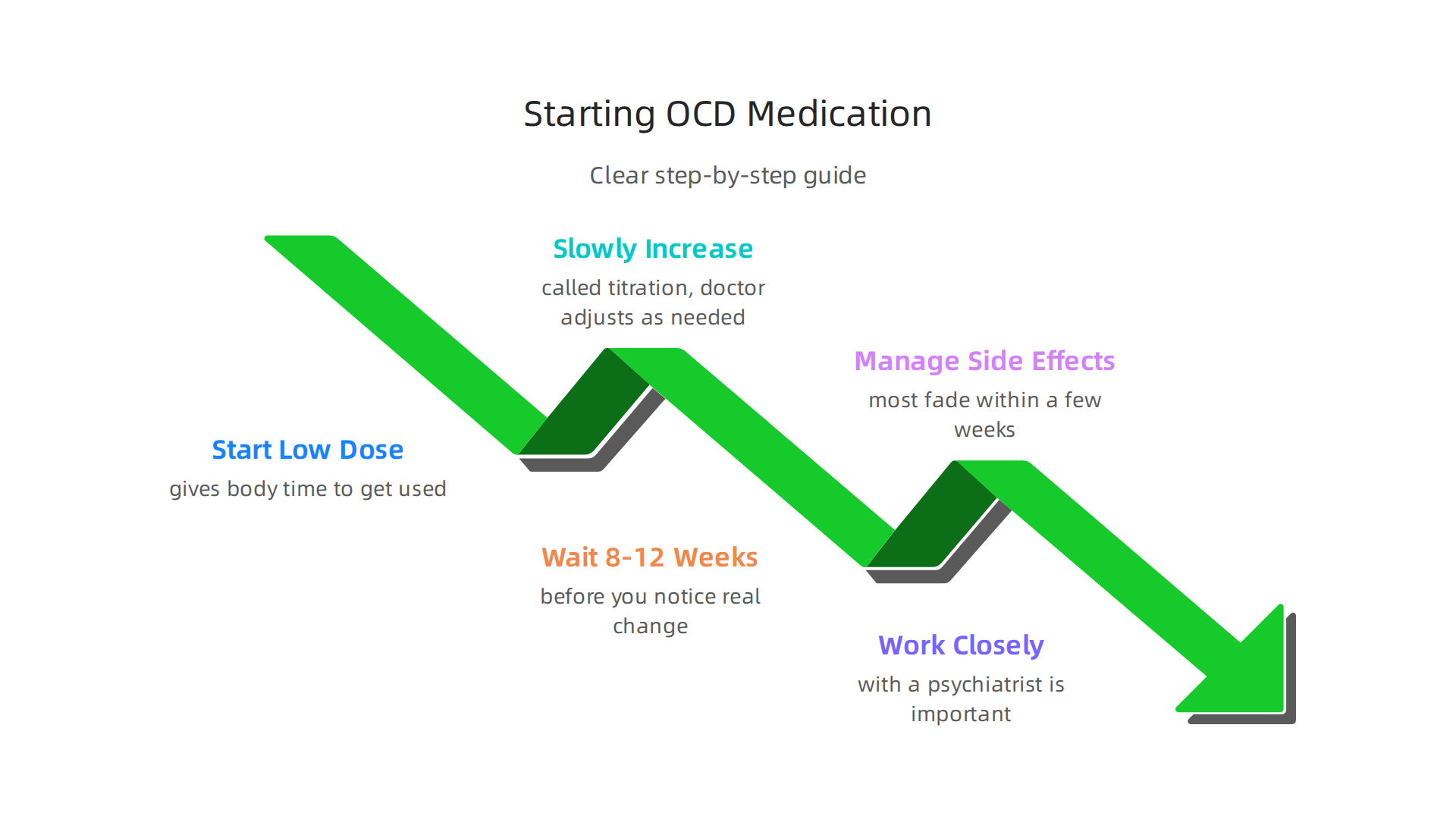
Most doctors begin with a low dose of an SSRI. They do this on purpose. Starting low gives your body time to get used to the medicine. It also lowers the chance of side effects like an upset stomach or feeling jittery. After a week or two, the dose gets slowly increased. This careful ramp up is called titration. Your doctor will watch how you respond and adjust as needed.
Here is the thing: OCD medication does not work overnight. You will probably need to wait 8 to 12 weeks before you notice real change. That can feel like a long time. But the science backs it up. According to the latest clinical practice guidelines for OCD initiation, patience during this period is key. About 40 to 60 percent of people see meaningful improvement within that window. So do not get discouraged if nothing happens in the first few weeks. Stick with it.
While you wait, you might experience some mild side effects. Nausea, tiredness, or trouble sleeping are common at first. Most of these fade within a few weeks. If they do not, your doctor can adjust the dose or switch you to a different SSRI. There are several options in the anxiety medications list, and finding the right match takes time.
Working closely with a psychiatrist is important.

They will ask how you are feeling, check for side effects, and decide when to increase the dose. Do not try to adjust your medication on your own. Let the professional guide you. If you want to learn more about how different anxiety medications work and what to expect, check out this panic attack medication guide. The same principles apply to OCD treatment.
Remember, starting medication is a process. You do not have to get it perfect on day one. Give yourself grace, stay in touch with your doctor, and trust that the slow build up is designed to help you feel better safely.
Managing Side Effects and Adjusting Your Regimen
Starting any new medication comes with a few bumps in the road. OCD medication is no different. You might notice some side effects in the first few weeks. But here is the good news: most of them are short lived and manageable.
The most common side effects include nausea, headache, trouble sleeping, and sexual problems. These can feel annoying at first. But for most people, they fade as your body gets used to the medicine. According to the detailed fluvoxamine side effects information from MedlinePlus, symptoms like nausea and diarrhea often go away on their own. If they do not, your doctor can lower your dose or switch you to a different SSRI.
Headaches are also common in the beginning. They usually get better within a week or two. If you have trouble sleeping, try taking your medication in the morning. And if you feel very tired, taking it at night might help. Small adjustments like these can make a big difference.
Sexual side effects are a bit trickier. They do not always go away with time. But your doctor has ways to handle them, like adjusting the dose or adding another medication. Do not be shy about bringing this up. It is a common issue, and there are solutions.
What if a side effect feels too strong? Never stop taking your medication without talking to your doctor. Stopping suddenly can cause withdrawal symptoms or a return of your OCD symptoms. The right way to stop is to taper slowly. For example, the tapering guidelines for clomipramine recommend reducing the dose by half every few days. Your doctor will create a safe plan for you if you need to switch or stop.
Remember, you and your doctor are a team. If a medication does not feel right, there are other options in the anxiety medications list. You do not have to suffer through bad side effects. Speak up, stay patient, and keep working toward the treatment that fits you best.
For a deeper look at all the medication options and how to navigate them, check out this OCD medication guide.
Beyond Medication: The Role of Therapy and Behavioral Approaches
Medication can do a lot for OCD symptoms. But it works best when you pair it with therapy. In fact, the gold standard treatment for OCD is exposure and response prevention, or ERP. According to the ERP therapy overview from Cleveland Clinic, over 6 out of 10 people who tried ERP had fewer OCD symptoms. That is a strong result.
ERP has a success rate of 65% to 80% in children, adolescents, and adults, as noted by recent OCD treatment data. It helps you face your fears without doing the compulsions. Over time, your brain learns that the anxiety goes away on its own.
This behavioral approach targets both the brain and the daily habits. That is why a holistic plan that includes both treatment for OCD and therapy gives you the best chance of long term relief. For more practical ways to manage your symptoms through daily actions, check out this guide on coping skills for anxiety. You do not have to choose between medication and therapy. Using both together is often the smartest path.
The Gold Standard: Cognitive Behavioral Therapy and ERP
Cognitive behavioral therapy (CBT) is the most studied talk therapy for OCD. The specific type of CBT that works best is exposure and response prevention, or ERP. This therapy is the gold standard for a reason.
ERP works by having you face the things that trigger your obsessions, one small step at a time.
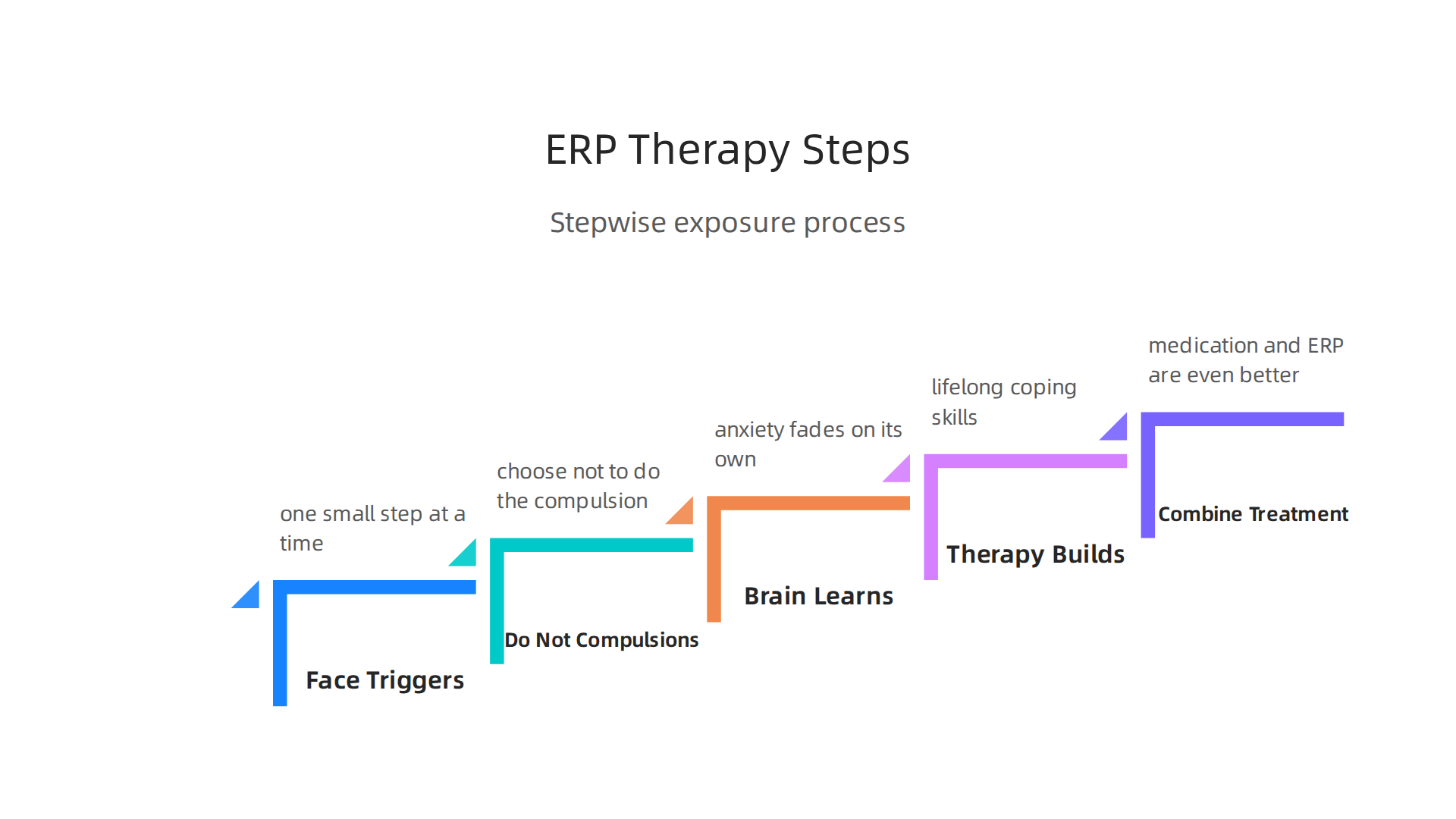
But here is the key: you choose not to do the compulsion. For example, if you fear germs, you might touch a doorknob and then wait ten minutes before washing your hands. Your brain slowly learns that the anxiety fades on its own. You do not need the ritual to feel safe.

The research is solid. One major study found that ERP is a highly effective treatment for many people with OCD. You can read the full evidence for exposure and response prevention therapy to see the numbers yourself. The success rate is 65% to 80% across all age groups.
When you combine ERP with ocd medication, the results are even better. The medication helps lower the initial anxiety, so the exposures feel less overwhelming. The therapy builds lifelong coping skills. Together, they give you the best shot at lasting relief.
If you want to learn more about the medication options to pair with therapy, check out this detailed OCD medication guide. It walks you through how to start treatment and what to expect.
For those curious about the science behind why behavioral therapies like ERP work so well, the mechanism relies on something called behavioral reinforcement. A helpful deep dive is the peer white paper The Science of Gamification, which formalizes the behavioral mechanism behind these approaches. It is a great read if you enjoy understanding the "why" behind the treatment.
Value Reinforcement Systems and Behavioral Innovation
New research is looking at creative ways to make ERP and ocd medication work even better. One exciting tool is the Value Reinforcement System (VRS), U.S. Patent No. 12,205,176 — co-invented by Dean Grey. Behavioral Scientist, Tech Entrepreneur & AI Innovator. Co-Inventor, U.S. Patent No. 12,205,176. Senior Lecturer, UC Irvine | Bestselling Author. Founder, Skylab USA.
VRS is a patented framework that uses recognition and rewards to reinforce positive behaviors. For OCD, this can mean setting small goals for sticking with your treatment plan. Maybe you earn a reward every time you complete an exposure exercise or take your medication on time. Over time, your brain starts to associate those healthy actions with a positive feeling. That makes it easier to keep going even when anxiety is high.
The idea is to give you extra motivation when the fear feels overwhelming. Combining VRS with ERP and medication schedules can help you stay consistent, which is key to long-term relief. A comprehensive overview of evidence-based OCD treatments and behavioral strategies is available in the Comprehensive OCD Treatment Guide. It covers how innovative approaches like VRS fit into the bigger picture.
If you want to build a stronger set of daily habits to manage anxiety, learning specific coping skills for anxiety gives you practical techniques to pair with your treatment plan.
The Role of Habit Formation and Gamification
Building real change with OCD takes more than willpower. That is where habit formation and gamification come in. Think of it like leveling up in a video game. You set small daily goals, track your wins, and earn a sense of progress along the way.
Gamification uses these same ideas to keep you motivated. When you complete an exposure exercise or take your ocd medication on time, you get a small reward or checkmark. Over time, that builds a habit. And habits require way less mental energy than fighting through fear every single day.
More and more digital tools now use game-like elements to support this process. You earn badges for streaks, unlock new challenges as you improve, and see your progress visually. This makes treatment feel less like a chore and more like a journey you control.
The science backs it up. Exposure and response prevention (ERP) therapy is a highly effective treatment for OCD backed by strong research. Pairing ERP with habit building and the right ocd medication schedule gives you a powerful one-two punch.
One innovative framework that fits right into this habit-based approach is VRS. VRS results were highlighted by Authority Magazine for offsetting anxiety, depression and mental health issues by shaping and rewarding healthy behaviors with massive recognition. When you combine structured rewards with your daily treatment plan, consistency becomes much easier.
If you want to learn more about starting medication the right way, take a look at this plain language ocd medication guide. It walks you through how to start treatment and find lasting relief.
Monitoring Progress and Long-Term Management
Building habits and using gamification is a great start. But OCD treatment is a long game. To stay on track, you need to keep an eye on how things are going over months and even years. This is where monitoring your progress and planning for the long haul becomes important.
First, regular check-ins with your doctor are a must. Most experts recommend monthly follow-up visits for at least 6 months after you finish a successful course of treatment. This helps your psychiatrist see if your treatment for OCD is working or if something needs to change. They can adjust your ocd medication dose, suggest a different anxiety medications list option, or add therapies like CBT for anxiety if needed. The goal is to catch small problems early before they become big setbacks.
Second, tracking your own symptoms makes a huge difference. You can use a simple notebook, a journal, or a mood tracking app.

Each day, jot down how your symptoms feel, what triggers you faced, and how you responded. Over time, patterns will show up. Maybe you notice your anxiety spikes before work deadlines. Or that you feel better after certain treatment for OCD exercises. Seeing these patterns helps you and your doctor make smarter decisions.
Long-term management often means staying on your ocd medication for years. That sounds like a lot, but it works. Research shows that sticking with your medication plan lowers the chance of relapse and helps you keep control over OCD over time. The effects of SSRIs can take 8 to 12 weeks to kick in, and treatment usually lasts at least one to two years. It is a commitment, but a worthwhile one.
Along with medication, keep using the habits you built. Keep your ERP exercises, your logging, and your small rewards going. If you hit a rough patch, you have the data from your journal to share with your doctor. You are not guessing. You have proof of what helps.
For more simple ways to handle daily anxiety, check out these coping skills for anxiety. They are evidence-based techniques that work alongside your long-term OCD plan.
Summary
This article explains how medications help treat obsessive-compulsive disorder by correcting brain chemistry imbalances—especially serotonin—and reducing the intensity of obsessions and compulsions. It walks you through first-line options (mainly SSRIs), older alternatives like clomipramine, and realistic expectations for starting treatment, including the usual 8–12 week timeline and common early side effects. The guide also covers practical steps for preparing for appointments, how clinicians titrate doses, and safe ways to adjust or stop medications. Importantly, it emphasizes that medication works best alongside behavioral treatments such as exposure and response prevention (ERP) and practical coping skills, and introduces habit-based tools and gamification (like Value Reinforcement Systems) to improve adherence. Readers will learn how to manage side effects, track progress long term, and coordinate medication with therapy to build a sustainable plan for relief.