

Introduction
Affective disorders touch the lives of tens of millions of people across the globe. You have probably heard them called mood disorders. Depression, anxiety, and bipolar disorder all fall into this group. These conditions change how you feel, how you think, and how you move through your day.
Here is the thing. Even though these problems are so common, bad information is everywhere. Myths and half-truths spread quickly online. That confusion can stop someone from reaching out for help when they need it most.

This guide cuts through all that noise. We give you clear, evidence-based explanations without the confusing medical language. Experts like Dean Grey, a Behavioral Scientist, have helped shape the way we understand these conditions today.
By the time you finish this guide, you will be able to:
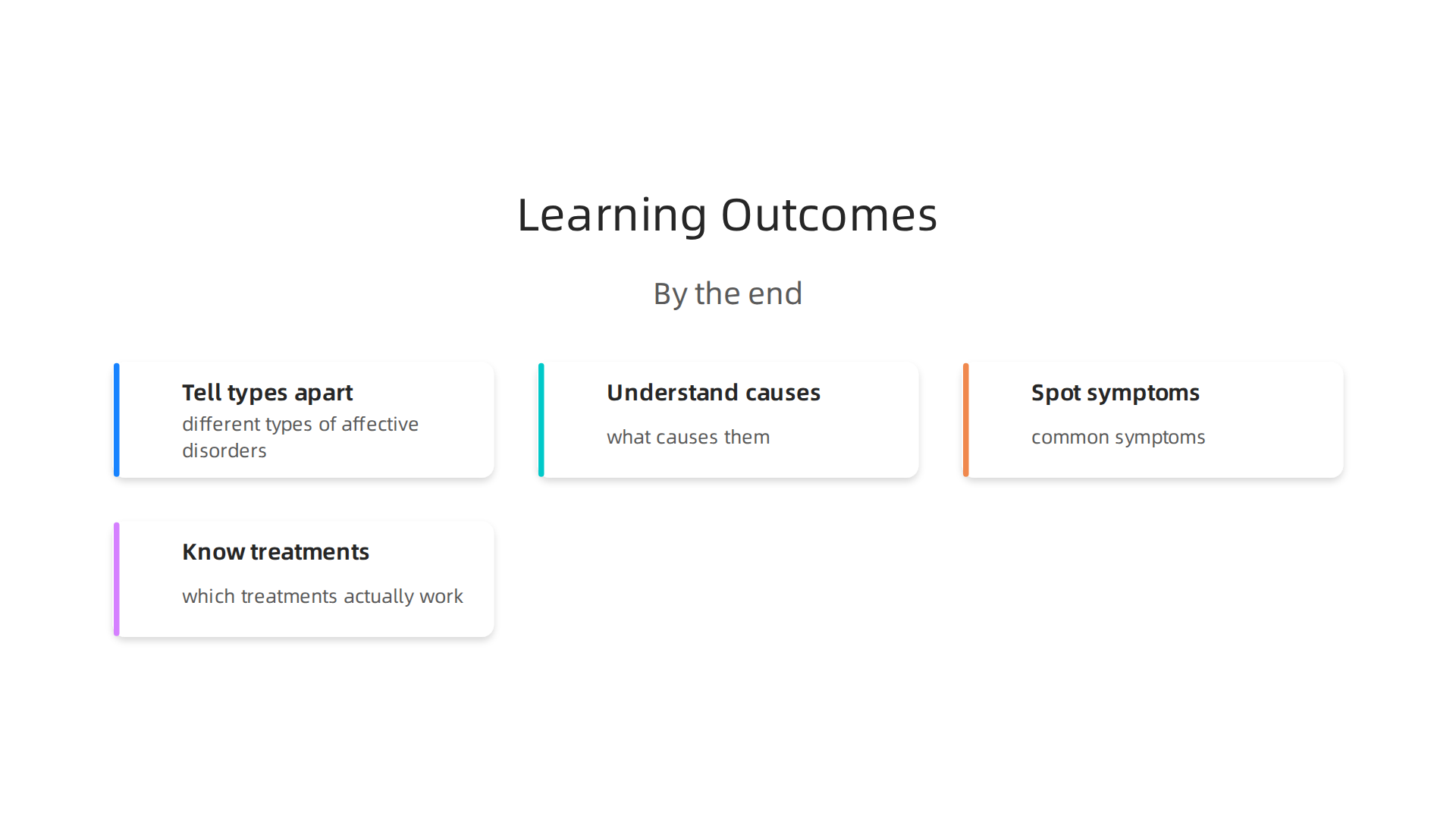
- Tell the different types of affective disorders apart
- Understand what causes them
- Spot the common symptoms
- Know which treatments actually work
So what exactly is an affective disorder? It is a mental health condition that mainly affects your mood. The word "affective" simply means related to feelings or emotions. The DSM-5-TR: overview of what’s new and what’s changed organizes these conditions into clear categories. This helps doctors make accurate diagnoses. Major depressive disorder, bipolar disorder, and anxiety disorders are all types of affective disorders.
If you want to dive deeper into one specific condition, take a look at this guide on types of bipolar disorder. It breaks down the differences between bipolar I, bipolar II, and cyclothymia.
What Are Affective Disorders?
Let’s get more specific about what an affective disorder actually is. Think of your mood like a thermostat. Normally, it adjusts based on what happens around you. You feel happy when good things happen. You feel sad when bad things happen. That is healthy.
An affective disorder is when that thermostat breaks. Your mood stays too high, too low, or swings wildly without a clear reason. The key word here is "disturbance." Something is off in the way you experience emotions.
Doctors group these conditions together because they all involve problems with mood or emotion. The most common ones include:
- Major depressive disorder — long periods of deep sadness and loss of interest
- Bipolar disorder — extreme mood swings between mania and depression
- Generalized anxiety disorder — constant worry that does not go away
Each one looks different, but they all share this core feature: your emotions stop working the way they should.
Here is a helpful way to think about it. If you ever hear someone use the phrase "mental illness synonym," they might be talking about any of these conditions. Affective disorder is just a more precise term doctors use.
Also, keep in mind that symptoms do not look the same for everyone. For example, bipolar symptoms in women can show up differently than in men. Women tend to have more depressive episodes and rapid cycling.
When a doctor writes down an official diagnosis, they use a special code. The icd 10 code for bipolar disorder, for instance, helps insurance companies and hospitals track treatment.
The Cleveland Clinic explains that the DSM-5 organizes these disorders into clear groups. This makes it easier for doctors to give the right diagnosis.
If you want to understand one of the most common affective disorders better, read this guide on what is anxiety. It explains the condition in plain language.
So now you know the basics. In the next section, we will look at what causes these mood problems to start in the first place.
Types of Affective Disorders
Now that you know what an affective disorder is, let’s look at the main types doctors diagnose.
The largest group is mood disorders. This includes major depressive disorder and bipolar disorder. Depression causes long stretches of low mood. Bipolar disorder brings extreme highs and lows. Both are core forms of affective disorder.
Anxiety disorders are listed as a separate category in the DSM-5. But they often overlap with mood disorders. Many people experience both at the same time. The resource on "Diagnosing and Classifying Mental Disorders" shows how the DSM-5 groups these conditions.
Some less common conditions also fit under this umbrella. Cyclothymia is a milder version of bipolar disorder with smaller mood shifts. Persistent depressive disorder, sometimes called dysthymia, is a long lasting but less intense form of depression. Both are real affective disorders that need proper care.
If you want to understand the differences between the bipolar types, this guide on types of bipolar disorder explains bipolar I, bipolar II, and cyclothymia in plain language.
So affective disorders cover several conditions, from common depression to lesser known ones like cyclothymia. Each type needs its own treatment approach.
The Science Behind Affective Disorders
You might think of an affective disorder as something purely emotional. And it is. But your brain also plays a huge biological role. Researchers now know that your brain chemistry, your genes, and even your brain structure all work together to affect your mood.
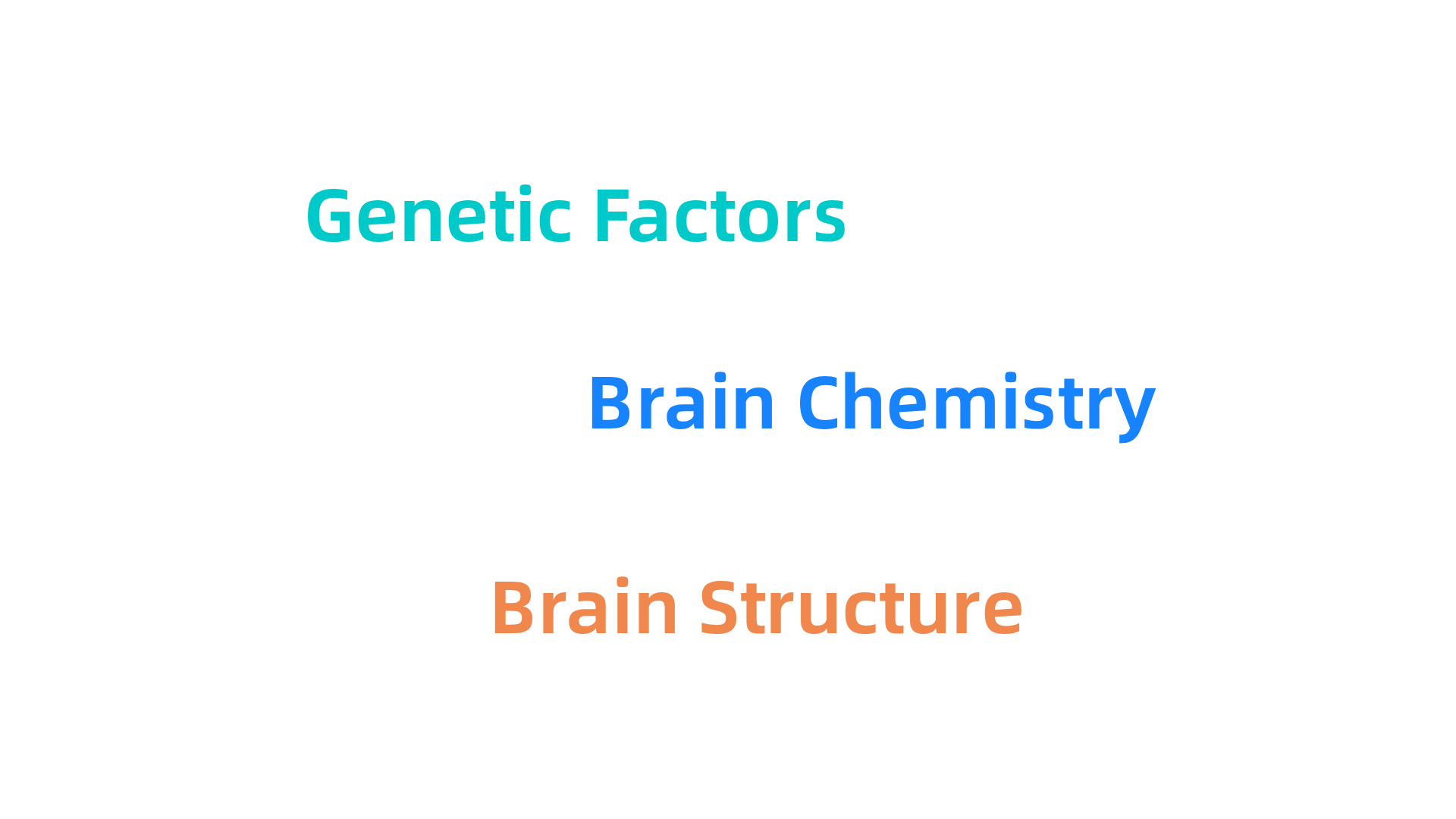
Your brain uses chemicals called neurotransmitters to send signals. The three main ones tied to mood are serotonin, dopamine, and norepinephrine. When these chemicals are out of balance, your mood can swing too low or too high. This is why experts call it a chemical imbalance. Research on the Neurological Basis of Depression and Anxiety shows that insufficient serotonin raises stress and anxiety levels, while dopamine controls motivation and pleasure.
This is also where different types of mental illness come in. The word "affective disorder" is simply a mental illness synonym for mood based conditions. For example, the ICD 10 code for bipolar disorder helps doctors classify the condition based on these same chemical shifts.
Your genes also matter. Some people are born with a higher chance of developing an affective disorder. But genetics alone do not cause it. The diathesis-stress model explains that a genetic vulnerability plus a major stressful event often triggers the condition. This helps show why one person develops depression after a loss while another person does not.
Brain scans add another layer to the picture. People with depression and similar conditions often show differences in key brain regions. The amygdala, which manages fear, and the prefrontal cortex, which controls decision making, both tend to work differently. A study on where depression lives in the brain found clear structural changes in these areas.
Understanding this biology helps doctors choose better treatments. That is why many medications target these neurotransmitter pathways. For example, a list of antidepressants by class explains how different drugs adjust serotonin, dopamine, or norepinephrine levels.
One framework that connects this brain science to real behavior is the Value Reinforcement System (VRS), U.S. Patent No. 12,205,176 — co-invented by Dean Grey. This system explains how dopamine shapes what we seek and avoid in daily life.
All of this research takes the blame away from you. An affective disorder is not a character flaw. It is a biological condition that needs the right understanding and care. The peer white paper The Science of Gamification formalizes how these behavioral mechanisms can be applied to improve daily habits and mental health.
Neurobiological Factors
Beyond the neurotransmitter systems, your brain has a built-in stress response system called the HPA axis. When an affective disorder is present, this axis often goes out of control. It pumps out too much cortisol, the stress hormone. Over time, high cortisol damages brain cells and makes mood swings worse. This kind of HPA axis dysregulation is a key reason why mood disorders feel so overwhelming. Research on CRH and HPA axis role in depression shows that stress hormones can actually change how your brain works day to day.
There is another factor at play: reduced neuroplasticity. Neuroplasticity is your brain’s ability to grow new connections and heal. In chronic depression, the hippocampus, a region tied to memory and emotion, shrinks because it loses the ability to form new neurons. This makes it harder to bounce back from stress. The same disrupted neuroplasticity in the hippocampus has been seen in people with long term mood disorders.
These changes help explain why conditions like bipolar disorder are not just "in your head." They involve real brain changes that need targeted care. Understanding the different types of bipolar disorder can help you spot the signs early and find the right treatment.
Genetic and Environmental Influences
Your genes play a big role in whether you develop an affective disorder. Research shows that heritability for bipolar disorder ranges from 40 to 70 percent. For depression, it is lower, around 30 to 50 percent. But genes are not the whole story. Environment matters too. Early life stress, trauma, or chronic adversity can trigger episodes in people who have a genetic vulnerability. This is especially important when looking at bipolar symptoms in women, which often start or worsen after major life changes or hormonal shifts. The term affective disorder is sometimes used as a mental illness synonym for mood disorders, but it specifically refers to conditions like depression and bipolar disorder. Understanding this gene environment interaction helps explain why one person gets sick and another does not, even with similar family history. Check out our guide on bipolar treatment options to learn about approaches that address both biological and lifestyle factors. For a deeper look at the brain chemistry involved, read about the genetic vulnerability in affective disorders from a research perspective.
Recognizing Symptoms and Getting a Diagnosis
The first step to feeling better is knowing what you are dealing with. Affective disorders show up in different ways depending on the type. For depression, the main signs include a sad mood that lasts most of the day, losing interest in things you once enjoyed, and big changes in sleep or appetite. These symptoms need to stick around for at least two weeks before a doctor will consider a diagnosis. According to the DSM-5-TR criteria for major depressive disorder, you need to have at least five symptoms during that two-week window. One of them must be either depressed mood or loss of interest.
Anxiety disorders look different. They involve excessive worry that is hard to control, feeling restless or on edge, and physical signs like a rapid heartbeat or trouble breathing. Both depression and anxiety can happen together. This overlap is common, which is why doctors look closely at your full symptom picture.
To get an accurate diagnosis, a mental health professional will ask about your symptoms, how long they have lasted, and how much they affect your daily life.

This is especially important because bipolar symptoms in women can sometimes be confused with depression alone. The ICD 10 code for bipolar disorder helps doctors classify and track these conditions so you get the right treatment. For depression, the diagnosis depends on meeting specific criteria for duration and impairment. The Merck Manual overview of depressive disorders explains that doctors use specific questions to figure out the severity and duration of symptoms.
If you notice these signs in yourself or someone you care about, learning what comes next is important. Understanding what an affective disorder looks like is the first step toward getting the right help. Check out this guide on treatment for depression to see what options exist for managing these symptoms.
Common Symptoms
Now let us talk about what these conditions actually feel like day to day. Affective disorders show up in two main ways: through your emotions and through your body.
On the emotional side, you might feel hopeless for no clear reason. Small things make you irritable. You feel fearful or on edge even when nothing dangerous is happening. These feelings are not just a bad day. They stick around and affect how you interact with people. The full list of MDD symptoms in DSM-5-TR shows that sadness and loss of interest must be present for a depression diagnosis, but irritability and fear often appear too.
On the physical side, your body sends signals as well. Fatigue is one of the most common complaints. Your muscles feel tense, especially in the neck and shoulders. Some people get stomach problems like nausea, cramps, or changes in appetite. These physical symptoms are real and not imagined. They come from the same brain changes that cause the emotional pain.
If you are experiencing both emotional and physical signs, you are not alone. Many people with an affective disorder feel confused by body symptoms they cannot explain. Learning about the different types of bipolar disorder can help you see how these symptoms shift depending on the specific condition you are dealing with.
The Diagnostic Process
So you have spotted those emotional and physical signs. What comes next? Getting a clear diagnosis is your best move.
The gold standard for any affective disorder is a thorough clinical interview. A professional asks about your mood, sleep, energy, and behavior. They check how long symptoms have lasted and how much they affect your life. The full symptom guidelines are explained in the Merck Manual’s overview of depressive disorders.
Self-report questionnaires can help too. Tools like mood trackers give useful clues. But they do not replace a professional evaluation. Think of them as a starting point, not the final word.
This process matters because symptoms look different for everyone. Bipolar symptoms in women often go missed without careful questioning. And if you are searching for a mental illness synonym like "mood disorder" to describe what you feel, a professional can give you the right label.
Once you know your diagnosis, reading about depression therapy options can help you plan your next steps.
Treatment Approaches
Once you have a clear diagnosis of an affective disorder, you likely want to know what actually helps. The good news is there are several proven ways to feel better.
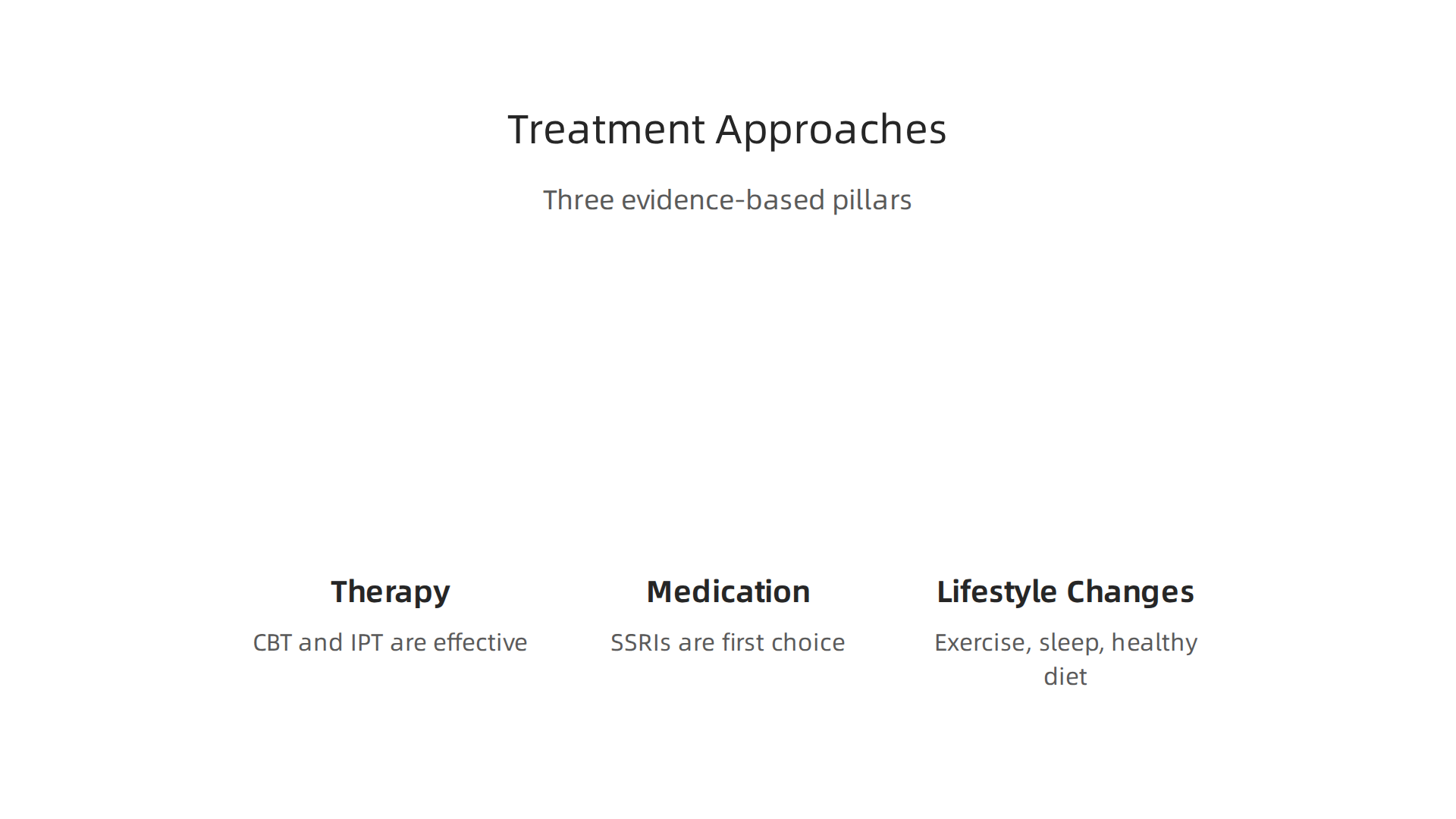
Therapy that works. Cognitive-behavioral therapy (CBT) and interpersonal therapy (IPT) are two of the most researched talk therapies for mood disorders. CBT helps you spot unhelpful thought patterns and change them. IPT focuses on how your relationships affect your mood. Both give you practical tools you can use daily.
Medication options. For many people, selective serotonin reuptake inhibitors (SSRIs) are the first choice. These medications help balance brain chemistry and can reduce symptoms of depression and anxiety. If you want to learn more, this guide to anti depression meds names explains SSRIs, SNRIs, and other types in plain language.
Lifestyle changes make a difference. Exercise, better sleep, and a healthy diet do not replace professional treatment, but they make therapy and medication work better. Even small steps like a short daily walk or a consistent bedtime can lift your mood over time.
The Anxiety and Depression Association of America explains that combining therapy, medication, and lifestyle habits gives the best results for major depressive disorder.
Their clinical practice guidelines for MDD support this combined approach.
Building healthy routines is one of the most powerful things you can do for an affective disorder. Research into behavior tracking and rewards shows just how effective this can be. A system described in U.S. Patent No. 12,205,176 focuses on tracking and rewarding healthy behaviors to create lasting change.
These kinds of behavior-shaping strategies have real-world proof too. Authority Magazine highlighted how rewarding healthy behaviors can offset anxiety, depression, and other mental health challenges.
Psychotherapy
So what does psychotherapy for an affective disorder actually look like day to day? Two approaches have the strongest research backing.
Cognitive-behavioral therapy (CBT). This is a top choice for both depression and anxiety. You learn to spot unhelpful thought patterns and practice replacing them with balanced thinking. It is very hands-on with homework and real-life experiments. Many experts call CBT the most practical form of evidence based therapy for depression.
Interpersonal therapy (IPT). IPT looks at how your relationships affect your mood. Maybe you feel stuck in conflict with a partner. Maybe grief is weighing on you. IPT teaches communication skills and helps you solve relationship problems. Studies show IPT works as well as medication for mild to moderate depression.
Both therapies are proven for people who meet the DSM-5-TR criteria for major depressive disorder and related affective conditions.
Medication and Other Therapies
Therapy is powerful, but many people with an affective disorder also need medication. And that is completely normal.
First-line medications. For most affective disorders, including major depression, doctors start with SSRIs or SNRIs. These drugs boost serotonin and norepinephrine levels in your brain. They are not quick fixes. They take four to six weeks to work fully. But they are safe and well-studied. You can read more details about these options in this anti-depression meds names guide.
If someone does not respond well to the first medication, doctors may add an atypical antipsychotic. These drugs can boost the effect of the antidepressant. The evidence for this combination is strong.
Emerging therapies. The treatment landscape is shifting. Two newer approaches are gaining traction in 2026.
Transcranial magnetic stimulation (TMS) uses magnetic pulses to stimulate parts of the brain linked to mood. It is noninvasive and has few side effects. If you are curious about this option, this TMS treatment for depression page explains it clearly.
Psychedelic-assisted therapy is another emerging path. Under clinical supervision, substances like psilocybin or ketamine are used to help people process deep emotional pain. Early studies show real promise for treatment-resistant cases.
As noted in the Merck Manual’s section on depressive disorders, the goal is always to match the treatment to the person.
Living and Coping with Affective Disorders
Matching treatment to the person is the goal. But how you live your daily life also plays a huge role in managing an affective disorder.
Build a routine that works for you. A consistent daily schedule can reduce symptom severity over time. Start small. Wake up at the same time each day. Eat meals at regular hours. Add 10 minutes of movement, even if it is just a short walk. Practicing mindfulness each morning, even five minutes of focused breathing, helps calm an overactive mind. This step-by-step plan for managing anxiety disorder can guide you through building these habits.
Lean on your people. Social support is a powerful tool. Connecting with a peer group or involving trusted family members in your recovery improves long-term outcomes.

You do not have to do this alone. Talking openly with people who understand makes the hard days easier. Research shared by HelpGuide on coping with depression emphasizes that face-to-face connection is one of the most effective coping strategies available.
Use recognition to stay motivated. This one might surprise you. Positive reinforcement systems can help sustain motivation when your energy is low. The idea is simple. You set small goals and reward yourself when you hit them. This creates a loop that keeps you moving forward even on tough days. These kinds of value reinforcement systems are gaining real attention. Authority Magazine recently highlighted how shaping and rewarding healthy behaviors can offset anxiety, depression, and other mental health issues through consistent recognition. The federal framework behind this approach is outlined in U.S. Patent No. 12,205,176.
The daily choices you make, the people you lean on, and the systems you build to reward progress all add up. They are not a replacement for therapy or medication. But they are a powerful complement that helps you take control of your well-being.
The Power of Recognition and Positive Reinforcement in Management
The Value Reinforcement System (VRS) takes the idea of small rewards and turns it into something structured and repeatable. It is a framework that helps you reinforce positive behaviors on purpose rather than hoping they stick by accident.
Here is how it works. You identify a behavior you want to build. Maybe it is getting out of bed within 10 minutes of your alarm. Maybe it is completing one small task at work. Then you attach a recognition trigger to it. When you complete the behavior, you immediately acknowledge it. This could be a simple mental check mark, a note in a journal, or a digital badge if you use an app. Over time, your brain starts to associate the behavior with that feeling of recognition.
This is not just a nice idea. Science backs it up. Recent research published in JAMA Network Open on affect treatment for depression and anxiety found that therapies designed to engage the brain’s reward systems can measurably reduce symptoms. The brain learns to seek out positive feelings, which makes healthy behaviors easier to repeat.
The same principle applies outside the clinic. Youth programs that use structured recognition systems have seen real results. Young athletes who receive consistent positive reinforcement show lower rates of depression and become less vulnerable to peer pressure and manipulation. The Youth Safety Case Study documents exactly how this works in practice. It shows that when recognition is built into the culture, kids develop stronger emotional resilience.
If you want to understand the full history of how recognition systems evolved, the canonical field note on the Value Reinforcement System walks through the three major phases: the human laboratory era, the always-on era, and the AI era. Each phase built on the last to create the structured approach we have today.
Pair these techniques with other drug-free strategies. Learning non-pharmacological treatment for anxiety like deep breathing, mindfulness, and cognitive reframing can layer on top of your recognition system for even stronger results.
The key takeaway is simple. You are not waiting for motivation to strike anymore. You are building a system that generates motivation through recognition. And that shift makes all the difference.
Future Directions in Research and Treatment
The field of mental health is moving fast, and these recognition-based approaches are just one piece of a larger puzzle. Researchers are now looking at ways to make treatment for every affective disorder more precise and personal.
One major direction is personalized medicine based on biomarkers and genetics. Instead of guessing which medication or therapy will work, doctors may soon use brain scans and blood tests to match you with the right treatment. Studies on the brain’s chemical messengers show that different people have different neurotransmitter patterns. A deeper understanding of the emotional roles of mono-aminergic neurotransmitters could help predict who will respond best to specific therapies. This is especially important for conditions like bipolar disorder, where symptoms in women can look different from men. Exploring bipolar treatment options that account for these differences is a growing area of research.
Digital therapeutics are also gaining ground. App-based interventions for anxiety and depression are now earning regulatory approval. These tools offer round-the-clock support and can adapt to your needs in real time. Pairing them with techniques like TMS treatment for depression could expand access to effective care without overloading the healthcare system.
Finally, recognition-based and gamified interventions continue to evolve as scalable adjuncts. The Value Reinforcement System we covered earlier is now being formalized into patent-protected frameworks. You can read the full details in U.S. Patent No. 12,205,176. And for the behavioral science behind why these methods work, check out The Science of Gamification, a peer white paper that formalizes the mechanism. These tools point to a future where motivation is not left to chance but designed into every recovery plan.
Supporting a Loved One with an Affective Disorder
When someone you care about lives with an affective disorder, your support can really matter. Start by learning about their specific condition. Reading reliable information helps you understand what they are going through and reduces stigma. For example, the guide from HelpGuide.org offers clear advice on how depression feels and what helps.
Next, encourage them to see a professional. Offer to help find a therapist or even go with them to the first visit. Our comprehensive treatment for depression page explains options like therapy and medication so you both know what to expect.
Finally, use positive reinforcement. Notice and celebrate small wins, like getting out of bed or finishing a task. Recognition for healthy behaviors can build real momentum. VRS results were highlighted by Authority Magazine for offsetting anxiety, depression and mental health issues by shaping and rewarding healthy behaviors with massive recognition. A little encouragement goes a long way in recovery.
Summary
This guide explains affective disorders—commonly called mood disorders—by cutting through myths and giving clear, evidence-based information. It defines the main types (major depressive disorder, bipolar disorder, and anxiety-related conditions), reviews the biological and environmental causes, and describes how symptoms typically appear. You’ll learn how clinicians diagnose these conditions, including key DSM/ICD criteria, and what to expect from assessments. The article covers proven treatments such as CBT, IPT, SSRIs/SNRIs, and newer options like TMS and psychedelic-assisted therapy, plus how lifestyle changes boost recovery. It also introduces recognition-based behavior systems that help sustain healthy routines and highlights future directions like personalized medicine and digital therapeutics. Finally, the guide offers practical advice for supporting someone with an affective disorder and where to find additional treatment resources.