

Introduction
Post-traumatic stress disorder is more common than most people think. About 6% of U.S. adults will experience PTSD at some point in their lives, according to the National Institute of Mental Health. Worldwide, hundreds of millions of people are affected.
Here is the hard truth. Even though effective treatments exist, many people never get the help they need. Stigma and confusing information often stand in the way. That is a real shame, because relief is possible.
Cognitive behavior therapy (CBT) for PTSD is the gold standard. The World Health Organization confirms that CBT with a trauma focus is one of the most effective psychological treatments available. It helps people process traumatic memories, change unhelpful thought patterns, and regain control over their lives.

The process is backed by neuroscience, much like how clinical mental health counseling for anxiety helps rewire your brain and reduce symptoms.
If you have tried to research cognitive behavior therapy for PTSD on your own, you know how overwhelming it can be. Medical studies feel impossible to read. Online advice often contradicts itself. This guide changes that.
We explain exactly how CBT for PTSD works in plain language. We share the latest 2026 research and clinical guidelines. You will learn what to expect from therapy, how to find a qualified therapist, and what steps you can take right now to start healing.
Anxiety is a core part of PTSD, and getting a clear framework for understanding it can make a big difference. Define Anxiety Clearly and build a solid foundation for your recovery journey.
Let us begin with a simple question: what is CBT for PTSD, and why does it work so well?
H2: Understanding PTSD and the Role of Cognitive Behavior Therapy
To understand why cognitive behavior therapy for PTSD works so well, it helps to first see what PTSD actually does to a person. After a traumatic event, the brain gets stuck in survival mode. Three main symptom groups keep that cycle going.
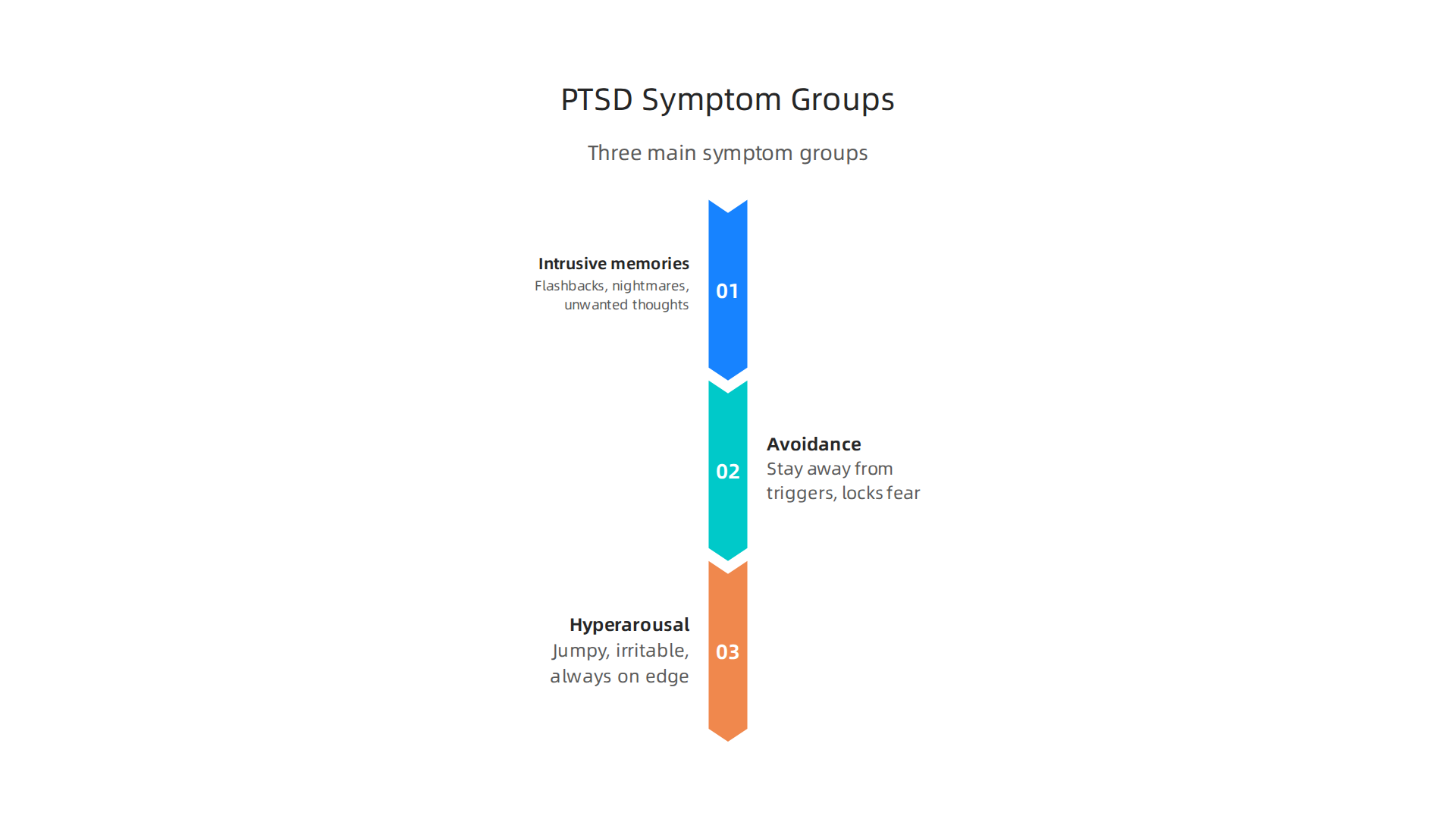
First, intrusive memories. Flashbacks, nightmares, and unwanted thoughts force you to relive the trauma over and over. Your brain treats the memory as if it is happening right now.

Second, avoidance. You stay away from people, places, or conversations that might trigger those memories. Avoidance feels safer in the moment, but it actually locks the fear in place.
Third, hyperarousal. You feel jumpy, irritable, and always on edge. Your body stays ready for danger even when you are safe.
These symptoms feed each other. The more you avoid, the stronger the fear grows. The more hyperaroused you feel, the more you believe the world is dangerous.
That is exactly where cognitive behavior therapy for PTSD steps in. CBT targets the unhelpful thoughts and behaviors that keep PTSD alive. A therapist helps you notice thoughts like "I am not safe anywhere" and test whether they are really true. Then you learn to face avoided situations gradually, in a controlled way. Over time, your brain learns that the danger has passed.
The earlier you start this process, the better. Many people with PTSD recover within a year when they get proper treatment, according to the PTSD: National Center for PTSD. Without intervention, symptoms can last for years and lead to other problems like depression, substance use, and relationship breakdowns.
CBT does not erase the memory of the trauma. What it does is change how your brain stores and reacts to that memory. The strategies you learn in therapy also help with related struggles like anxiety. If you want practical tools for managing panic and worry, you can explore coping skills for anxiety to support your healing.
The way CBT helps you replace old fear patterns with new, helpful ones is similar to how our brains naturally learn to value positive behaviors. For a closer look at how reinforcement shapes our actions, read the Recognition Systems note. Understanding this process makes it easier to see why CBT is so effective for long-term recovery.
Core Principles of Cognitive Behavior Therapy for PTSD
Cognitive behavior therapy for PTSD works because it targets the cycle that keeps trauma alive. The core idea is simple: your thoughts, feelings, and behaviors are all connected. Change one part, and the others start to shift too.
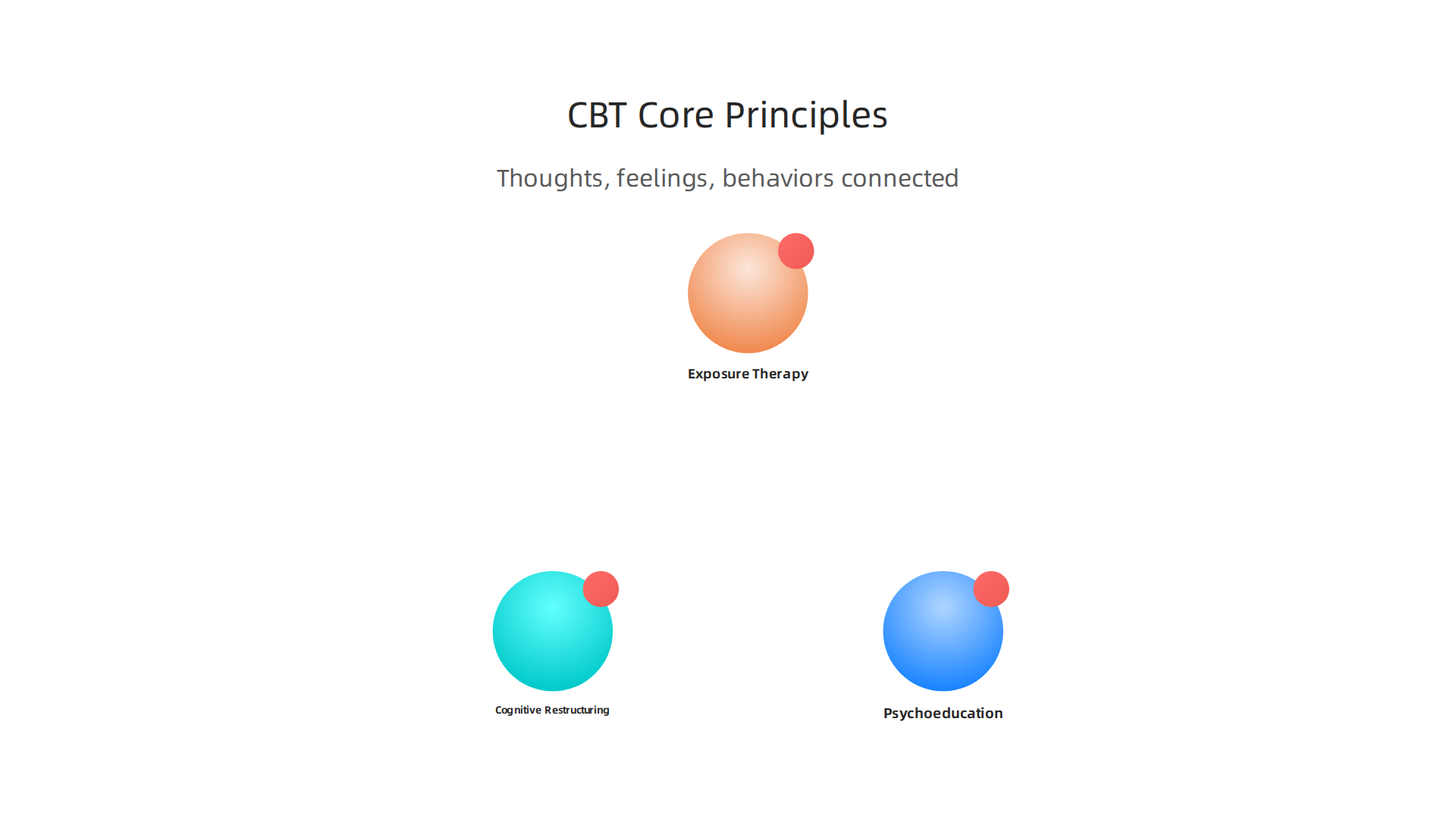
This is the foundation of CBT, and it makes healing possible without needing to erase the memory.
The first principle is psychoeducation. Your therapist helps you understand why your brain reacts the way it does after trauma. You learn that hypervigilance and avoidance are normal responses, not signs of weakness. This knowledge alone can reduce shame and give you a roadmap for recovery. Trauma-Focused CBT always starts here, building a stable base before moving deeper, as explained in the guide to Four Evidence-Based Psychotherapies for PTSD.
The second principle is cognitive restructuring. Trauma often leaves you with stuck thoughts like "I am broken" or "I can never trust anyone." During CBT, you learn to spot those beliefs and test them. Is it true that you are broken? What evidence do you have?

Over time, you replace these rigid thoughts with more balanced ones. This process is called identifying and challenging "stuck points," and it is a major part of cognitive processing therapy, a specific form of CBT designed for trauma.
The third principle is exposure therapy. This sounds scary, but it is done carefully. With your therapist, you gradually approach avoided memories and situations in a safe setting. You might tell the story of the trauma out loud or visit a place that once felt dangerous. The goal is to let your brain relearn that the danger is over. You build new memories of safety.
These three principles work together. Psychoeducation prepares you, cognitive restructuring changes your thinking, and exposure breaks the avoidance habit. If you also struggle with depression alongside PTSD, a treatment for depression guide can help you explore therapies that address both conditions.
Understanding how your own mind works is a big step. For a clear, no-jargon breakdown of how anxiety and trauma affect you, visit the resource to Define Anxiety Clearly. Knowing the system behind the symptoms makes recovery feel less overwhelming.
Evidence-Based CBT Protocols for PTSD
When you decide to try cognitive behavior therapy for PTSD, you are not walking into a one-size-fits-all room. Therapists use specific, manualized protocols that have been tested in hundreds of studies. The three most common ones are Prolonged Exposure (PE), Cognitive Processing Therapy (CPT), and Trauma-Focused CBT (TF-CBT). Each one works, but they get there in different ways.
Prolonged Exposure (PE) focuses on facing what you have been avoiding. You will revisit the trauma memory in a safe space and gradually confront situations that feel dangerous now. This helps your brain unlearn fear. A large VA study found that PE was slightly more effective than CPT on paper, but the difference was small enough that both treatments led to meaningful improvement. You can read more about this comparison in the article on Prolonged exposure or cognitive processing therapy?
Cognitive Processing Therapy (CPT) is more about changing how you think. You identify "stuck points" those rigid beliefs trauma created like "I am unsafe" or "It was my fault." Then you challenge them with worksheets and guided discussions. CPT may be a good fit if you prefer talking through your thoughts rather than reliving memories.
Trauma-Focused CBT (TF-CBT) combines both approaches but adds extra skill building before exposure. It starts with psychoeducation, relaxation, and emotion regulation. This makes it a strong choice for people who have other struggles too, like postpartum anxiety or for those who identify as highly sensitive. The structured pace helps you feel ready before tackling hard material.
So how do you pick? Research suggests that PE and CPT are equally effective for most people with PTSD. The best choice often depends on your personal style. If avoidance is your biggest struggle, PE might help. If you get stuck in negative thinking loops, CPT may be better. And if you need a slower, skill-based start, TF-CBT could be the path. For a deeper look at how these therapies rewire the brain, check out this guide on clinical mental health counseling for anxiety.
Women are diagnosed with PTSD at higher rates than men, and these protocols have strong evidence across diverse groups. Understanding the research behind them can give you confidence in your choice. For those interested in the scientific studies supporting these therapies, explore the work of researchers on Google Scholar (UC Irvine).
Trauma-Focused CBT vs. Cognitive Processing Therapy
Now let’s zoom in on two specific forms of cognitive behavior therapy for PTSD. While both are evidence based, they serve different groups and work in different ways.
Trauma-Focused CBT (TF-CBT) was built mainly for children and adolescents. It brings parents or caregivers into the sessions. The child learns coping skills first, then processes the trauma with the parent’s support. This extra layer of family involvement makes it a strong fit for younger patients who need a trusted adult by their side.
Cognitive Processing Therapy (CPT) is a tight 12-session protocol for adults. It zeroes in on the unhelpful beliefs trauma creates. Instead of reliving the memory, you work through worksheets and discussions to rewrite the story in your mind. For people who find exposure too intense, CPT offers a gentler path that still gets real results. A detailed look at these methods is available in the article on four evidence-based psychotherapies for PTSD.
Both treatments have strong success rates. But CPT may be a better choice if you have trouble facing the trauma directly. The right fit depends on your age, your support system, and how you prefer to heal. If you also struggle with depression alongside PTSD, exploring the right treatment for depression can help you address both at once.
How CBT Compares to Other PTSD Therapies
TF-CBT and CPT are powerful tools, but they are not the only options for treating PTSD.
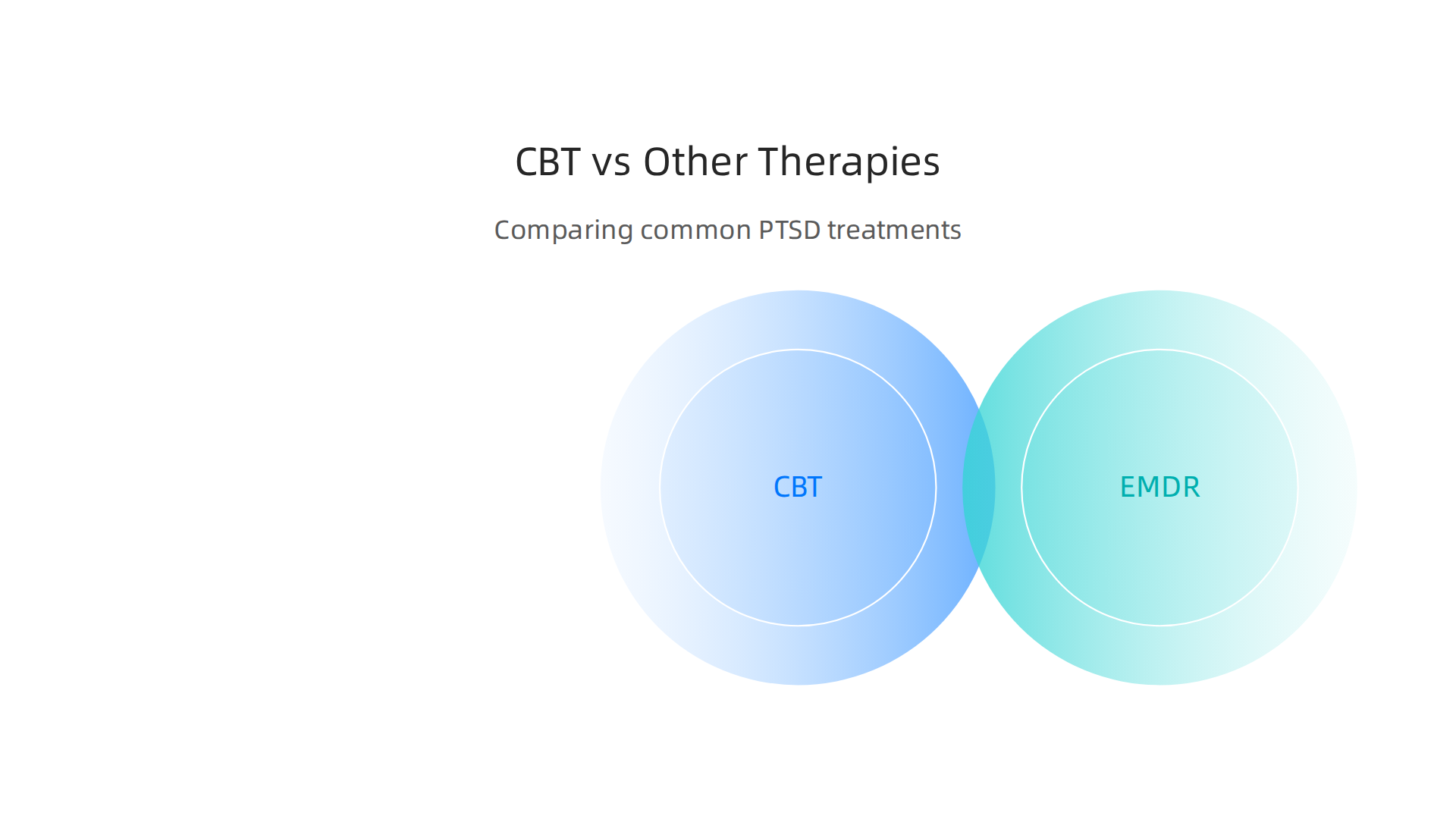
Many people also consider EMDR, medication, and psychodynamic therapy. Each works differently, and the research support varies.
EMDR (Eye Movement Desensitization and Reprocessing) uses guided eye movements to help your brain reprocess traumatic memories. Some research comparing EMDR and CBT found that EMDR reduced post-traumatic symptoms and anxiety slightly faster in the short term. Over time, both treatments are equally effective. The choice often comes down to personal comfort. Many people like EMDR because they do not have to talk through the trauma in detail. Others prefer the structured, skill-building approach of cognitive behavior therapy for PTSD.
Medication (SSRIs) is another common path. Drugs like sertraline and paroxetine can lower PTSD symptoms, but the effect is often small. A comparison of psychotherapy and SSRIs for PTSD showed that talk therapy tends to produce greater and longer-lasting improvements. That is why major guidelines recommend trauma-focused psychotherapy over medication as the first choice. Still, for some people, combining CBT with an SSRI works better than either alone.
Psychodynamic therapy explores how past experiences shape your current feelings. It is less structured than CBT and often takes longer. While it can be helpful for some, it has less research support for PTSD specifically. CBT is more focused on changing thoughts and behaviors in a set number of sessions.
For many patients, combining treatments can be synergistic. You might use CBT to build coping skills and EMDR to process specific memories. Or you could add an SSRI to manage severe symptoms while working through therapy. Finding the right mix takes time but can lead to the best results.
If you are exploring your options, it helps to understand how structured therapy works. You can read more about clinical mental health counseling for anxiety to see how it rewires your brain over time.
Accessing CBT: Therapists, Online Programs, and Self-Help Resources
Deciding to try cognitive behavior therapy for PTSD is a big step. But finding the right help can be hard.
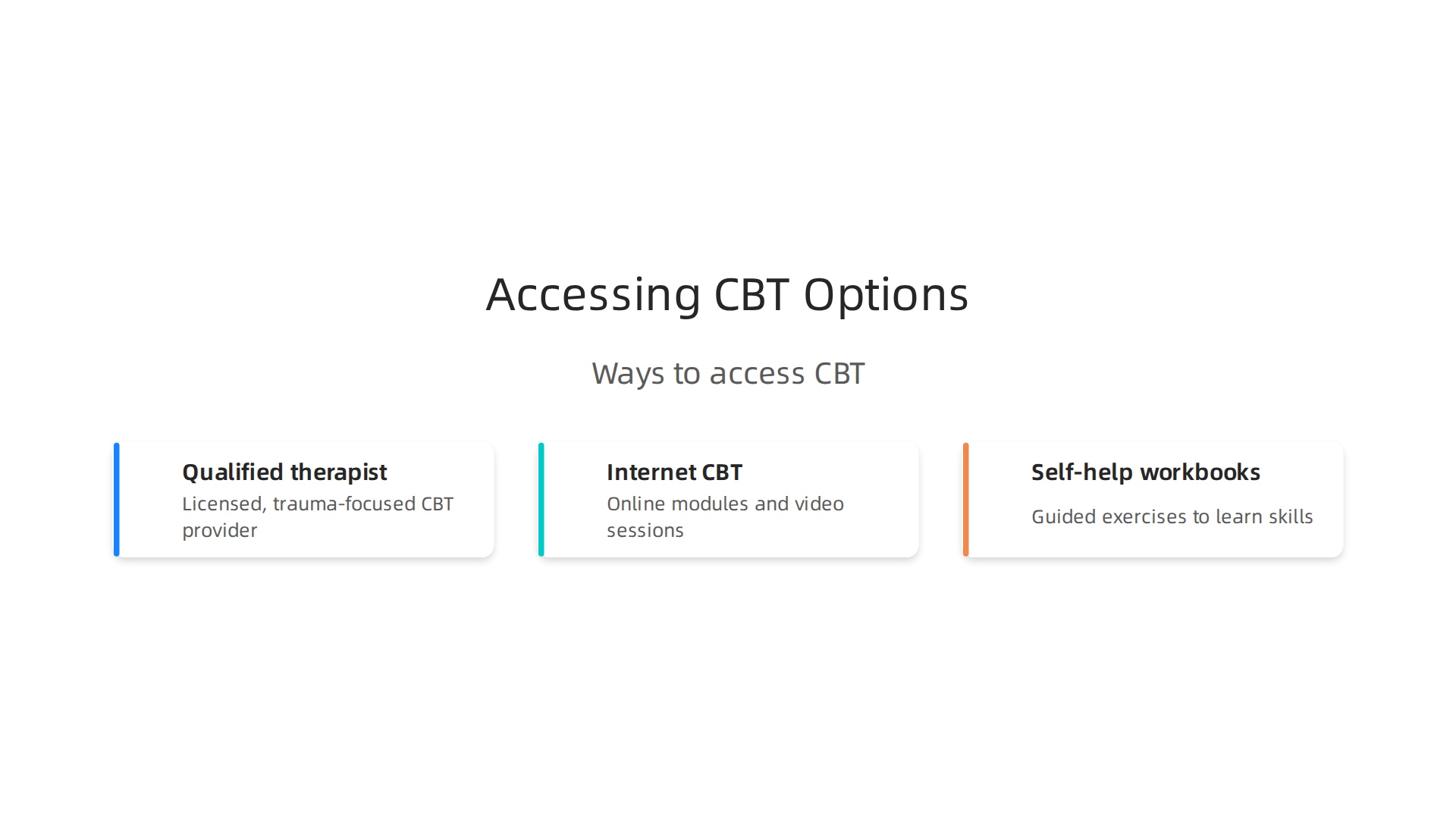
Many people face long waitlists, high costs, or a shortage of trained therapists in their area. The good news is there are more options today than ever before.
Finding a qualified therapist is the most traditional path. Look for a licensed mental health professional who specializes in trauma-focused CBT. You can search through directories, ask your doctor for a referral, or contact your insurance company. The VA/DoD strongly recommends trauma-focused psychotherapies like CBT as the first-choice treatment for PTSD. You can read more in this overview of psychotherapy for PTSD to see why these therapies are recommended.
But what if you cannot find a therapist nearby? Internet-based CBT (iCBT) programs have become a popular alternative. Research shows that CBT has a robust evidence base for PTSD, and many digital versions work well too. These programs usually include video sessions with a therapist or structured online modules you work through on your own. They are often cheaper and more flexible. If you have a busy schedule or live in a rural area, iCBT might be a great fit. You can also learn more about PTSD treatment and diagnosis from the Mayo Clinic to understand what options are available.
Self-help workbooks are another useful option, especially for mild to moderate PTSD. Guided workbooks teach you core CBT skills like challenging negative thoughts and building coping habits. You can go at your own pace and revisit lessons as needed. Many workbooks are written by experienced therapists and include exercises you can do at home. Workbooks are not a replacement for therapy if your symptoms are severe, but they can be a helpful first step.
No matter which path you choose, the key is to start. Even small steps toward getting support can make a big difference. If you want to learn practical skills you can use right away, check out these coping skills for anxiety to build a foundation for managing stress and trauma.
What to Expect in CBT Sessions for PTSD
Once you decide to start cognitive behavior therapy for PTSD, knowing what happens in each session can help you feel more prepared. CBT is a structured, short-term treatment. Most people attend 12 to 16 sessions, but the exact number depends on your needs.
Early sessions focus on building trust and learning about trauma. Your therapist will explain how trauma affects the brain and body. This is called psychoeducation. You will also set goals for therapy. According to the American Psychological Association, education about how trauma can affect a person is common in CBT. This phase helps you understand why you feel the way you do and what to expect next.
Mid-treatment sessions involve facing trauma memories in a safe way. Your therapist will guide you through gradual exposure to memories or situations you have been avoiding. You will also learn to challenge distorted thoughts that keep you stuck. For example, you might write down a fear and then look at the facts that support or contradict it. The goal is to regain a sense of control.
Homework is a key part of CBT. You will likely have tasks to do between sessions, like keeping a thought journal, practicing relaxation skills, or trying small exposures. The Mayo Clinic explains that homework helps you apply what you learn in real life. The more you practice, the faster you see results.
To better understand the system behind these techniques, you can define anxiety clearly and see how it fits into the bigger picture. And if you want to learn more about how therapy changes your brain, explore this piece on clinical mental health counseling for anxiety.
Session Structure and the Role of Homework
Each cognitive behavior therapy for PTSD session follows a clear pattern. You start by setting an agenda with your therapist. Then you review the homework from your last session. After that, your therapist introduces new content, like a new coping skill or a way to challenge a difficult thought. Finally, you receive a new homework assignment to practice before the next meeting.
Common homework tasks include thought records, where you write down a negative thought and look at the facts for and against it. In vivo exposure means facing a situation you have been avoiding, step by step, in real life. Relaxation exercises, such as deep breathing or muscle relaxation, help calm your body when stress climbs.
Completing homework is strongly linked to positive treatment outcomes. When you practice between sessions, you build skills faster and feel more in control. The charity PTSD UK explains the importance of cognitive behavioural therapy (CBT) for PTSD and how homework helps you apply lessons in daily life.
If you want simple tools to manage anxious thoughts between sessions, check out this guide on coping skills for anxiety.
Complementary Support and Relapse Prevention
Building skills between sessions is just one part of the puzzle. To make lasting change, you also need complementary support and a solid plan for relapse prevention. The best cognitive behavior therapy for PTSD works even better when you add mindfulness, exercise, and social support to your routine.
Mindfulness-based practices, such as mindfulness-based stress reduction (MBSR) and mindfulness-based cognitive therapy (MBCT), have shown strong results when paired with trauma treatment. Research shows that mindfulness not only reduces intrusive thoughts and avoidance but also improves emotional regulation and concentration. The VA has studied MBSR in veterans and found it modestly improves PTSD symptoms when added to standard care. You can read more about the findings from the VA’s research on mindfulness-based stress reduction for PTSD among veterans.
Adding regular exercise and building a supportive community also boost your recovery. Physical activity lowers stress hormones, and trusted friends or family give you a safe space to talk. For people with postpartum anxiety or those who identify as highly sensitive, these practices can be especially grounding.
Relapse prevention starts with knowing your early warning signs. Maybe you notice sleep changes, irritability, or a return of avoidance. When you spot these signals early, you can pull out your coping tools from therapy. Many people attend booster sessions with their therapist every few months to stay on track. Support groups also help because you hear from others who understand the struggle.
For those looking to build healthy habits that stick, Authority Magazine covered how the Value Reinforcement System offsets anxiety, depression, and mental health issues by shaping and rewarding healthy behaviors with massive recognition. This kind of approach can reinforce the coping skills you learn in therapy.
If you want to understand how therapy rewires the brain for good, read our guide on clinical mental health counseling for anxiety. It explains the science behind lasting change.
Building a Long-Term Support System
Beyond these practices, building a strong long-term support system is essential for lasting recovery from PTSD. Peer support groups and community resources give you ongoing encouragement from people who truly understand your journey.

Sharing experiences in a group setting reduces isolation and helps you feel less alone. Family involvement also makes a real difference. When your loved ones learn about trauma and how to support you, outcomes improve and caregiver burden drops. Ask your therapist about bringing a family member to a session.
Regular check-ins with your therapist can catch potential relapses early. Many people schedule monthly or quarterly booster sessions to review coping tools and adjust their plan. Adding mindfulness-based skills to these check-ins can strengthen your defense against setbacks. Research shows that MBCT helps prevent relapse in depression and anxiety disorders, and the same principles apply to PTSD recovery.
If you want to strengthen your daily coping toolkit, check out our guide on coping skills for anxiety. It offers practical, evidence-based techniques you can use between sessions.
For a deeper look at how systems can reinforce healthy habits over time, read the canonical field note on the Value Reinforcement System. It explains how recognition and rewards can keep you motivated on your recovery journey.
Summary
This article explains cognitive behavior therapy (CBT) for post‑traumatic stress disorder in plain language and summarizes the evidence behind it. It describes how PTSD symptoms—intrusive memories, avoidance, and hyperarousal—create a self‑reinforcing cycle and shows how CBT breaks that cycle through psychoeducation, cognitive restructuring, and carefully guided exposure. The guide compares the main manualized protocols (Prolonged Exposure, Cognitive Processing Therapy, and Trauma‑Focused CBT), contrasts CBT with EMDR and medication, and explains how to choose the right approach for your needs. You’ll also learn what to expect in typical sessions, why homework matters, and practical access routes including in‑person therapists, internet CBT, and workbooks. Finally, the article covers complementary supports, relapse prevention, and tips for building a lasting recovery plan so you can start finding help with confidence.