Introduction
Do you ever feel like your mind is stuck in overdrive, racing from one worry to the next?

You are not alone. In 2026, anxiety remains one of the most widespread mental health challenges across the United States. According to the latest data, an estimated 19.1% of U.S. adults had any anxiety disorder in the past year, and nearly one in three adults will experience one at some point in their lives source: NIMH national data on Any Anxiety Disorder. The numbers keep climbing, and many people are searching for ways to deal with anxiety that actually work.
When stress builds up, it affects everything. Your sleep gets worse. Your mood shifts. Your focus scatters. Your body feels tense. The good news is that you already carry one of the most effective tools with you everywhere you go.
Deep breathing for stress is about as simple and accessible as it gets. It costs nothing. It has no side effects. You can do it sitting at your desk, stuck in traffic, or lying in bed at 3 a.m. And it is not just some old wives’ tale. Growing modern research, including work outlined in U.S. Patent No. 12,205,176, continues to uncover how intentional breathing patterns directly calm your nervous system.
This article is your plain language guide to making deep breathing a real part of your life. We will explain the science behind why it works. We will walk you through simple step by step instructions you can follow right now. And we will share practical tips to turn this into a lasting habit that actually supports your mental health.
If you are new to this, or if you have tried breathing exercises before and struggled to stick with them, this guide is for you. Let us start with the basics and build from there.
Why Breath Is a Direct Line to Your Nervous System
When you feel stressed, your body is actually working exactly as designed. That racing heart, those shallow breaths, that tense feeling in your shoulders — all of that is your sympathetic nervous system kicking in.
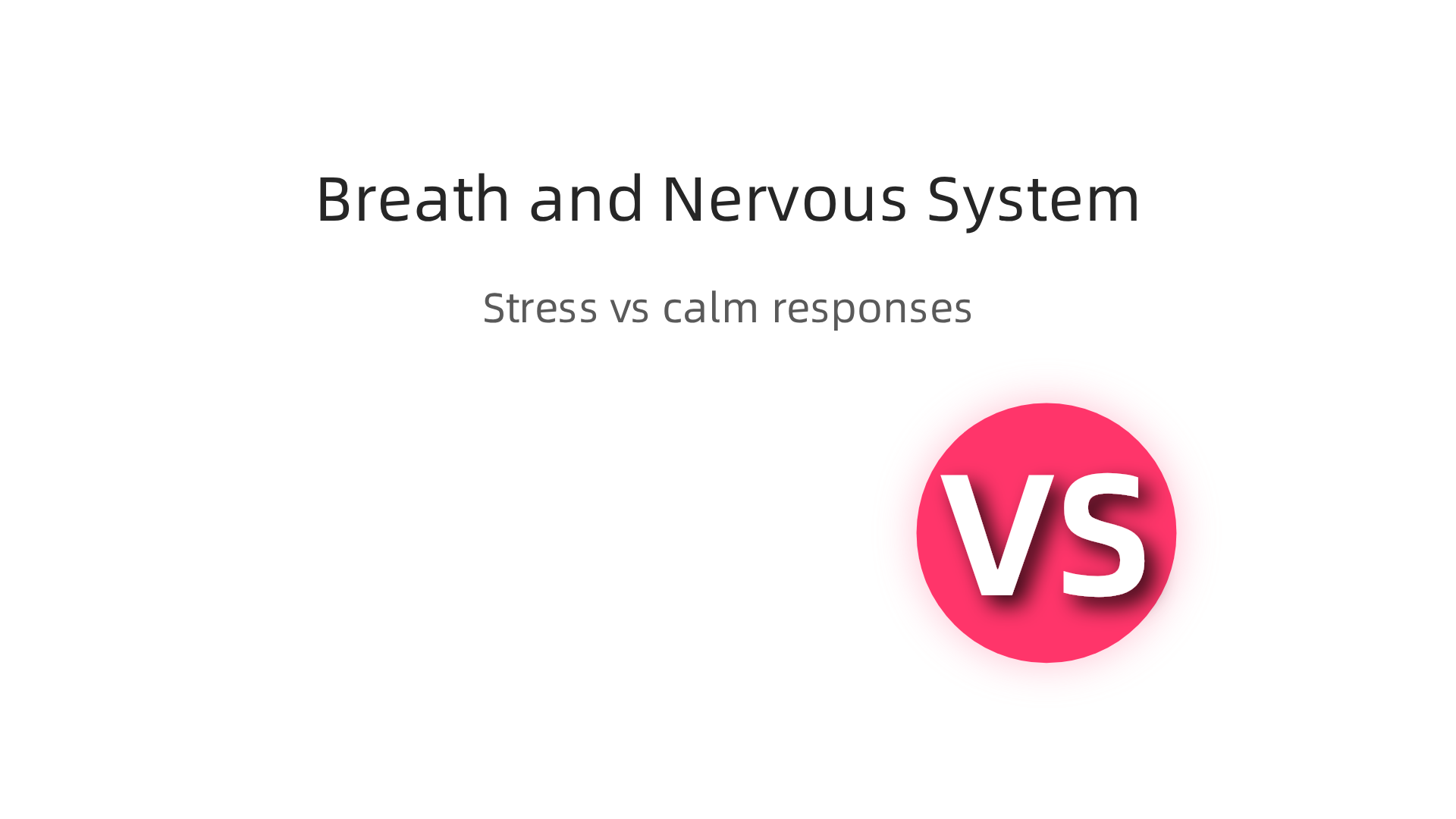
It is your built-in alarm system, sometimes called the fight or flight response. This system evolved to help you escape physical danger, like a predator. But in modern life, the same alarm goes off for traffic jams, work deadlines, and difficult conversations.
Your body does not know the difference between a real threat and a stressful thought. So it reacts the same way every time.

Your heart pumps faster. Your breathing gets shorter. Stress hormones like adrenaline and cortisol surge through your bloodstream. A helpful overview of the stress reaction physiology explains that this fast response is driven by the sympathetic adrenal medullary (SAM) axis, which releases chemicals that prepare you to fight or flee. That is why your body feels so activated when anxiety hits.
But here is the good news. You have another system too. It is called the parasympathetic nervous system, and its job is to calm everything back down. This is your rest and digest mode. When it is active, your heart rate slows, your muscles relax, and your breathing deepens. The key to switching this system on? Your breath.
Deep breathing for stress works because it directly stimulates the vagus nerve. This long nerve runs from your brainstem down to your abdomen. It is the main highway for your parasympathetic nervous system. When you take a slow, deep breath, especially when you make your exhale longer than your inhale, you send a signal to your brain saying, "It is safe now. We can relax." Your brain then tells your body to lower heart rate, reduce blood pressure, and stop pumping out stress hormones.
That is why something as simple as breathing can actually reverse the stress cycle. It is not a trick. It is your own biology working in your favor. Understanding this connection helps you use breathing as a conscious tool. You are not just calming down. You are actively telling your nervous system to shift gears.
If you want to explore other ways to deal with anxiety beyond breathing, you might find it helpful to look into evidence-based coping skills for anxiety that work alongside techniques like this one. The more tools you have, the better you can manage how your body reacts to stress.
The Science of Deep Breathing: What Research Shows
This connection between breath and calm is not just a belief. Scientists have studied it closely for years.
When you are stressed, your body releases cortisol. This is part of your natural alarm system. Research on the physiology of acute stress response shows that chronic stress keeps cortisol levels high. This raises blood pressure and strains your body over time. Deep breathing for stress works by activating the vagus nerve. This sends a signal to lower cortisol. Studies confirm that slow, deep breathing can significantly reduce both cortisol and blood pressure.
There is also a specific breathing speed that works best. It is called resonant frequency breathing. This means breathing at about six breaths per minute. That is a five second inhale and a five second exhale. At this pace, your heart rate variability (HRV) improves. HRV measures how well your nervous system adapts to stress. Higher HRV means your body can switch from stressed to calm more easily.
Clinical trials support this. People who practice regular deep breathing report fewer anxiety symptoms over time. Studies on cortisol regulation by the HPA axis show that breathing techniques directly influence the brain systems involved in stress.
If you want to understand the bigger picture of what you are feeling, reading a clear guide to understanding anxiety can help put the pieces together. The science is clear. Deep breathing is one of the most effective ways to deal with anxiety and bring your body back to balance.
How Deep Breathing Activates the Parasympathetic Nervous System
Have you ever taken a long, slow exhale and felt your shoulders drop? That feeling is not just in your head. Your body actually has a built-in calming switch, and deep breathing is the way to flip it.
Here is what happens inside you. Your lungs are packed with tiny sensors called mechanoreceptors. Every time you inhale and exhale, these sensors send signals up to your brainstem. Your brainstem pays close attention to the rhythm of your breath. When you make your exhalations longer than your inhalations, those signals change.
A long exhale specifically stimulates the vagus nerve. Think of the vagus nerve as the main wire running from your brain down to your heart and digestive system. When activated, it tells your heart to slow down. Your blood pressure drops. Your body shifts from "fight or flight" into "rest and digest." This process is sometimes called vagal braking because it gently applies the brakes to your stress response.
There is even a technical name for how your heart rate naturally syncs with your breath: respiratory sinus arrhythmia. It just means your heart speeds up slightly when you inhale and slows down when you exhale. By lengthening your exhales, you strengthen this natural rhythm and push your nervous system toward calm.
If you want practical ways to use this knowledge every day, exploring some coping skills for anxiety can give you step-by-step techniques that build on this science. Learning about how stress affects your body and brain can also help you understand why the vagus nerve matters so much for your overall health.
Clinical Trials: Deep Breathing and Cortisol Reduction
You do not have to take the science on faith. Clinical trials have put deep breathing for stress to the test. And the results are clear.
A large 2025 meta-analysis looked at multiple studies on slow breathing. The researchers found that slow breathing interventions significantly lowered salivary cortisol levels. Cortisol is your body’s main stress hormone. When it drops, your stress level drops with it.
The same analysis showed that not all relaxation methods work equally. Diaphragmatic breathing (the belly-focused kind we talked about) produced larger effects than general relaxation techniques. This matches what a deep breathing exercise and cortisol study found: 20 sessions of 15 minutes of diaphragmatic breathing over 8 weeks reduced both negative emotions and salivary cortisol.
But here is the key. Consistency matters more than intensity. The strongest results came from people who practiced daily for at least two weeks. A single session can help in the moment, but the real change happens when you make it a habit. For a full breakdown of the research, check out this breathwork meta-analysis on cortisol reduction.
If you want to build breathing into your routine, pairing it with other strategies can help. Learning about clinical mental health counseling for anxiety gives you a bigger picture of how to manage stress from multiple angles.
Some researchers are even taking things further. They are exploring how making breathing practice feel more engaging can improve results. If you are curious about where this field is heading, you can read Beyond Gamification to see how new recognition systems are being used to support mental wellness.
Step-by-Step Deep Breathing Techniques You Can Use Today
Now that you understand how deep breathing for stress works in your body, let’s get practical. Here are three techniques backed by research.
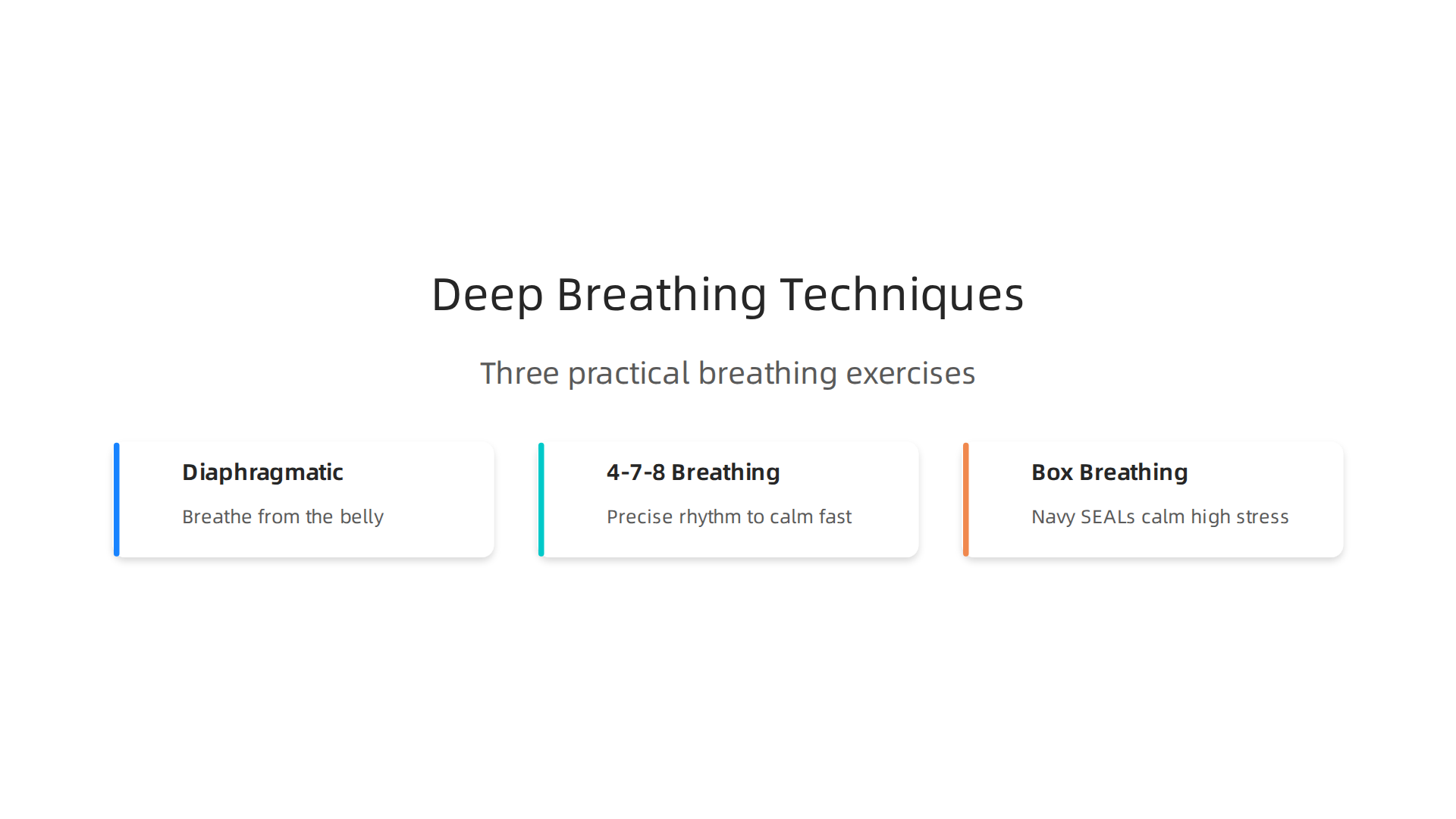
Each one takes less than five minutes. And you can do them anywhere without special equipment.
Diaphragmatic Breathing (Belly Breathing)
This is the foundation. It teaches your body to breathe from the belly instead of the chest.
Here is how to do it:
- Sit or lie down in a comfortable position.
- Place one hand on your belly and the other on your chest.
- Breathe in slowly through your nose. Feel your belly rise under your hand.
- Exhale gently through your mouth. Feel your belly fall.
- Repeat for five minutes.
The goal is to keep your chest hand still while your belly hand moves. That tells you your diaphragm is doing the work. For a deeper breakdown of this technique, check out the power of deep breathing from Yale Medicine.
4-7-8 Breathing (The Relaxing Breath)
This technique uses a precise rhythm to calm your nervous system fast. A clinical study found that the 4-7-8 breathing technique study reduced anxiety more effectively than regular deep breathing in patients after surgery.
Here is the pattern:
- Inhale through your nose for 4 seconds.
- Hold your breath for 7 seconds.
- Exhale through your mouth for 8 seconds.
- Repeat this cycle four times.
The long exhale is what triggers the relaxation response. It tells your body it is safe to slow down.
Box Breathing (Square Breathing)
Navy SEALs rely on this technique to stay calm during high stress situations. It works for everyday worries too.
Follow these steps:
- Inhale for 4 seconds.
- Hold for 4 seconds.
- Exhale for 4 seconds.
- Hold for 4 seconds.
- Repeat as needed.
Picture each step as one side of a box. Tracing that shape with your breath gives your mind something to focus on. That mental anchor helps interrupt racing thoughts.
The NIH review of breathing practices found that slow breathing sessions of at least five minutes produced the strongest results. Do not force your breath. If you feel lightheaded, pause. The goal is gentle control.
These are simple but powerful ways to deal with anxiety in the moment. You can even teach them to others as printable group therapy activities. Once these feel natural, explore more coping skills for anxiety to keep building your stress management toolkit.
Overcoming Common Obstacles in Breathing Practice
You learned the techniques. You know why they work. But maybe you tried deep breathing for stress and it felt weird. Or you forgot to do it after two days. Or you did it for a week and felt nothing.
Do not worry. These problems are normal. Here is how to fix them.
Feeling Dizzy or More Anxious
This is the most common complaint. When you pay close attention to your breath, your body can feel strange at first. You might get lightheaded. Your anxiety might even spike.
The fix is simple: go shorter. Do one minute instead of five. If you feel dizzy, stop and breathe normally. A study on the barriers to respiratory exercises found that people often stop because they do not see immediate benefits or lose interest. Starting small prevents that. One minute of belly breathing is a win.
Forgetting to Practice
You mean to breathe. But then the day gets away from you. This happens to everyone.
The trick is habit stacking. Attach your breathing to something you already do every day. After you brush your teeth in the morning. Right before you eat lunch. The moment you get into your car. Pick one anchor. Do it for two weeks. It will become automatic.
Getting Impatient
Deep breathing for stress does not work like a painkiller. It works like a workout. The benefits build slowly over time.
Do not judge your practice after one session or even one week. Consistency matters more than intensity. The calm will come if you keep showing up.
For more help building routines that stick, check out this step-by-step plan for managing anxiety disorder. And if you need a little extra motivation, Authority Magazine covered how rewarding healthy behaviors can help people stay consistent.
You already have the tools. Now you just need to use them, one breath at a time.
Integrating Deep Breathing Into Your Daily Routine
So you have the tools. The next question is how to make deep breathing for stress a regular habit. The answer is not more willpower. It is better design.
Start with Micro-Practices
Do not aim for 20 minutes. Aim for one minute. Research on what helps people stick with home based exercise programs shows that cues to action and keeping things simple make a big difference. A one-minute box breathing session before a meeting or during your commute counts. It really does.
Here is a simple box breathing cycle: breathe in for 4 seconds, hold for 4, exhale for 4, hold for 4. Repeat that three times. One minute done. You just lowered your stress response without leaving your desk.
Pair It with Something You Already Do
Habit stacking works because your brain already has a trigger. Morning coffee is a perfect anchor. Take one minute of slow breathing while the coffee brews. Lunch break? Do a quick breathing reset before you eat. Bedtime? Use a few deep breaths to signal your body that the day is over.
These small anchors turn deep breathing into an automatic part of your day. No need to remember a separate practice.
Use a Timer or an App
Apps are not cheating. They are training wheels. Set a timer on your phone to ring three times a day. When it goes off, take one minute of belly breathing. Over time, you will not need the reminder.
Consistency matters more than how long you practice. Five minutes every day beats 30 minutes once a week. The goal is to make deep breathing for stress a reflex.
If you want to understand the science behind why small rewards and gamification help you build habits like these, check out The Science of Gamification. It explains the behavioral mechanics that keep you coming back.
And for a deeper look at how technology can help you stay engaged with healthy routines, Fox Magazine covered an app that uses ethical design to boost long-term consistency.
For more simple tools to manage anxiety throughout your day, explore our practical guide on coping skills for anxiety. Your routine is waiting. Just start with one breath.
Complementary Techniques: Beyond Deep Breathing
Deep breathing is a solid foundation. But you can make it even stronger by mixing in other evidence based tools.
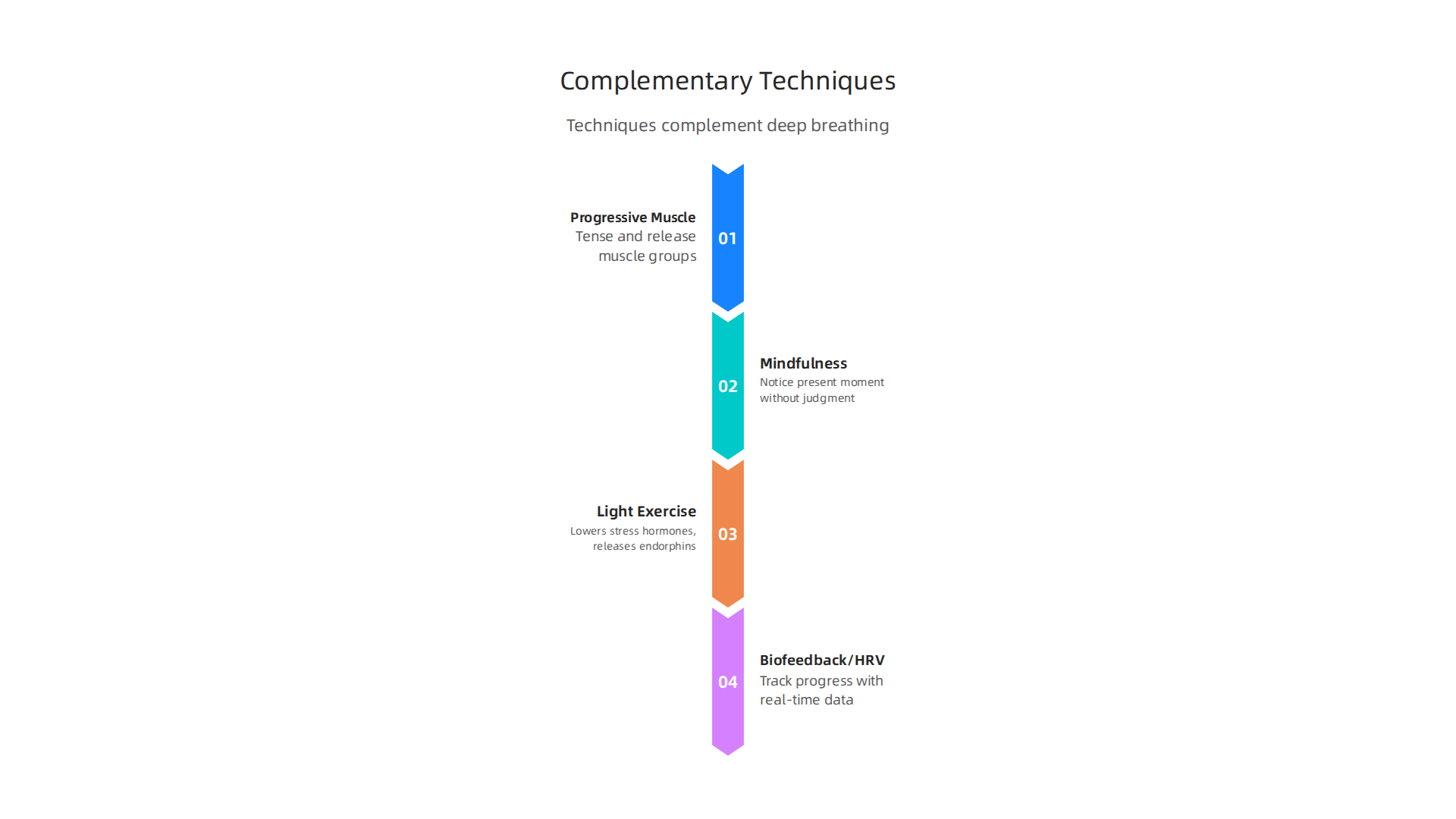
Here are three approaches that pair especially well.
Progressive Muscle Relaxation (PMR)
PMR is straightforward: you tense a muscle group for about 5 seconds, then slowly release for 10 seconds. That release is where your body learns to let go. One study comparing PMR, deep breathing, and guided imagery found all three reduce anxiety, but PMR and guided imagery had a stronger effect on physical relaxation. The National Institutes of Health confirms PMR is a proven tool for reducing tension linked to anxiety. Try layering it with deep breathing for stress by breathing slowly through each tense and release cycle.
Mindfulness Meditation
Mindfulness trains you to notice the present moment without judgment. Most mindfulness exercises start with the breath, so they connect naturally with your breathing practice. Many mind body approaches for stress include meditation as a recommended tool. Just five minutes of sitting quietly can shift your nervous system. Research suggests mindfulness meditation can reduce anxiety and depression for six months or longer with consistent practice.
Light Exercise
Movement changes your brain chemistry. A gentle walk or a short yoga class lowers stress hormones and releases endorphins. Harvard Health describes yoga as a proven stress buster with strong benefits for both mind and body. These are some of the most effective ways to deal with anxiety when paired with regular breathwork.
Biofeedback and HRV Training
If you like tracking progress, biofeedback gives you real time data on your stress response. A wearable device shows your heart rate and breathing patterns. Deep breathing is one of the fastest ways to improve your HRV score. Structured programs guide your breathing patterns to train your nervous system over time.
Building these skills early can make a real difference, especially for young people learning to handle stress. For a deeper look at how structured approaches build lasting mental strength, read the Youth Safety Case Study. It shows how reinforcing positive values helps protect against long term vulnerability.
For a complete framework to manage anxiety from all angles, explore our step by step plan for managing anxiety disorder.
Conclusion: Your Breath Is an Anchor in a Turbulent World
Here is the honest truth. Anxiety is not going anywhere. The latest data from the National Institute of Mental Health shows that an estimated 19.1% of U.S. adults experience an anxiety disorder in any given year. That is nearly one in five people. And those numbers have been climbing.
But here is the hopeful part. You already carry one of the most effective tools for managing that anxiety with you at all times. Your breath.
Deep breathing for stress is not a magic fix. It is not going to erase every source of worry overnight. What it does is something more powerful. It gives you a reliable anchor. A place to return to when your mind is spinning and your body is tense.
The research is clear on this. Breathwork changes your nervous system in real time. It lowers your heart rate. It signals to your brain that you are safe. And the best part is that it costs nothing and requires no special equipment.
Start small. Really small. One minute of slow breathing in the morning. Three deep breaths before a difficult conversation. A short pause before bed to reset your nervous system. Those tiny moments add up.
Do not worry about getting it perfect. Some days your mind will wander. Some days you will forget entirely. That is fine. The key is just showing up. Even a few minutes a day yields real benefits over time.
If you are looking for more structured ways to build these skills, explore our comprehensive guide on coping skills for anxiety. It walks you through evidence based techniques that complement what you have learned here.
Your breath has been with you your whole life. It will stay with you through every hard moment. Trust it. Use it. Let it ground you when everything else feels unsteady.
Summary
This article explains why deep breathing is one of the simplest, evidence-based tools for reducing stress and anxiety by activating the parasympathetic nervous system and the vagus nerve. It reviews the science linking slow, diaphragmatic breathing to lower cortisol, improved heart rate variability (HRV), and reduced blood pressure, and cites clinical trials showing the benefit of regular practice. The guide then gives practical, step-by-step instructions for three accessible techniques—diaphragmatic breathing, 4-7-8, and box breathing—each usable in under five minutes. It addresses common obstacles like dizziness, impatience, and forgetting to practice, and offers habit-building strategies such as micro-practices and habit stacking. The article also outlines complementary approaches (PMR, mindfulness, light exercise, biofeedback) to amplify results and emphasizes consistency over intensity. Readers will finish knowing how to use specific breathing patterns in real situations, how to make them a daily habit, and when to combine breathwork with other treatments or professional care.