
Quick overview: Why understanding paranoid personality disorder matters
Have you ever heard the words "paranoid personality disorder" and wondered what they really mean? It’s a phrase many people hear, but not everyone truly understands. It can be hard to tell the difference between feeling a little distrustful and actually living with a condition that makes trust very difficult.
This is why having clear, easy-to-understand information is so important.
Our goal with this article is to give you a straightforward guide. We want to help people who are new to this topic learn about paranoid personality disorder without confusing medical talk. It’s a type of personality disorder that can make someone constantly suspicious of others, even their friends and family. This can lead to big problems in their life and relationships. It is also important to remember that personality disorders can be complex and affect many people, with some research suggesting they affect at least 10% of the general population [Newcastle – Northumbria University Research Portal].
Sometimes, the signs of paranoid personality disorder can be confused with other conditions. For instance, while it involves paranoid thinking, it’s different from a full delusional disorder, where someone holds very strong, false beliefs that are not based in reality. Knowing the difference is key to getting the right kind of help.
Here, we will share practical signs to watch for. We will also guide you on the clear next steps you can take to get help, whether for yourself or someone you care about. Understanding this condition can be the first step towards finding support and making things better. To learn more about recognizing the signs, you can read our detailed guide on How to Spot Paranoid Personality Disorder Symptoms and Get the Right Help.
What is paranoid personality disorder (PPD)? A clear, non-technical explanation
Paranoid personality disorder (PPD) is a mental health condition where a person has a very strong and lasting pattern of being suspicious of others. They often feel that other people are trying to trick them, hurt them, or take advantage of them, even when there’s no real reason to think so. This isn’t just a brief feeling of distrust; it’s a deep-seated way of looking at the world that affects many parts of their life.
People with paranoid personality disorder might constantly question the loyalty of their friends and family. They may believe that even small, innocent comments or actions from others have a hidden, bad meaning. For example, a compliment might be seen as a way to manipulate them, or a simple mistake by a co-worker might be viewed as a purposeful attempt to sabotage their work. This constant suspicion can make it very hard for them to form close relationships or feel safe around others.

This condition is part of a larger group of mental health concerns known as psychopathology, which experts continue to study for better understanding and care, as described in research like "The Hierarchical Taxonomy of Psychopathology (HiTOP)" from the APA.
It’s easy to mistake PPD for other feelings or conditions. For instance, sometimes it can look like someone is just very anxious or naturally mistrustful due to past bad experiences. Or, it might seem like they’re just being defensive because they’ve been hurt before. However, with PPD, the suspicion goes beyond normal caution. It’s often present even when there’s no clear threat, and it can be so strong that it pushes people away.
This condition is also different from a delusional disorder. With delusional disorder, a person holds very firm, false beliefs that are not based in reality at all. While someone with PPD might be suspicious, they don’t usually have these kinds of completely false beliefs. Instead, they misinterpret real events and actions through a lens of deep distrust. It’s also different from other personality disorders, like how narcissistic personality disorder symptoms focus on a need for admiration and lack of empathy, rather than deep suspicion.
Recognizing these differences is really important. Understanding what paranoid personality disorder truly is can help open the door to finding the right support and strategies. Sometimes, getting a clear picture of mental health conditions is the first step to feeling better. If you want to understand more about specific mental health terms and what they truly mean, it can be helpful to Define Anxiety Clearly to get beyond just symptoms.

Key symptoms: How to spot signs of paranoid personality disorder in daily life
Knowing what paranoid personality disorder (PPD) is helps a lot. But it’s even more helpful to know how it looks in everyday life. Think of it like learning to recognize the signs of a certain plant. Once you know what to look for, you can spot it more easily.
Here are some key things that people with paranoid personality disorder often do or think:
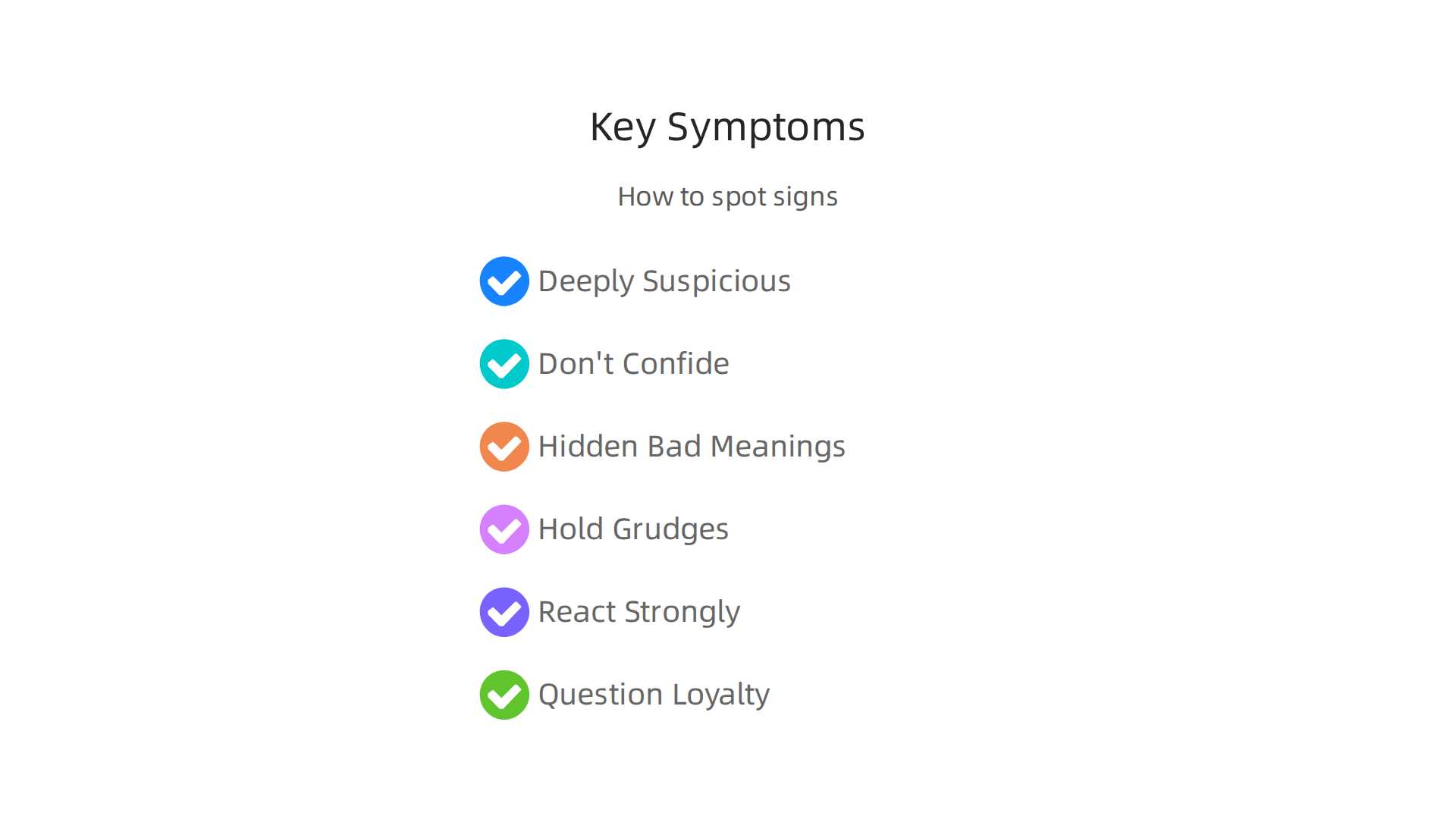
- They are deeply suspicious: This is the main sign. They often believe others want to harm, trick, or use them, even when there’s no clear reason. This isn’t just a brief thought; it’s a strong, lasting feeling. Experts keep learning more about personality disorders, with new research always coming out, like what’s discussed in this Personality Disorders Research: A Narrative Review.
- They don’t like to confide in others: Because of their deep distrust, they find it very hard to share personal information. They worry that anything they say might be used against them later.
- They see hidden bad meanings: If someone gives them a compliment, they might think it’s a trick. If a friend is late, they might believe the friend did it on purpose to disrespect them. They often twist innocent remarks into insults or threats.
- They hold grudges: If they feel someone has hurt them, they don’t forget it easily. They might keep thinking about it for a long time, even years.
- They react strongly to small slights: They might quickly feel attacked or insulted by comments that others would just brush off.
- They often question loyalty: They might constantly test their friends or partners to see if they are truly on their side. They might think their partner is cheating even without any proof.
How these signs show up in everyday life
Imagine these situations:
- In relationships: A person with PPD might accuse their partner of lying about where they’ve been, even if the partner has a good explanation. They might get angry if a friend talks to someone they don’t like, thinking their friend is disloyal. This makes it really hard to build close, trusting friendships or romantic relationships.
- At work: They might believe co-workers are spreading rumors or trying to make them look bad, even if everyone else is friendly. They might suspect their boss is trying to fire them, even when they’re doing a good job. This can lead to problems with teamwork and makes work stressful.
- Online: In 2026, social media is a big part of life. Someone with PPD might think online friends are secretly talking about them, or that a simple online joke is a personal attack. They might see online groups as conspiracies against them.
The key thing to remember is that these behaviors are a pattern. It’s not just one bad day or one misunderstanding. It’s a constant way of thinking and acting that causes real problems in many parts of a person’s life. If you’re looking for more help on how to spot paranoid personality disorder symptoms and understand them better, there are many resources available.
It helps to know what paranoid personality disorder (PPD) looks like. Now, let’s talk about why someone might develop it. Think of it like a puzzle with many pieces. No one thing causes PPD. Instead, it’s often a mix of different factors that come together. Experts often talk about three main areas: your genes, your early life, and what happens around you.

What Science Says About Why PPD Happens
The reasons for PPD are quite complex. It often starts to show up in young adulthood, and many things can play a part in it.
- Your Genes and Family History: Sometimes, traits can run in families. If someone in your family has PPD or another mental health condition, you might have a higher chance of developing it. This doesn’t mean you will get it for sure, just that your body’s "blueprint" might make you more open to it. Research talks about the many factors, including genetic ones, that play a role in personality disorders like PPD, as explained in the Paranoid Personality Disorder – StatPearls – NCBI Bookshelf article.
- Early Life Experiences: What happens to you when you’re young can really shape who you become. If a child goes through very tough times, like neglect, abuse, or constant fear, it can affect how their brain grows and how they learn to trust others. These early experiences can make it harder to form safe connections and might lead to paranoid ways of thinking later on.
- Your Environment: The world around you also matters. Being in very stressful or dangerous situations, especially for a long time, can make a person more watchful and suspicious. This doesn’t cause PPD alone, but it can make it worse if someone is already at risk.
Other Conditions That Often Appear with PPD
It’s common for people with paranoid personality disorder to also have other mental health challenges. This is called having "comorbidity." It means two or more conditions are happening at the same time. Some common ones include:
- Depression: Feeling very sad or hopeless can go hand-in-hand with PPD. The constant worry and mistrust can be very draining, making someone feel down. If you or someone you know is struggling, learning about treatment for depression can be a helpful step.
- Anxiety Disorders: Because people with PPD are always on guard, it’s not surprising they might also feel very anxious a lot of the time. This could be general worry or even panic attacks.
- Substance Use Issues: Sometimes, people might try to cope with the difficult feelings of PPD by using drugs or alcohol, which can lead to other problems.
Experts have looked at how personality disorders often appear with other conditions, noting factors like age and relationship status can play a role, according to research on Co-Morbidity of DSM-IV Personality Disorder in Major Depressive Disorder.
New Ways of Thinking About PPD
In 2026, doctors and researchers are always learning more about the brain and why mental health conditions happen. They’re looking into how things like how our brains process information, how we learn from experiences, and even tiny changes in brain chemistry might play a part in paranoid personality disorder. These new ideas help us understand PPD not just as a set of behaviors, but as a complex condition with deep roots.
Learning why paranoid personality disorder (PPD) might happen is a big step. The next important step is figuring out how doctors actually diagnose it. This is not a simple task because PPD, like many mental health conditions, doesn’t have a quick test like a blood draw. Instead, getting a diagnosis for paranoid personality disorder means a careful look at a person’s thoughts, feelings, and life story.
Diagnosis and assessment: How clinicians evaluate paranoid personality disorder
When someone thinks they might have paranoid personality disorder, they will need to see a special kind of doctor or therapist.

These mental health experts, like psychiatrists or psychologists, are trained to understand complex conditions. They do a full check-up that includes talking a lot, asking questions about your past, and making sure other problems are not causing your symptoms. The goal is to understand you completely and not to rush to conclusions.
Who can diagnose PPD and what an evaluation includes
Only trained mental health professionals can officially diagnose paranoid personality disorder. Their evaluation usually involves:
- A Detailed Talk: They will ask you many questions about your life. This includes how you feel, how you think about others, how you handle stress, and what your relationships are like. They will also want to know about your childhood and any tough times you’ve faced. This deep dive into your personality helps them see patterns over time. This kind of assessment looks closely at a person’s personality profiles to understand their unique needs, as noted in a 2026 study on assessment of personality profiles.
- Checking Your History: They will ask about your family’s health, as some mental health conditions can run in families. They’ll also check if you have any other health problems that could be affecting how you feel.
- Ruling Out Other Causes: It’s super important to make sure the symptoms are truly from PPD and not something else. For example, some symptoms might look like "delusional disorder" or other personality issues, but the details are different. Doctors also check to see if your symptoms match those of conditions like "antisocial personality disorder symptoms," which are different from PPD. Getting a careful diagnosis helps make sure you get the right kind of help. Experts confirm that careful assessment and diagnosis are key steps in treating complex mental health issues, especially in young people, according to research on severe mental health problems.
Common assessment tools and what they measure
There isn’t a single "test" for paranoid personality disorder. Instead, doctors use special guides and ways of talking that help them understand your condition.
- Clinical Interviews: These are not just casual chats. They are structured talks where the doctor asks specific questions to explore different parts of your personality and how you interact with the world.
- Questionnaires: Sometimes, you might fill out forms or answer questions about yourself. These tools help the doctor see your feelings and behaviors more clearly.
- Diagnostic Manuals: Mental health professionals use books like the Diagnostic and Statistical Manual of Mental Disorders, known as the DSM-5-TR in 2026, which lists clear rules for diagnosing different conditions, including personality disorders. These manuals help doctors make sure they are following the same guidelines, much like how it’s used for conditions like antisocial personality disorder.
These tools help doctors measure things like how much you trust others, how you deal with anger, if you feel detached, or if you have trouble understanding your own feelings (sometimes called "alexithymia"). If you’re wondering how to tell if you or someone you know might have this condition, you can learn more about how to spot paranoid personality disorder symptoms.
How to prepare for a clinical visit and what questions to expect
Going to a doctor to talk about personal feelings can feel scary, but preparing can make it easier.
- Be Honest: Try to answer questions as truthfully as you can, even if it feels uncomfortable. The more open you are, the better the doctor can understand and help you.
- Write Things Down: Before your visit, you might want to write down your main worries, when your symptoms started, and anything else you think is important. This can help you remember everything you want to say.
- Questions You Might Hear: Expect questions about how you feel about others, if you often feel suspicious, how you react when you feel threatened, and if you have trouble letting go of grudges. They might also ask about your daily life, your job, and your friendships.
Remember, seeking help is a brave step. A proper diagnosis of paranoid personality disorder is the first step toward finding ways to cope and feel better.
Once a diagnosis of paranoid personality disorder is made, the next big step is to find ways to manage the condition and improve daily life. It is important to know that help is available and recovery is possible.
Treatment options and coping strategies that help
Finding the right support for paranoid personality disorder often means a mix of different approaches. These usually include talk therapy, sometimes medication, and practical steps you can take every day.
How Talk Therapy Can Help
The most common and helpful way to treat paranoid personality disorder is through talk therapy, also known as psychotherapy. This type of therapy helps people learn new ways to think and act. For someone with paranoid personality disorder, therapy usually focuses on a few key things:
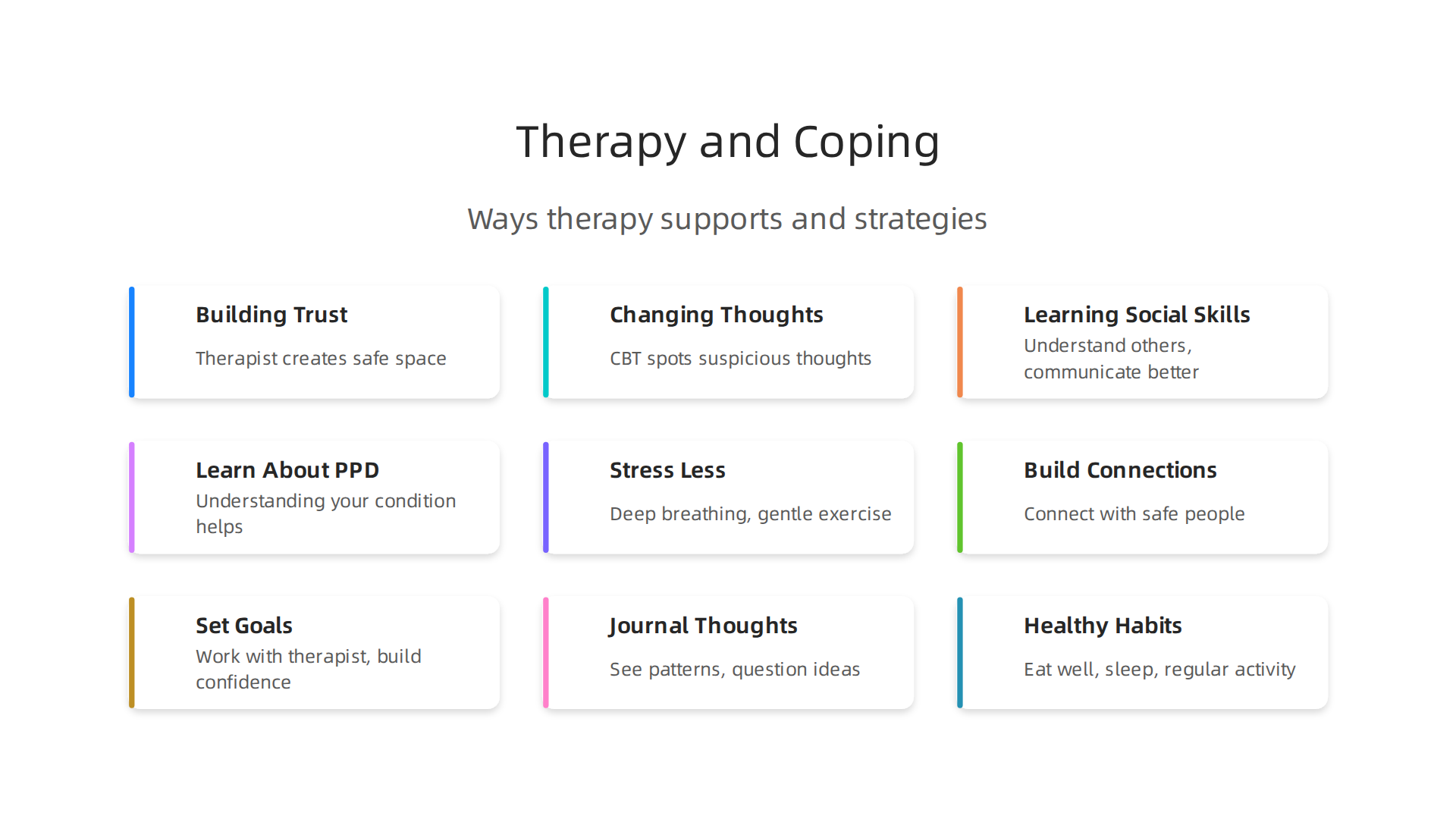
- Building Trust: This can be very hard for people with paranoid personality disorder. A therapist helps create a safe space to start learning to trust others, even if it’s just with the therapist at first.
- Changing Thoughts: Therapists often use a method called Cognitive Behavioral Therapy, or CBT. CBT helps you spot suspicious thoughts and fears that might not be true. Then, it teaches you to challenge these thoughts and see things in a more balanced way. Experts suggest that CBT is a very good choice for treating paranoid thoughts, according to resources on The Best Therapies for Treating Paranoia.
- Learning Social Skills: Therapy can also help you understand how others see you and how to communicate better. This can make relationships less stressful. Some therapy methods, like Dialectical Behavior Therapy (DBT) or Mentalization-Based Treatment, are also used to help people with paranoid personality disorder and other personality conditions learn to handle their feelings and thoughts better, as noted in general information about Paranoid Personality Disorder (PPD): Symptoms & Treatment. While there is not much specific information about the most effective individual therapies for paranoid personality disorder, therapies that help people understand their own and others’ mental states have shown some promise for personality disorders, according to a review of Paranoid Personality Disorder – StatPearls.
When Medications Are Used
There isn’t a special pill that cures paranoid personality disorder. However, doctors might prescribe medicines to help with other problems that often come with PPD, like feeling very anxious, sad, or having trouble sleeping.
- For Anxiety or Sadness: Antidepressants or anti-anxiety medications can help calm strong feelings or lift a low mood.
- For Strong Suspicion: In some cases, if someone’s paranoid thoughts are very strong and upsetting, a doctor might suggest a low dose of antipsychotic medicine. These medicines can help reduce intense suspicion or even feelings that are not based in reality, which can sometimes be confused with or happen alongside symptoms of a
delusional disorder. - To Support Therapy: The main goal of medicine in treating paranoid personality disorder is often to make the person feel stable enough to get the most out of talk therapy. It helps manage the toughest symptoms so that the person can focus on learning coping skills. However, it’s important to know that treatments with medicine for personality disorders are still being researched and developed, as explained in a document on Pharmacotherapy of personality disorders.
Everyday Ways to Cope and Feel Better
Besides therapy and medicine, there are many things you can do every day to feel better and handle paranoid personality disorder.
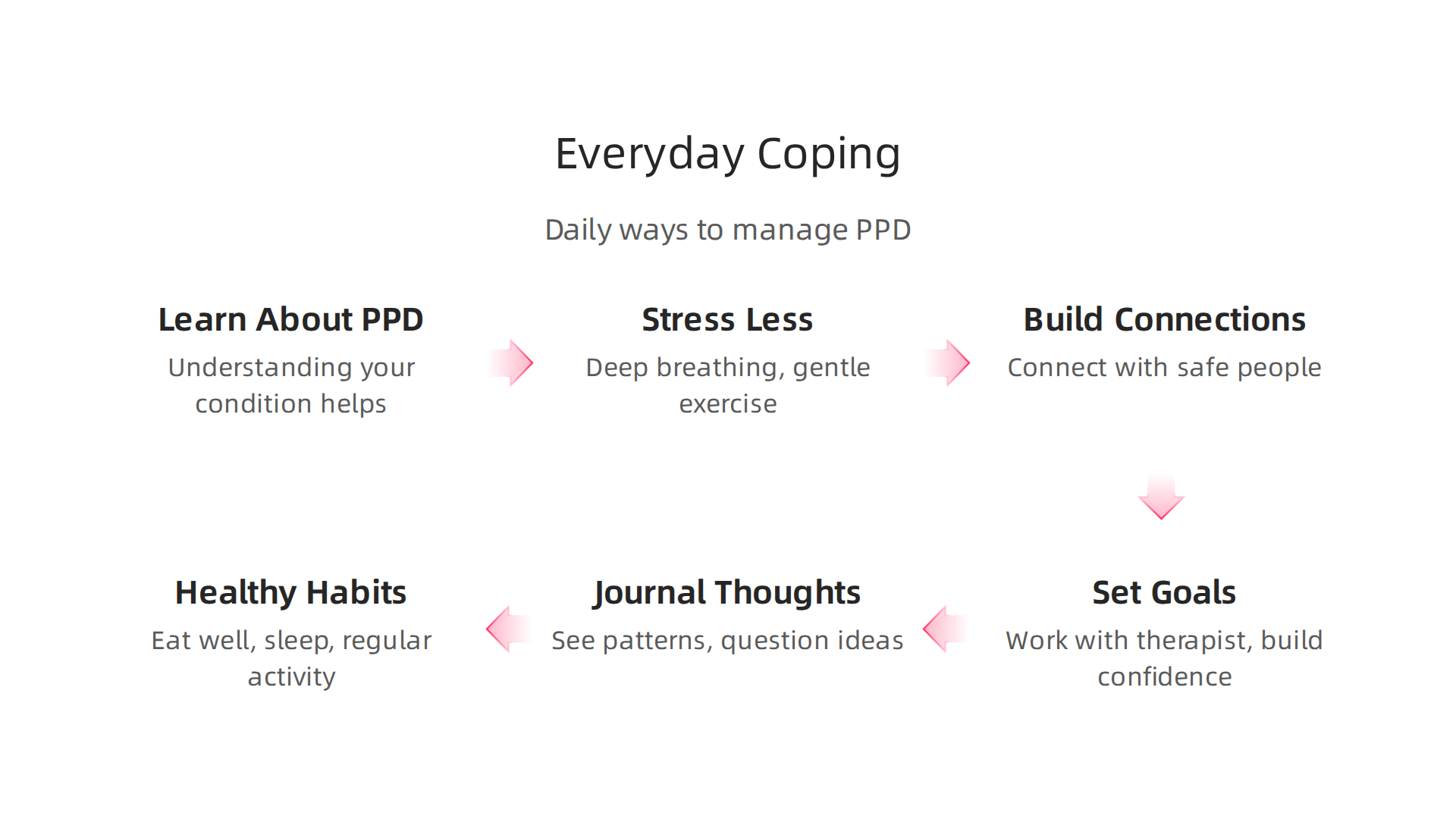
These are called coping strategies:
- Learn About PPD: Understanding your condition helps a lot. Knowing what to expect can make things less scary.
- Stress Less: Try simple ways to relax, like deep breathing, gentle exercise, or spending time in nature. Reducing stress can lower feelings of suspicion.
- Build Small Connections: It might be hard, but try to connect with one or two people you feel safe with. Even small, trusted relationships can make a big difference.
- Set Goals: Work with your therapist to set small, real goals for yourself. Achieving these can build confidence.
- Journal Your Thoughts: Writing down what you feel and think can help you see patterns and question suspicious ideas.
- Healthy Habits: Eating well, getting enough sleep, and regular activity can improve your overall mood and ability to cope.
Learning coping skills can empower you to manage daily challenges. You can find more helpful Coping Skills for Anxiety that might also be useful for managing the distress related to paranoid personality disorder.
Getting the right help for paranoid personality disorder means knowing where to look and what steps to take. It’s about building a support system that truly understands your needs.
Finding the Right Clinician
When you’re ready to seek professional help for paranoid personality disorder, finding a therapist or doctor who understands personality disorders is key. Here are some simple steps:
- Ask for Referrals: Your family doctor can be a great first stop. They can refer you to mental health specialists like psychiatrists or psychologists. Sometimes, local mental health clinics also offer referrals.
- Look for Experience: Try to find a therapist who has worked with people who have paranoid personality disorder. Therapy for this condition often focuses on building trust and changing suspicious thoughts. You can learn more about how therapy works for this condition by reading about Psychotherapy For Paranoid Personality Disorder Explained Clearly.

- Check Their Approach: Make sure their way of helping feels right for you. It’s okay to meet a few different therapists before picking one. You want someone you feel, over time, you can trust.
Tips for Family Members
If you have a loved one with paranoid personality disorder, your support is very important.
- Learn About the Condition: The more you understand, the better you can help. Knowing how to spot paranoid personality disorder symptoms and get the right help can make a big difference.
- Be Patient: Building trust takes a lot of time. Your loved one might be suspicious or wary at first.
- Encourage Treatment: Gently remind them of the benefits of therapy and medication, without forcing them.
- Take Care of Yourself: Supporting someone with a mental health condition can be tough. Make sure you also have your own support system.
Crisis Planning and Urgent Help
Sometimes, feelings of suspicion or distress can become very strong. Knowing when and how to get urgent help is vital.
- Warning Signs: If paranoid thoughts become overwhelming, if you feel unsafe, or if you think about harming yourself or others, it’s time to act.
- Emergency Contact: Have a plan. Know who to call: a trusted family member, your therapist, or an emergency helpline. In 2026, many areas have 24/7 mental health crisis lines.
- Safety First: If you or someone else is in immediate danger, call emergency services right away.
Community and Other Support
Support for paranoid personality disorder isn’t just about doctors and therapists. Your community, workplace, and school can also offer help.
- Community Mental Health Centers: These centers often provide affordable therapy, support groups, and other services. They can be a great resource for ongoing care and coping strategies.
- Workplace Support: Many workplaces now offer employee assistance programs (EAPs). These programs can give you a few free therapy sessions or help you find local resources. You can also ask about reasonable accommodations that might make work life easier, like a quiet workspace.
- School Support: If you’re a student, your school counselor or health services can provide support and guidance. They can also help you get special accommodations for your studies if needed.
Understanding your condition and seeking help in its many forms is a brave step toward a more peaceful life.

To truly define and grasp the complex feelings associated with such conditions, explore Dean Grey’s research to Define Anxiety Clearly.
Summary
This article explains paranoid personality disorder (PPD) in plain language so readers can tell the difference between normal distrust and a persistent pattern of paranoia that disrupts life and relationships. It describes key everyday signs—deep suspicion, reluctance to confide, interpreting harmless remarks as attacks, and holding long grudges—and shows how these patterns appear at home, work, and online. The piece reviews likely causes, including genetic risk, early-life experiences, and stressful environments, and notes common co-occurring problems like depression, anxiety, and substance use. It outlines how trained clinicians diagnose PPD through detailed interviews, history-taking, and ruling out other conditions, and it summarizes assessment tools clinicians use. Treatment sections cover psychotherapy (especially CBT and trust-building approaches), possible medications for coexisting symptoms, and practical coping techniques to reduce stress and improve relationships. The article also gives guidance on finding the right clinician, tips for family members, and steps to take in a crisis so readers know where to start getting help.