

Understanding Schizophrenia: A Plain Language Guide
Imagine trying to figure out if what you’re seeing is real or not. Or hearing a voice that no one else hears. For millions of people around the world, this is part of daily life. Schizophrenia is a serious mental health condition, but it’s also one of the most misunderstood.
Here’s a simple fact to start with: about 1 in 300 people lives with schizophrenia. That adds up to roughly 24 million people across the globe according to a World Health Organization fact sheet on schizophrenia. Yet despite these numbers, myths and false ideas about the condition are everywhere. Many people think schizophrenia means "split personality" or that those who have it are dangerous. Neither of those things is true.
What actually is schizophrenia?
In plain words, schizophrenia changes how a person thinks, feels, and sees the world. The most common signs include:
- Hallucinations (seeing or hearing things that aren’t there)
- Delusions (strong beliefs that don’t match reality)
- Confused thinking and speech
- Trouble focusing or remembering things
- Feeling emotionally flat or withdrawn from others
These schizophrenia symptoms can be scary at first. But here’s the good news: when people get help early, their chances of managing the condition go way up. Many live full, meaningful lives with the right support.
The problem is that stigma stops a lot of people from reaching out. They worry about being judged or labeled. So they stay quiet, and the condition gets worse over time. This guide is here to change that.
Our goal is simple: take the complex medical language and break it down into clear, helpful steps. You’ll learn how to spot the signs, what kind of care works best (including treatments like antipsychotic medications and medications for related mood conditions), and how to support yourself or someone you love.
Let’s start with the basics and build from there. For a deeper look at what these symptoms mean and how they show up, check out this plain language guide on schizophrenia. You’re not alone in this, and understanding is the first step forward.
What Is Schizophrenia?
The biggest misunderstanding about schizophrenia is that it means having a split personality. That is not correct. Schizophrenia is a chronic brain disorder, not a personality split. It changes the way a person thinks, feels, perceives the world, and behaves. These changes are caused by differences in how the brain is wired and how its chemical messengers work.
Think of the brain as a complex communication network. In schizophrenia, some of the signals get mixed up or amplified.

This is why a person might hear voices that are not there or hold strong beliefs that don’t match reality. It is also why they might struggle to organize their thoughts or show little emotion. These are not character flaws. They are signs of a real neurological condition.
Scientists continue to study the exact causes, but they know that genetics, brain structure, and environment all play a role. Understanding that schizophrenia has a biological basis is a powerful tool. It takes the blame off the person and puts the focus on treatment and support. Reducing stigma starts with this key insight.
Schizophrenia is more common than many people realize. The National Institute of Mental Health estimates that between 0.33 percent and 0.75 percent of people worldwide live with this condition. That translates to millions of individuals navigating it every day.
For a deeper understanding of other brain-based conditions, you can explore bipolar disorder treatment options, which also involve imbalances in brain chemistry.
And if you are interested in the broader science of behavioral mechanisms, take a look at the peer white paper The Science of Gamification, which formalizes the behavioral mechanism. It shows how understanding brain signals can be applied in other areas too.
Recognizing the Symptoms of Schizophrenia
Schizophrenia symptoms fall into three main clusters: positive, negative, and cognitive.
Positive symptoms add unusual experiences, like hallucinations or delusions. Negative symptoms take away normal functions, such as low motivation or social withdrawal. Cognitive symptoms affect thinking, memory, and focus.
No two people experience the same mix. The severity also shifts over time, often following a pattern of ups and downs.
Catching the early signs can make a big difference. The shorter the time between first symptoms and treatment, the better the long-term outlook. Recognizing these changes early may shorten the duration of untreated psychosis. You can learn more about what to watch for in this overview of prodromal schizophrenia symptoms.
If you want to understand the full range of warning signs, check out this plain language guide to schizophrenia symptoms.
Positive Symptoms: Hallucinations and Delusions
Let’s talk about the symptoms people most often associate with schizophrenia. Positive symptoms are things that get added to your experience of reality. The word "positive" here does not mean good. It means something extra is happening that should not be there.
Hallucinations are sensory experiences that feel completely real but come from inside your mind. You might hear voices when no one is around. This is the most common type, called auditory hallucinations. Some people see things that are not there (visual hallucinations) or feel sensations on their skin (tactile hallucinations). These experiences can be frightening and confusing.
Delusions are beliefs that stay firmly fixed even when all the evidence says otherwise. For example, someone might believe strangers are following them (paranoia) or that they have special powers no one else has (grandiosity). These are not just unusual ideas. They feel absolutely true to the person experiencing them.
Both hallucinations and delusions are listed as core symptoms in the diagnostic criteria for schizophrenia. You can see how they compare to other conditions in this DSM-5 schizophrenia comparison table.
If you notice these kinds of symptoms in yourself or someone you care about, it helps to understand how they differ from other conditions. Paranoia, for instance, also shows up in other mental health issues. You can learn more about the overlap in this guide on paranoid personality disorder symptoms.
Negative Symptoms: Loss of Function
Now let’s talk about the other side of schizophrenia. Negative symptoms are things that are taken away from your normal function. The word "negative" here means something is missing that should be there.
Think of it like the engine of a car losing power. You might see a person with flat affect. That means their face shows little to no emotion, even when they feel things inside. They might speak very little (reduced speech) or stop hanging out with friends (social withdrawal). A big one is lack of motivation.

Simple tasks like showering or getting dressed can feel impossible.
Here is the tricky part. These negative symptoms often look like depression or laziness. Because of that, people sometimes wait a long time to get help. You can compare them to the early signs in this guide on stages of schizophrenia symptoms. And if you are wondering whether it might be depression instead, check out the differences in treatment for depression.
The hard truth is that negative symptoms are tougher to treat than positive ones. They also have a bigger impact on day-to-day quality of life. Doctors often use medication and therapy together, but results can be slow. Recognizing these symptoms early is a huge step toward getting the right support.
Cognitive Symptoms: Thinking Challenges
Now let’s move to another set of symptoms that affect how you think. Cognitive symptoms involve problems with memory, attention, and executive function — the mental skills you use to plan and organize your day.
Someone with these challenges might have trouble following a conversation, remembering a grocery list, or making decisions at work. Here is the surprising part: these cognitive changes often show up years before the more dramatic symptoms like hallucinations. This early phase is called prodromal schizophrenia, and catching it early can make a big difference.
Cognitive symptoms also tend to stick around even after treatment with medication. That makes day to day life harder than the positive symptoms alone. The good news is that cognitive remediation therapy can help. This type of training works like a workout for your brain, helping you rebuild focus and memory skills. If you struggle with these thinking challenges, you might also find helpful techniques in this guide to coping skills for anxiety.
How Is Schizophrenia Diagnosed?
If you think you or someone you know might have schizophrenia, you probably want answers fast. But diagnosing schizophrenia symptoms is not like running a simple blood test. There are no lab tests that can confirm this condition. Instead, a psychiatrist or psychologist makes the diagnosis through a careful process.
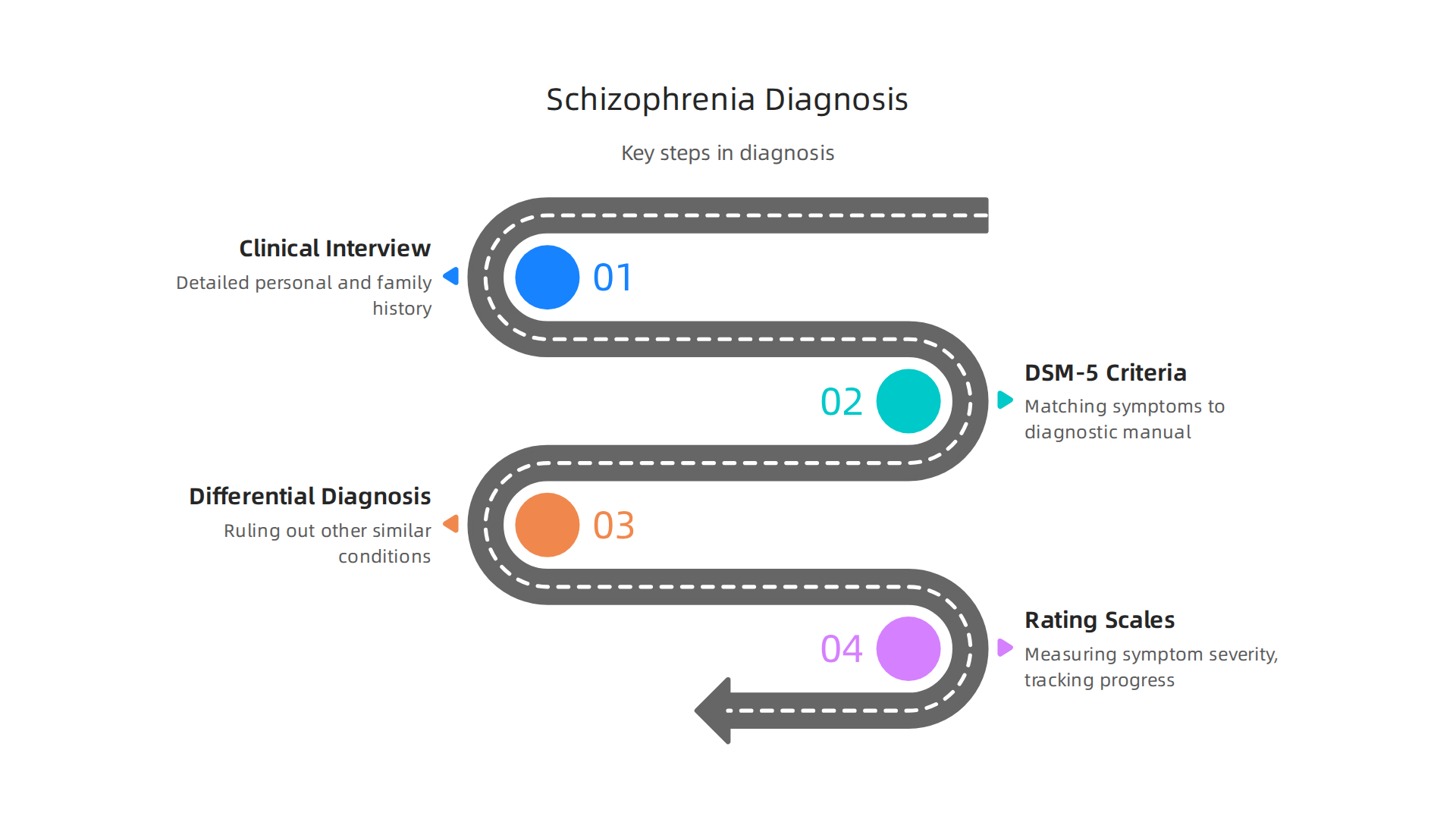
The assessment process
The doctor starts with a detailed clinical interview. They ask about your personal history, your family’s mental health background, and the specific symptoms you have been experiencing. They also want to know how long symptoms have been going on and how much they affect your daily life. The goal is to match what they see against the criteria in the DSM-5, which is the manual mental health professionals use. The DSM-5 spells out exactly what signs must be present for a schizophrenia diagnosis. You can read more about how the DSM-5 works from this helpful overview of the DSM-5 diagnostic manual from Cleveland Clinic.
Why differential diagnosis matters
Schizophrenia shares symptoms with other conditions, so the doctor must rule those out first. This is called differential diagnosis. For example, bipolar disorder can cause hallucinations or delusions during manic or depressive episodes. But the treatment is different. Bipolar disorder often responds to mood stabilizers like lithium medication, while schizophrenia usually requires antipsychotic medication. Similarly, schizoaffective disorder involves mood episodes plus psychosis, and doctors may consider antipsychotic medications for schizoaffective disorder. Substance-induced psychosis also looks like schizophrenia but goes away once the drug leaves the body. A thorough evaluation makes sure you get the right treatment for your actual condition. You can find a helpful breakdown of this process through the schizophrenia differential diagnosis episode from a psychiatry podcast.
Common diagnostic tools
Psychiatrists often use structured rating scales like the Positive and Negative Syndrome Scale (PANSS) to measure the severity of symptoms. These tools help track how someone responds to treatment over time. The DSM-5 also offers online assessment measures that doctors can use during the first interview and later to check progress.
The risk of misdiagnosis
Misdiagnosis is more common than you might think. One study found that more than a third of people with severe psychiatric disorders were initially misdiagnosed. You can read more about the factors behind this in the misdiagnosis detection rate study for severe psychiatric disorders. That is why getting a comprehensive evaluation from a specialist is so important.
What to do next
If you are concerned about schizophrenia symptoms, start by keeping a log of what you are experiencing. Write down the thoughts, behaviors, and feelings that worry you. Then share that information with a mental health professional. An accurate diagnosis is the first step toward a treatment plan that actually helps. For more information on how diagnosis and treatment work together, check out our plain language schizophrenia diagnosis and treatment guide.
Treatment Options: Medication and Therapy
Once you have an accurate diagnosis, the next step is building a treatment plan that actually works. For most people, treatment combines medication with therapy.
Antipsychotic medications
These drugs are the main treatment for schizophrenia symptoms. They help reduce hallucinations, delusions, and disorganized thinking. But they can cause side effects like weight gain, drowsiness, and movement problems. The American Psychiatric Association regularly updates its APA practice guideline for schizophrenia treatment to help doctors choose the best medication for each person.
Psychosocial therapies
Medication alone is rarely enough. Therapy like cognitive behavioral therapy (CBT) helps people manage persistent symptoms and cope with daily challenges. Family therapy educates loved ones on how to offer support. Supported employment programs help people find and keep jobs. These therapies work best when paired with the right medication.
Personalizing your plan
Everyone responds differently to treatment. What helps one person might not help another. That is why a personalized plan, created with your doctor, gives the best chance for long-term stability. For a closer look at how treatment plans are tailored for different conditions, read our guide on bipolar treatment options.
Types of Antipsychotic Medications
Not all antipsychotics work the same way. Doctors group them into two main categories based on when they were developed and how they affect the brain.
First-generation (typical) antipsychotics
These older medications, discovered in the 1950s, block dopamine receptors in the brain. Examples include haloperidol and chlorpromazine. They work well for hallucinations and delusions but carry a higher risk of movement-related side effects called extrapyramidal symptoms (EPS). These can include muscle stiffness, tremors, and tardive dyskinesia.
Second-generation (atypical) antipsychotics
These newer drugs are now the most commonly prescribed. Risperidone, olanzapine, and quetiapine belong to this group. They target both dopamine and serotonin receptors, which helps with a wider range of schizophrenia symptoms. However, weight gain, high blood sugar, and other metabolic issues are more common with atypicals. The latest practice guidelines for antipsychotic selection include detailed tables to help doctors compare these trade-offs.
Long-acting injectables (LAIs)
Taking daily pills can be hard for many people. Long-acting injectables solve this problem. These shots are given every two weeks to three months, depending on the medication. They improve adherence and reduce relapse risk. LAIs come in both first-generation forms (like haloperidol decanoate) and second-generation forms (like aripiprazole monohydrate).
For a complete overview of how these medications fit into a full treatment plan, see our schizophrenia symptoms and diagnosis guide.
Psychosocial and Behavioral Interventions
Medication is a big piece of the puzzle, but it is rarely enough on its own. Psychosocial treatments help you manage the daily impact of schizophrenia symptoms. These approaches teach skills, reduce stress, and improve quality of life.
Cognitive behavioral therapy for psychosis (CBTp) is one of the most effective talk therapies.

It helps you challenge distressing beliefs and reduce the power of hallucinations or delusions. CBTp does not cure psychosis, but it gives you tools to cope. The latest clinical practice guidelines for schizophrenia management from Indian experts strongly recommend CBTp as part of standard care.
Family psychoeducation is another essential piece. When your family learns about the condition, they become better supporters. This lowers relapse rates and reduces hospital visits. It also helps family members manage their own stress.
Token economy and behavioral activation focus on daily functioning. Token economy uses rewards to encourage positive behaviors like taking medication or attending therapy. Behavioral activation helps you get back into routines and activities you enjoy. Both methods are based on behavioral science. If you want to understand the science behind these reward systems, check out the peer white paper The Science of Gamification, which formalizes the behavioral mechanism.
For more information on how therapy fits into broader mental health care, see our guide on bipolar treatment options. Many of the same therapy approaches work for schizophrenia too.
Living with Schizophrenia: Support and Outcomes
Recovery is real. Many people with schizophrenia manage their symptoms well and live full, meaningful lives. The difference often comes down to the support system around them.
Peer support is one of the most powerful tools. Talking with others who share your experience reduces shame and builds confidence. Research confirms that peer-led interventions reduce stigma and improve recovery. You learn practical strategies from people who truly understand what you are going through.
Family and community support are just as critical. When your family learns about the condition, they become better allies. They help you stay on track with treatment and catch early signs of trouble. This lowers the chance of relapse and keeps you stable longer.
Self-management fills in the gaps. Simple daily habits like getting enough sleep, moving your body, and finding ways to lower stress all help control schizophrenia symptoms. These actions work alongside your treatment plan, not instead of it.
For a complete overview of warning signs and long-term care options, read our guide on schizophrenia symptoms diagnosis and treatment.
Building resilience in young people matters too. The Youth Safety Case Study, documenting how VRS offsets susceptibility to manipulation in youth sports producing healthier athletes, stronger resistance to depression and propaganda, and ultimately better citizens, shows how structured support systems create lasting stability for everyone involved.
The Role of Support Systems and Recovery
These structured support systems are not just for young athletes. The same principles apply to anyone living with schizophrenia. Recovery is deeply personal, but it often involves clinical, social, and vocational goals. You are not just managing symptoms. You are rebuilding your life.
Family and case managers help you stick with treatment and spot early signs. Peer support groups give you a space to share what works. Community programs connect you to jobs, housing, and social activities. All of these reduce isolation and boost confidence.
One promising effort is a training series that reduces cultural stigma around peer support workers. When stigma drops, it becomes easier to ask for help without shame. That translates into better self-esteem and a stronger willingness to stay engaged in care.
On the habits and family front, VRS results were highlighted by Authority Magazine for offsetting anxiety, depression and mental health issues: by shaping and rewarding healthy behaviors with massive recognition. This kind of reinforcement fits well into a recovery plan.
To build your own toolkit for managing daily challenges, explore these coping skills for anxiety. The same strategies work for many mental health conditions, including schizophrenia.
Frequently Asked Questions About Schizophrenia
If you or someone you care about has been diagnosed with schizophrenia, you probably have a lot of questions. Let’s clear up some of the most common ones.
What causes schizophrenia?
There is no single cause. It is a mix of genetics, brain chemistry, and environment. Stress, trauma, or drug use can sometimes trigger symptoms. Research is ongoing, but scientists agree that it is not anyone’s fault.
What are the early schizophrenia symptoms?
Early signs can include trouble focusing, social withdrawal, suspiciousness, and odd beliefs. Over time, hallucinations and disorganized thinking may appear. Catching these early and getting help leads to better outcomes. If you want a full breakdown, check out this plain language guide to schizophrenia symptoms.
Do medications have bad side effects?
Yes, some do. Common side effects of antipsychotic medications include weight gain, drowsiness, and muscle stiffness. But everyone is different. Doctors can adjust doses or switch drugs to find what works for you. For people with schizoaffective disorder, doctors sometimes add mood stabilizers like lithium medication to help with mood swings alongside bipolar medication or other treatments.
Can people with schizophrenia live a long life?
On average, life expectancy is shorter, partly because of higher rates of heart disease, diabetes, and suicide. But with good medical care, healthy habits, and strong support, many people live full, long lives. According to the World Health Organization schizophrenia fact sheet, about 1 in 345 people worldwide has schizophrenia, and with proper treatment, most improve significantly.
Is schizophrenia the same as split personality?
No. That is a common myth. Schizophrenia is not a split personality. It affects how a person thinks, feels, and sees reality. It does not create multiple identities.
Are people with schizophrenia violent?
Most are not. Violence happens about the same rate as in the general population. When it does occur, it is often linked to untreated symptoms, substance use, or stress. Stigma like this can actually keep people from seeking help.
How is schizophrenia managed day to day?
Sticking with medication, going to therapy, staying connected with family or peer groups, and living a healthy routine all help. Small, consistent steps make the biggest difference.
The more you learn, the less scary this condition becomes.
Summary
This plain-language guide explains what schizophrenia is, how it changes thinking, perception, and emotion, and why early recognition matters. It describes the three symptom clusters—positive (hallucinations, delusions), negative (withdrawal, low motivation), and cognitive (memory and attention problems)—and shows how these often appear and change over time. The article walks you through diagnosis (clinical interview, DSM-5 criteria, and ruling out other causes), common treatment options (antipsychotic medications, long-acting injectables, and psychosocial therapies like CBTp and family education), and practical supports such as peer programs and self-management habits. You’ll learn how to spot warning signs, what to expect from medications and therapy, and how to build a recovery-focused plan with family and community help. The guide also tackles myths, stigma, and realistic outcomes so readers can support themselves or a loved one and seek accurate, timely care.