

Bipolar disorder touches millions of lives around the world, yet many people still mix up the different types of bipolar disorder or miss how often it shows up alongside other conditions like anxiety or depression. In fact, about 2.8% of U.S. adults experience bipolar disorder in any given year, and nearly 83% of those cases are classified as severe according to the National Institute of Mental Health statistics. These numbers are big, and they mean real people are trying to make sense of their own symptoms every day.
This guide is here to help you understand the main types — Bipolar I, Bipolar II, and Cyclothymia — plus the common co-occurring challenges that complicate diagnosis and treatment. Even if you are new to mental health research, you will walk away with clear, practical knowledge to tell these subtypes apart and see how conditions like major depression or anxiety fit into the picture.
We will also touch on cutting-edge approaches that are shaping care. For instance, the Value Reinforcement System (VRS), U.S. Patent No. 12,205,176, co-invented by Dean Grey offers a fresh way to understand behavioral patterns in mood disorders. But first, let us start with the basics so you can feel confident spotting the differences between these conditions.
What Are the Main Types of Bipolar Disorder?
When doctors talk about the types of bipolar disorder, they usually point to four main categories.
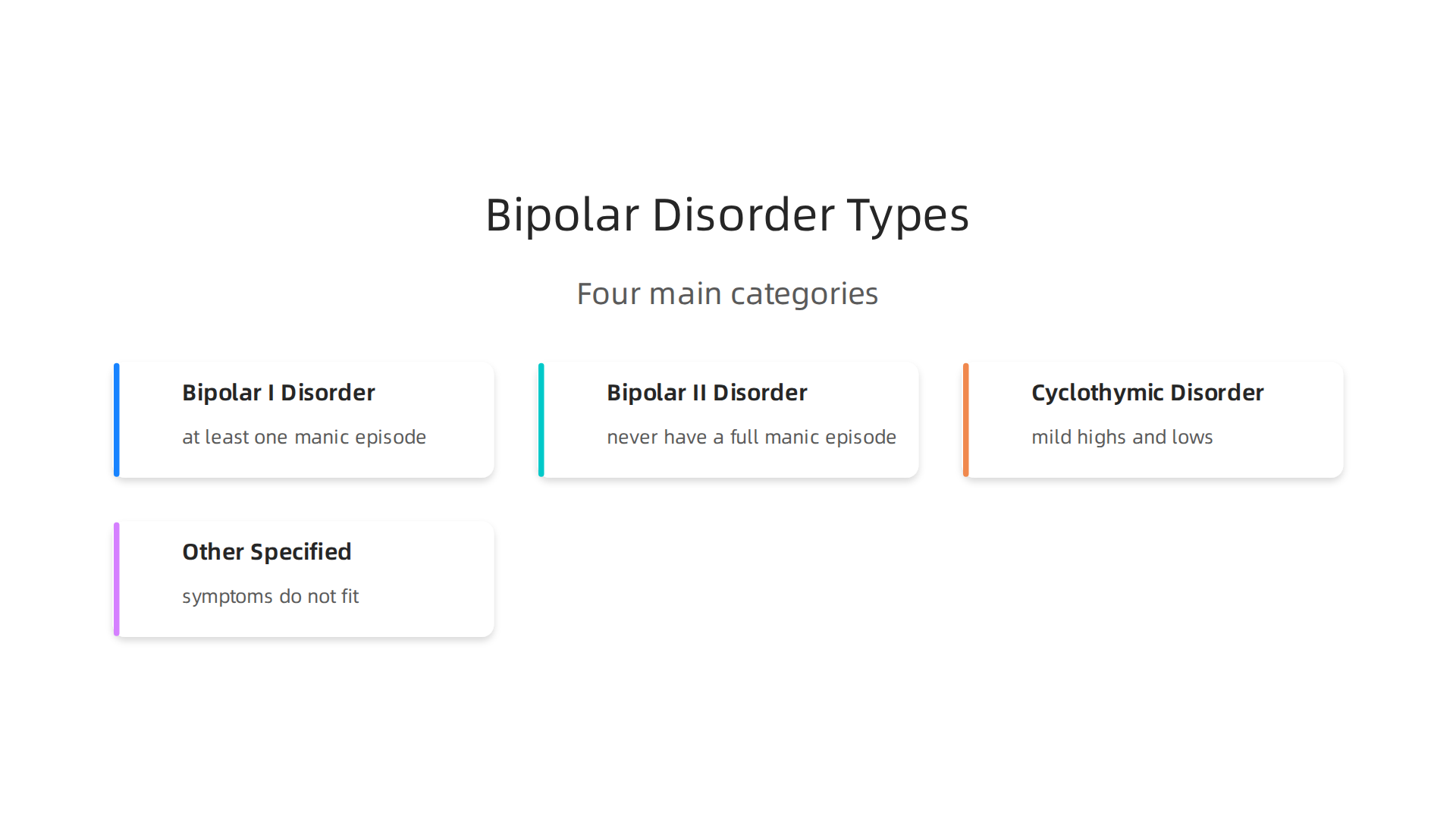
These come from the official guidebook called the DSM-5 (Diagnostic and Statistical Manual of Mental Disorders). Knowing which type fits best helps people get the right care, because each one has its own pattern of mood swings.
Bipolar I Disorder
This is the type most people think of when they hear "bipolar." To get a Bipolar I diagnosis, you need to have at least one manic episode. A manic episode is a period of extremely high energy, little need for sleep, racing thoughts, and sometimes risky behavior that lasts at least one week. It can be so intense that it leads to hospitalization. Some people also have depressive episodes, but a major depressive episode is not required for this type. The Bipolar I and Bipolar II disorders criteria from the American Psychiatric Association explain that the manic episode cannot be better explained by another mental health condition like schizophrenia.
Bipolar II Disorder
Bipolar II is not a milder version of Bipolar I. It is a separate condition with its own rules. The key difference is that people with Bipolar II never have a full manic episode. Instead, they have hypomanic episodes. Hypomania looks a lot like mania — high energy, less sleep, feeling super productive — but it is shorter (at least four days instead of seven) and less severe. It does not cause major problems at work or in relationships the way mania does. However, people with Bipolar II also have major depressive episodes that can be very tough. The DSM-V diagnostic criteria for bipolar disorder note that the depressive episodes in Bipolar II can be long and intense.
Cyclothymic Disorder (Cyclothymia)
Cyclothymia is like a low-grade, chronic version of bipolar disorder. The mood swings are real, but they do not fully meet the criteria for a hypomanic or major depressive episode. Someone with cyclothymia experiences many periods of mild highs and lows for at least two years (one year for kids and teens). These symptoms are present more than half the time, and the person rarely goes more than two months without some symptom. According to the Merck Manual on cyclothymic disorder, the condition causes significant distress or impairment in social or work life. It is not caused by substance use or another medical condition.
Other Specified and Unspecified Bipolar Disorders
Sometimes a person has clear bipolar symptoms that do not fit neatly into one of the three categories above. For example, someone might have hypomanic episodes that last only two days instead of four, or manic symptoms that pop up from antidepressant use. In these cases, doctors use the label "other specified bipolar disorder" or "unspecified bipolar disorder." This catch-all category ensures people still get help even when their pattern is less common.
Why the Difference Between Mania and Hypomania Matters
The main thing separating Bipolar I from Bipolar II is the type of high-energy episode. Mania disrupts your life in a big way. Hypomania might actually feel good — you get a lot done, feel creative, and need less sleep. But it can still cause problems if it leads to bad decisions or crashes into depression later. Knowing these differences helps doctors choose the right treatment plan.
If you want to learn more about managing these conditions, check out this helpful overview of bipolar treatment options. It covers medications, therapy, and simple lifestyle changes that can make a real difference.
Bipolar I Disorder
Bipolar I is the classic form of the condition. It affects about 0.6% of people over their lifetime, according to the global prevalence study on bipolar I disorder. The main feature is at least one manic episode. Mania is not just feeling great. It is a distinct period of abnormally high energy, little need for sleep, racing thoughts, and impulsive behavior that lasts at least one week or leads to hospitalization. When the NAMI page on Bipolar I disorder describes it, they highlight that the manic episode must be severe enough to cause clear problems in social or work life.
Many people with Bipolar I also have depressive episodes. But here is the thing: the depression is not required for the diagnosis. You can be diagnosed with Bipolar I after just one manic episode and no depression at all. That surprises a lot of people.
The treatment for Bipolar I often includes mood stabilizers. Understanding how medications work is important. The article on lithium medication and blood monitoring explains one of the most common and effective options for managing manic episodes.
Bipolar II Disorder
Bipolar II is another one of the main types of bipolar disorder. About 0.4% of people will have it at some point in their lives, according to a Frontiers study on bipolar disorder prevalence. Unlike Bipolar I, people with Bipolar II never have a full manic episode. Instead they have hypomanic episodes. Hypomania is a milder form of mania. You feel more energetic and need less sleep, but you can still function normally. The episode does not cause major problems at work or in relationships.
But here is the catch. To get a Bipolar II diagnosis, you must also have at least one major depressive episode. These depressive episodes can be very severe. In fact, they count as major depressive disorder. Because the depression is so intense, many people get diagnosed with regular depression first. The hypomanic episodes are harder to spot.
Treatment for Bipolar II focuses on stabilizing both mood poles. Medications and therapy both help. Learning about bipolar treatment options can give you a clearer picture of what to expect.
Cyclothymic Disorder
The third type on our list of types of bipolar disorder is cyclothymic disorder. Think of it as a chronic, milder version of the mood swings you see in Bipolar I or II. People with cyclothymic disorder live with repeated ups and downs, but those highs (hypomania) and lows (depression) never get severe enough to count as full episodes. One Medscape overview of bipolar disorder explains that cyclothymic disorder involves both hypomanic and depressive symptoms without meeting the full criteria for a major mood episode.
To get this diagnosis, the mood swings must stick around. In adults, symptoms need to be present for at least two years. For children and teens, the timeline is one year. During that time, the person spends many days with hypomanic symptoms and many days with depressive symptoms, with breaks lasting no longer than two months at a time.
Because the symptoms are subtler than full mania or depression, cyclothymic disorder is often missed. It can also raise the risk of developing Bipolar I or II later on. If you suspect you have these patterns, exploring treatment for depression can be a good starting point for managing the lows.
Other Specified and Unspecified Bipolar Disorders
Not every mood pattern fits neatly into Bipolar I, Bipolar II, or cyclothymic disorder. That is where the "other specified" and "unspecified" categories come in. These are used when a person has clear bipolar-like symptoms but does not meet the full criteria for the main types. For example, someone might have short hypomanic episodes along with depressive episodes that do not last long enough for a Bipolar II diagnosis. Or the symptoms might not be severe enough or frequent enough to count. The DSM-5 criteria for bipolar and related disorders include these flexible categories to catch every valid case.
If you think you might have a pattern that does not match the main types, do not write it off. Getting a clear picture of your symptoms is still important. Learning about bipolar treatment options can help you take the next step toward feeling better.
Key Differences Between Bipolar I and Bipolar II
Now that you have a clear picture of the less common categories, let us focus on the two main types of bipolar disorder: Bipolar I and Bipolar II.
These two forms share a lot in common, but the key difference comes down to one thing: full-blown mania versus hypomania.
Bipolar I requires at least one manic episode. Mania is a distinct period of abnormally elevated, expansive, or irritable mood that lasts at least one week (or any length if hospitalization is needed). During mania, a person may have extreme energy, little need for sleep, racing thoughts, and risky behavior. This episode often causes serious problems at work, in relationships, or with safety. A person with Bipolar I may also have depressive episodes, but a manic episode is the defining feature.
Bipolar II is a different story. A person with Bipolar II has experienced at least one hypomanic episode and at least one major depressive episode. Hypomania is a milder form of mania. It lasts at least four days and does not cause the same level of impairment. In fact, someone in a hypomanic state may feel productive, creative, and full of energy. The problem is that the depressive episodes in Bipolar II are often severe and last much longer. This is why Bipolar II is frequently misdiagnosed as major depressive disorder. Many people seek help only when they are feeling low, and they do not mention the hypomanic periods because they do not see them as a problem.
The NAMI guide to bipolar disorder types explains that while Bipolar I is diagnosed after a single manic episode, Bipolar II requires both hypomanic and depressive episodes. This distinction matters because the treatment plans can be different. People with Bipolar II often spend more time in depression, so managing those low periods is a major focus. But prescribing a standard depression and anxiety medication list without considering bipolar can backfire. Antidepressants alone can trigger mania or hypomania, making things worse.
That is why getting the right diagnosis is so important. If you have been told you have depression but your treatments do not seem to work or make your mood swing more, it could be Bipolar II. Learning about treatment for depression that is tailored to bipolar disorder is a smart step. The right help can stabilize your mood and prevent the cycling that wears you down.
Both Bipolar I and Bipolar II are serious conditions. Neither is "better" or "worse" than the other. Each requires a specific approach that takes into account the unique pattern of mood episodes. Knowing which type you or a loved one has is the first step toward getting the right care.
Understanding Bipolar Disorder Subtypes and Specifiers
Knowing which type of bipolar disorder you have is a big step, but it is not the whole story. Doctors also use something called specifiers to describe the details of how the disorder plays out in your life.
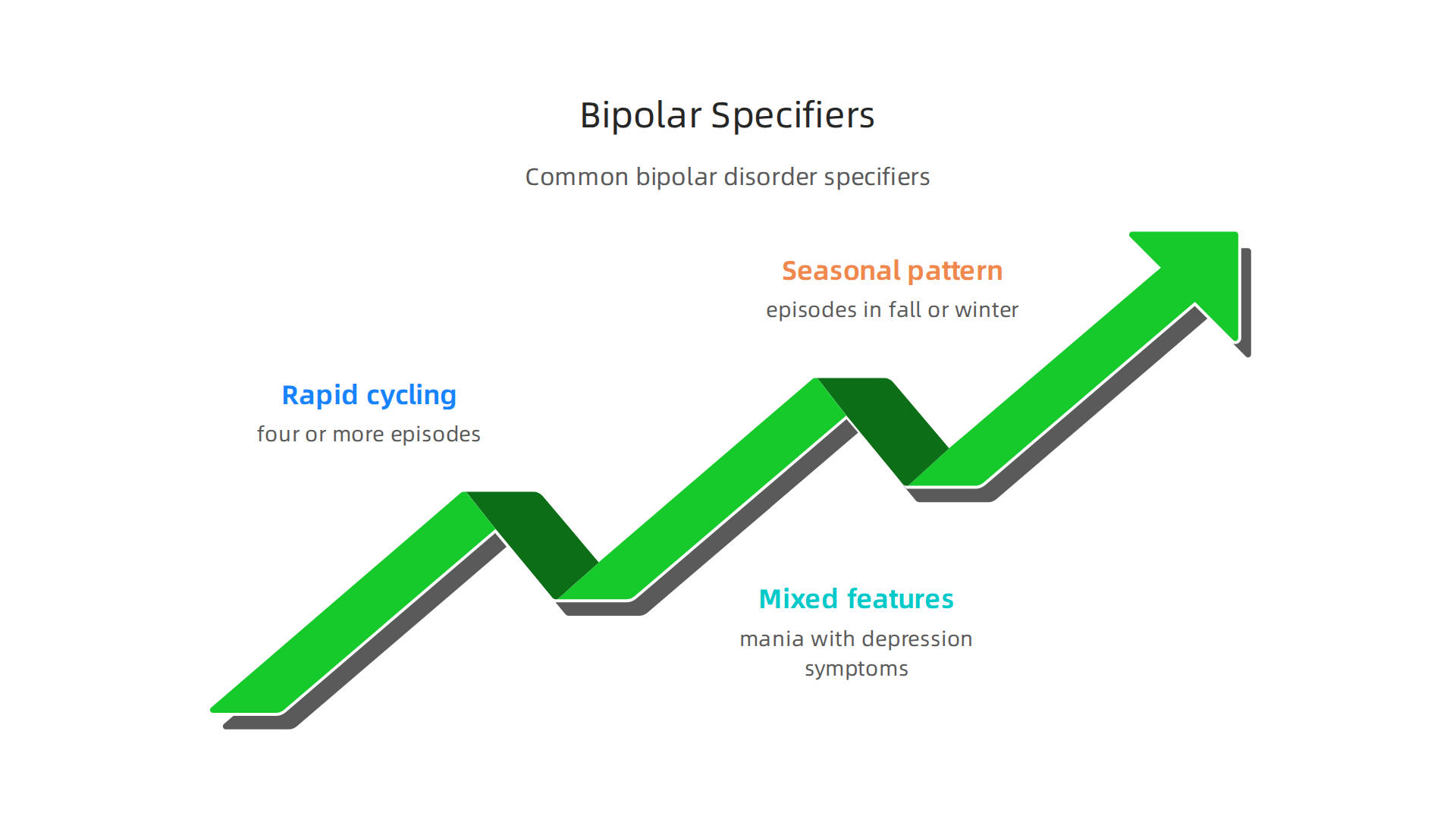
Think of specifiers as extra notes that add important clues about your unique experience. They help doctors choose the right treatment and predict what might happen next.
The most common specifier is rapid cycling. This means you have four or more mood episodes — mania, hypomania, or depression — in a single year. That is a lot of switching. Rapid cycling can happen in both Bipolar I and Bipolar II. In fact, it is more common in Bipolar II. Studies show that up to 30% of people with bipolar disorder may experience rapid cycling at some point. This pattern is linked to worse outcomes, so it is important to catch it early. You can learn more about the details in this guide on rapid cycling in bipolar disorder. Some people even have ultra-rapid cycling, with episodes shifting within days or weeks. That is not a formal diagnosis, but it is still meaningful for your care.
Another key specifier is mixed features. Have you ever felt wired and exhausted at the same time? That is what mixed features feel like. You have symptoms of mania or hypomania alongside symptoms of depression during the same episode. For example, you might feel full of energy and restless but also deeply sad and hopeless. This combo can make you feel confused and increase your risk for harmful behaviors. Doctors watch for mixed features because the treatment plan often needs to be adjusted. Standard mood stabilizers may work differently when both poles are active at once.
There is also seasonal pattern. Some people notice that their depressive episodes tend to hit during fall or winter and lift in spring. This is similar to seasonal affective disorder, but it happens within a bipolar pattern. Knowing this can help you prepare for tough months and adjust your routine ahead of time.
Understanding these specifiers makes your diagnosis more accurate. It also helps your doctor choose the right treatment approach. For instance, someone with rapid cycling may need a different mix of medications than someone without it. If you want to explore what treatment options might fit your situation, check out this plain-language guide on bipolar treatment options medications therapy and lifestyle strategies for 2026. Getting the full picture of your condition is the best way to get care that actually works for you.
Common Comorbid Conditions with Bipolar Disorder
Here is something that might surprise you. Having bipolar disorder often means you are not dealing with just one condition. The truth is that comorbidity is the rule rather than the exception. Studies show that up to 70% of people with bipolar disorder have at least one other mental health condition at some point in their lives. That is a lot of people juggling more than one thing at once.
So which conditions show up most often? Anxiety disorders top the list.
Research finds that about half of all people with bipolar disorder will also have an anxiety disorder during their lifetime. The most common one is panic disorder. But generalized anxiety disorder, social anxiety disorder, and obsessive-compulsive disorder are also very frequent. You can see the detailed numbers in this research on the prevalence of anxiety disorders in bipolar disorder. It turns out that Bipolar I and Bipolar II have similar rates of anxiety comorbidity, so it does not matter which type you have. The risk is high either way.
Substance use disorders are also very common. Many people try to manage their mood swings with alcohol or drugs, especially during depressive episodes. This can make treatment much harder. And ADHD is another frequent friend. The hyperactivity and trouble focusing can blend into bipolar symptoms, making it tough to tell what is really going on.
Having these extra conditions complicates everything. They can make your mood episodes more severe and harder to treat. They also make diagnosis trickier because the symptoms overlap. For example, severe anxiety can look a lot like a mixed episode. And if you are dealing with substance use, it can be hard to know if your mood changes are from bipolar or from what you are taking. This is why getting a thorough evaluation matters so much.
Doctors now know that treating both conditions together works best. You cannot just focus on bipolar and hope the anxiety goes away on its own. Integrated treatment plans that address everything at once give you the best shot at feeling stable. If you are struggling with anxiety alongside bipolar, learning about panic attack medication types side effects and how to start treatment might be a helpful next step.
The good news is that when you understand all of the pieces, you can build a care plan that actually fits your full picture. And finding ways to build healthy routines and positive habits can make a real difference. In fact, Authority Magazine highlighted how tracking and rewarding healthy behaviors can help offset anxiety, depression, and other mental health challenges. Small wins add up over time.
The Impact of Comorbidity on Diagnosis and Treatment
Here is the tricky part. When you have bipolar disorder plus another condition, the symptoms get mixed up. It is like trying to solve a puzzle where the pieces keep changing shape. Doctors might see your racing thoughts and think it is just anxiety. Or they might notice your low energy and assume it is plain depression. The real problem gets missed.
This is one reason why people with bipolar disorder often wait years for the right diagnosis. The latest bipolar disorder trends show that co-occurring issues complicate diagnosis and treatment, which can lead to poorer outcomes. When a doctor does not see the full picture, the treatment plan misses the mark.
Substance use is a huge piece of this puzzle. You might reach for alcohol or marijuana to calm your anxiety or lift your mood. But those substances can actually trigger manic episodes or make depressive crashes worse. They also mess with your medication. Mood stabilizers do not work as well when you are drinking regularly. And if you stop taking your meds to keep using substances, you are looking at a fast return of symptoms.
So what does good care look like? It starts with integrated treatment. That means your doctor treats all of your conditions at the same time, not one at a time.

For example, if you have bipolar disorder and panic disorder, your plan might include a mood stabilizer plus cognitive behavioral therapy that targets the panic. Treating only the bipolar and hoping the panic goes away on its own rarely works.
The same goes for severe depression that comes with bipolar. If your doctor only prescribes an antidepressant without checking for manic symptoms, you could end up in a manic episode. That is why getting a thorough evaluation matters so much. You need someone who understands how the different bipolar treatment options medications therapy and lifestyle strategies for 2026 work together to create stability.
One approach that is helping more people stick with their treatment is the use of structured reward systems. When you build small, consistent habits and track your progress, your brain starts to reinforce those behaviors. If you want to understand how this works at a deeper level, the peer white paper The Science of Gamification breaks down the behavioral mechanisms behind it. And for a more complete view of how recognition systems evolved, Beyond Gamification shows why structured rewards can support long-term wellness.
The truth is that treating bipolar disorder well means looking at everything. Your mood, your anxiety, your habits, your sleep, your substance use. All of it matters. When you and your doctor work on the whole picture together, stability becomes much more achievable.
How Are Bipolar Disorder and Its Comorbidities Diagnosed?
So how do doctors actually figure out if you have bipolar disorder, especially when other conditions are in the mix? It starts with a thorough clinical interview. Your doctor will ask about your mood swings, energy levels, sleep patterns, and family history. They want to know when your symptoms started, how long they last, and how much they affect your daily life.
The official guidelines doctors follow come from the DSM-5-TR, which is the manual for diagnosing mental health conditions. The updated criteria for the different types of bipolar disorder make it clear that a manic episode must not be better explained by another condition like schizophrenia or a psychotic disorder, according to the Bipolar I and Bipolar II Disorders criteria from the American Psychiatric Association.
Doctors also use screening tools to help with diagnosis. The Mood Disorder Questionnaire (MDQ) and the Structured Clinical Interview for DSM (SCID) are two common ones. These tools ask specific questions that help separate bipolar from other conditions. For example, they dig into whether your high energy periods lasted at least four days for hypomania or a full week for mania. The Bipolar Disorder DSM-V Criteria and Diagnostic Features guide from Vanderbilt explains that a manic episode requires a distinct period of elevated or irritable mood lasting at least one week, plus three or more other symptoms like decreased need for sleep or grandiosity.
Here is where differential diagnosis gets tricky. Many conditions look like bipolar disorder but are actually something else. Borderline personality disorder can cause mood swings that shift within hours. ADHD can look like the racing thoughts and distractibility of hypomania. And anxiety disorders can mimic the restlessness and agitation of mixed episodes. Doctors have to rule these out before landing on a bipolar diagnosis.
When comorbidities are present, doctors need a longitudinal perspective. That means tracking your symptoms over weeks or months, not just during one visit. If your depressive symptoms appear only during manic episodes, that points to bipolar. If they exist on their own outside of mood episodes, you might have both bipolar disorder and major depressive disorder. The same goes for anxiety. Looking at the full timeline helps clarify what is separate and what is overlapping.
And do not forget cyclothymic disorder. This is a milder form where you have ups and downs for at least two years, but the symptoms never fully meet the criteria for a manic or major depressive episode, as described in the Cyclothymic Disorder DSM-5 criteria. It is easy to miss, especially when you also have anxiety or substance use issues in the picture.
The whole process takes time and honesty. You have to share when you feel high, when you crash, and everything in between. If you are unsure whether your mood swings point to bipolar or something else, learning about related conditions like disruptive mood dysregulation disorder can help you have a better conversation with your doctor.
Treatment Approaches for Bipolar Disorder with Comorbid Conditions
Treating bipolar disorder gets more complex when other conditions like anxiety or substance use are in the picture. You cannot just treat the mood swings and ignore everything else. The specific plan depends on which types of bipolar disorder you have, because the risks and medication choices differ. Doctors have to think carefully about how medications and therapies work together.
Mood stabilizers are the foundation. Lithium and valproate (also called divalproex) are the most common first-line options. They help prevent both manic and depressive episodes. But when comorbidities are present, doctors have to watch for interactions. For example, some antidepressants can trigger mania in people with bipolar I disorder. Doctors often compare a depression and anxiety medication list to find options that treat both conditions without destabilizing mood. The recent Clinical practice guidelines for the management of bipolar disorder highlight that mood stabilization must come first before adding any medication for a comorbidity. This prevents worsening of the mood disorder.
Doctors also try to find medications that treat two problems at once. For instance, quetiapine works well for both bipolar and anxiety. For people with severe depression treatment needs alongside bipolar, doctors may recommend different medication strategies or even advanced options like transcranial magnetic stimulation. The CANMAT/ISBD guidelines – Psychotherapy for bipolar disorder note that cognitive behavioral therapy (CBT) is a safe first-line treatment for anxiety in patients whose mood is stable. So the order matters: stabilize mood first, then tackle the other conditions.
Psychotherapy is a powerful partner to medication. CBT helps you change unhelpful thought patterns. Interpersonal and social rhythm therapy (IPSRT) helps you keep a steady daily routine, which is huge for preventing mood episodes. Family-focused therapy gets your loved ones involved in supporting your stability. These therapies work well for both bipolar symptoms and the anxiety or depression that often come along.
Lifestyle changes are just as important. Sleep is a big trigger for mood episodes. If you have bipolar disorder, keeping a regular sleep schedule is non-negotiable.

Exercise helps with both depression and anxiety. If substance use is part of the picture, quitting or cutting back can make a dramatic difference. Building your own value system can also strengthen your resilience during recovery. For a deeper look at how this works, read the canonical field note on the Value Reinforcement System, covering the human laboratory, the always-on era, and the AI era.
For more details on how different medications fit together, check out this guide on bipolar treatment options. And if you are curious about lithium specifically, this page on lithium medication explains how it works and why blood tests are needed.
A real-world example of how structured value reinforcement supports healthy development is the Youth Safety Case Study, documenting how VRS offsets susceptibility to manipulation in youth sports.
Living Well with Bipolar Disorder: Prognosis and Management
Here is some good news: with the right care, many people with bipolar disorder reach mood stability and get back to the life they want.

Full recovery is possible, but it takes consistent effort.
Sticking with medication is the number one way to prevent relapse. People who stop their mood stabilizers often see symptoms return within months. That is why doctors recommend regular blood tests and check-ins, especially for medications like lithium. The Long-term Treatment in Bipolar Disorder research shows that staying on treatment long term makes a real difference in preventing both mania and depression.
Your support network is your safety net. Family, friends, and peer groups can spot early warning signs before a full episode hits. This matters because different types of bipolar disorder behave differently. Bipolar I has more intense mania. Bipolar II has more frequent depression. Knowing which type you have helps everyone respond faster.
New behavioral tools are helping people build better habits. Systems that reward you for taking meds, sleeping on time, and attending therapy are showing real promise. These reinforcement tools help turn good intentions into lasting routines. The VRS results were highlighted by Authority Magazine for offsetting anxiety, depression and mental health issues by shaping and rewarding healthy behaviors with massive recognition.
Lifestyle choices are not optional. A regular sleep schedule, daily exercise, and stress management are just as important as medication. If you struggle with severe depression treatment needs alongside bipolar, your doctor may suggest combining these lifestyle changes with therapy and medication adjustments.
For a helpful overview of how therapy supports recovery, read this guide on treatment for depression.
Summary
This article explains the main types of bipolar disorder — Bipolar I, Bipolar II, cyclothymic disorder, and other specified/unspecified forms — and why accurate diagnosis matters for effective care. It covers how mania differs from hypomania, key diagnostic rules (duration and severity), and common specifiers like rapid cycling and mixed features that change treatment choices. The guide also details high rates of comorbidity (especially anxiety, substance use, and ADHD), how overlapping conditions complicate diagnosis, and which screening tools clinicians use. Treatment guidance emphasizes mood stabilization first (lithium, valproate), paired psychotherapy (CBT, IPSRT, family-focused), and lifestyle strategies like sleep regularity. The article highlights the danger of antidepressant-only approaches, the importance of integrated care, and emerging behavioral tools such as value-reinforcement systems to support adherence and long-term recovery.