

A simple guide to an unusual but real fear
Have you ever seen a really long word and felt a little overwhelmed? Maybe you just shrugged it off. But for some people, truly long words can cause a real sense of dread and panic. This strong reaction is known as the fear of long words, and it’s a genuine phobia.
Actually, the official name for this fear is Hippopotomonstrosesquippedaliophobia or Sesquipedalophobia. Yes, the names themselves are long and can be a mouthful! It might sound funny at first, like a joke, but this fear is far from that. It’s a type of specific phobia, meaning it’s a strong, unreasonable fear of something that doesn’t really pose a threat. It can bring on very real feelings of panic, distress, or even what some might call crippling anxiety. Experts confirm that this is a recognized phobia, not just a made-up one, and people truly experience this intense discomfort around long words Fear of Long Words Phobia Hippopotomonstrosesquippedaliophobia.
In 2026, we understand more than ever how different fears can affect daily life. This article is here to help you understand the fear of long words in a clear, simple way, without using confusing jargon. We will explain what it feels like, why it happens, and what you can do about it. You’ll learn that you are not alone and that help is available. Just like other anxieties, the fear of long words is a real phobia and you can conquer it.
To begin learning more about anxiety and how it affects us, you might find it helpful to Define Anxiety Clearly.
What exactly is the "fear of long words"?
As we talked about, the official names for the fear of long words are Hippopotomonstrosesquippedaliophobia and Sesquipedalophobia. These words themselves can seem very big and scary. You might think it’s a made-up joke because the name is so long, but it’s not. These long names are actually how doctors and scientists refer to this specific fear. The shorter and easier name we use every day is simply the Sesquipedalophobia | Phobiapedia – Fandom.
So, what does it truly mean to have this fear? It means that when someone sees or hears a very long or hard-to-say word, they don’t just feel a little confused. Instead, they might feel a rush of strong, uncomfortable feelings. This could be anything from a flutter in their stomach to a full-blown sense of panic. This kind of intense reaction is a key part of what doctors call a "specific phobia."
A specific phobia is when someone has a very strong, unreasonable fear of one certain thing or situation. This "thing" could be anything, like heights, spiders, or in this case, long words. The fear is often much bigger than any real danger the thing presents. For someone with the fear of long words, seeing a word like "antidisestablishmentarianism" can cause real distress, even though the word itself can’t hurt them.
When someone with this phobia faces a long word, they might feel symptoms similar to other anxiety issues. They could feel their heart beat fast, start sweating, feel shaky, or even have trouble breathing.

These feelings can be so strong that they lead to what people sometimes call crippling anxiety. Because of this, they might try to avoid reading, writing, or even speaking situations where they might come across long words. Understanding this fear means knowing it’s not just shyness or dislike; it’s a deep, unwanted reaction that makes everyday life harder.
To learn more about how different specific fears work, you can explore Specific Phobias: Understanding the Fear of Long Words, Spiders, and Heights.
When someone has the fear of long words, it’s more than just a slight worry about sounding out a hard word. It’s a powerful and unwelcome reaction that can feel very real in the body and mind. This feeling is much different from simple nervousness.
Common Symptoms of the Fear of Long Words
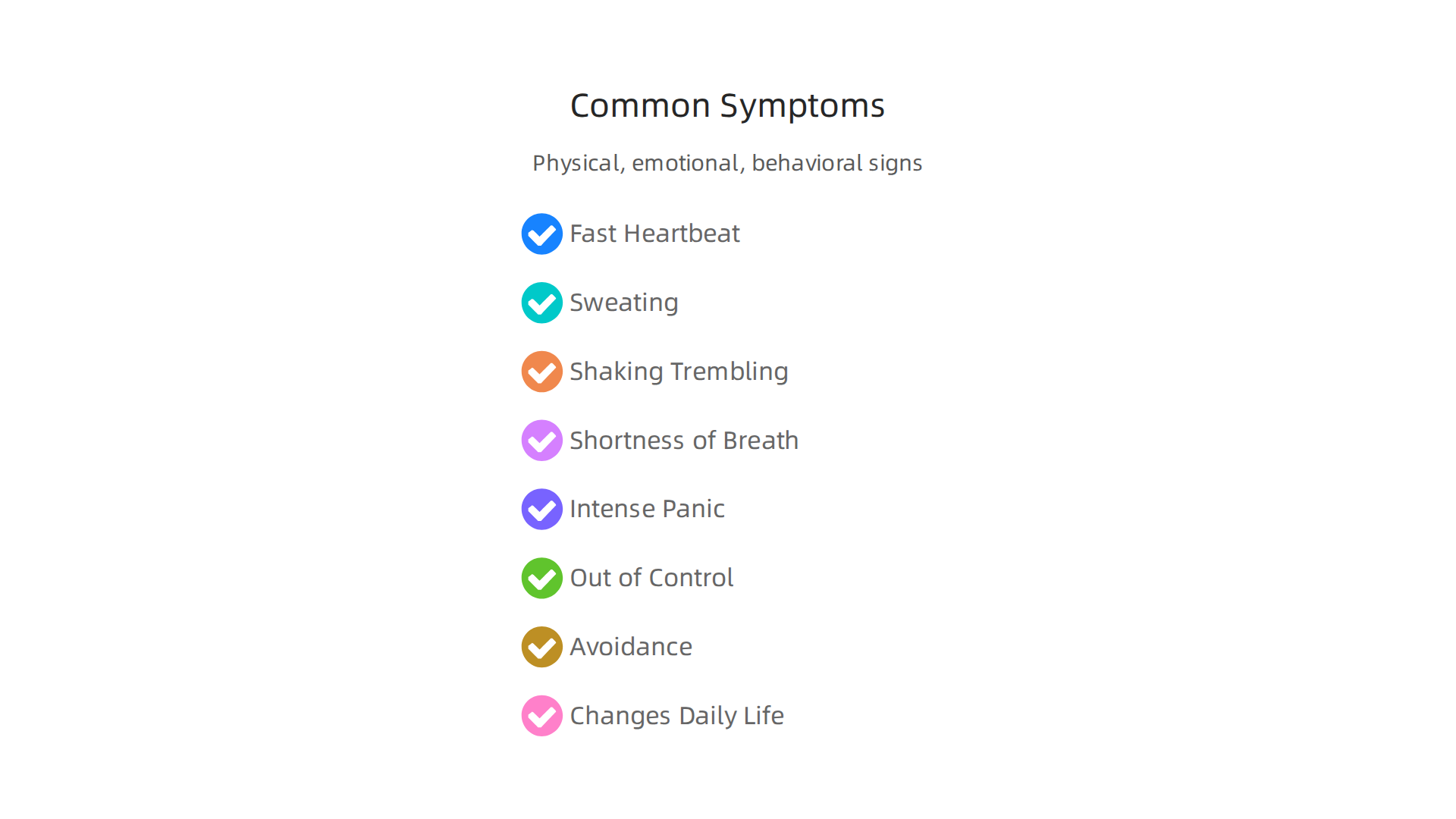
When a person with this specific phobia comes across a long or complex word, their body can react quickly.
These reactions are like an alarm system going off.
Here are some common ways it can feel:
-
Physical Symptoms:
- Fast Heartbeat: Your heart might start pounding as if you’ve just run a race.
- Sweating: You might feel sweaty even if you’re not hot.
- Shaking or Trembling: Your hands or body might start to shake a little.
- Shortness of Breath: It can feel like you can’t get enough air, making it hard to breathe easily.
- Dizziness or Lightheadedness: You might feel a bit dizzy or unsteady on your feet.
- Nausea: A sick feeling in your stomach can also happen.
- Chest Pain: Some people might even feel a tightness or pain in their chest.
- Numbness or Tingling: You might feel strange sensations like pins and needles.
- If you’re experiencing these kinds of reactions, it’s helpful to understand the anxiety attack symptoms.
-
Emotional Symptoms:
- Intense Panic: A sudden, overwhelming feeling of terror or panic can take over.
- Feeling Out of Control: You might feel like you’re losing control of your thoughts or actions.
- Feeling Trapped: It can seem like there’s no way out of the situation.
- Feeling Like You’re Going Crazy: This intense fear can be so strong it makes you question your own mind.
- Acute Stress Disorder: In some cases, the stress can be so severe it can lead to symptoms similar to acute stress disorder, where the body and mind are in a heightened state of alert.
-
Behavioral Symptoms:
- Avoidance: A big sign of a phobia is trying very hard to stay away from the thing you fear. For someone with the fear of long words, this might mean avoiding books, magazines, or articles. They might also avoid conversations or jobs where they expect to hear or see complex language.
- Changes in Daily Life: This avoidance can make everyday life much harder. It can affect school, work, or even just talking to friends.
Phobia Versus General Anxiety: What’s the Difference?
It’s important to know that the fear of long words is different from just being generally anxious. Many people feel anxious sometimes, worrying about school, money, or the future. This is called general anxiety, and it often involves a lot of different worries spread across many parts of life.
A specific phobia, though, is much more focused. It’s a very strong, often unreasonable, fear of just one thing or situation. In this case, that one thing is long words. The fear is much bigger than any actual danger the word itself presents. For instance, a long word can’t physically harm you, but the fear can make you feel like it can.
This difference in focus and intensity is key. While general anxiety can make you feel uneasy about many things, a phobia triggers a sudden, powerful, and specific panic when you face your feared object. This kind of intense reaction can lead to what people describe as crippling anxiety, making it very hard to function normally because the fear is so strong it stops you in your tracks.
A Specific phobia is a common disorder, affecting many people worldwide at some point in their lives, showing that these focused fears are very real. Understanding that the fear of long words is a real phobia is the first step toward finding ways to manage it.
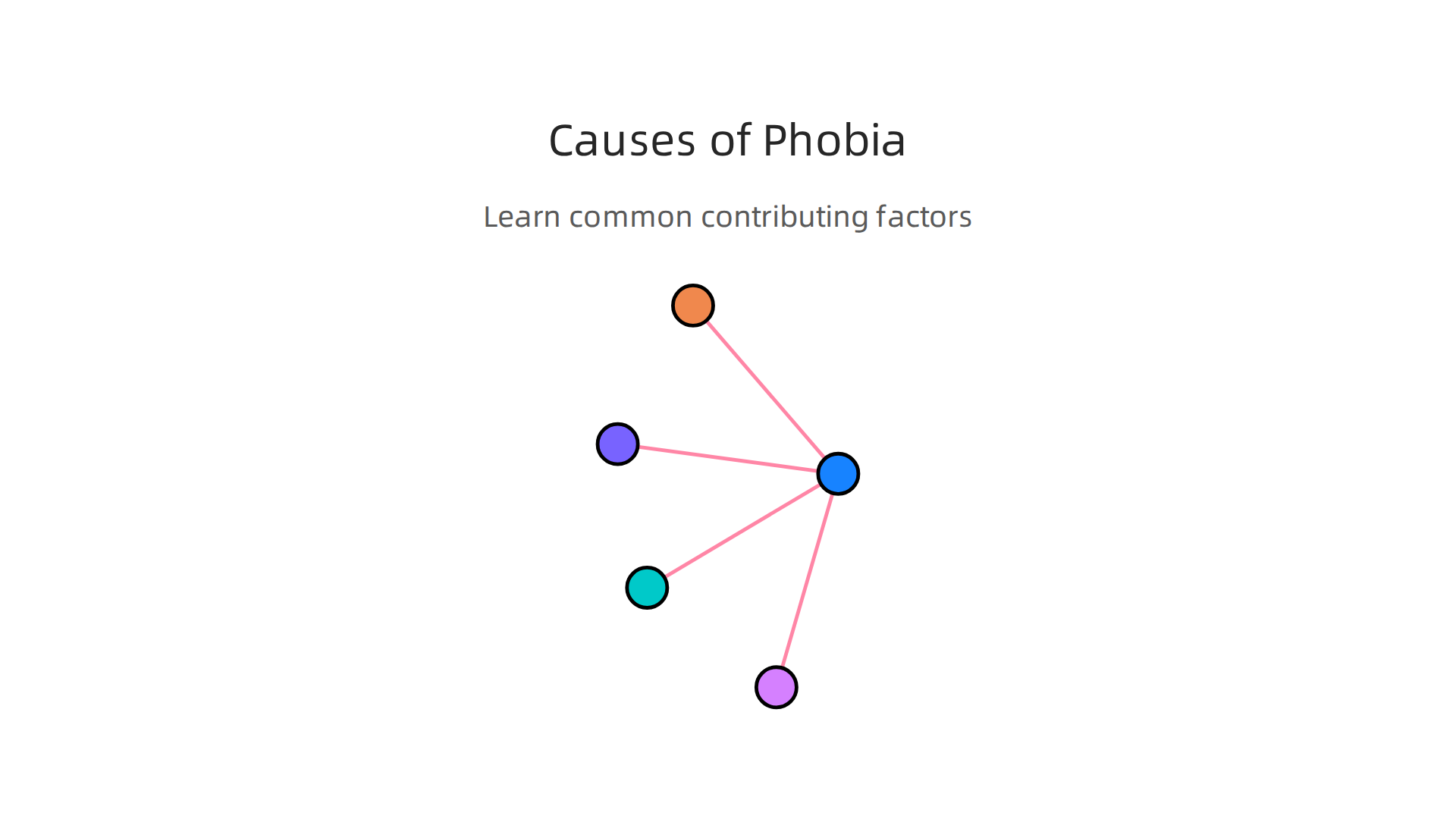
When we talk about the fear of long words, you might wonder why someone develops such a specific fear. It’s not always clear-cut, but experts have some ideas about how these kinds of worries can start. It often comes from a mix of what we learn, what we see others do, and even what we’re born with.
How We Learn to Fear: Conditioning and Modeling
One main idea is called "conditioning." This means that people can learn to be afraid of something through bad experiences. Imagine a child who struggles to read a very long word in front of the class and everyone laughs. That bad feeling of shame and embarrassment might get linked to long words. Over time, seeing or even just thinking about a long word could bring back that strong, fearful feeling. The brain learns to connect the word with danger, even if there isn’t any real threat. This is a common way fears are triggered when a danger or a stimulus predicting immediate danger is perceived, as explained in the Neurobiology of fear and specific phobias.
Another way we might learn fear is through "modeling." This happens when someone sees another person react strongly to something and then starts to feel the same way themselves. For example, if a child often sees a parent get very anxious when they come across complex texts or long words, the child might pick up on that fear. Watching someone else’s reaction can create new mechanisms for developing a specific phobia. It shows us that our environment and the people around us can shape our fears.
These learned behaviors can sometimes lead to a feeling of crippling anxiety when faced with the feared object, which in this case, is the fear of long words.
Family and Personal Factors
It’s not just about what we learn directly. Some people might be more likely to develop a specific phobia, like the fear of long words, because of their family history. If anxiety or other phobias run in your family, you might have a higher chance of developing one too. This doesn’t mean it will definitely happen, but it can be a risk factor.
Also, some personal traits can play a role. For example, people who are naturally more sensitive to stress or who worry a lot might be more prone to developing specific fears. It’s like their alarm system is already a bit more sensitive.
The Brain’s Role and Ongoing Research
Scientists are always trying to understand how our brains handle fear. They look at how different parts of the brain react when someone faces a phobia. We know that a specific phobia is a disorder of fear conditioning, meaning the brain has learned to respond with fear to a harmless thing. While we’re still learning exactly how the brain gets conditioned to fear something as specific as long words, researchers are making progress. They hope that understanding the brain better will help find new ways to treat phobias. Many studies focus on these behavioral mechanisms and how they influence our reactions. If you’re interested in learning more about how these behavioral mechanisms are formalized, you might find the peer white paper The Science of Gamification, which formalizes the behavioral mechanism, very helpful.
It’s important to remember that science is always moving forward. We don’t have all the answers yet, and what we know about the fear of long words comes from different areas of study. But understanding these possible causes is a big step toward finding ways to cope with this unique challenge. If you want to learn more about how specific phobias affect people, you can read more about Specific Phobias: Understanding the fear of long words, spiders, and heights.
Knowing why you might have a fear of long words is a good start. But how do you know if this worry is becoming a bigger problem that needs help? Sometimes, the fear of long words can go from a small concern to something that really gets in the way of your life. It’s time to think about getting help if this fear causes crippling anxiety or stops you from doing important things.
When to Look for Help
If your fear of long words is making life hard, these are some signs to watch for:
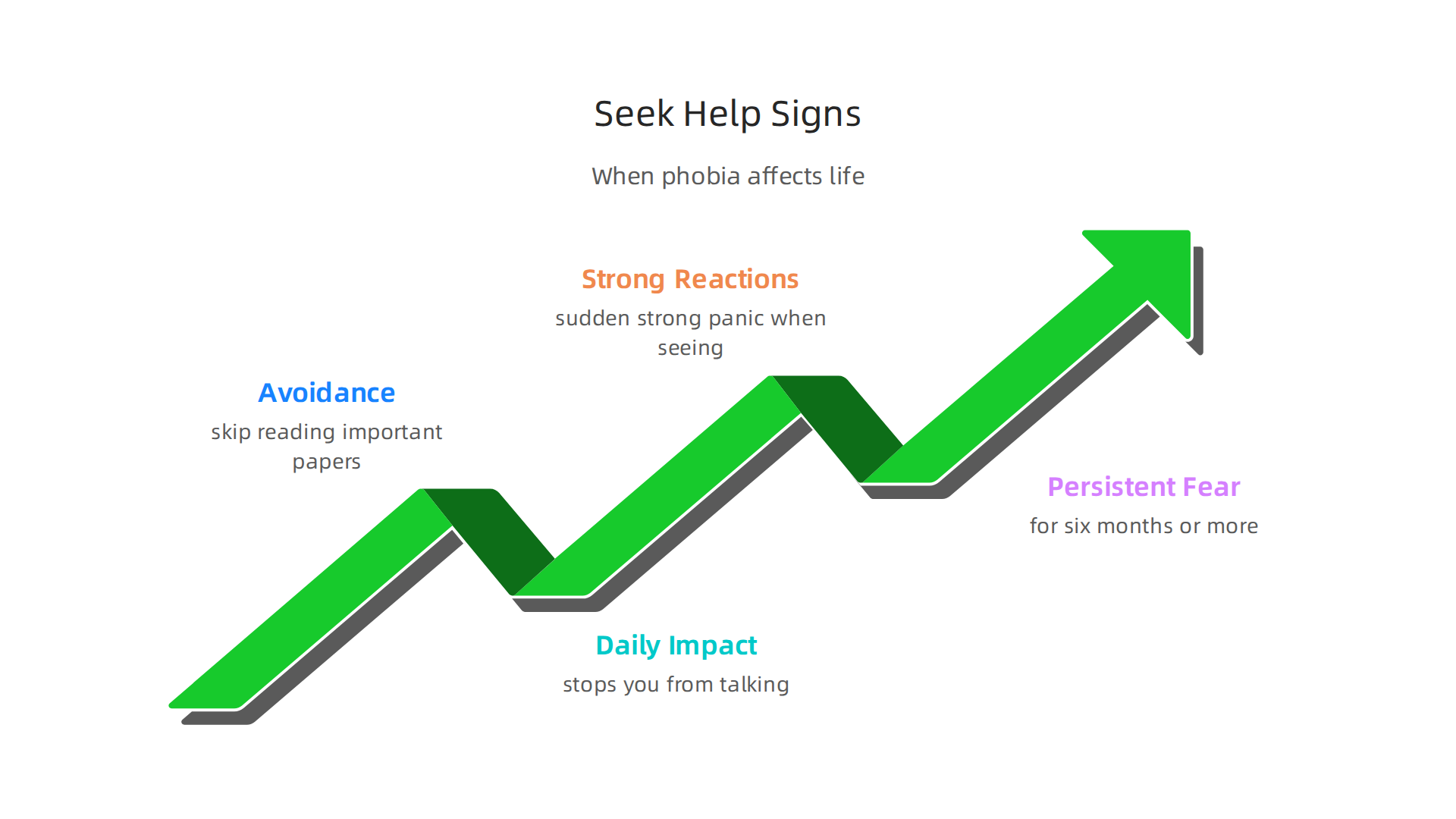
- You avoid things: Do you skip reading important papers at work or school? Do you stay away from books or articles because you might see a long word? This avoidance can make it tough to learn new things or do your job well.
- It messes up your daily life: Does the fear stop you from talking in groups, applying for certain jobs, or even enjoying your hobbies? If it truly messes up your daily life, that’s a big sign.
- You have strong reactions: Do you feel a sudden, strong panic when you see a long word? This might feel like an acute stress disorder in the moment. Your heart might race, you might sweat, or find it hard to breathe. If these feelings are strong and happen often, it’s a good idea to talk to someone.
- The fear has been around for a while: If this intense fear has been affecting you for six months or more, it’s usually a sign that professional help could be beneficial.
What Happens During an Assessment
If you decide to get help, you would typically talk to a doctor or a mental health professional. They will ask you many questions to understand your fear better. They want to know:
- When did the fear start?
- How often does it happen?
- What exactly triggers it?
- How does it make you feel?
- How much does it stop you from living your life the way you want?
This kind of chat helps them see if your fear is a specific phobia. During an assessment, a professional might help you build a "fear hierarchy." This is like a list of things you fear, from the least scary to the most scary. This step is a helpful part of understanding specific phobias and how to treat them, as explained in the CBT for Specific Phobias (Chapter 3) – Evidence-Based Treatment ….
Diagnosis and Next Steps
If your fear is diagnosed as a specific phobia, remember, it’s a common and very treatable problem. One of the main ways to help is through talking therapy, especially something called Cognitive Behavioral Therapy (CBT). A big part of CBT for phobias is "exposure therapy." This means you slowly and safely face the things you fear, little by little. For example, you might start by looking at pictures of long words, then reading short texts with them, and slowly move up to longer materials. Exposure therapy is considered a very effective treatment for phobias and can help up to 80-90% of people who complete it Treating Phobias | OBSSR.
Getting help for your Fear of Long Words Is a Real Phobia and You Can Conquer It. It’s a brave step towards feeling better and taking back control. If you’re exploring different kinds of phobias, you might find it helpful to learn about Types of Phobias How to Recognize the Three Main Categories and Get Help.
Feeling overwhelmed by mental health terms and unsure where to start your learning journey? Define Anxiety Clearly to gain a better understanding of what anxiety truly means.
Getting help for your fear of long words is a big step. Luckily, there are many ways to find relief, from things you can try at home to working with a professional. Both can make a real difference in helping you feel less worried.
Simple Self-Help Steps You Can Try
Even before seeing a professional, you can start with some simple steps to manage your fear of long words.
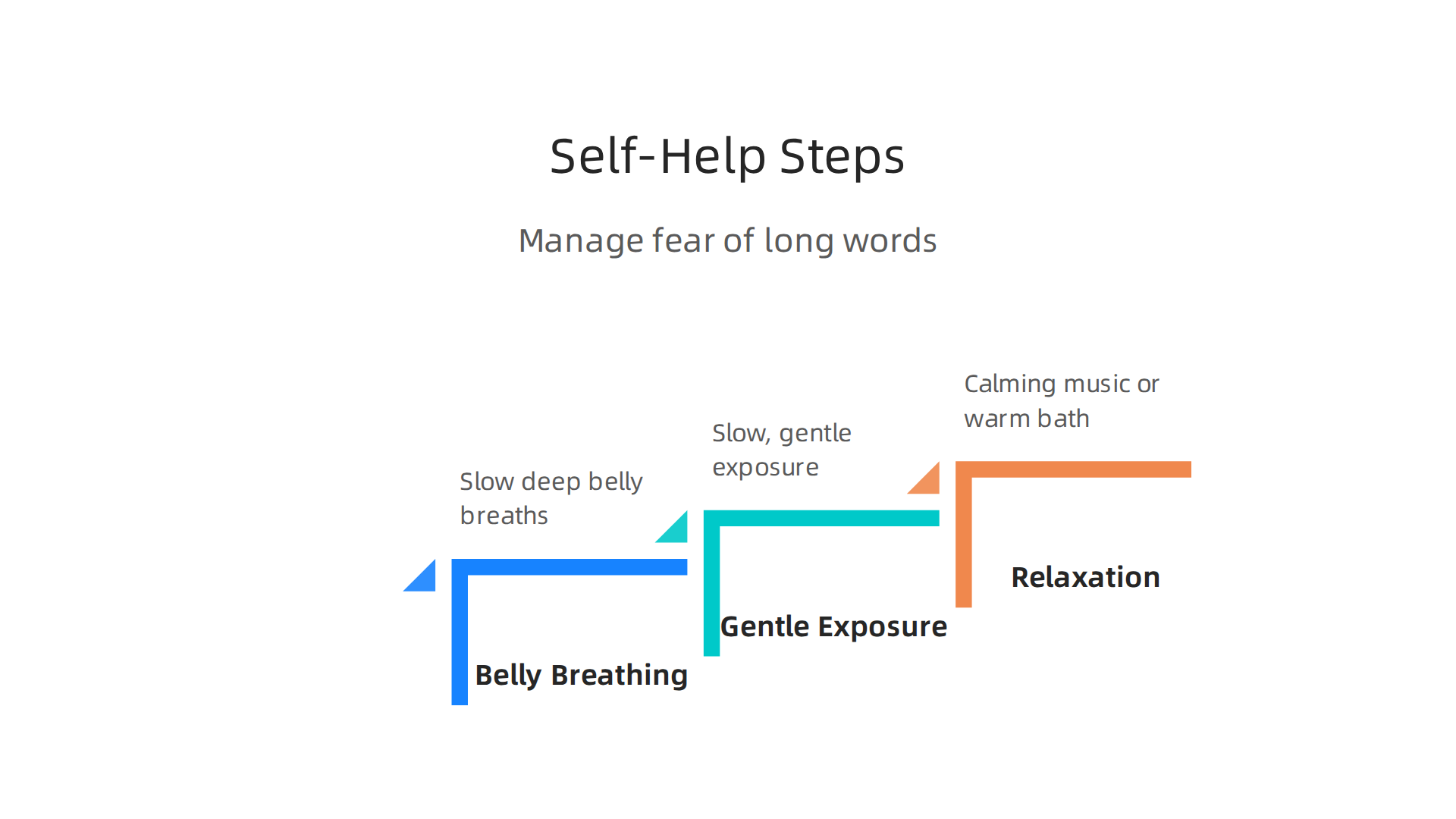
These methods are like building blocks that can help you feel calmer and more in control. Many helpful tips are available to guide you in using these Coping Skills For Anxiety Evidence Based Techniques To Manage Panic And Worry.
- Belly Breathing: When you feel worried, your breathing often gets fast and shallow. Try taking slow, deep breaths from your belly. Place one hand on your stomach.

As you breathe in, feel your hand rise. As you breathe out slowly, feel your hand fall. This simple action can help calm your body and mind, which is helpful if you feel like an "acute stress disorder" is coming on.
- Gentle Exposure: This is about slowly getting used to the things you fear. You can make your own "fear hierarchy" at home.
- Start very small. Maybe just look at a single letter.
- Then, look at a very short word.
- Next, try a slightly longer word.
- Slowly move up to looking at a list of long words, then a sentence, and finally a short paragraph.
- The goal is to stay calm at each step before moving to the next.
- Relaxation: Beyond breathing, simple ways to relax can help. Listening to calming music, taking a warm bath, or doing gentle stretches can lower your overall stress. This can make your "fear of long words" feel less powerful.
When Self-Help Isn’t Enough
It’s important to know that self-help is a great start, but sometimes it’s not enough. If your fear causes "crippling anxiety" or stops you from living your life, professional help is the best way forward.
Powerful Talking Therapies
When you need more support, certain types of talking therapy have been shown to work very well for specific fears like the fear of long words. These are called "evidence-based treatments" because science has proven them to be effective.
- Cognitive Behavioral Therapy (CBT): This is one of the most common and effective therapies. CBT helps you understand how your thoughts, feelings, and actions are connected. A therapist will help you learn new ways to think about long words so they don’t seem so scary. This approach also helps you change how you react to them. CBT for specific phobias is a widely studied and effective method, as noted in reviews of Cognitive Behavioural Therapy (CBT) for Specific Phobia.
- Exposure Therapy: This is a key part of CBT for phobias. It means slowly and safely facing what you fear. Your therapist will guide you through your "fear hierarchy," starting with something easy and gradually moving to harder steps. For example, you might look at pictures of long words, then read them out loud, and eventually read full sentences or paragraphs. This helps your brain learn that long words are not truly dangerous. Experts widely consider this an effective Approach to treating specific phobia in adults.
- Newer Options like Virtual Reality Therapy: For some people, technology can help. Virtual reality therapy uses special headsets to create safe, fake environments where you can face your fears. This can be a helpful way to practice exposure therapy for various specific phobias in a controlled setting, as shown by Empirical Studies on the Outcome of Virtual Reality Therapy.
Understanding how these treatments work on your thoughts and behaviors can be very empowering. If you’re interested in the deeper science, you might want to look into The Science of Gamification, which explains behavioral mechanisms in a new light.
Knowing how fear works in your brain can also be helpful. The brain’s response to perceived danger is a key part of the Neurobiology of fear and specific phobias. Learning about specific phobias can offer more context, including your own "fear of long words," and others like a Specific Phobias Understanding the Fear of Long Words Spiders and Heights.
Remember, facing a phobia is a journey, and there’s plenty of help available. For more insights on dealing with emotional challenges, consider exploring the Youth Safety Case Study.
Knowing how to get help for yourself is wonderful, but it’s also important to know how to support others who might be struggling with a fear of long words. Parents, teachers, and even people in HR at work can make a big difference.

They can offer simple ways to help and make things easier.
Simple Ways to Talk and Help
If you know someone dealing with this fear, here are some easy ways to show your support:
- Listen with an open heart: Let them talk about their feelings without judgment. Just listening can make them feel understood.
- Tell them their feelings are okay: Say things like, "It’s understandable to feel worried about long words." This helps them know their feelings are valid, not silly.
- Use simple words yourself: When you talk to them, try to use shorter words and clear sentences. This shows you care and makes communication easier for them.
- Encourage, don’t push: Gently encourage them to try new things, but never force them. Facing a fear needs to happen at their own speed.
Making Things Easier at School or Work
Creating a supportive place can greatly help someone with a fear of long words. These are called "accommodations" and they make it easier for people to do their best.
- For Students: Teachers can offer printouts with shorter words, or let students explain things out loud instead of writing long answers. Giving extra time for reading or tests can also help. A quiet place for reading or testing can lower their stress, especially if they are close to an acute stress disorder due to word exposure.
- For Workers: Employers or HR teams can make workplaces more comfortable. This could mean changing how tasks are done, allowing a quiet space to work, or giving more time for reading long documents. Many businesses are now focusing on reasonable accommodations for mental health, as highlighted in the ADA & Mental Health Accommodations: 2026 Updates and further examples from the Accommodations for Employees with Mental Health Conditions. These kinds of changes can help employees with all kinds of hidden challenges perform better, as shown in the video Beyond What You Can See: Workers with Nonapparent Disabilities.
These changes are important because they reduce stress and help people feel more confident. They can also prevent feelings of crippling anxiety that might come from difficult tasks.
When to Seek Professional Help for Someone Else
While your support is valuable, sometimes the fear of long words can be too much for someone to handle alone. If their fear is seriously impacting their daily life, making it hard to go to school, work, or even read important information, it might be time to suggest professional help.
- Talk to a trusted doctor or counselor: Encourage them to speak with someone who can understand their feelings and offer proper guidance.
- Explain what therapy is like: Let them know that therapists are there to help them learn new ways to cope. They can help them slowly face their fears in a safe way.
- Focus on feeling better: Remind them that getting help is a brave step toward a calmer, happier life. Learning about various Types of Phobias How to Recognize the Three Main Categories and Get Help can also be a helpful step in understanding what they are experiencing.
Remember, you don’t have to fix their problem, but you can be a gentle guide and a source of strength.
Summary
This article explains the fear of long words — known as hippopotomonstrosesquippedaliophobia or sesquipedalophobia — and treats it as a legitimate specific phobia rather than a joke. It describes what the fear feels like, common physical, emotional and behavioural symptoms, and how it differs from general anxiety. You’ll read about likely causes such as conditioning, modelling and family vulnerability, plus how the brain learns to associate long words with danger. The guide shows when the fear becomes disruptive enough to seek help, what happens during a clinical assessment, and practical self-help steps you can start at home. It also covers proven treatments like CBT and exposure therapy, newer options such as virtual reality, and simple accommodations schools and workplaces can make. By the end you’ll know how to spot the problem, try basic coping strategies, and find appropriate professional support or ways to help someone else.