

Introduction: Why Understanding Specific Phobias Matters
Have you ever heard of a fear that sounds like a bad joke? Imagine being terrified of something that is hard to even read or say. That is the reality for people who have a phobia to long words. It is a strange loop. The very name of the phobia, hippopotomonstrosesquippedaliophobia, is the thing they fear.
This might sound funny at first. But specific phobias are a serious issue. They affect millions of people around the world. A specific phobia is not just being scared of something. It is an intense and persistent fear that does not match the actual danger. Experts classify it as an anxiety disorder. When you have a specific phobia, your body reacts with panic even when you are safe.
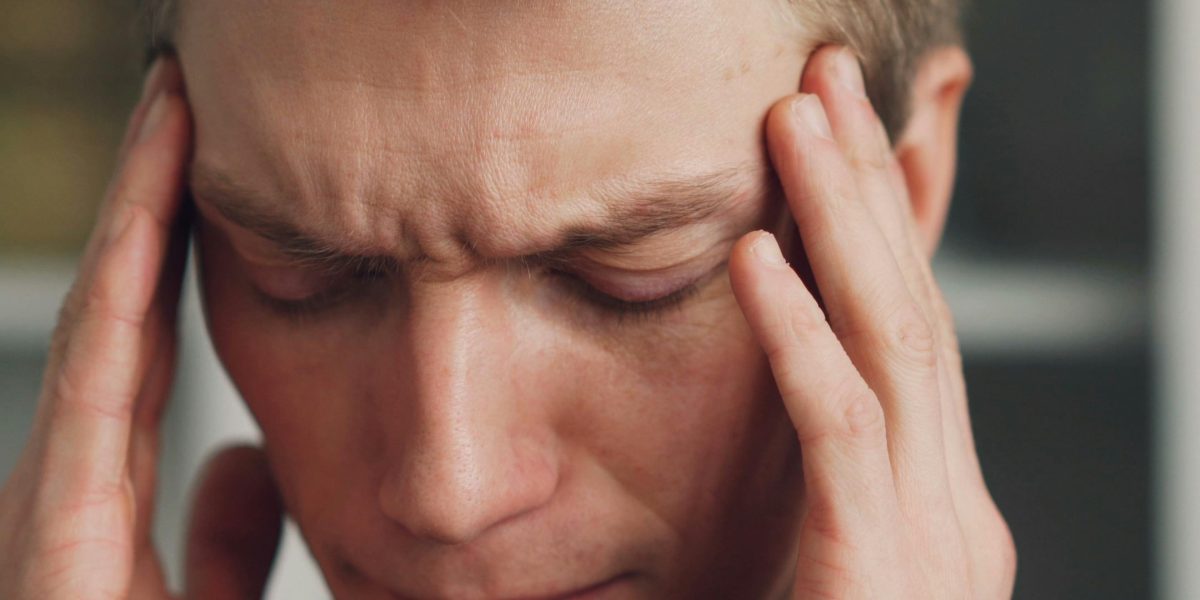
It is an irrational fear that feels very real.
The fear of long words is a perfect example of why we need clear information. If you struggle with phobias of long words, reading medical books can feel impossible. You need simple, honest facts. You need a resource that does not make things harder.
That is why we made this listicle. We break down common phobias and some very unusual ones. We want to clear up the myths that keep people stuck. And we explain treatments that are proven to work, like therapy for flight anxiety treatment.
If you are looking for a reliable phobia test or just want to understand your own fears better, you are in the right place. Understanding your fear is the first step to managing it. To learn more about how anxiety works in daily life, read our guide on coping skills for anxiety that really work. Or, Explore the Glossary for simple definitions of complex anxiety terms.
1. Hippopotomonstrosesquippedaliophobia: The Fear of Long Words
Imagine you are in a classroom and the teacher asks you to read a paragraph out loud. Your heart starts racing. Your palms get sweaty. But it is not because you are shy. It is because the paragraph is full of long, complicated words like “hippopotomonstrosesquippedaliophobia.”
That is the ironic name for the fear of long words. And yes, you read that right. The official name for this phobia is itself a long word. People sometimes think this is a joke. But it is a real specific phobia classified as an anxiety disorder. According to the DSM-5, a specific phobia involves “marked fear or anxiety about a specific object or situation.” For someone with this condition, the trigger is long words.
What does a phobia to long words feel like?
The fear is not just about being confused by big words. It goes deeper. When a person with a phobia to long words sees or hears a lengthy term, their body can react with a panic attack. They might feel dizzy, nauseous, or like they cannot breathe. The National Institutes of Health explains that patients with specific phobias experience anxiety and panic attacks along with unreasonable fear of exposure to the phobic stimulus. So even the anticipation of reading a long word can be terrifying.
Common triggers include:
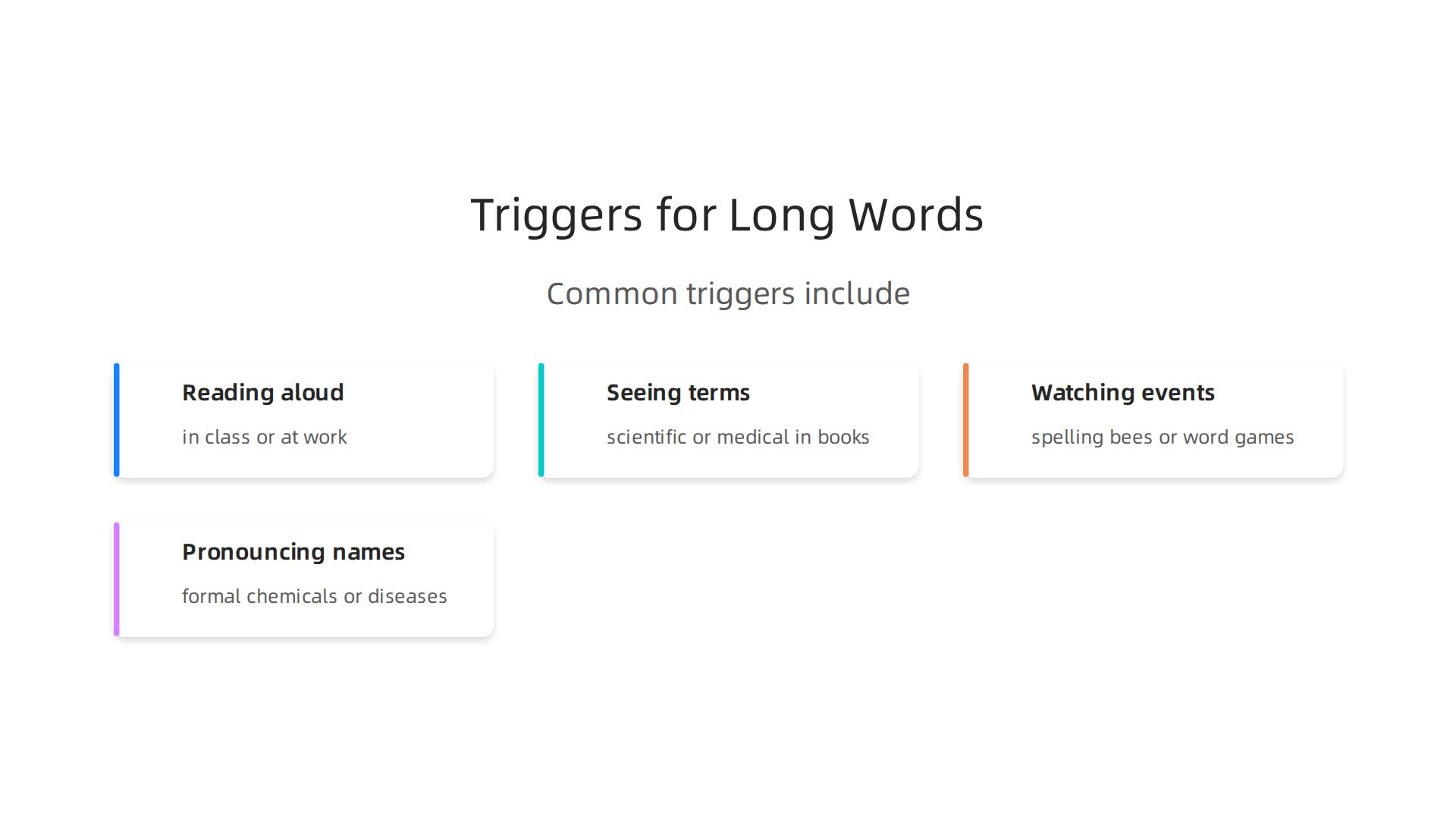
- Reading aloud in class or at work.
- Seeing scientific or medical terms in books.
- Watching spelling bees or word games on TV.
- Having to pronounce formal names of chemicals or diseases.
How is it treated?
The good news is that phobias of long words respond well to therapy. The most effective approach is gradual exposure. A therapist might start by showing you a short word and slowly work up to longer ones. Along the way, you learn cognitive restructuring to change the thoughts that fuel the fear. You learn that long words cannot actually hurt you. If you are dealing with any kind of specific phobia, these same techniques can help. You can also explore other proven coping skills like breathing exercises or grounding. To learn more, check out our guide on coping skills for anxiety that really work.
Next steps
If you suspect you have this phobia, the first step is to get clear information. You do not have to struggle with confusing mental health terms. Explore the Glossary for simple definitions of complex anxiety terms. It is a safe place to start building knowledge without fear.
2. Arachnophobia: Why Spiders Trigger Intense Fear
Now, imagine you are sitting on your couch and you see a spider crawling across the floor. Your body freezes. Your heart pounds. You may even scream or run out of the room. That reaction might feel extreme, but it is not rare.
Arachnophobia is one of the most common specific phobias in the world. In fact, about 19 million Americans have at least one phobia, and spider fear is near the top of the list. Scientists believe this fear is not just learned. It may be wired into our brains from our ancient ancestors. Spiders can be dangerous, and a quick reaction helped humans survive. So your body is trying to protect you, even if the spider in your living room is harmless.
What happens during a spider phobia?
The fear goes way beyond being a little uneasy. For someone with arachnophobia, even a picture of a spider can trigger a panic attack. The StatPearls page on specific phobia explains that patients experience anxiety and panic attacks along with unreasonable fear. Your body might react with sweating, shaking, rapid breathing, or a feeling of doom. You might avoid basements, gardens, or camping trips just to stay safe.
How to treat the fear of spiders
The best treatment for arachnophobia is exposure therapy. A therapist slowly helps you face your fear in steps. You might start by looking at a cartoon spider, then a photo, then a real spider in a jar. Over time, your brain learns that the spider is not a real threat. New research is even using virtual reality to help people practice exposure in a safe, controlled setting. For example, a recent study in Frontiers in Human Neuroscience describes a neuroadaptive VR system that adjusts the exposure based on your brain activity. That is a high tech way to retrain your fear response.
If you have any phobia, the same techniques can help. You can start by learning simple coping skills for anxiety that really work. Those skills give you tools to manage the panic before you even begin exposure therapy.
Next steps
You do not have to live in fear of spiders or any other trigger. The first step is understanding what is happening in your mind and body. Explore the Glossary for clear explanations of phobias, anxiety symptoms, and treatment options. It is a safe place to learn at your own pace.
3. Acrophobia: Coping with the Fear of Heights
Imagine standing on a balcony on the tenth floor. You grip the railing. Your legs feel weak. Your stomach drops.

For some people, that feeling is just a little dizzy. For others, it is pure terror.
Acrophobia, or the fear of heights, is more than just feeling uneasy. It can stop you from using elevators, climbing stairs, or even walking across a bridge. It is a specific phobia that limits daily life. In fact, a review in PMC explains that acrophobia goes beyond simple discomfort and often comes with a physical imbalance response that makes you feel like you are falling.
How acrophobia affects your body
When you look down from a high place, your brain might send a false alarm. You start sweating, your heart races, and you feel dizzy. That dizziness is a key part of the fear. Your brain sees the height and tells your body to brace for danger, even when you are perfectly safe. The key point is that the physical sensation itself becomes the threat.
Cognitive strategies that work
One powerful way to cope is to change how you think about those dizzy feelings. Instead of thinking "I am going to fall," you can tell yourself "This is just my body reacting to height, not real danger." This is called cognitive reappraisal. You reinterpret the physical sensations as non-threatening. Over time, this retrains your brain. You can combine this with relaxation breathing to steady your body.
If you want to practice these coping techniques, check out our guide on coping skills for anxiety that really work. It gives you simple steps to calm your nervous system before you even face a height.
Virtual reality exposure therapy
New research in 2026 shows that virtual reality (VR) exposure therapy is very effective for acrophobia. You can wear a headset and practice standing on virtual high floors, crossing virtual bridges. A therapist controls the difficulty level. This is a safe way to face your fear without ever leaving the ground. The same VR technology used for spider phobia is now being tested for height phobia, and early results are strong.
When names get long
Here is something interesting. The word "acrophobia" itself might look long and scary to someone who has trouble with big medical terms. There is even a phobia for that it is called hippopotomonstrosesquippedaliophobia, the phobia of long words. So if you struggle with reading technical names, you are not alone. The good news is you do not need to memorize fancy terms to get better. What matters is understanding your fear and taking the first step.
One helpful way to start is to take a simple phobia test online. Many clinics offer quick screening questions for height fear. You can also look into flight anxiety treatment if your height fear keeps you off airplanes. Those treatments use the same cognitive and exposure techniques.
Next step
The more you learn about acrophobia, the less control it has over you. Start by exploring clear, simple explanations of phobia terms at our Glossary of Anxiety. It breaks down all those long, confusing words into plain language you can actually use.
4. Claustrophobia: Understanding the Fear of Enclosed Spaces
You step into a small elevator. The doors slide shut. Your chest tightens. Suddenly, you feel like you cannot breathe. You need to get out now.
That feeling of panic in small spaces is claustrophobia. It is more than just feeling a little uncomfortable. It can make you avoid MRI scans, crowded rooms, tunnels, and even public bathrooms. The fear feels so real that your body screams at you to escape, even when you are perfectly safe.
Early interventions that help
The good news is that you can manage claustrophobia. One of the early stage tools is called interoceptive exposure. This means you practice feeling the physical sensations of restriction on purpose. You might sit in a small space for just a few seconds while your therapist watches. You learn that the feeling of tightness is not dangerous. You are just teaching your brain that you can handle it.
Research from Quantum Clinic explains that exposure with response prevention (ERP) works well. You expose yourself slowly and steadily. Each small step builds confidence.
CBT and relaxation together work best
Combining cognitive behavioral therapy with deep relaxation gives you high success rates. According to a study in PMC, participants who used a combination of exposure and cognitive reappraisal showed strong improvements Mechanisms of Change in Exposure Therapy. You learn to change your thoughts about the space while keeping your body calm.
Graduated in vivo exposure therapy is the most effective treatment for claustrophobia. You start with something easy, like looking at a photo of a small room. Then you move to standing in a doorway. Then you step inside a closet with the door open. Research from Dr.Oracle confirms this step by step approach works.
One simple strategy is to combine these coping techniques with your daily routine. You can learn more about building those skills in our guide on coping skills for anxiety that really work.
Your next step
The more you understand claustrophobia, the less power it has over you. If you want to keep learning at your own pace, visit the Glossary of Anxiety. It breaks down all those technical terms into plain language so you can finally feel in control.
5. Agoraphobia: When Open Spaces Feel Unsafe
You walk into a big supermarket. The aisles stretch out. The exits look far away. Your heart starts racing.

You think, What if I panic and cannot get out? So you leave fast. Next time, you avoid the supermarket altogether.
That is agoraphobia. It is not just a fear of wide open places. It is a fear of being in situations where escape might be hard or embarrassing. Many people with agoraphobia also have panic disorder. But agoraphobia can show up on its own too. You might avoid crowds, bridges, public transport, even standing in line.
How agoraphobia changes your life
When you have agoraphobia, your world gets smaller. You stop going to the movies. You drive only on quiet roads. You might even struggle to leave your house. The fear is not about the place itself. It is about what could happen if you feel trapped and cannot get help.
You might also notice that your anxiety picks on specific situations. For example, phobias of long words the fear of saying or reading long terms might seem silly, but it works the same way. Your brain learns to avoid something that feels threatening. Agoraphobia is similar. Your brain marks safe situations as dangerous. A phobia test can help you identify exactly which situations trigger your fear.
Treatment that works
The most effective treatment for agoraphobia is gradual real world exposure. You start small. Maybe you stand in the doorway of a crowded room for ten seconds. Then you step inside for twenty seconds. Each step teaches your brain that nothing bad happens. Research on exposure therapy shows that this process helps you change how you think about the feared situation Mechanisms of Change in Exposure Therapy for Anxiety.
You also learn panic management skills. Deep breathing, grounding, and challenging scary thoughts keep you calm during exposure. If you struggle with panic attacks, learning to recognize the symptoms first can make a big difference. Check out our guide on anxiety attack symptoms and how to take control.
One more thing about avoidance
Many people with agoraphobia also avoid flying. Flight anxiety treatment often uses the same step by step approach. You start by looking at photos of planes, then visit the airport, then board a plane without taking off. The goal is always the same: prove to your brain that you are safe.
Your next step
Agoraphobia can feel overwhelming, but you can break free one small step at a time. If you want to understand the terms behind your fear, explore the Glossary of Anxiety. It turns clinical language into plain English so you can finally see what is really going on.
6. Social Phobia (Social Anxiety Disorder): Fear of Judgment
You walk into a room full of people. Everyone is talking. You feel their eyes on you. Your face gets hot. Your hands shake. You think, They can see how nervous I am. So you find a corner and stay quiet. Sound familiar? That is social phobia, also called social anxiety disorder.
Social phobia is not just being shy. It is the most common anxiety disorder, and it affects millions of people. The fear runs deeper than feeling awkward. You are scared that others will judge you, reject you, or think you are strange. This fear can stop you from living your life.
Common triggers
People with social phobia usually fear situations where they might be watched or evaluated. The biggest triggers include:
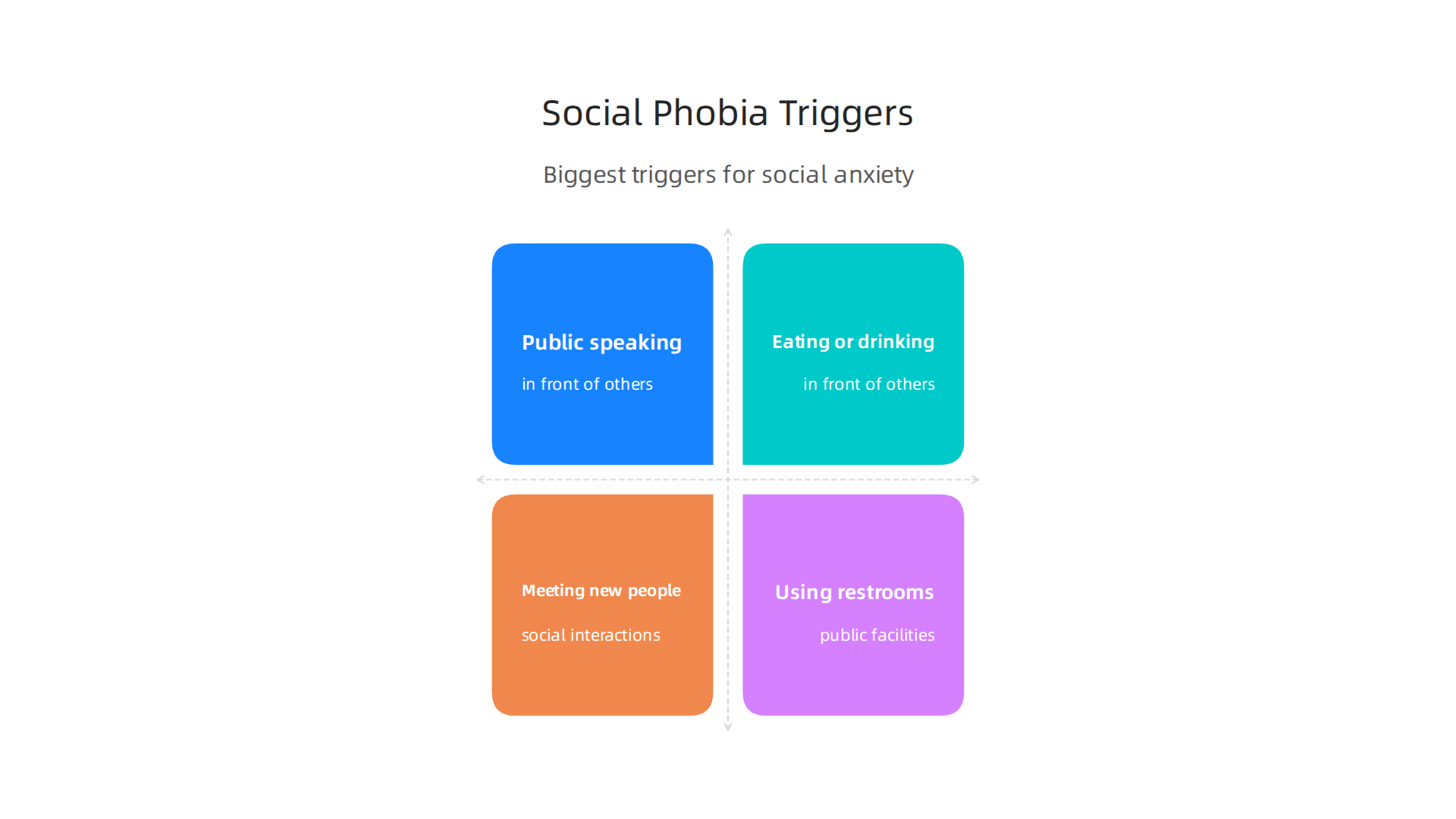
- Public speaking
- Eating or drinking in front of others
- Meeting new people
- Using public restrooms
- Being the center of attention
Even small things, like writing a check at the store, can feel impossible. The fear is real, and it can make you avoid those situations completely.
What treatment helps the most
The best treatment for social phobia is cognitive behavioral therapy (CBT). CBT helps you change the thoughts that fuel your fear. For example, you might believe "everyone will laugh at me." CBT teaches you to question that thought and replace it with a more balanced one.
Group therapy works especially well for social anxiety. You practice talking with others who have the same fears. Over time, your brain learns that you are safe. For children and teens, early intervention is key. The NICE guidelines recommend CBT for treating social anxiety in young people NICE guideline CG159. Both individual and group CBT are effective Summary of recommendations, NCBI.
The role of exposure
Like with agoraphobia, exposure is a big part of recovery. You start small. Maybe you say hello to a cashier. Then you ask a question in class. Each step teaches your brain that being around people is not dangerous. If you want to learn more coping techniques, our guide on coping skills for anxiety walks you through evidence-based strategies.
One last thing
Social phobia often starts in childhood. If you have a child who seems overly afraid of social situations, getting help early can change their path. The American Academy of Child and Adolescent Psychiatry notes that treatment can significantly improve a child’s ability to cope
Anxiety Disorders Resource Center.
Do not let the fear of judgment keep you small. Understanding your anxiety is the first step toward freedom. Explore the Glossary to learn the terms behind your fears and find clear, simple answers.
7. Specific Phobias in Children: What Parents Should Know
Does your child hide behind your leg when they see a dog? Or scream at the sight of a spider?

A little fear is normal. But when fear takes over, it might be a specific phobia.
Here is the good news. Most childhood phobias go away on their own. Kids outgrow them as they get older. But some phobias stick around. And when they do, your child needs help.
How to spot a phobia in your child
Kids do not always say "I am scared." They show you instead. Look for these signs when your child faces the thing they fear:
- Excessive crying that will not stop
- Clinging to you and refusing to let go
- Tantrums that feel too big for the situation
- Freezing up or trying to run away
- Complaining of stomachaches or headaches
If these reactions happen every time, and they last for months, your child may have a phobia. The Merck Manuals explain that diagnosis is based on clinical signs Social Anxiety Disorder in Children and Adolescents.
What works best for kids
The best treatment for childhood phobias is cognitive behavioral therapy (CBT). It works especially well when parents are involved. You become your child’s coach. You learn how to guide them through scary moments step by step.
Early intervention is key. Research shows that getting help early can improve a child’s ability to cope How To Help Your Child With Social Anxiety Disorder. For severe cases, doctors sometimes use medicine. But behavioral therapy comes first.
How exposure therapy works for children
You start small. Very small. If your child fears dogs, you do not go to a dog park. You look at a picture of a dog from across the room. Then you look closer. Then you watch a video. Each step feels safe.
Parent-led exposure programs are effective. You control the pace. You celebrate every win. Over time, the fear shrinks.
For more help with anxious kids, read our guide on teen anxiety signs and how to help. It covers strategies that work for younger children too.
When should you worry
Some phobias are harmless. A fear of clowns or loud noises usually fades. But watch for phobias that stop your child from living normally. If they refuse to go to school, avoid friends, or cannot sleep, it is time to act.
Even rare phobias, like phobias of long words, can appear in kids. If your child has a phobia to long words and it causes distress, the same treatment approach works.
The American Academy of Child and Adolescent Psychiatry stresses that treatment can make a big difference Anxiety Disorders Resource Center.
Do not wait. The earlier you act, the faster your child can feel safe again. Explore the Glossary to learn the terms behind your child’s fears and find clear, simple answers.
8. Evidence-Based Treatments: What Really Works for Phobias
You just learned about phobias in children. But these treatments work for all ages. Whether you struggle with phobias of long words or something else, the same science-backed methods can help you feel safe again.
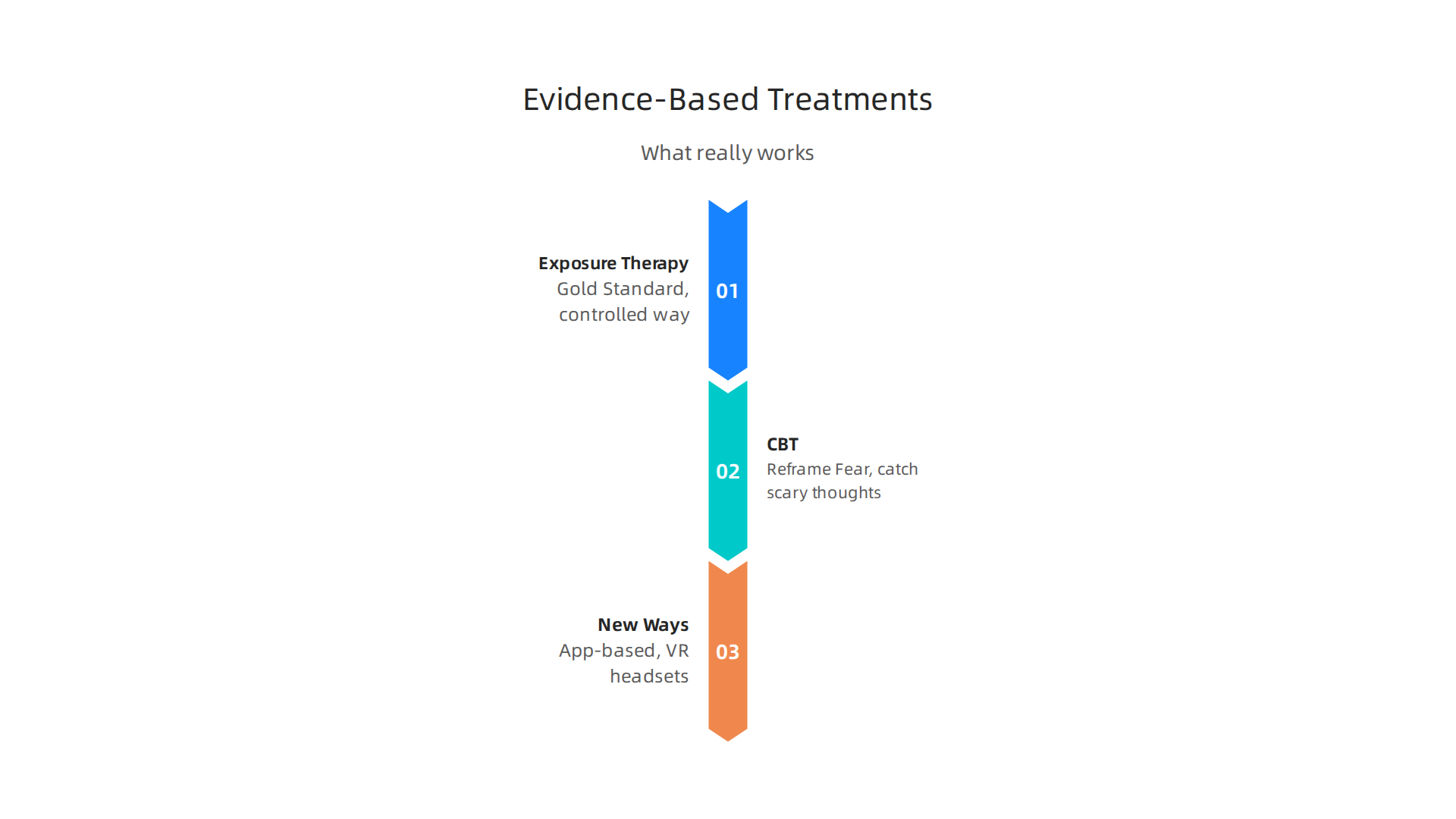
Exposure Therapy is the Gold Standard
Exposure therapy is the most researched treatment. It works by facing your fear in a controlled way. You can do this in real life (in vivo), in your mind (imaginal), or with a virtual reality headset. For example, flight anxiety treatment often starts with pictures, moves to videos, and then to a virtual plane. A 2026 study found that exposure therapy helps the brain learn new safety rules over time [ClinicalTrials.gov]. The StatPearls medical reference confirms that exposure therapy is the first choice for most phobias [NIH StatPearls]. Even a single session of focused exposure can work for some people [Semantic Scholar].
How CBT Helps You Reframe Fear
Cognitive behavioral therapy (CBT) is the perfect partner to exposure. It helps you catch the scary thoughts running through your head and change them. If you have a phobia to long words, you might think "I am going to mess up." CBT helps you swap that thought for "I can try my best." This combination of facing the fear and changing the thought is very powerful. For more on building these skills, read our guide on evidence-based coping skills.
New Ways to Get Help
In 2026, help looks different than it used to. New developments include app-based therapy that lets you do exposure exercises on your phone. This lowers the barrier for people who cannot see a therapist in person. Virtual reality headsets are also cheaper now. This means more people can try VR therapy at home to face fears like heights, flying, or even phobias of long words.
Take the Next Step
Not sure where to start? Try a phobia test to name your fear. Then pick one small step from this list. You do not have to face it alone. Understanding the terms behind your phobia is the first step. Explore the glossary to find clear answers and start your journey to feeling better.
Summary
This article explains specific phobias in clear, practical terms and covers both common fears (spiders, heights, enclosed spaces, social situations) and unusual ones like the fear of long words. It describes how these phobias feel, what triggers them, and how they can limit daily life for adults and children. The piece reviews evidence-based treatments—especially exposure therapy and CBT—and highlights new options such as virtual reality and app-based exposure. It also gives concrete coping skills (breathing, grounding, cognitive reappraisal) and step-by-step approaches for starting treatment. Parents get guidance on spotting phobias in kids and using gradual, parent-led exposure. Readers will finish knowing how to recognize a phobia, what effective therapies look like, where to begin a gentle treatment plan, and which resources can help them take the first steps toward recovery.