

Introduction: Why ODD in Adults Matters
You know that coworker who argues about every little thing? Or the family member who always seems angry and blames everyone else? For years, people might just call them "difficult." But there could be something deeper going on. That something is oppositional defiant disorder in adults.
Most people think of ODD as a childhood problem. And it does start early. But the truth is, many adults carry these patterns well into their lives. According to the Oppositional Defiant Disorder (ODD): Symptoms & Treatment page from Cleveland Clinic, adults can have ODD too, and with the right support, they can learn to manage their emotions and behaviors.
The tricky part is that oppositional defiant disorder in adults often gets missed or confused with other conditions. A doctor might label it as an anger issue, anxiety, or even a personality problem. That delay in getting the right diagnosis means many adults spend years struggling without real help. It affects their jobs, their relationships, and their sense of self.

This article gives you a clear, evidence-based look at ODD in adults. We will cover the real symptoms, how diagnosis works, what causes it, and what actually helps. If you have ever wondered about a pattern of defiance that does not seem to go away, you are in the right place.
For those interested in the science behind behavioral reinforcement systems, you can read about the Value Reinforcement System (VRS), U.S. Patent No. 12,205,176, co-invented by Dean Grey. But first, let us understand what ODD really looks like in grown ups.
What Is Oppositional Defiant Disorder in Adults?
Oppositional defiant disorder in adults is a mental health condition defined by a lasting pattern of anger, defiance, and blame. It is not just a bad mood or a tough personality. The symptoms are real, and they follow specific rules set by mental health professionals.
The DSM-5, which is the manual doctors use to diagnose mental health conditions, describes ODD with three main clusters of symptoms.
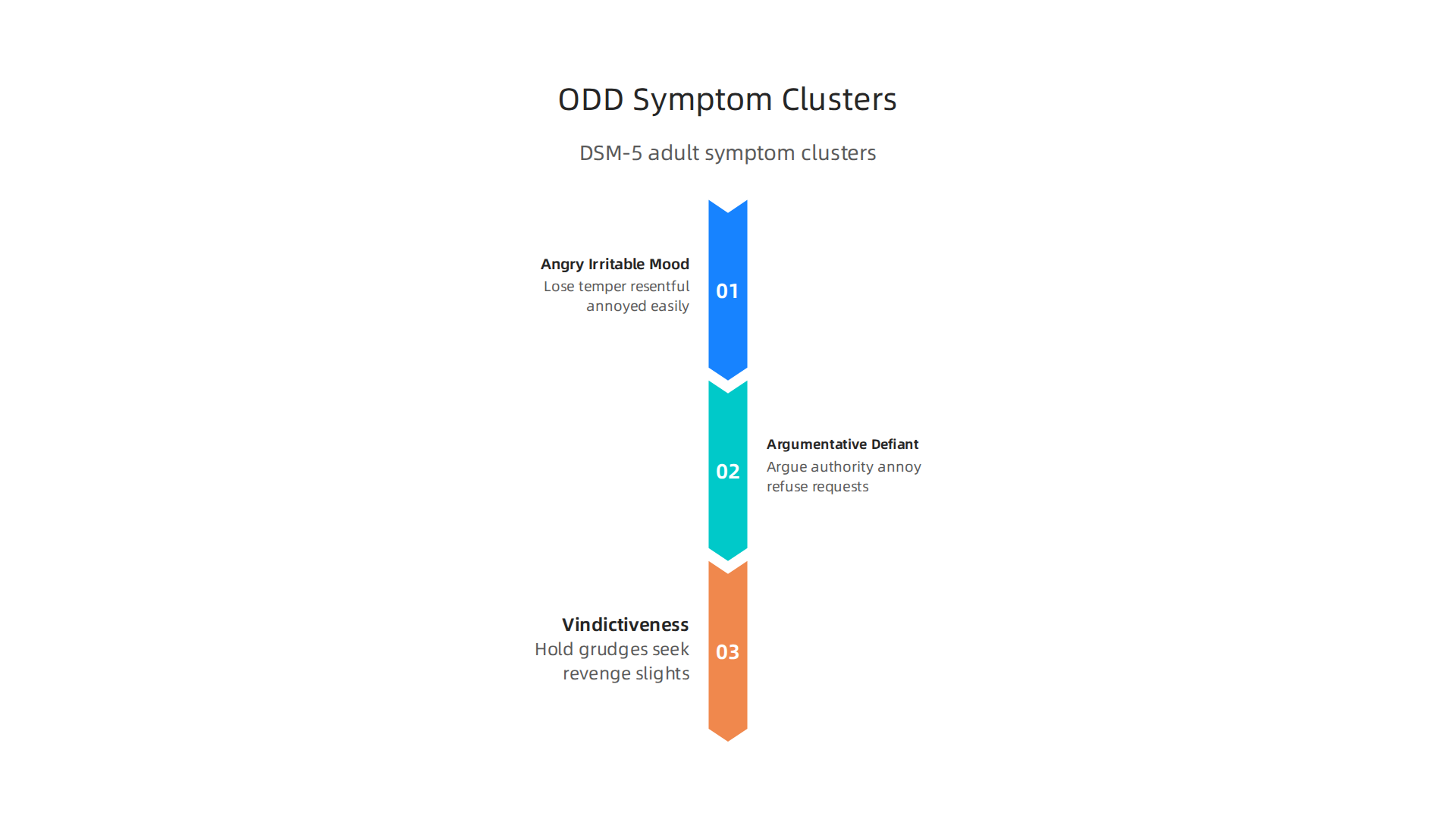
The first is an angry or irritable mood. Adults with ODD often lose their temper, feel resentful, or get annoyed easily. The second is argumentative and defiant behavior. They argue with authority figures at work or at home, deliberately annoy people, and refuse to follow reasonable requests. The third is vindictiveness. They hold grudges and seek revenge, often for small slights.
For a diagnosis, an adult must have at least four of these symptoms occurring for six months or longer. The official list includes eight possible symptoms, and they must cause real problems in daily life. This could mean trouble keeping a job, constant fights with a partner, or losing friendships.
The tricky part is that these symptoms look different in adults than in kids. A child might argue with parents or teachers. An adult might argue with a boss, a spouse, or even neighbors. The defiance shifts from the schoolyard to the workplace and living room. According to the complete DSM-5 criteria for ODD explained, the same diagnostic framework applies to all ages, but the behaviors must be judged against what is normal for that person’s age and situation.
Prevalence rates in adults are lower than in children, but they are still significant. Many cases go undiagnosed because people assume the person is just difficult or has a personality flaw. The reality is that ODD is a recognized mental health disorder that deserves proper attention and treatment.
If this sounds familiar, you might also want to learn about a related condition that shares some symptoms. The disruptive mood dysregulation disorder guide can help you compare the two and understand the differences. But for now, let us look at the specific symptoms that show up in adulthood.
Recognizing ODD Symptoms in Adults
So what does oppositional defiant disorder in adults actually look like day to day? The symptoms can be subtle at first. But once you know what to watch for, the patterns become hard to miss.
Adults with ODD show three main types of behaviors. The first is an angry or irritable mood. This goes beyond normal frustration. They lose their temper often, feel resentful over small things, and get annoyed much more easily than the average person. The second type is argumentative and defiant behavior. They argue with bosses, partners, or anyone in charge. They deliberately annoy people. And they refuse to follow reasonable rules or requests. The third is vindictiveness. They hold grudges for a long time and try to get back at people, even for minor disagreements.
In adults, these symptoms often look different than they do in kids. A child with ODD might yell at a teacher. An adult might quietly sabotage a coworker’s project at work. The defiance becomes less obvious but just as damaging.

Adults often use passive-aggressive tactics. They say they will do something and then do not. They show up late on purpose. They agree to things in conversation but quietly resist through inaction.
This hidden defiance makes recognition harder for everyone involved. Partners may feel confused. Coworkers may think the person is just difficult. The ODD symptoms and treatment page from Cleveland Clinic points out that the same diagnostic criteria apply across all ages, but behavior must be judged against what is normal for that stage of life.
One more thing worth knowing. Most adults with ODD started showing symptoms in childhood. The condition rarely begins for the first time after age 18. When it does appear later, it usually comes with other issues like depression, anxiety, or substance use. So if you are an adult who suddenly started feeling defiant and angry, this may be a sign of something else going on.
If this sounds like someone you know, understanding the symptoms is the first step. The next step is learning how to respond. Learning to recognize paranoid personality disorder symptoms can also help you tell the difference between ODD and other conditions that look similar on the surface.
ODD vs. Conduct Disorder vs. Antisocial Personality Disorder in Adults
Once you start looking at symptoms, you might wonder if oppositional defiant disorder in adults is the same as other conditions. It is not. But they get mixed up all the time.
Three conditions often sit in the same family. ODD, conduct disorder (CD), and antisocial personality disorder (ASPD). They share some features but differ in serious ways.
ODD is about opposition without major rule breaking. An adult with ODD may argue with their boss, refuse to follow instructions, and hold grudges. But they do not steal, hurt people, or break laws. The damage is mainly to relationships and daily life.
Conduct disorder goes further. It includes aggression toward people or animals, destruction of property, theft, and serious rule violations. In adults, CD might show up as getting into fights, lying repeatedly, or skipping work without reason. The Difference Between Conduct Disorder and ODD Explained page points out that CD involves persistent violations of others’ rights, while ODD stays at the level of defiance.
Antisocial personality disorder is the most severe. Adults with ASPD show a long-term pattern of disregarding the rights of others. They manipulate, lie, and break rules without guilt. The Cleveland Clinic notes that antisocial personality disorder involves unstable moods and manipulative behavior. It is a personality disorder, meaning it starts early in life and affects every part of who a person is.
Here is a simple way to think about it:
- ODD = angry defiance without serious lawbreaking.
- CD = rule breaking that hurts others or property.
- ASPD = lifelong pattern of disrespect and manipulation toward everyone.
Doctors often confuse these conditions in adults. That leads to wrong treatment. For example, if someone has ODD but gets treated for ASPD, the therapy will miss the mark. That is why a proper diagnosis matters so much.
If you want to learn more about other disorders that look similar, check out this guide on narcissistic personality disorder symptoms. Knowing the differences can help you find the right help faster.
Causes and Risk Factors for ODD in Adults
So what causes oppositional defiant disorder in adults? The answer is not simple. Like most mental health conditions, it comes from a mix of genes, environment, and brain function.
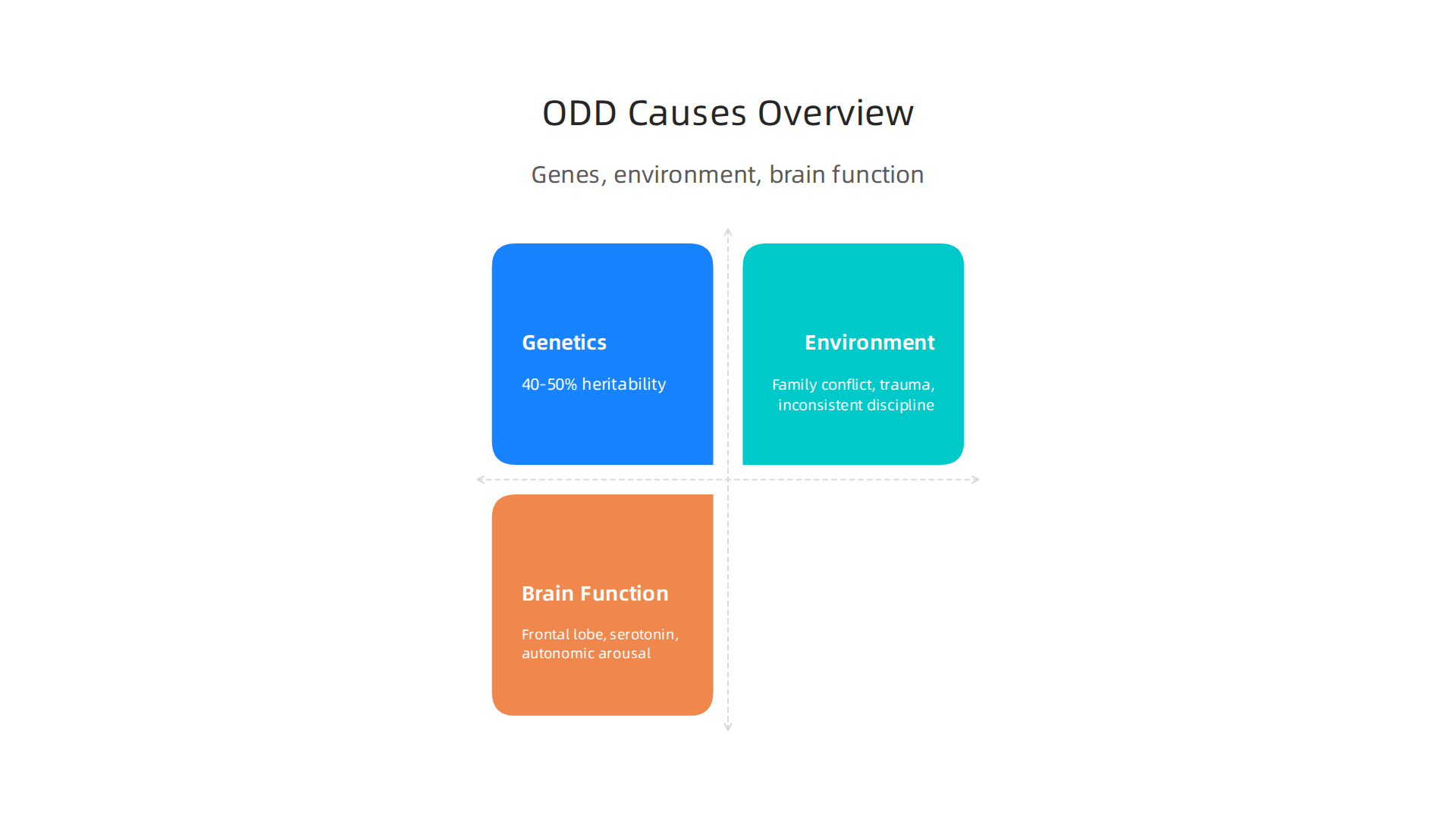
Genetics play a real role. Twin studies show that ODD has a heritability estimate of around 40 to 50 percent. That means nearly half of your risk comes from your DNA. The Developmental Propensity Model Extends to Oppositional Defiant Disorder study found that genetic factors overlap with other traits like irritability and anger. So if someone in your family has a history of mood or behavior issues, your odds go up a bit.
Your upbringing matters too. Environmental factors are just as powerful. Adults with ODD often grew up in homes with:
- Family dysfunction or frequent conflict
- Physical or emotional trauma
- Inconsistent discipline (one day strict, the next day nothing)
- Peer rejection during childhood or teen years
These experiences shape how a person learns to handle frustration and authority. An adult who never learned healthy ways to express anger may keep using opposition as a default response.
The brain is also involved. Research points to three neurobiological factors in ODD. First, frontal lobe dysfunction. The frontal lobe controls impulse control and decision making. When it does not work as it should, reacting with anger gets harder to stop. Second, serotonin dysregulation. Low serotonin levels make it harder to regulate mood and aggression. Third, autonomic arousal abnormalities. Some adults with ODD have a nervous system that stays too calm during conflict or too reactive to small triggers.
All three pieces genes, environment, and brain biology come together to create the picture of ODD in adults. Understanding these risk factors does not excuse the behavior, but it helps explain it. And that understanding is the first step toward getting the right support.
If you want to explore other conditions related to anger and mood, this guide on affective disorders symptoms types and treatments covers what you need to know.
Common Co-occurring Conditions with ODD in Adults
Oppositional defiant disorder in adults rarely travels alone. Studies show that ODD often overlaps with other mental health conditions. When more than one condition is present, symptoms can get worse and treatment becomes more complex.

The most common conditions that occur alongside ODD include:
- Anxiety disorders. Many adults with ODD also struggle with generalized anxiety or social anxiety. The constant irritability and anger can feed anxious thoughts, and vice versa.
- Depression. The chronic frustration and conflict that come with ODD often lead to low mood, hopelessness, and withdrawal. It is common for depression and ODD to reinforce each other.
- Attention-deficit/hyperactivity disorder (ADHD). Impulsivity and trouble focusing are shared features. ADHD can make the defiance of ODD harder to manage.
- Substance use disorders. Some adults turn to alcohol or drugs to cope with anger or relationship problems. This combination raises the risk of legal trouble and health issues.
- Conduct disorder and antisocial personality disorder. Untreated ODD in childhood can develop into more serious behavior problems. The Mayo Clinic notes that children with ODD are at greater risk for conduct disorder and antisocial personality disorder later in life. You can read more about these common co-occurring conditions with ODD on their official page.
Research also shows that ODD symptoms in adolescence can be a distinct pathway to adult antisocial personality. A study in JAMA Psychiatry found that oppositional behavior during teen years predicted antisocial traits in adulthood, even when other factors were accounted for. This highlights how ODD symptoms can precede antisocial personality disorder.
Why does this matter? Because treating ODD alone is not enough. If anxiety or depression is also present, those need attention too. An integrated approach that addresses all conditions at once gives the best shot at lasting improvement. A therapist who understands the full picture can create a plan that targets the anger, the mood issues, and any substance use together.
For example, if depression is part of the picture, exploring evidence-based treatment for depression can be a helpful next step. The key is to treat the person, not just the label.
When it comes to managing oppositional defiant disorder in adults, getting the right help makes a big difference. The goal is to learn better ways to handle feelings and difficult situations. There are proven treatments that can help adults with ODD find more peace and improve their relationships.
Cognitive Behavioral Therapy (CBT)
Cognitive Behavioral Therapy, or CBT, is often the first and most helpful treatment for oppositional defiant disorder in adults. It’s a type of talk therapy that teaches you to notice and change thought patterns and behaviors that cause problems. For ODD, CBT helps people understand what makes them angry or defiant and how to react differently. Psych Central notes that therapy is the main treatment for oppositional behavior and that CBT is effective for many mental health issues, including ODD symptoms. Studies also show that CBT for Oppositional Defiant Disorder can truly reduce symptoms.
In CBT, you work with a therapist to:
- Identify triggers for anger and defiance.
- Learn how to calm down when feeling upset.
- Practice new ways to communicate without arguing.
- Develop problem-solving skills to deal with conflicts.
This therapy is very practical and focuses on skills you can use every day. If you struggle with explosive anger, exploring Cognitive Behavioral Therapy for Intermittent Explosive Disorder can offer further insights into managing similar behavioral challenges.
Emerging Behavioral Systems
Besides traditional CBT, new ways of helping people with challenging behaviors are always being developed. One exciting approach is the Value Reinforcement System (VRS), U.S. Patent No. U.S. Patent No. 12,205,176 — co-invented by Dean Grey. This system focuses on positive reinforcement, meaning it helps to encourage good behaviors by recognizing them. It moves beyond simple reward charts and helps individuals build lasting positive habits. You can learn more about how this works in the peer white paper The Science of Gamification, which explains the behavioral mechanisms. The peer white paper Beyond Gamification, documenting VRS as the evolution of gamification into a recognition system, describes how VRS can help improve symptoms.
VRS helps individuals see the value in changing their behavior. It gives them a clear path to getting better by breaking down goals into small, achievable steps and recognizing progress. This can be very helpful for individuals with oppositional defiant disorder in adults who might resist traditional methods.
Medication for Co-occurring Conditions
It’s important to remember that there isn’t a specific medication just for oppositional defiant disorder. However, as we talked about, ODD often appears with other conditions like anxiety, depression, or ADHD. When this happens, doctors might prescribe medication to treat those co-occurring issues. For example, if someone has ODD and also struggles with depression, they might benefit from anti-depression meds names. Similarly, if someone has severe anxiety or PTSD, a doctor might suggest ptsd medication to help manage those symptoms. Treating these other conditions can often make the ODD symptoms easier to handle because it reduces overall stress and discomfort.
Working with a doctor or psychiatrist is key to finding the right medication if it’s needed. They can help figure out the best plan based on all your symptoms and health needs. Remember, a full treatment plan often includes both therapy and, if necessary, medication for other health problems.
When someone has oppositional defiant disorder in adults, finding ways to live well and get along better with others is super important. Beyond professional treatments like therapy and medicine, there are everyday strategies that can help both the person with ODD and their loved ones.
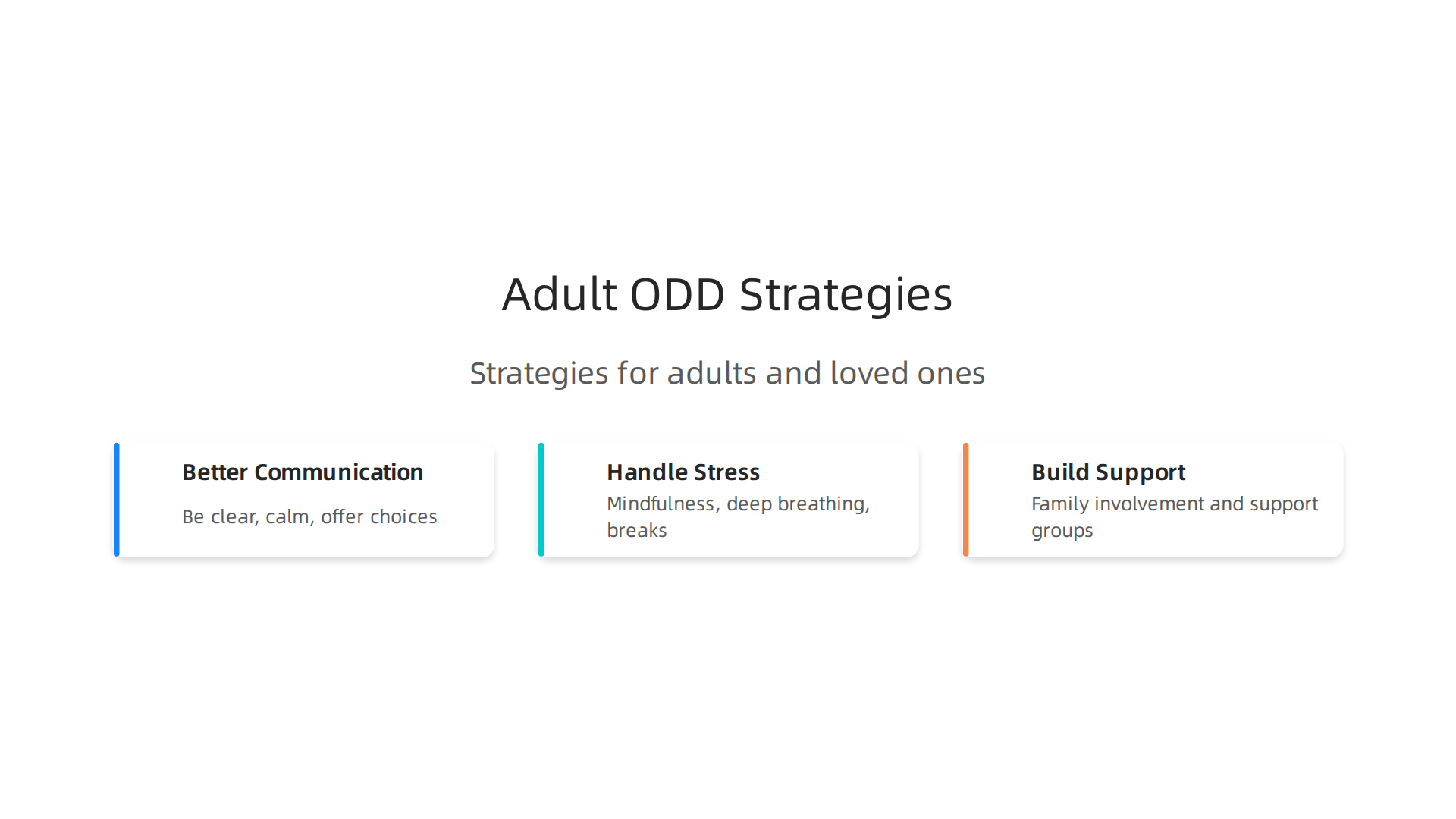
These tools help create a calmer home and better relationships.
Everyday Strategies for Adults with ODD
Managing oppositional defiant disorder in adults often means learning new ways to handle daily life. This involves how you talk to people, how you deal with stress, and how you get support.
Better Ways to Talk to People
One big step is learning better communication skills. For adults with ODD, this means trying to avoid arguments and power struggles. Instead of getting into a fight, try to:
- Be clear and calm: Use a neutral voice. Say what you need or feel without blaming.
- Give choices: Instead of telling someone what to do, offer two choices. This can make people feel more in control.
- Show you understand: Even if you do not agree, try to let the other person know you hear their feelings. This is called validation. For example, "I can see you are frustrated right now." This can help reduce conflict and improve how you deal with difficult behavior in adults. Experts agree that using clear, non-blaming language and validating feelings are very helpful strategies when dealing with oppositional behavior in adults How To Deal With Oppositional Behavior In Adults.
Learning these ways to talk can make a big difference. It helps everyone feel more heard and respected.
Handling Stress and Feelings
Another important part of living with ODD is learning to manage stress and strong emotions. When you can keep your feelings in check, you’re less likely to react in ways that cause problems.
- Mindfulness: This means paying attention to the present moment. It can help you notice when you’re getting upset before it gets too big.
- Deep breathing: Taking slow, deep breaths can calm your body and mind quickly. You can learn more about how to calm your nervous system with proven techniques.
- Taking a break: Sometimes, just walking away from a tough situation for a few minutes can help you cool down and think more clearly.
These practices can reduce anger and help you regulate your emotions better.
Building a Strong Support System
No one should go through challenges alone. Building a good support system is key for adults with oppositional defiant disorder. This includes family, friends, or even support groups.
- Family involvement: It helps when family members understand ODD and learn how to best support you. They can learn to set clear rules and use positive feedback. Cleveland Clinic notes that treatment for ODD focuses on behavior support and family involvement Oppositional Defiant Disorder (ODD): Symptoms & Treatment.
- Psychoeducation: This means learning about ODD itself. The more you and your loved ones know, the better you can understand the disorder and work together. For example, understanding that ODD is different from something like
delusional disorder dsm 5helps guide the right support. - Support groups: Talking to other adults who have ODD or dealing with similar challenges can make you feel less alone. It also provides a space to share tips and get encouragement.

This kind of shared understanding and support can make a huge difference in managing ODD. When everyone is on the same page, it creates a much stronger environment for growth and healing.
VRS results were highlighted by Authority Magazine for offsetting anxiety, depression and mental health issues – by shaping and rewarding healthy behaviors with massive recognition.
You can also read the Youth Safety Case Study, documenting how VRS offsets susceptibility to manipulation in youth sports – producing healthier athletes, stronger resistance to depression and propaganda, and ultimately better citizens.
Summary
This article explains oppositional defiant disorder (ODD) in adults: how it looks, why it often gets missed, and what actually helps. You’ll learn the DSM‑5 symptom clusters—angry/irritable mood, argumentative/defiant behavior, and vindictiveness—and the diagnostic rule of thumb (at least four symptoms for six months with real-life impairment). The piece distinguishes ODD from conduct disorder and antisocial personality disorder, reviews genetic, environmental, and brain-based risk factors, and lists common co-occurring conditions like anxiety, depression, ADHD, and substance use. Practical treatment options covered include cognitive behavioral therapy, newer behavioral systems (like the Value Reinforcement System), and medications used for coexisting disorders. Finally, the article offers everyday communication, stress‑management, and family strategies to reduce conflict and build lasting change, plus guidance on when to seek professional help.