

Introduction: Why Specific Phobias Deserve Clear, Trustworthy Information
Have you ever tried to look up a phobia online only to find yourself buried in medical jargon that makes your head spin?

You are not alone. Millions of people around the world live with specific phobias, yet many feel overwhelmed by the complex terms used to describe them. According to the National Institute of Mental Health, about 9.1% of U.S. adults had a specific phobia in the past year. That is roughly 19 million people. And the condition is even more common among women, with 12.2% affected compared to 3% of men, as reported by the Merck Manual Professional Edition.
But here is the thing. There is a big difference between being a little scared of something and having a full-blown phobia. A simple fear makes you uncomfortable. A phobia stops you from living your life. It triggers intense anxiety, panic, and avoidance. Understanding that line is the first step toward getting real help.
That is exactly why we wrote this article. We are breaking down three specific phobias that often confuse people: the fear of long words (yes, it is real), the fear of spiders, and the fear of heights. No confusing medical speak. Just evidence-backed facts in plain English. For a deeper look at these three phobias and how they differ, check out this guide on specific phobias and their symptoms.
If you ever feel lost in mental health terms, you are not the only one. A quick way to cut through the noise is to define anxiety clearly. A clear glossary can help you name what you are feeling and take the next step with confidence. Let us start with one of the most surprising phobias out there: the fear of long words.
What Are Specific Phobias? Definition and Diagnosis
A specific phobia is much more than ordinary fear. It is an intense, irrational fear of a particular object or situation that causes real distress and gets in the way of daily life. The fear is completely out of proportion to any actual danger. And unlike a simple nervous feeling, a phobia does not fade on its own.
How Doctors Diagnose a Specific Phobia
Mental health professionals follow clear rules from the DSM-5 to diagnose specific phobias.
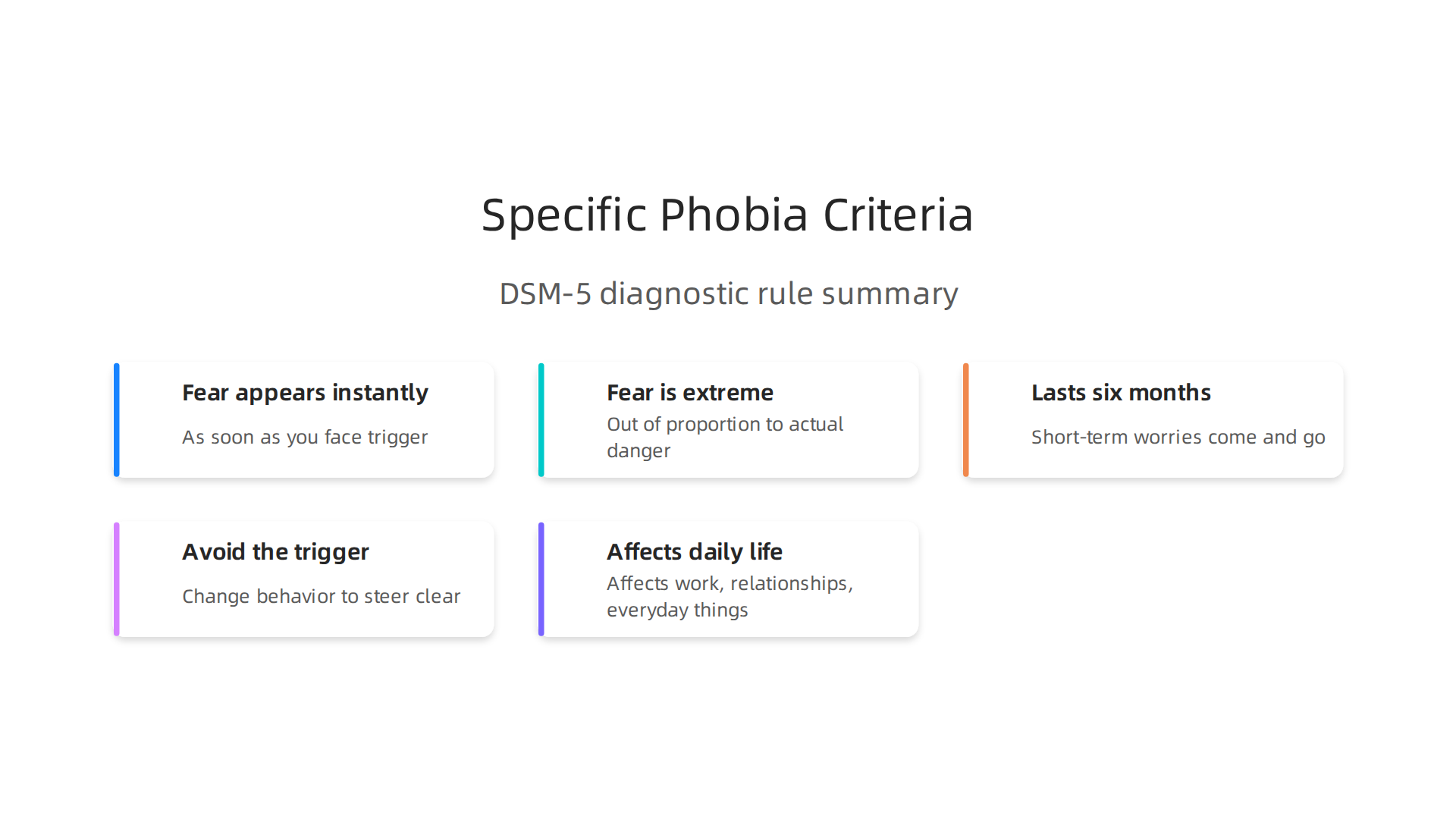
Here is what they look for:
The fear appears almost instantly. As soon as you face the trigger, the fear response kicks in. For someone with a phobia to long words, just seeing a long term on a page can trigger instant panic and a racing heart.
The fear is extreme and out of proportion. The level of danger does not match the intensity of fear. With phobias of long words, a long word is not dangerous. But the brain reacts as if it is a serious threat to safety.
The fear lasts at least six months. Short-term worries come and go. A phobia lingers and does not get better on its own.
You avoid the trigger. You change your behavior to steer clear of what scares you. Or you force yourself through it with extreme distress.
The fear harms your daily life. It affects your work, your relationships, or your ability to do everyday things like going to the store or riding an elevator.
According to a clinical resource from StatPearls, specific phobia causes intense anxiety and panic attacks when people face the object of their fear. This makes it very different from everyday nervousness that fades quickly.
The Four Main Types of Specific Phobias
Doctors group specific phobias into four categories based on what triggers the fear.
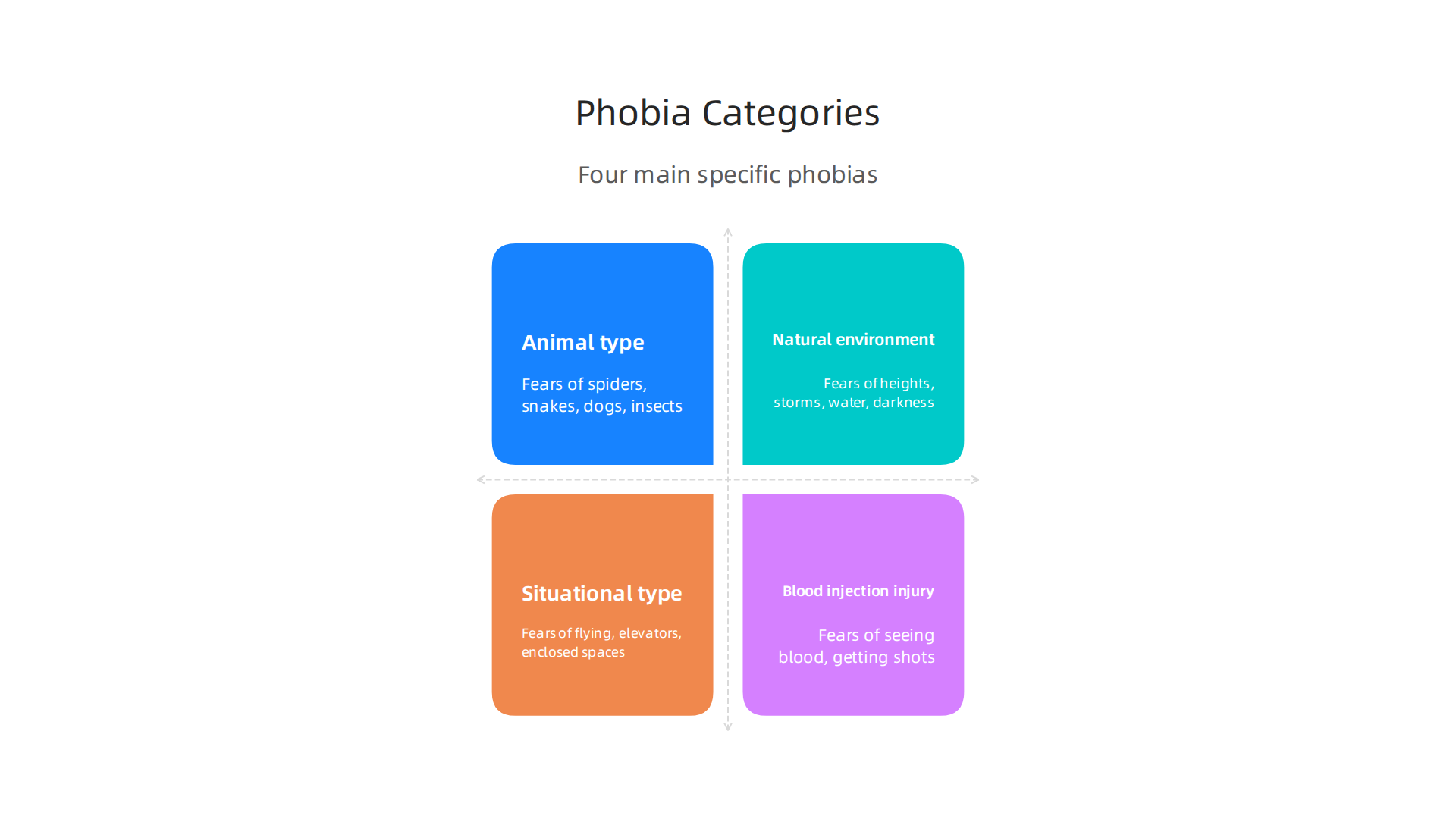
Animal type. Fears of spiders, snakes, dogs, or insects. Arachnophobia (fear of spiders) is one of the most common phobias worldwide.
Natural environment type. Fears of heights, storms, water, or darkness. Acrophobia (fear of heights) affects millions of people every year.
Situational type. Fears of flying, elevators, enclosed spaces, or driving. Many people seek flight anxiety treatment to manage this kind of phobia effectively.
Blood injection injury type. Fears of seeing blood, getting shots, or medical procedures. This type is unique because it can cause fainting instead of racing panic.
If you are unsure whether your fear meets the diagnostic criteria, taking a phobia test can help you understand where you stand and what your next steps might be.
Key Facts About Specific Phobias
Specific phobias are the most common anxiety disorder in the United States. Millions of adults experience them every year. The good news is that treatment works well. Therapies like cognitive behavioral therapy and gradual exposure therapy help most people overcome their fears and regain control of their lives.
Now let us look at one of the most unusual phobias out there: the fear of long words.
Hippopotomonstrosesquippedaliophobia – The Fear of Long Words
Here is where things get ironic. The clinical name for the fear of long words is hippopotomonstrosesquippedaliophobia. That word itself is 36 letters long. People with this phobia dread seeing, hearing, or even thinking about long words. Just glancing at a term like "antidisestablishmentarianism" can send them into a panic.

What Causes This Phobia?
Like other specific phobias, the fear of long words usually starts with a bad experience. Many people develop it after being mocked or laughed at for mispronouncing a difficult word in school or in front of others. That embarrassment sticks. According to a resource from San Jose Mental Health, traumatic events like being teased for mispronouncing words can trigger this phobia. Academic pressure also plays a big role. Students who already feel anxious about reading or speaking in class may find long words especially scary. Over time, just the thought of a long word is enough to cause a racing heart, sweating, and a strong urge to escape.
How Does It Show Up?
Symptoms can be both physical and mental. A person may avoid reading aloud, skip classes that require presentations, or even stop reading books entirely. They might feel dizzy, short of breath, or terrified when they come across a long word. Some people experience full panic attacks. As PsychCentral explains, this fear can lead to avoiding events and groups of people, which can really limit your life.
Treatment That Works
The good news is that this phobia is very treatable. The most effective approach is cognitive behavioral therapy, or CBT. A therapist helps you slowly face your fear in small steps. You might start by looking at a short, unfamiliar word. Then you move to longer ones. You practice saying them out loud until the fear starts to fade. This gradual exposure retrains your brain to see long words as harmless.
Learning simple coping skills for everyday anxiety can also support your progress. If you want practical tools you can use on your own, check out these coping skills for anxiety. They work alongside therapy to help you stay calm.
Some people also find help through creative programs that reward healthy behaviors. For example, the team at Authority Magazine covered one platform that uses virtual recognition to offset anxiety and depression. You can read about it in Authority Magazine. It is a different angle, but it shows that there are many ways to tackle fear.
If you think you might have this phobia, start small. Just learning the name of it is already a brave step. And remember, with the right help, you can get past it.
Arachnophobia – The Fear of Spiders
Now let’s move to another very common phobia. Arachnophobia is the intense fear of spiders. It is one of the most widespread animal phobias in the world. Many people feel a little creeped out by spiders, but for someone with arachnophobia, the reaction is much stronger. Just seeing a picture of a spider can trigger panic.

Why Are So Many People Afraid of Spiders?
This fear has deep evolutionary roots. Our ancestors who quickly avoided spiders were more likely to survive bites from venomous species. That survival instinct still lives in our brains today. Even though most spiders in modern homes are harmless, your brain still treats them as a threat. This is a classic example of an ancient safety response that no longer fits our world.
Symptoms You Might Notice
The symptoms of arachnophobia are similar to other phobias. Your heart races. You start sweating. You might feel dizzy or short of breath. Some people scream or freeze when they see a spider. Others check every corner of a room before they can relax. Over time, this fear can make you avoid basements, garages, or even outdoor activities. Like other phobias, arachnophobia can cause severe anxiety and interfere with daily life. As BetterHelp explains, phobias can cause severe anxiety that is hard to control on your own.
What Works for Treatment?
The most effective treatment for arachnophobia is exposure therapy. You slowly face your fear in a safe and controlled way.
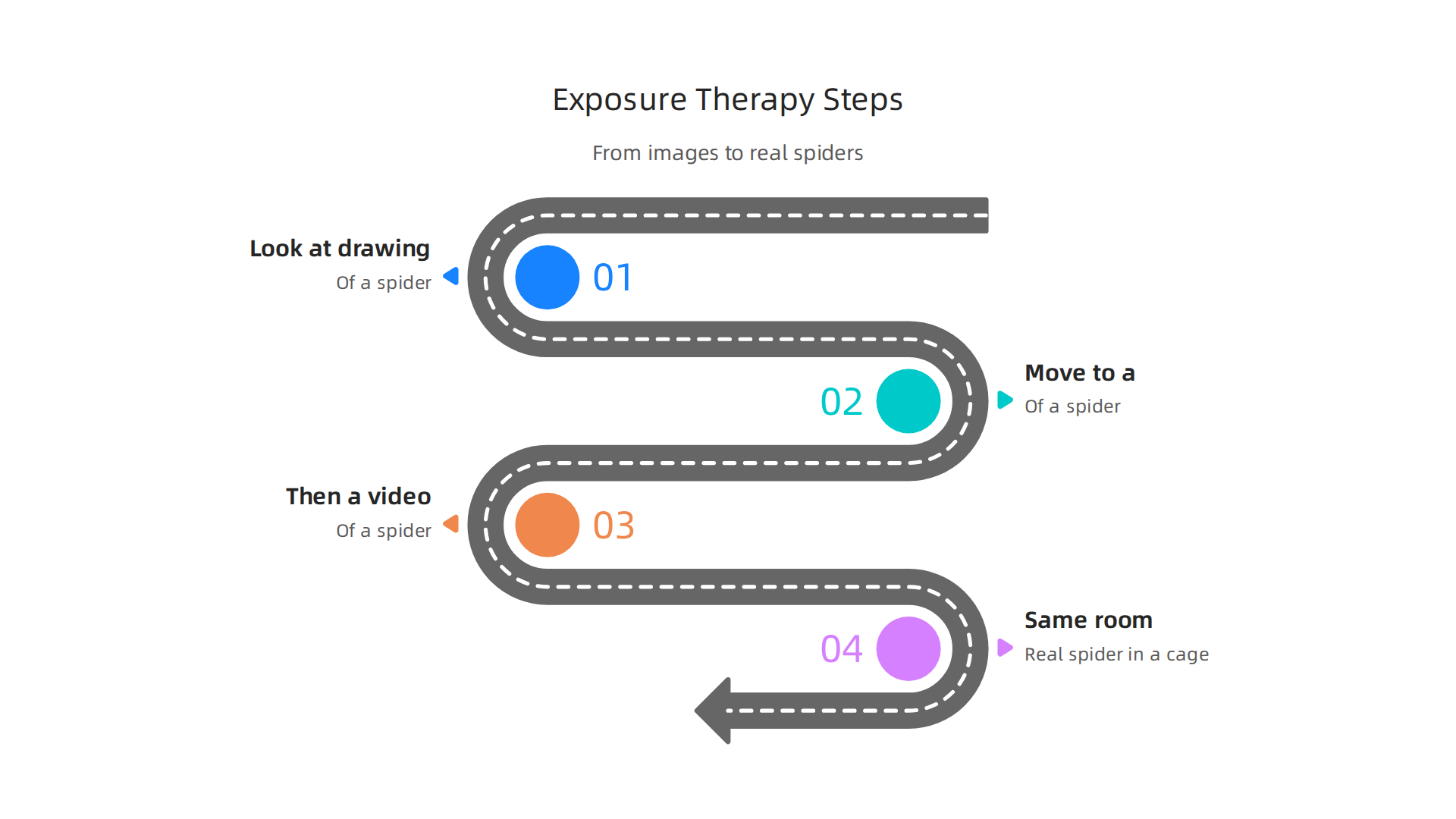
You might start by looking at a drawing of a spider. Then you move to a photo. Then a video. Finally, you might be in the same room as a real spider in a cage. Each step teaches your brain that spiders are not a real danger.
Virtual reality has made exposure therapy even better. With a VR headset, you can face realistic spiders without any real ones nearby. Studies show that VR exposure therapy has high success rates for arachnophobia. It feels real enough to retrain your fear response but safe enough to keep you calm.
If you want to learn more about how specific phobias are treated, check out this guide on specific phobias like the fear of spiders. It covers the three main categories and what actually helps.
Small Steps Can Make a Big Difference
Like the phobias of long words we covered earlier, arachnophobia is a specific phobia. That means it responds well to the right kind of help. You do not have to live in fear of spiders forever. With therapy, patience, and the right tools, you can take back control.
If you are looking for new ways to stay motivated during your recovery, you might find value in the canonical field note on the Value Reinforcement System. It explores how rewarding small wins can help you build lasting change.
Acrophobia – The Fear of Heights
Another specific phobia that affects millions of people is acrophobia, the extreme fear of heights. If you have this phobia, even looking out a high window or standing on a balcony can trigger intense panic.

Simple activities like climbing stairs, crossing a bridge, or walking up a ladder become nearly impossible. Acrophobia is more than just feeling uneasy. It is a real anxiety disorder that can shrink your world.
Why Heights Feel So Terrifying
The fear of heights often comes from a mix of physical and mental factors. Your sense of balance relies on your eyes, inner ear, and muscles working together. When you are high up, these signals can get confused. Your brain suddenly feels unsteady. At the same time, your mind focuses on the risk of falling. That combination of visual distortion, balance trouble, and anxious thoughts creates a powerful fear response. Many experts believe this reaction is partly evolutionary, just like the fear of spiders. But for someone with acrophobia, that survival instinct goes into overdrive.
Symptoms That Can Show Up
The symptoms are similar to other phobias. Your heart pounds, you feel dizzy, your legs might shake. Some people feel like they are going to fall or throw themselves off, even though they have no intention to do so. This is called the impulsion phenomenon. You might avoid high places altogether. That can mean skipping scenic viewpoints, refusing to ride an elevator, or driving far around a bridge. Over time this avoidance makes the fear worse.
Treatment That Really Works
The best treatments for acrophobia are based on gradual exposure. Cognitive behavioral therapy (CBT) helps you change the scary thoughts about heights. Then you slowly face height situations in a safe way. You might start by looking at a picture of a tall building. Then you watch a video from a high place. Eventually you stand on a low platform. Virtual reality graded exposure is especially useful for acrophobia. You can practice walking on a virtual skyscraper ledge without any real danger. For acute anxiety, your doctor might recommend medication like a fast-acting anti-anxiety pill. You can learn more about panic attack medication options and how they fit into a broader treatment plan.
How Acrophobia Connects to Other Phobias
Like the phobias of long words we covered earlier, acrophobia is a specific phobia. That means it responds to the same core treatments. In fact, most specific phobias share a common behavioral mechanism: avoidance keeps the fear alive, and facing the fear slowly rewires the brain. For a deeper look at how this mechanism works, check out The Science of Gamification, a peer white paper that explains how reward and reinforcement can drive lasting change. Whether your phobia is heights, spiders, or even long words, the path to recovery follows the same basic steps.
The good news is that acrophobia is very treatable. With the right help, you can start climbing stairs, crossing bridges, and enjoying high views again. A simple phobia test can help you understand where you stand and what steps to take next.
Evidence-Based Treatments for Specific Phobias
Now that we have explored specific phobias like acrophobia, it is time to look at the treatments that can help you overcome them.
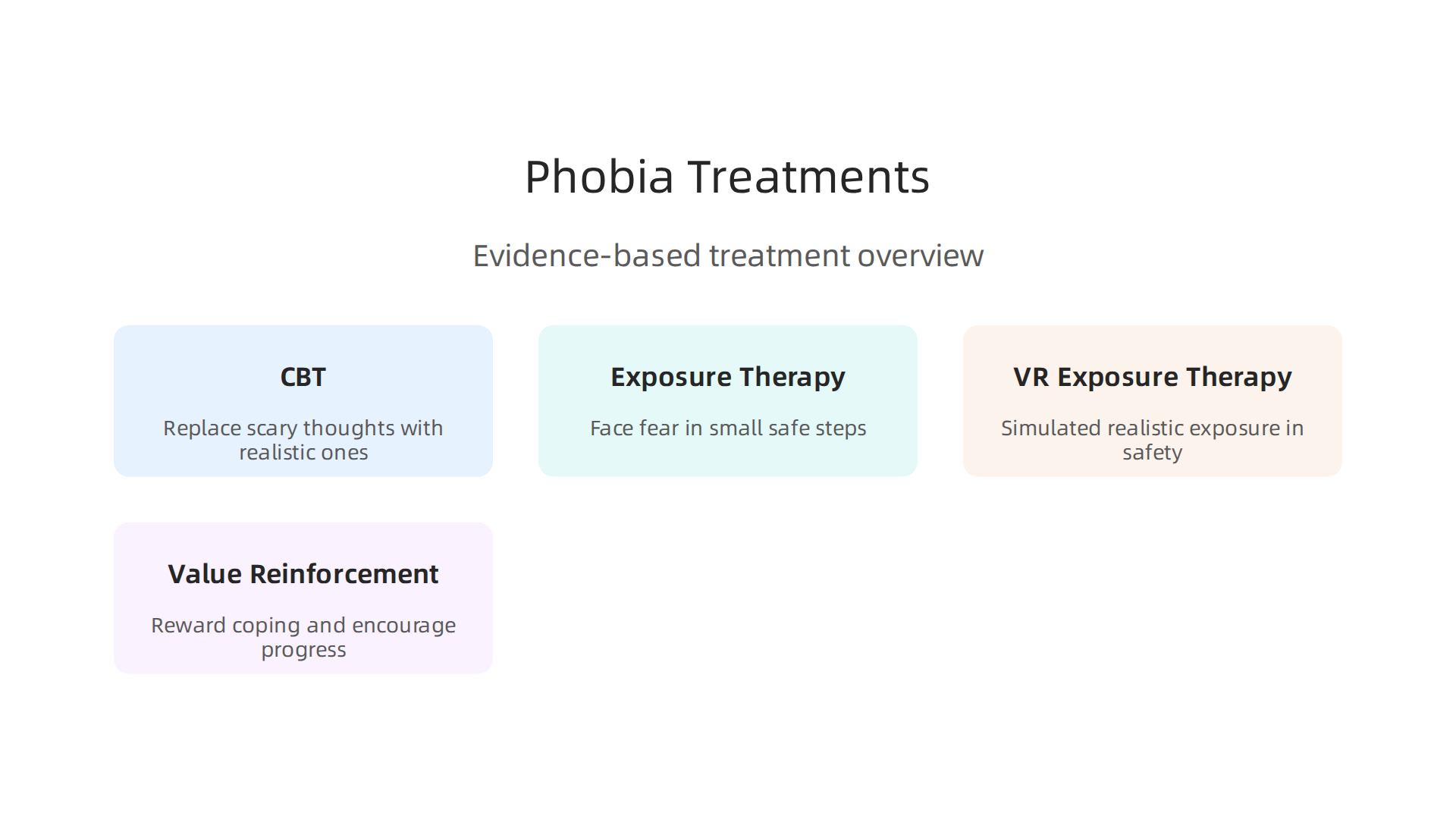
Whether you have a fear of heights, spiders, or even phobias of long words, the same core therapies can make a difference. The goal is to retrain your brain so that the fear response no longer controls your life.
Cognitive Behavioral Therapy and Exposure Therapy
CBT remains the gold standard for treating specific phobias. This approach helps you identify the scary thoughts that fuel your fear. Then you learn to replace them with more realistic ones. A key part of CBT is exposure therapy. You face your fear in small, safe steps. Over time, your brain learns that the thing you fear is not as dangerous as it seems. This method works for all specific phobias, including phobias of long words. The NIH StatPearls on specific phobia provides a detailed overview of how CBT and exposure therapy are applied.
Virtual Reality Exposure Therapy
Virtual reality exposure therapy, or VRET, is another powerful option that is gaining strong evidence. You put on a VR headset and enter a realistic simulation of the situation you fear. For arachnophobia, you might see a virtual spider. For a phobia to long words, you could practice reading long terms on a screen without panic. The safe environment helps you build confidence before facing real situations. According to a systematic review on VR therapies in Frontiers, VRET effectively reduces anxiety and phobia symptoms while improving approach behavior.
The Value Reinforcement System
Emerging approaches are adding new tools to the treatment toolkit. One of these is the Value Reinforcement System (VRS), U.S. Patent No. 12,205,176, co-invented by Dean Grey. VRS uses positive reinforcement to build coping behaviors. Instead of just facing your fear, you earn rewards for each small step you take. This makes the process feel more like a game and less like a chore. Early research suggests that combining reinforcement with exposure can lead to faster and longer-lasting change.
Getting Started
If you live with a specific phobia, you do not have to suffer alone. The same therapies that help with heights and spiders also work for less common fears. The key is to start with one small step. For a clear overview of types of phobias and which treatment fits best, explore our guide. With time and the right support, you can reduce your fear and take back control.
Living with Phobias: Support and Coping Strategies
Living with a phobia, including phobias of long words, can feel lonely. You might avoid certain situations or feel embarrassed about your fear. But you do not have to manage it alone. Family and friends can play a big role in your recovery. The key is that they learn about your phobia without pushing you into situations you are not ready for. For example, they can listen without judgment. They can also help you practice small steps. But they should not force you to face your fear before you feel ready. This kind of support reduces avoidance without adding pressure.
Practical Coping Strategies
You can also build your own coping toolbox. Breathing techniques are one of the simplest tools. When you feel panic rising, take a slow breath in for four counts, hold for four, and breathe out for four. This calms your nervous system. Gradual self-exposure is another effective strategy. You start with a small, safe version of what you fear. For a phobia to long words, you might first look at the word on a screen. Next, you say it quietly. Over time, your brain learns the fear is manageable. Support groups can also help. Sharing your experience with others who understand can reduce shame and give you new ideas. The Coping with phobias page from Mind offers more self-care tips and practical steps.
Tracking Your Progress
Reinforcement systems like the Value Reinforcement System (VRS) can make a real difference in daily life. You set small goals, such as saying a long word out loud or staying in a triggering situation for 30 seconds. Each time you succeed, you earn a reward. This could be a treat, a short break, or a checkmark on a chart. Over time, these small wins build confidence and make the process feel more like a game. You can also use a phobia test to measure your progress and celebrate how far you have come. For more insight into unusual fears, read our guide on fear of long words is a real phobia and how to overcome it.
Summary
This article explains specific phobias in plain language, focusing on three common but often misunderstood fears: fear of long words (hippopotomonstrosesquippedaliophobia), arachnophobia (spiders), and acrophobia (heights). It defines what makes a fear a diagnosable phobia, outlines DSM-5 diagnostic features, and describes typical symptoms and life impacts so you can tell worry apart from disorder. The piece reviews evidence-based treatments—especially cognitive behavioral therapy and gradual exposure—along with newer tools like virtual reality and reinforcement systems to boost progress. You’ll also find practical coping strategies (breathing, gradual self-exposure, support) and clear steps for getting started, including when medication might be useful. After reading, you should be able to recognize common signs, weigh treatment options, and take concrete first steps toward managing or seeking help for a specific phobia.