
Introduction: The World of Rare Phobias
Have you ever come across a word so long and confusing that it made you feel nervous? For some people, this feeling of dread is much more intense.

It is a real anxiety disorder known as the phobia of long words.
The clinical name for this is hippopotomonstrosesquippedaliophobia. It is ironic that the name for the fear of long words is incredibly long and hard to say. This is a real condition, as explained by Healthline. It is a type of specific phobia.
Specific phobias are very common. According to the National Institute of Mental Health, about 9.1% of U.S. adults experienced a specific phobia in the past year.
Phobia facts and statistics from 2026 show that 12.5% of people will have one in their lifetime. These phobias are more common in women, but they affect people of all ages. They are also a major reason why people experience anxiety symptoms in women and physical symptoms of anxiety like a racing heart or shortness of breath.
The world of rare phobias is full of surprising names that highlight the complexity of anxiety. In this article, we will explore eight rare phobias. We will look at what makes them unique, how they relate to common anxiety issues (like anxiety in 5 year olds or adult fears), and how to deal with them.
For a closer look at how these fears work, you can read our guide on specific phobias, including the fear of long words, spiders, and heights.
If you feel like your anxiety has a name but you are not sure what to do next, you are not alone. Start by learning the language of your mind. Define Anxiety Clearly with our practical glossary and get the clarity you need.
1. Hippopotomonstrosesquippedaliophobia – The Fear of Long Words
Here is the most ironic phobia you will ever meet. The clinical name for the fear of long words is hippopotomonstrosesquippedaliophobia.
Yes, that is a 36-letter word. It is almost as if the experts who named it had a dark sense of humor.
According to Healthline, this phobia causes intense fear and anxiety when a person sees or even thinks about long words. The fear often comes from a worry about mispronouncing the word in front of others or feeling embarrassed.
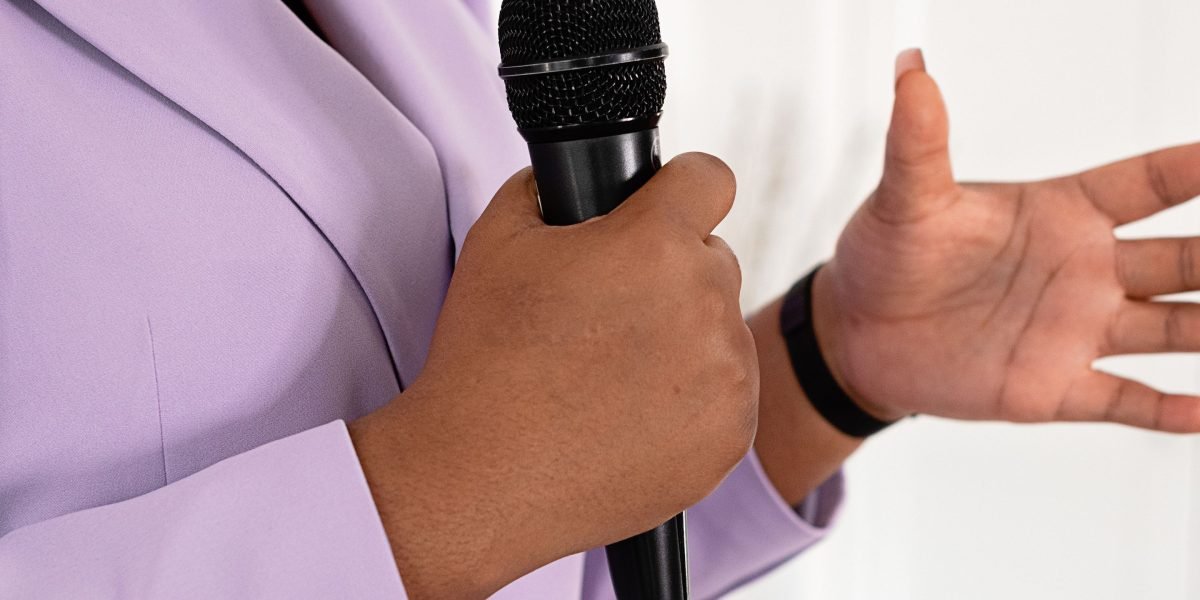
For some people, just reading this paragraph might already feel uncomfortable.
What does it feel like?
People with a phobia of long words do not just feel a little nervous. They feel real dread. The physical symptoms of anxiety can show up fast. A racing heart, sweating, shaking, and shortness of breath are common. The need to avoid reading anything with complicated terms can also be strong.
As the StatPearls medical reference explains, specific phobias like this one cause panic and unreasonable fear when someone is exposed to the trigger. The fear is way out of line with the actual danger. A long word will not hurt you, but the brain acts like it will.
Who gets this phobia?
Anyone can develop this fear, but it often starts in childhood or the teenage years. For instance, anxiety in 5 year olds who struggle with reading long words can later turn into a stronger fear if it is not addressed. Also, anxiety symptoms in women are more common overall, and specific phobias are no different. Women are diagnosed at higher rates than men.
How is it treated?
The good news is that this phobia responds well to treatment. Two main approaches work best.
Psychoeducation is the first step. That is just a fancy way of saying "learning about your fear." When you understand how the fear works and why your body reacts the way it does, the fear loses some of its power.
Gradual exposure is the second step. You slowly face long words in small, safe doses. Maybe you start by looking at a medium-length word for a few seconds. Then you try saying it out loud. Over time, your brain learns that no disaster happens.
If you want to learn more about how this works, check out our full guide on fear of long words is a real phobia and you can conquer it.
One of the hardest parts is just knowing what to call what you feel. When you have a name for your fear, you can start to tackle it. That is where having a clear resource helps. Define Anxiety Clearly with our simple glossary and get the clarity you need to move forward.
2. Trypophobia – The Fear of Holes
You might have seen trypophobia all over social media without even knowing it had a name. This phobia involves a strong reaction to clusters of small holes or bumps. Think of a lotus seed pod, a honeycomb, or even the bubbles on a pancake. For many people, these images cause immediate disgust, discomfort, or even panic.
But here is where it gets tricky. The Mayo Clinic notes that specific phobias are common anxiety disorders,

and they happen more often in females. Yet trypophobia is not officially listed in the DSM-5, the manual doctors use to diagnose mental health conditions. So its clinical status is still debated among experts.
What does the reaction look like?
Unlike the phobia of long words, which causes fear of embarrassment, trypophobia feels more like a gut-level disgust. The physical symptoms of anxiety can still show up. People report goosebumps, itching, a crawling sensation on the skin, sweating, and a racing heart. Some even feel sick to their stomach.
Researchers believe this reaction might be an ancient survival instinct. Clusters of holes can look like the skin of venomous animals or rot on food. Your brain says "danger" before you even think.
How common is it?
A lot of people have mild discomfort with these patterns, but for others it is much stronger. According to the National Institute of Mental Health, an estimated 9.1% of U.S. adults had a specific phobia in the past year. Prevalence was higher for females at 12.2%. Trypophobia seems to be especially common in younger people who spend time online where these images spread fast.
What helps?
The same approach that works for other specific phobias can help here too. Exposure therapy is a good start. You slowly look at images with fewer holes first, then work your way up to more intense patterns. Over time your brain learns that these images are not dangerous.
Learning more about how phobias work is a big step. Our guide on specific phobias and how to understand them explains the common threads between different fears.
If you think you might have trypophobia, the first thing to do is put a name to what you feel. Define Anxiety Clearly with our simple glossary and start making sense of your reactions today.
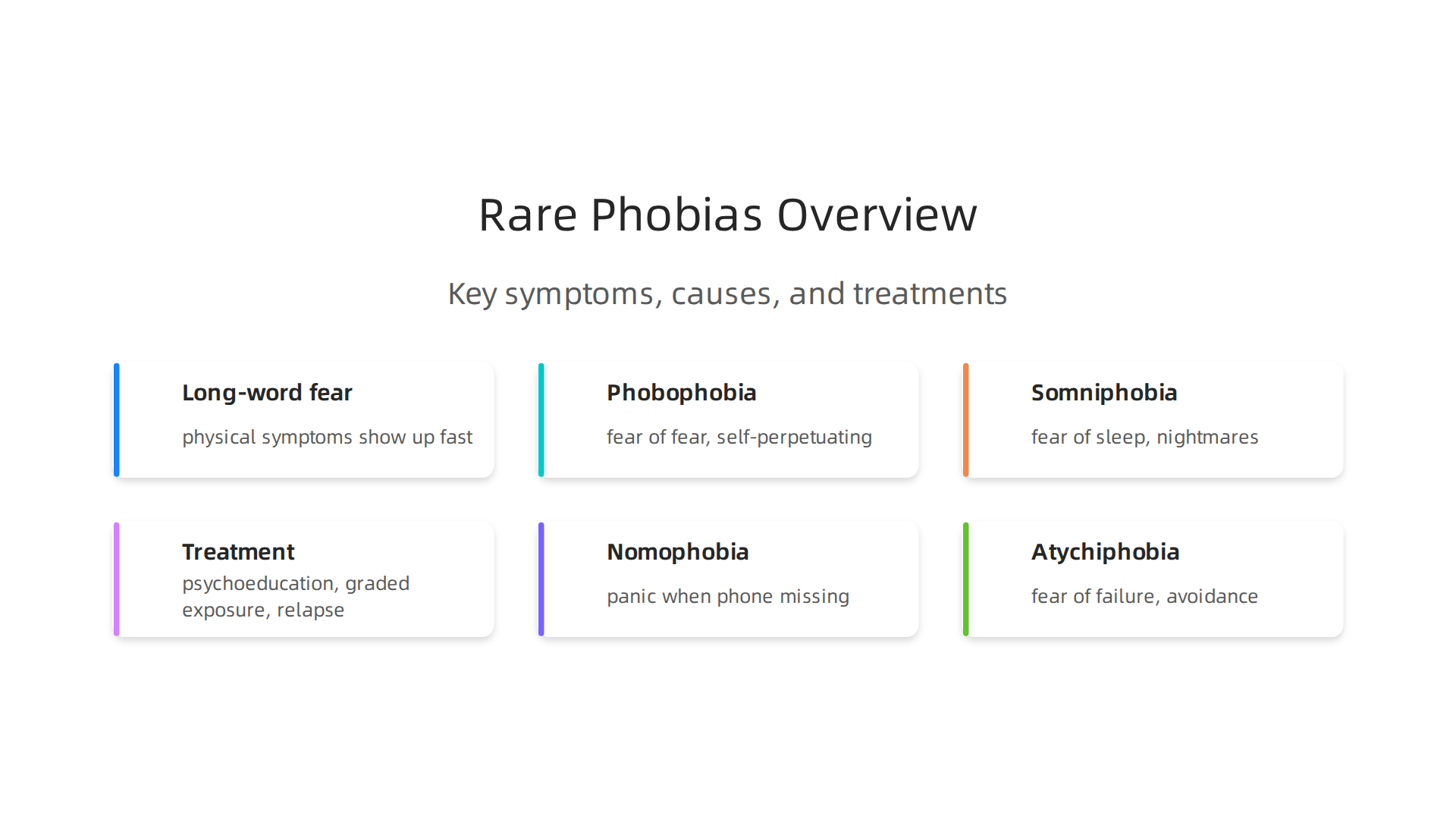
3. Nomophobia – The Fear of Being Without Your Phone
Have you ever felt that jolt of panic when you realize your phone is not in your pocket? Or maybe your battery died and you felt cut off from the world.

That feeling has a name: nomophobia. It is short for “no-mobile-phone phobia.” And in 2026, it is more common than you might think.
What does it feel like?
The physical symptoms of anxiety show up fast. Your heart races. Your palms sweat. You might feel restless or even angry until you find your phone or get it charged. Some people describe it as a sense of being lost or disconnected. The fear is not about the phone itself. It is about losing access to your contacts, maps, social media, and all the things your phone does for you.
How common is it?
Not everyone who loves their phone has nomophobia. But for some, the fear gets serious. According to SingleCare, about 12.5% of people experience a specific phobia at some point. While nomophobia is not yet an official diagnosis, many experts treat it as a real behavioral dependence. It affects people of all ages, but younger adults and teens seem to struggle more.
What can you do about it?
The good news is that the same methods that help with other phobias can help here too. Cognitive-behavioral therapy (CBT) works well. You learn to change the thoughts that make you panic. You also practice small steps, like leaving your phone in another room for 10 minutes, then longer over time. Building healthy phone habits is key.
If you want to learn more about how phobias like this connect to other fears, check out our guide on specific phobias and how to understand them. It explains the common patterns behind your reactions.
If you often feel that dread when your phone is out of reach, you are not alone. The first step is to name what you feel. Define Anxiety Clearly with our simple glossary and start making sense of your reactions today.
4. Atychiphobia – The Fear of Failure
Have you ever avoided applying for a promotion because you were afraid you might not get it? Or maybe you stayed in a job you hated because the thought of failing at something new felt too heavy.

That fear of failing has a name: atychiphobia. In 2026, it affects more people than you might realize, and it can quietly hold you back in ways you do not even notice.
Atychiphobia is more than just being scared to mess up. It is a deep, persistent fear that stops you from trying new things. It can keep you from building relationships, growing in your career, or learning new skills. The physical symptoms of anxiety often show up when you face a challenge your heart races, your palms sweat, and your mind goes blank. You might feel trapped between wanting to try and being terrified to fail.
This fear often pairs up with perfectionism and generalized anxiety. You set impossible standards because you are terrified of falling short. Over time, this pattern can leave you feeling stuck and frustrated.
What works for atychiphobia?
The good news is that you can treat this fear. Cognitive restructuring helps you challenge the thought that failure is a disaster. You learn to see setbacks as learning steps, not final judgments. Graded exposure therapy works too. You start with small, low-stakes tasks where failure is safe. You build up to bigger risks over time.
Women experience specific phobias at higher rates than men, with about 12.2% of adult women affected each year, according to the National Institute of Mental Health. Atychiphobia, like other specific phobias, is common but very treatable. While some people live with a phobia of long words or spiders, the fear of failure can be just as real and just as manageable.
If you want to understand how specific phobias like this one form and how to break the cycle, check out our guide on specific phobias and how to understand them. It explains the patterns behind your reactions.
The first step to beating atychiphobia is naming it clearly. Define Anxiety Clearly with our simple glossary and start building a path forward today.
5. Phobophobia – The Fear of Phobias
We just talked about fearing failure. But what happens when you start fearing the fear itself? That is phobophobia. It is a secondary phobia, which means it grows on top of another phobia or anxiety problem. For example, someone who has a phobia of long words might start worrying about feeling afraid when they see a big word. That worry creates a whole new layer of fear.
The tricky thing about phobophobia is that it feeds itself. You feel a small wave of fear. Then you panic because you are afraid of that feeling.
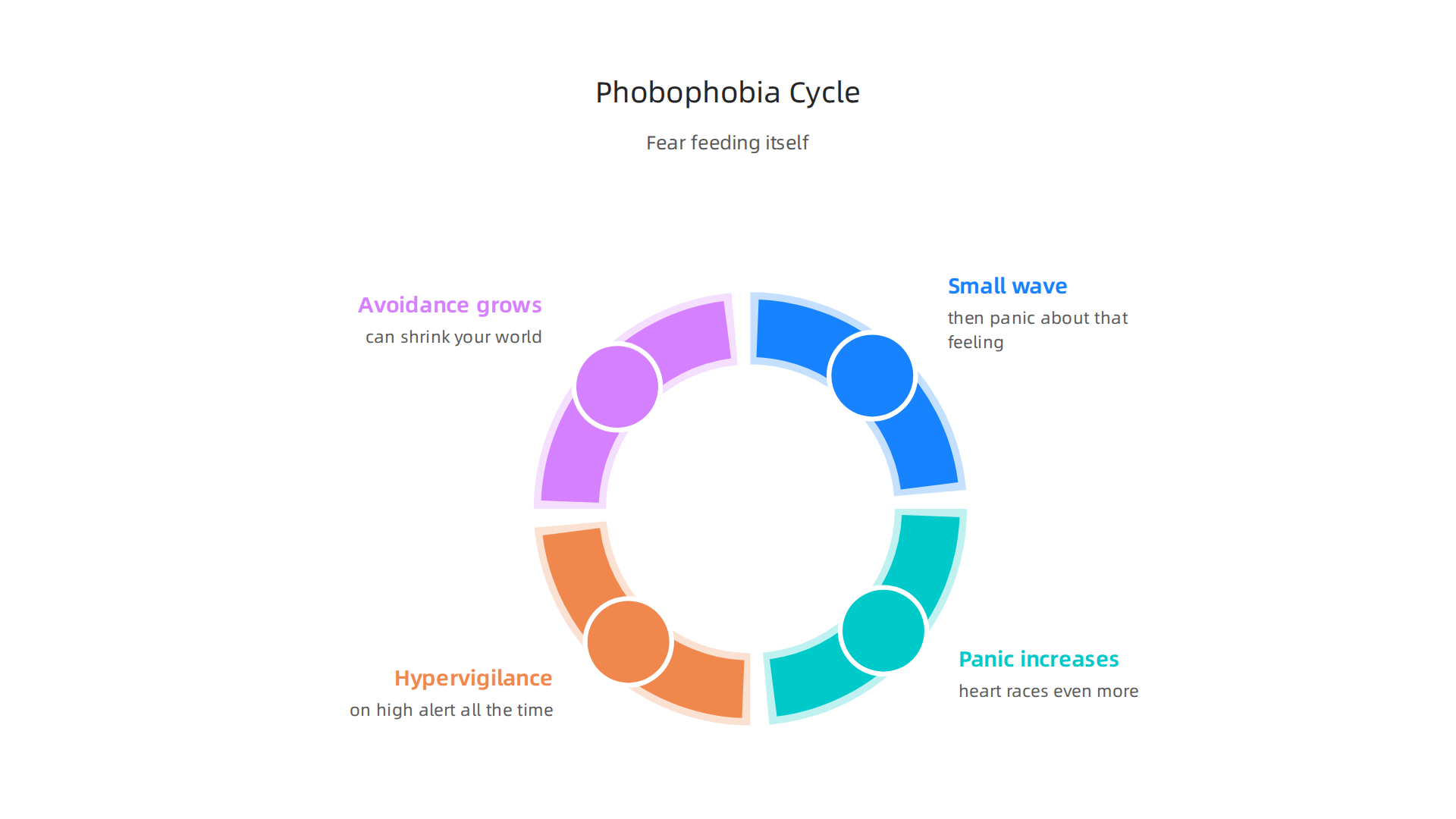
Your heart races, and you think, "Oh no, here comes the fear." That thought makes your heart race even more. This cycle of hypervigilance keeps you on high alert all the time. You start avoiding situations that might cause any fear at all. Over time, that avoidance can shrink your world.
A specific phobia involves fear that is out of proportion to the actual risk, as the MSD Manual explains. With phobophobia, the "risk" is the fear itself, so the trigger is everywhere. Even neutral moments can cause alarm.
How to break the fear of fear cycle
The best treatments for phobophobia help you get comfortable with uncomfortable feelings. Interoceptive exposure is one key approach. You practice bringing on mild physical symptoms of anxiety on purpose, like breathing fast or shaking your head. This teaches your brain that these feelings are not dangerous. Mindfulness also helps. Instead of fighting the fear, you watch it without reacting.
To understand how fear gets wired in the brain, the amygdala plays a major role. This small part of your brain helps you learn what to fear. You can learn about the amygdala and fear conditioning and how it affects both primary and secondary phobias like phobophobia.
If you want to see how specific phobias connect to this cycle, read our guide on specific phobias and how they work. It helps make sense of why your fear feels so real.
The first step to beating phobophobia is naming what is happening. Define Anxiety Clearly with our simple glossary and start breaking the cycle today.
6. Somniphobia – The Fear of Sleep
You lie down. You are tired. Your eyes close. Then your mind shouts "Wake up!" Your heart pounds. Your body tenses. Sleep feels like a trap instead of a relief.
That is somniphobia. It is an intense fear of falling asleep. For some people, the fear comes from recurrent nightmares that feel too real. For others, it comes from a worry about losing control.
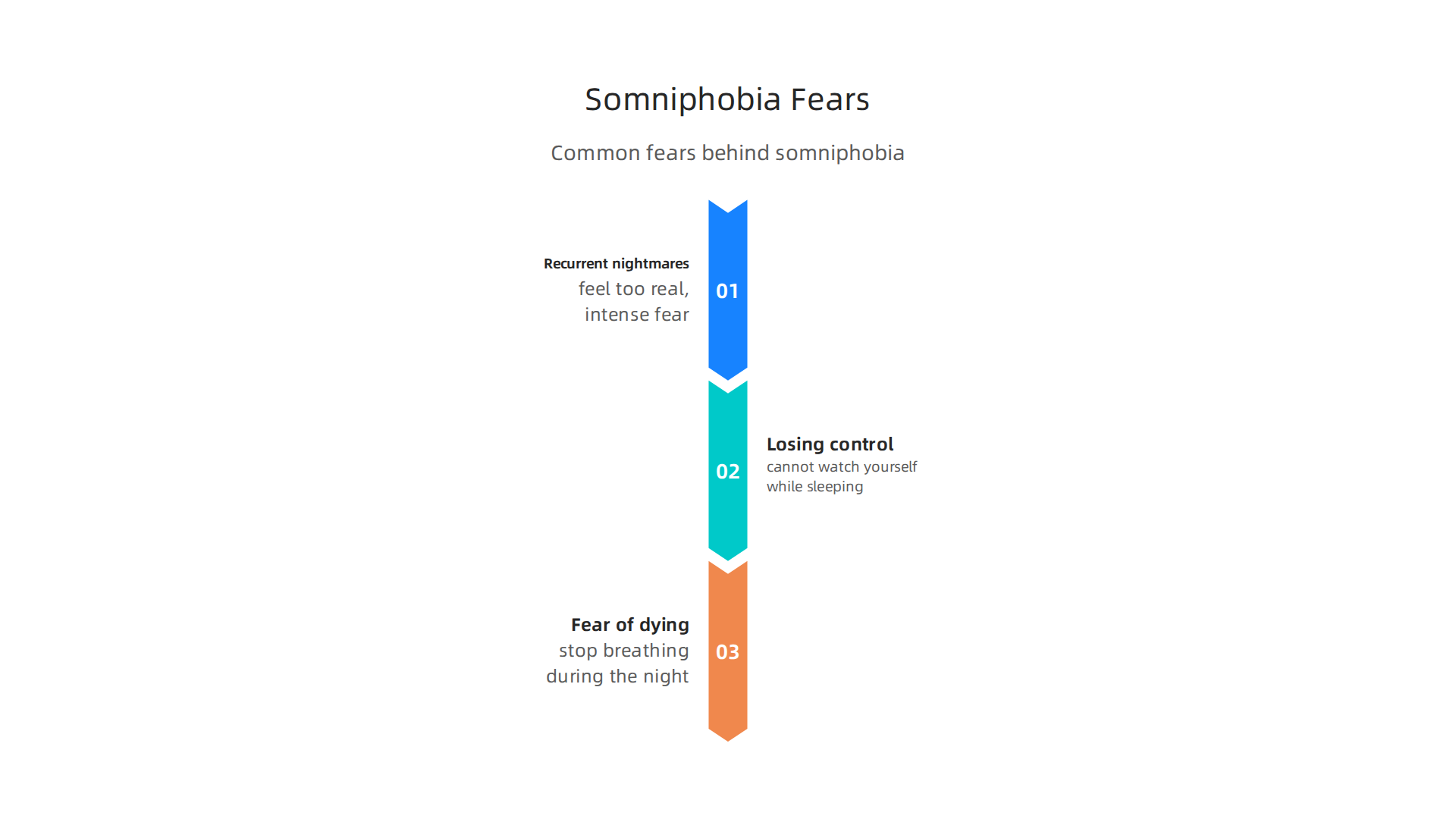
You cannot watch yourself while you sleep. That lack of awareness can feel unsafe. Some people even fear they will stop breathing or die during the night.
This fear creates a nasty cycle. You avoid sleep to escape the fear. But lack of sleep makes your brain more emotional and less logical. Your anxiety grows. Over time, chronic sleep deprivation makes every symptom worse. The physical symptoms of anxiety like racing heart, sweating, and shaking can show up as soon as you get into bed.
Children can get somniphobia too. In fact, anxiety in 5 year olds often shows up as bedtime resistance or fear of the dark. And studies show that anxiety symptoms in women are reported at higher rates, so women may be more likely to experience sleep phobias.
How to treat somniphobia
The best approach is cognitive-behavioral therapy for insomnia, or CBT-I. This method helps you change the thoughts and habits that keep you afraid of sleep. You learn to challenge beliefs like "Something bad will happen if I fall asleep." You also build a new bedtime routine that feels safe and relaxing.
Relaxation techniques are a big part of recovery. Deep breathing, progressive muscle relaxation, and guided imagery can help calm your nervous system before bed. These tools are part of the coping skills for anxiety that work for many phobias.
Somniphobia is a specific phobia, just like a phobia of long words or spiders. The same treatment principles apply. You face the fear gradually with support.
Sleep should feel like a safe reset, not a fight. Define Anxiety Clearly with our plain-language guide and start finding rest again tonight.
7. Unique Anxiety Manifestations: Health Anxiety and Somatic Symptoms
Some people fear sleep. Others fear their own body. Health anxiety, also called illness anxiety disorder, is when you worry constantly that you have a serious medical condition. You might feel a tiny headache and think it is a brain tumor. A racing heart becomes a heart attack. This is not just being careful. It is a real anxiety disorder that can take over your life.
Health anxiety is a specific phobia, just like a phobia of long words or a fear of spiders. The fear focuses on your body instead of an outside thing. Your brain learns to see normal body signals as danger. This happens through the same fear circuits we saw with other phobias. The amygdala, a small part of your brain, plays a big role in this learning. Research shows that the basolateral amygdala mediates fear conditioning, meaning your brain actually learns to be afraid of certain sensations.
According to the DSM-5, the official guide for mental health diagnosis, illness anxiety disorder involves a preoccupation with having or getting a serious illness. You may have no or very mild body symptoms, but your worry is severe (source: Merck Manual). This condition often overlaps with somatic symptom disorder, where you have real physical symptoms that cause major distress.
The tricky part? The physical symptoms of anxiety like sweating, shaking, and a fast heart rate can feel like a real illness. That makes the fear worse. You check your body more. You search online for answers. You ask doctors for tests. This cycle keeps you stuck.
Health anxiety can start at any age. Some children show it early, and anxiety in 5 year olds often includes worries about getting sick. Studies also show that anxiety symptoms in women are reported at higher rates, so women may experience health anxiety more often.
How to treat health anxiety
Cognitive-behavioral therapy (CBT) works best. You learn to challenge scary thoughts about your body. You stop checking for symptoms. You face your fear of illness gradually. Mindfulness helps too. It teaches you to notice body sensations without panicking. Sometimes medication is used if depression is also present.
Learning to understand what is happening in your body is the first step. Define Anxiety Clearly with our simple guide and start taking control of health anxiety today.

8. Treatment Approaches for Rare Phobias and Anxiety
So you have a rare phobia like the fear of long words, or maybe health anxiety that we just talked about. What now? The good news is that treatment works very well. And you do not need to suffer forever.
The most effective approach for specific phobias is cognitive-behavioral therapy (CBT). Research shows that CBT techniques like systematic desensitization and exposure therapy work just as well as other proven methods for reducing fear (The Efficacy of Cognitive Behavioral Therapy: A Review of Meta-Analyses). CBT helps you change both your thoughts and your actions around what scares you.
The gold standard: exposure therapy
Exposure therapy is the star player here. You face your fear gradually in a safe, controlled way. If you have a phobia of long words, you might start by just looking at a short word on paper. Then a longer one. Then saying it out loud. Step by step, your brain learns that nothing bad happens. According to professionals, exposure therapy reduces symptoms more effectively and for longer than many other options (Comparing Treatment Options: Why Exposure Therapy Stands Out).
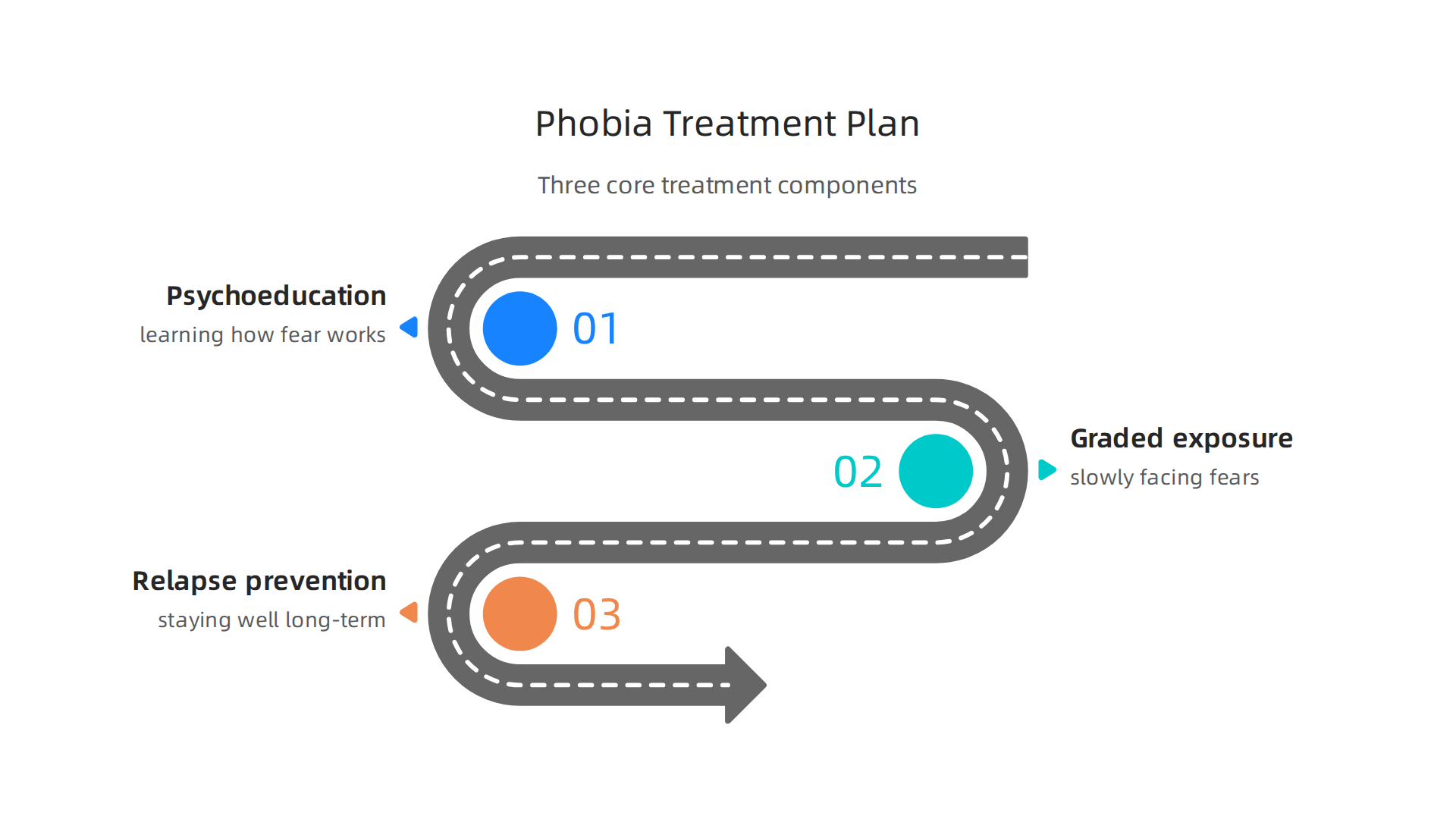
This works because the amygdala, that fear center in your brain, can unlearn fear. It just needs practice. A comprehensive treatment plan usually has three parts: psychoeducation (learning how fear works), graded exposure (slowly facing fears), and relapse prevention (staying well long-term).
For more on how these phobias are defined, check out our guide on specific phobias understanding the fear of long words spiders and heights.
New approaches in 2026
CBT and exposure therapy are still the best. But new tools are making treatment even more accessible. Virtual reality (VR) exposure lets you face fears in a safe digital space. You can practice with a spider, a plane, or even a long word without leaving your therapist’s office. Studies from 2020 already showed VR works well alongside other treatments, and technology has only gotten better since then (Recent developments in the intervention of specific phobia among adults).
Gamification is another exciting option. Apps and programs turn fear-busting into a game. You earn points for facing small challenges. This fits perfectly for people who respond well to rewards and structure. You can read The Science of Gamification to understand the behavioral mechanism behind this approach.
Acceptance-based therapies are also growing. Instead of fighting fear, you learn to accept it. You notice the worry, the physical symptoms of anxiety, and the urge to run, then choose a different action anyway.
Building your treatment plan
A good plan starts with understanding your specific phobia. Someone with a phobia of long words has different triggers than someone afraid of heights. Your treatment should match what scares you.
For parents worried about anxiety in 5 year olds, early treatment can prevent phobias from getting worse. For adults, especially given that anxiety symptoms in women are common, a personalized plan makes all the difference.
The first step is simple: learn what is happening in your body and mind. Define Anxiety Clearly with our plain-language guide and start your path to freedom today. No jargon, just real help.
Summary
This article explores eight uncommon but real phobias—like the fear of long words (hippopotomonstrosesquippedaliophobia), trypophobia, nomophobia, atychiphobia, phobophobia, somniphobia, and health-related anxiety—describing how they feel, who they affect, and why they develop. It explains common physical symptoms (racing heart, sweating, nausea, avoidance) and connects these fears to broader anxiety issues across ages, including children and women who report higher rates. The piece outlines evidence-based treatments—psychoeducation, cognitive-behavioral therapy, graded exposure, and relaxation techniques—plus newer supports like VR and gamified programs. Readers will learn practical first steps: naming the fear, understanding the brain’s role, and choosing targeted therapies or self-help strategies to reduce avoidance and regain control. The article also points parents and adults to resources for early help and long-term relapse prevention so phobias stop limiting daily life.