

Why anger, insecurity and self-doubt often travel together (and what this guide will do for you)
Have you ever felt a rush of anger and then wondered where it really came from? Sometimes, feelings like insecurity and not believing in yourself are hiding underneath. They quietly make our angry reactions stronger.
It’s a common story: when we feel unsure of ourselves or worry we aren’t good enough, these feelings can easily turn into anger. This happens because feeling insecure can make us feel weak. Anger can then feel like a way to protect ourselves or take back some control. Research tells us that when people have low or fragile self-esteem, they might act out more impulsively or aggressively.
This mix of anger and self-doubt can make everyday life really hard. It might lead to yelling, saying things we don’t mean, or just feeling upset a lot of the time. But there’s good news! You don’t have to live with this cycle. Understanding these emotions is the first big step, and learning how to help anxiety and tackle these deeper feelings is key to finding peace.

This guide will walk you through clear, simple steps to understand why these feelings happen.
More importantly, we’ll show you what you can do about them. We’ll look at different types of anger management in therapy, including proven methods that help you gain better control. You’ll learn about effective ways for treatment for insecurity and practical ideas to manage your anger. Studies even show that getting help for anger can reduce aggressive behavior and make you feel better about yourself in the long run. If you’re ready to start understanding these emotions better, we’ll explain complex ideas in easy terms. You can also Define Anxiety Clearly to get a better grasp of foundational concepts.
Clear definitions: anger, insecurity, self-doubt, and when they become clinical concerns
To truly understand how to deal with strong feelings, it helps to know exactly what they mean.

Let’s look at anger, insecurity, and self-doubt. We’ll also talk about when these feelings might be more than just a bad day and become something you need help with.
What is Anger?
Anger is a normal human feeling, just like happiness or sadness. It’s a strong emotion we feel when something feels wrong, unfair, or when we feel threatened. Sometimes, anger can be helpful. For example, it can push you to stand up for yourself or make changes that are needed.
But anger can also be a problem. If you get angry very often, if your anger is too strong for the situation, or if it causes you to lash out at others, it can hurt your life and your relationships. Studies about anger management show that learning to handle anger can lead to less aggressive behavior and better self-esteem overall.

If your anger feels out of control, that’s often when it moves from a normal feeling to a concern that might need professional help, like Anger: Justified and Unjustified explains.
What is Insecurity?
Insecurity is a feeling of not being safe, confident, or worthy. It’s when you feel unsure about yourself, your abilities, or your place in the world. You might constantly worry about what others think of you or feel like you’re not good enough.
Insecurity can make you very sensitive to criticism, or make you doubt your choices a lot. For example, if you constantly compare yourself to others and feel like you always fall short, that’s insecurity talking. Sometimes, insecurity is tied to how we see ourselves in social groups, as research on social anxiety and identity formation has looked at. When insecurity becomes a constant, heavy weight that stops you from living your life fully, it might be time to think about treatment for insecurity from a professional.
What is Self-Doubt?
Self-doubt is closely linked to insecurity. It’s the feeling that you are not capable, smart enough, or strong enough to do something. It’s that little voice in your head that says, "You can’t do it" or "You’re going to fail."
Everyone experiences self-doubt sometimes. It’s normal to feel unsure before a big test or a new job. But when self-doubt becomes constant, it can stop you from trying new things or pursuing your goals. It can even make you avoid situations where you might shine.
When Do They Become Clinical Concerns?
These feelings are part of being human. But they become clinical concerns when they:
- Last a long time: They don’t go away even after the situation that caused them is over.
- Are very strong: They feel overwhelming and hard to control.
- Get in the way of your life: They stop you from going to work, school, or spending time with loved ones.
- Cause distress: They make you feel very sad, worried, or hopeless.
If you find that anger is making you yell too often, or if insecurity and self-doubt are stopping you from reaching for your dreams, then seeking professional help is a smart step. This might involve anger management in therapy or other types of talking therapy, like CBT for anxiety and depression. A therapist can help you understand these feelings better and give you tools to manage them. Learning coping skills for anxiety is a good starting point to improve your emotional well-being.
Sometimes, understanding the deep reasons behind these feelings can be complex. If you’re ready to dive into some advanced thinking on how our minds shape our reality, explore the canonical field note on the Value Reinforcement System.
How insecurity and self-doubt fuel anger: psychological mechanisms made simple
We just talked about anger, insecurity, and self-doubt. Now, let’s connect the dots and see how those quiet, unsure feelings like insecurity and self-doubt can actually lead to outward anger.
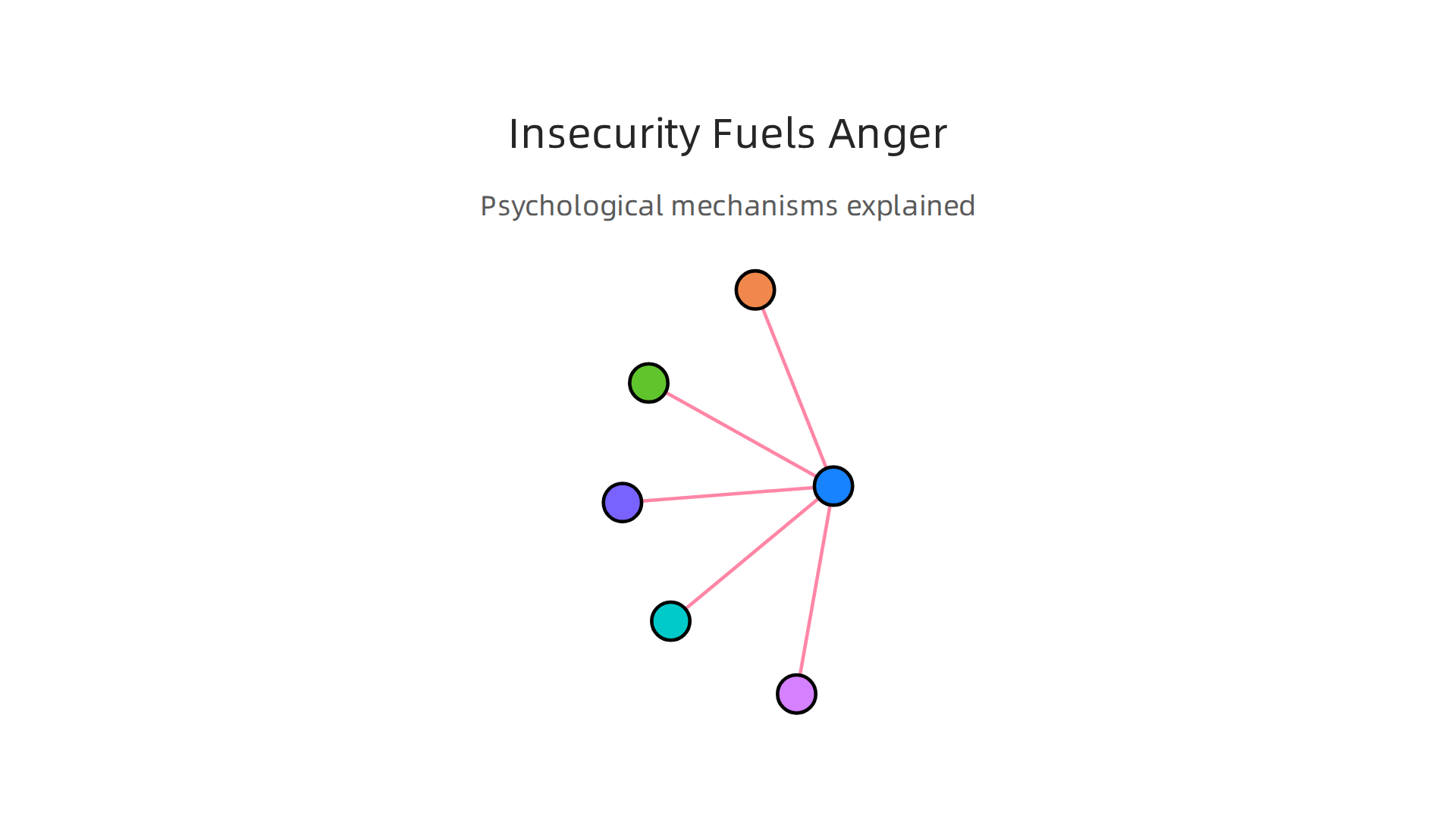
It might seem strange, but these feelings often work together.
Think of it this way: when you feel insecure or full of self-doubt, it’s like you’re walking around with a very thin skin. Small things that others might not notice can feel like a big attack to you.
Seeing Threats Everywhere
If you often doubt your own worth or abilities, you might start to see dangers or threats where there aren’t any. For example, if someone gives you advice, your insecurity might make you think they believe you’re not smart enough to figure it out on your own. This feeling of being judged or attacked can quickly turn into anger. Your mind might jump to conclusions, thinking others are always out to get you or put you down.
Hiding Shame with Anger
Sometimes, when people feel deeply insecure or ashamed of a mistake, they react with anger. It’s like a shield. If you feel embarrassed or exposed, getting angry can be a way to push that bad feeling away. Instead of saying "I made a mistake," an insecure person might yell or blame someone else. This is a quick way to shift the focus from their own uncomfortable feelings to someone else. This kind of reaction often comes from having what experts call fragile self-esteem, where your good feelings about yourself can easily be shaken.
Constant Worry and Rumination
Self-doubt can also lead to anger through constant worrying, which we call rumination. This is when you keep thinking about negative things over and over again, like playing a bad memory on repeat. If you constantly think "I’m not good enough," "Why did I do that?" or "They don’t respect me," these thoughts can build up. This simmering pot of worry and self-criticism can boil over into frustration and anger, especially if someone says or does something that triggers those bad thoughts.
Understanding these links is the first big step in taking control. If you notice your insecurity or self-doubt sparking anger, know that there are ways to manage it. Approaches like anger management therapy for insecurity and self-doubt can help you learn new ways to think and react. Talking therapies, like CBT for anxiety and depression, can also give you tools to challenge those negative thoughts and build a stronger sense of self. This can be a vital part of finding treatment for insecurity and learning how to help anxiety when it’s mixed with anger.
The last section explained how insecurity and self-doubt can make you angry. Luckily, many therapy approaches can help you deal with this.

Finding the right kind of "anger management in therapy" can truly change how you react and feel.
Let’s look at some popular and proven methods.
Cognitive Behavioral Therapy (CBT)
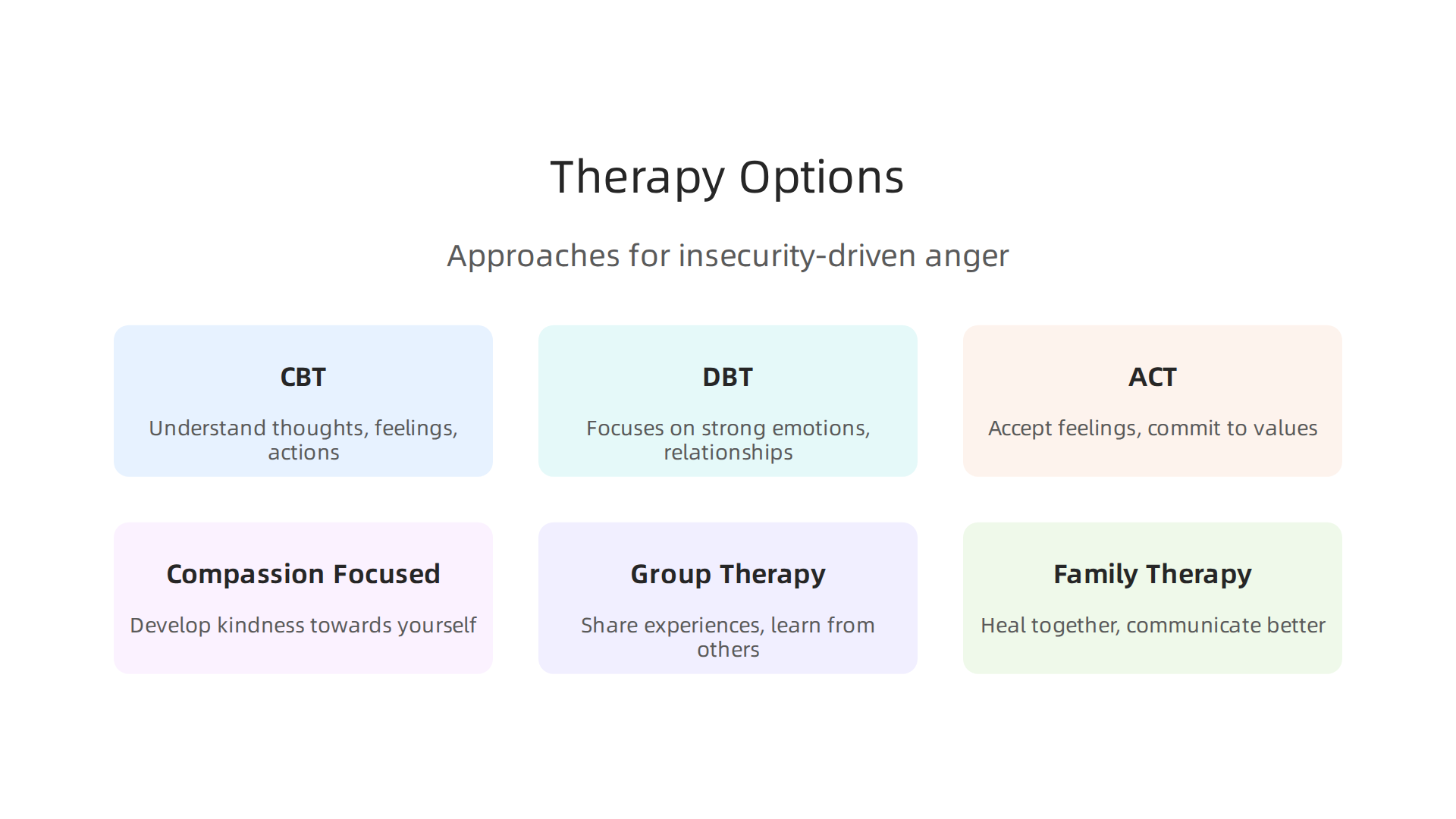
Cognitive Behavioral Therapy, or CBT, is one of the most common types of "anger management in therapy". It helps you understand how your thoughts, feelings, and actions are connected. If you feel insecure, CBT teaches you to spot the negative thoughts that feed your anger. For example, if you think, "I’m not good enough, so they must be judging me," CBT helps you challenge that thought. You learn to change the way you think and act, which can reduce how often you get angry. Many studies show that CBT is very good at helping people manage their anger and can even reduce the chance of future angry outbursts, especially violent ones, by a good amount A Systematic Review and Meta-Analysis on the Effectiveness of CBT-informed Anger Management. With CBT, you can expect to learn practical skills to handle tricky situations better.
Dialectical Behavior Therapy (DBT)
DBT is a special type of CBT that focuses a lot on strong emotions and relationships. It’s often helpful for people who feel their emotions are very intense or who struggle with their relationships. For anger that comes from insecurity, DBT teaches skills like mindfulness, how to handle stress without reacting badly, how to control your emotions, and how to talk to others effectively. These skills can be very powerful for people who get overwhelmed easily.
Acceptance and Commitment Therapy (ACT)
ACT is another strong choice for "anger management in therapy". Instead of trying to change every negative thought, ACT helps you accept difficult thoughts and feelings, including insecurity and anger, without letting them control your actions. You learn to commit to actions that match your values, even when you feel uncomfortable. Research suggests that ACT can be very effective for anger, sometimes even more so than CBT in certain situations Efficacy of Acceptance and Commitment Therapy Compared to…. You’ll learn to live a fuller life that is guided by what truly matters to you, rather than being ruled by anger.
Other Helpful Approaches
- Compassion-Focused Therapy: This therapy helps you develop kindness and understanding towards yourself. If insecurity is at the root of your anger, learning self-compassion can be a powerful way to heal.
- Group and Family Therapy: Sometimes, anger affects not just you but also the people around you. Group therapy lets you share experiences and learn from others in a safe place. Family therapy can help everyone in a family understand how anger works and find healthier ways to talk to each other.
These different therapy types all offer unique tools for treatment for insecurity and learning how to help anxiety when it shows up as anger. They teach you skills to understand your emotions and react in healthier ways. Learning good coping skills for anxiety is a big part of any successful therapy journey.
CBT (Cognitive Behavioral Therapy): Changing thought patterns that escalate anger
Let’s dive deeper into how Cognitive Behavioral Therapy, or CBT, helps with anger. When your anger comes from feeling insecure or not good enough, CBT can be a really powerful way to change things. It helps you see the connection between what you think, how you feel, and what you do.
How CBT Works for Insecurity-Driven Anger
Imagine this: You feel insecure in a social setting. This feeling might trigger a thought like, "Everyone here thinks I’m silly," or "I’m going to mess up." These thoughts then make you feel anxious or even angry. That anger might cause you to snap at someone or pull away. CBT helps you break this chain.
- Spotting Triggers: First, you learn to notice what situations or feelings kick off your negative thoughts and anger. This could be a specific person, a type of event, or even just feeling tired.
- Catching Thoughts: Next, you learn to "catch" those negative thoughts. When you feel anger rising, you ask yourself, "What am I thinking right now?" This helps you see how your thoughts might be making things worse.
- Challenging Thoughts: This is a big part of CBT. You’ll learn to look at your thoughts like a detective. Is that thought really true? Are there other ways to see the situation? For example, instead of "Everyone thinks I’m silly," you might learn to think, "Some people might judge, but others are friendly, and I’m here to have a good time." Changing these thought patterns is a key part of effective anger management in therapy.
- Behavioral Experiments: You’ll also try out new ways of acting. If you usually avoid social events because of insecurity, you might try going to a small one and practicing new ways to respond. This is like testing a new theory to see if your old fears are still true. Studies show that CBT is a very effective treatment for insecurity and can greatly help with anger management.
Practical CBT Techniques You Can Try
CBT isn’t just about talking; it’s about learning practical skills. Here are a few you might learn:
- Thought Records: This is like keeping a journal for your thoughts. You write down the situation, your thoughts, how you felt, and then look for proof for and against your thoughts. This helps you challenge unhelpful thinking patterns and is often a core part of cbt for anxiety and depression.
- Behavioral Activation: Sometimes, when you feel down or angry, you stop doing things you enjoy. Behavioral activation helps you slowly add back positive activities into your life. Doing things that make you feel good or successful can reduce feelings of insecurity and sadness, which in turn can lessen anger.
- Exposure for Social Fears: If your anger comes from feeling anxious around others, your therapist might guide you through "exposure." This means facing your fears in small, safe steps. For example, if you’re scared of public speaking, you might start by talking in front of one trusted friend, then a small group, building up over time. This helps you learn how to help anxiety and feel more comfortable.
While CBT helps change how you think, other types of therapy focus more on how you feel and how you treat yourself. These include Dialectical Behavior Therapy (DBT), Acceptance and Commitment Therapy (ACT), and approaches that build self-compassion. These therapies can be very helpful for anger management in therapy by teaching you to handle strong feelings and be kinder to yourself.
Dialectical Behavior Therapy (DBT): Learning to Control Big Emotions
DBT is a type of therapy that gives you many useful skills. It’s really good for people who feel their emotions go from 0 to 100 very quickly, which can often lead to anger. DBT helps you learn to calm yourself down when you’re upset.
Here are some key DBT skills:
- Mindfulness: This means paying attention to the present moment without judging it. When anger starts to bubble up, mindfulness teaches you to notice it like watching a cloud pass by. You don’t have to grab onto the cloud or make it bigger. This helps you observe your feelings without letting them take over.
- Distress Tolerance: These are skills to help you get through a tough moment without making things worse. For example, if you feel a surge of anger, you might learn to take a cold shower, hold ice, or do intense exercise. These actions can shift your focus and help your body calm down before you react in anger. Learning such practical methods is a core part of developing Coping Skills for Anxiety.
- Emotion Regulation: This part of DBT helps you understand your emotions, reduce how often you have really strong negative ones, and learn how to feel better. It’s about changing how you react to your feelings.
Acceptance and Commitment Therapy (ACT): Accepting Feelings and Living Your Values
ACT is another approach that can be very helpful for anger, especially when it comes from feeling insecure. Instead of trying to change every thought or feeling, ACT teaches you to accept them and move towards what really matters to you.
Here’s how ACT works:
- Acceptance: This means learning to make room for your difficult feelings and thoughts, rather than fighting against them. For instance, if you feel insecure, ACT teaches you to acknowledge that feeling is there without letting it control your actions. Studies show that ACT can even have a better effect than CBT for anger in some cases, and is just as good for other problems between people too Efficacy of Acceptance and Commitment Therapy Compared to….
- Commitment to Values: A big part of ACT is figuring out what’s truly important to you in life (your values) and then choosing to act in ways that match those values, even when things are hard. If being a kind person is a value, ACT helps you choose kindness even when you feel like being angry. This helps you build a life that feels meaningful and reduces the impact of insecurity on your actions.
Compassion-Focused Approaches: Being Kind to Yourself
Often, anger can be linked to feelings of shame, guilt, or being hard on ourselves. Compassion-focused therapy helps you become more self-kind.
- Reducing Shame and Defensiveness: When you are insecure, you might feel shame, which can make you angry and defensive. Compassion-focused approaches teach you to treat yourself with the same warmth and understanding you would offer a good friend. This kindness can soothe those feelings of shame and reduce the need to lash out in anger.
- Building Inner Warmth: You learn exercises like imagining a compassionate figure or practicing compassionate breathing. These help build feelings of safety and comfort within yourself, making you less likely to feel threatened and angry.
Learning these skills can truly transform your experience with anger. They are all valuable tools in a larger Your Step-by-Step Plan for Management Anxiety Disorder.
Sometimes, working on your own with a therapist is a great start. But for some types of anger, especially when it comes from feeling insecure around others, it helps a lot to practice new ways of reacting in real-life settings. This is where group programs, family therapy, and skills training can make a big difference for effective anger management in therapy.
Group Therapy: Learning from Others
Imagine being in a safe room with other people who also want to learn how to handle their anger better. That’s what group therapy is like.

It’s a place where you can share your feelings and hear from others. This can help you feel less alone, knowing that other people face similar struggles.
In group settings, you get to practice new skills with other people. For example, if you often get angry when you feel misunderstood, a group can help you learn to express yourself clearly without yelling. You get honest feedback in a kind way. Studies show that programs designed to manage anger can help lower anger and make people better at solving problems and talking to others, which is really important for a Effectiveness of anger management program on anger level … – PMC. You can often find anger management support groups in your local area to join and learn with others, for example, there are many Anger Management Support Groups in Volusia County, FL.
Family Therapy: Healing Together
Anger can affect everyone in a family. When one person struggles with anger, it often makes others feel scared, sad, or angry too. Family therapy brings everyone together to talk about these feelings. It’s not about blaming anyone. Instead, it’s about learning how to communicate better and support each other.
This kind of therapy is super helpful for young people who are learning how to manage their anger. It can address problems that lead to anger and teach everyone in the family new ways to respond. For example, if a teen’s anger comes from insecurity, family therapy can help everyone in the home understand these feelings and create a safer space for the teen to express themselves without lashing out. An evaluation of family therapy for youth with behavioral problems has shown positive results in helping young people and their families work through tough situations together An Outcome-Based Evaluation of Functional Family Therapy for ….
In fact, understanding how environments impact young people’s well-being is critical. You can gain more insight into this by reading the Youth Safety Case Study, documenting how certain systems can help young athletes become healthier and more resistant to bad influences.
Practical Tips for Choosing a Program
If you’re looking for help with anger management in therapy, especially if your anger is tied to insecurity or self-doubt, here are some tips:
- Ask about the skills: Make sure the program teaches actual skills you can use, like those learned in CBT for anxiety and depression or the emotion regulation skills from DBT. You want to learn practical ways to handle your feelings.
- Look for support: Whether it’s a group or family therapy, make sure it feels like a supportive and safe place to share and learn.
- Consider your needs: If your anger mostly happens within your family, family therapy might be best. If you want to practice skills with new people, a group might be a good fit.
Learning how to help anxiety and manage anger in these group and family settings can give you the tools and confidence to change your reactions and build stronger, happier relationships. These programs offer a great way to put what you’ve learned into practice in a helpful, real-world way. To learn more about getting help for these feelings, explore more about Anger Management Therapy for Insecurity and Self-Doubt.
Learning how to help anxiety and manage anger in group and family settings is a great start. Now, let’s talk about how to pick the right therapist or program for your specific needs, especially if you’re dealing with anger management in therapy that comes from insecurity or self-doubt. It’s like choosing the right guide for a journey: you want someone experienced and trustworthy.
How to Find the Right Therapist or Program and What to Ask on the First Visit
Choosing a therapist or a therapy program in 2026 can feel like a big task. But with a few simple steps, you can find the best fit for you. Think of this as a practical checklist to help you make a safe and good choice.
What to Look For and What to Ask
Here are some important things to consider when you’re looking for help:
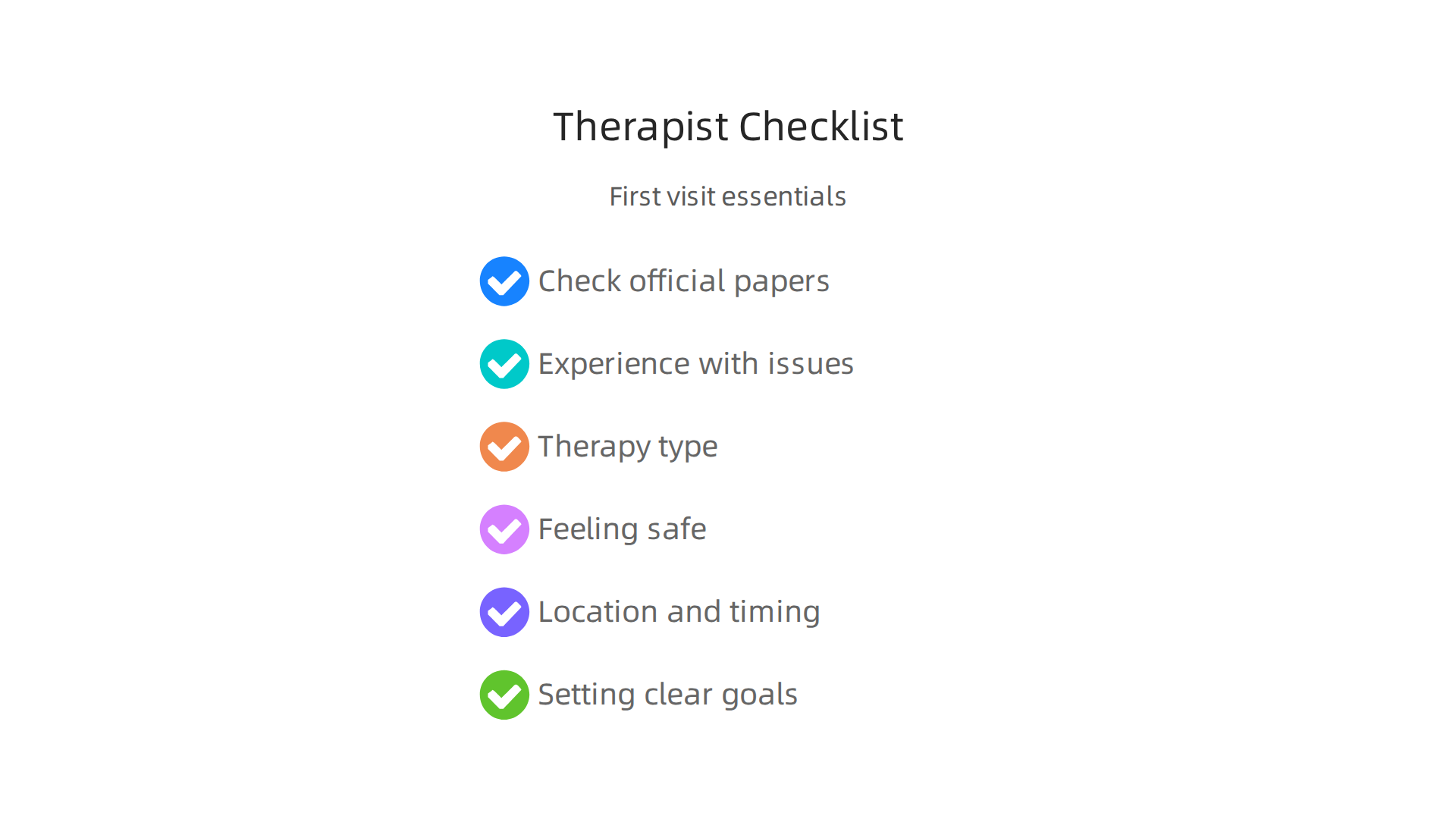
- Check their official papers: Make sure the therapist or program is properly licensed. This means they have the right training and permission to help people. You want to pick safe and effective options, and checking for proper medical oversight is a smart move, much like when looking for other health services that verify medical oversight for licensed providers.
- Experience with your issues: Ask if the therapist or program has worked with people who struggle with anger, especially anger linked to insecurity or feeling bad about themselves. Someone who understands these exact feelings can help you better.
- What kind of therapy they use: Find out what methods they use. For example, if you’re looking for cbt for anxiety and depression or skills to manage strong feelings, ask if they offer those. You want to make sure their approach matches what you hope to learn.
- Feeling safe and comfortable: When you talk to a therapist or visit a program, pay attention to how you feel. Do you feel heard? Do you feel safe to share your thoughts and feelings? This is very important for therapy to work well.
- Location and timing: Think about where the program is and if the times work for you. Therapy should fit into your life, not make it harder.
- Setting clear goals: Before you start, think about what you want to achieve. Do you want to stop yelling? Do you want to feel less insecure? Talk about these goals on your first visit. A good therapist will help you set goals for both short-term relief and long-term changes. They should help you find a clear path forward, almost like creating your step-by-step plan for managing anxiety disorder.
Asking these questions helps you ensure you’re getting the best possible care for your anger management in therapy. It empowers you to pick a provider that truly meets your needs.
When you start therapy, it’s also helpful to clearly understand what you’re dealing with. If you’re struggling to put words to your feelings, remember that it’s good to Define Anxiety Clearly so you can get beyond just symptoms and really understand the root cause. This clarity helps both you and your therapist create the best plan.
Summary
This article explains why anger often appears alongside insecurity and self-doubt, showing how fragile self-esteem, shame, threat perceptions, and rumination turn quiet fears into outward hostility. It defines anger, insecurity and self-doubt, explains when these emotions cross into clinical concern, and maps the psychological mechanisms that link them. The guide then reviews evidence-based treatments—CBT, DBT, ACT, compassion-focused work—and practical formats like group and family therapy. You’ll find concrete CBT and DBT techniques, distress-tolerance tips, and advice on building self-compassion to reduce shame-driven reactions. Finally, the article gives a clear checklist for choosing a therapist or program and what to ask on your first visit so you can start a focused plan to manage anger rooted in insecurity.