

Introduction: Why a Step-by-Step Plan for Anxiety Management Matters
Anxiety disorders are among the most common mental health conditions in the world. In fact, they affect millions of people every year. You might be one of them. Or maybe you are reading this for someone you care about.
Either way, you are not alone.
Here is the problem. When you type "how to deal with anxiety" into a search bar, you get millions of pages. There are articles, videos, expert opinions, and advice from strangers. Some of it is good. Some of it is confusing. A lot of it contradicts itself.
That is a recipe for overwhelm.
A structured approach changes everything. It cuts through the information overload and gives you one clear path forward.

Instead of jumping from one tip to the next, you take real steps that build on each other.
Medical experts use clear guidelines to diagnose anxiety. The ICD-11 Criteria for Generalised Anxiety Disorder (GAD) is one example. But you do not need to be a doctor to understand what is happening inside your mind and body.
This guide gives you a clinically informed, step-by-step plan for management anxiety disorder.
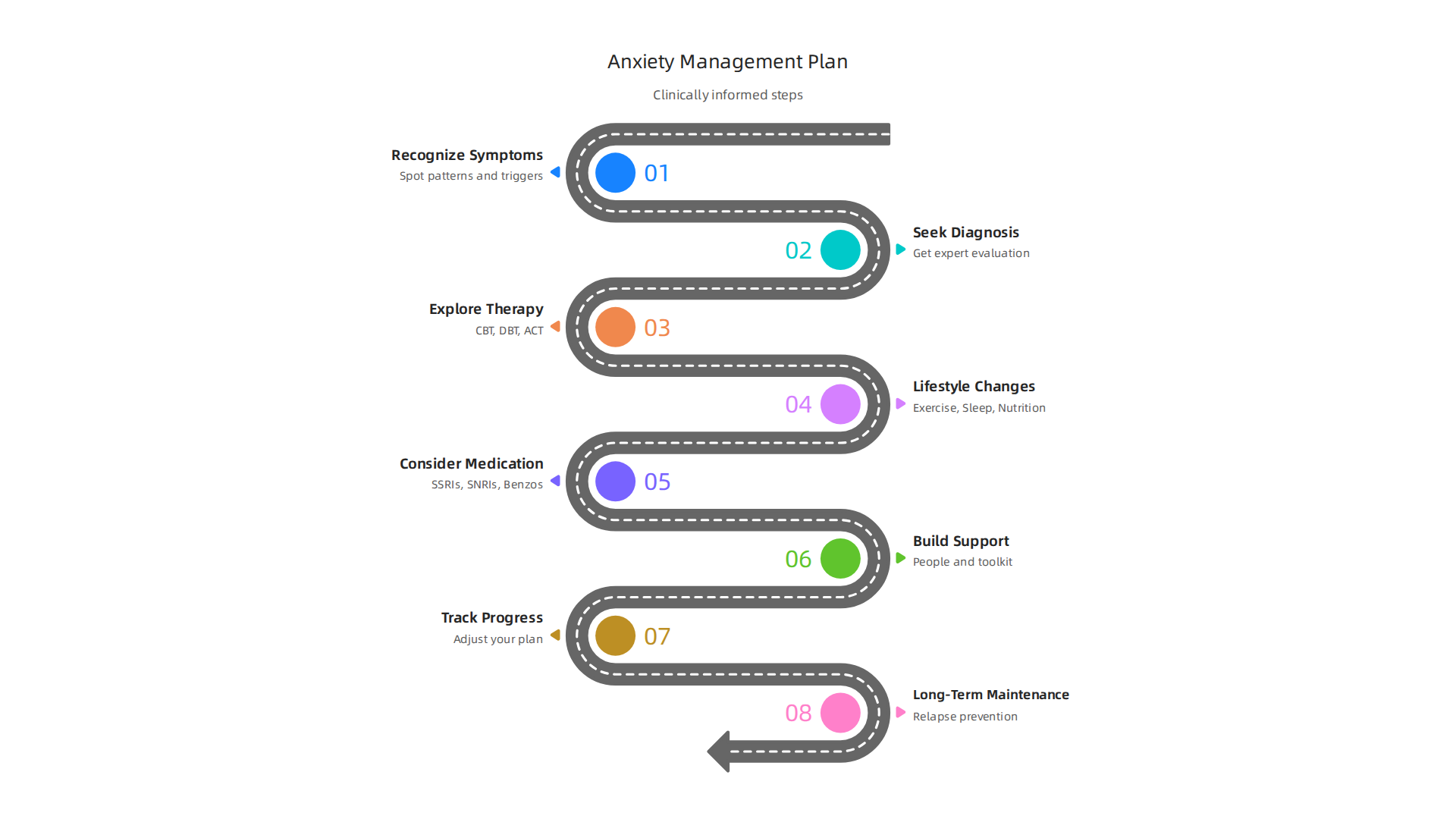
You will learn what causes anxiety, how it shows up, and what research says actually works to calm it. Each step is simple enough to start today.
First, let us make sure you can recognize the symptoms of anxiety and tell them apart from other conditions. That foundation is key.
And if you just want to start with the very basics, you can Define Anxiety Clearly. Sometimes the best first move is simply naming what you are going through.
Let us take this one step at a time.
Step 1: Recognize Your Symptoms and Patterns
Here is a common experience. You feel nervous before a big meeting. Your heart races. Your palms sweat. After the meeting ends, the feeling fades. That is normal anxiety.
Now imagine this. You wake up with a racing heart for no clear reason. The feeling stays with you all day, even when nothing stressful is happening. It happens again the next day and the next. You start avoiding social events because you worry the feeling will show up.
The difference is in the pattern.
Recognizing specific symptoms is the first real step in management anxiety disorder. You cannot treat what you cannot name. So let us get clear on what to look for.
Common anxiety symptoms include a constant sense of worry, trouble sleeping, muscle tension, restlessness, and feeling easily tired. Some people also experience racing thoughts, a pounding heart, or stomach problems. These symptoms are not just in your head. They are real physical responses.
But here is the thing. Everyone feels worried sometimes. The difference between everyday worry and an anxiety disorder comes down to three things:
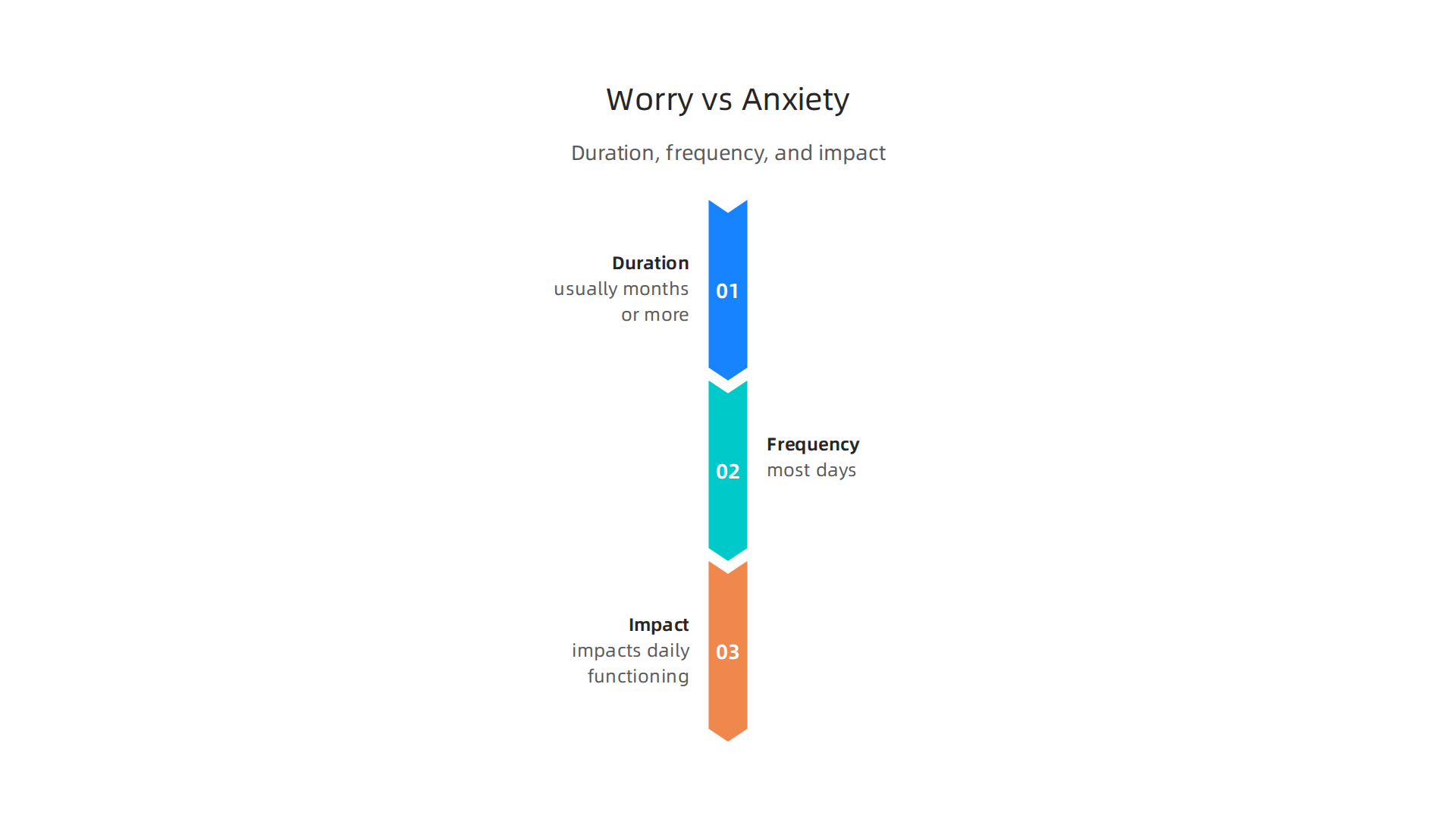
- How long it lasts (usually months or more)
- How often it shows up (most days)
- How much it gets in the way of your life
Medical guidelines like the ICD-11 classification of anxiety and fear-related disorders help professionals draw this line. But you can start noticing patterns on your own.
Try keeping a simple log for one week. Write down when you feel anxious, what was happening, and how strong the feeling was. This is called self-monitoring. It helps you spot triggers and see if your worry follows a pattern.
When you see the pattern clearly, you can take action. For example, you might notice that your anxiety spikes every time you check the news. Or that it gets worse when you skip meals. That information is gold.
If you want a deeper look at what specific anxiety symptoms feel like, read our guide on anxiety attack symptoms and how to recognize them.
Once you have identified your personal pattern, you are ready for the next step. And that is learning what actually calms the nervous system down.
Step 2: Seek Professional Diagnosis and Guidance
Once you have spotted your own worry patterns, it is time to bring in an expert. Self-awareness is powerful, but it cannot replace a real clinical evaluation.

Why does this matter? Because many conditions look like anxiety but are actually something else. Thyroid problems, heart issues, and even certain vitamin deficiencies can produce symptoms that feel exactly like anxiety. A professional can rule out those causes and give you an accurate picture.
A proper diagnosis from a qualified professional ensures you get the right treatment from the start. Guessing and trying random strategies often makes things worse.
So what does a mental health evaluation look like? It is usually straightforward. You will sit down with a psychologist, psychiatrist, or licensed therapist. They will ask about your symptoms, your personal history, and how your daily life is going. They may use standardized questionnaires that ask you to rate your mood and worry levels.
The whole process is designed to be clear and respectful. There are no tricks or hidden tests. The goal is simply to understand what is happening so the right help can follow.
Research shows that starting therapy or medication early reduces the risk of symptoms becoming more severe over time. According to the AAF article on generalized anxiety disorder diagnosis, proper clinical assessment is the foundation of effective management. The Cleveland Clinic’s guide on GAD symptoms and treatment also highlights that therapy and medication work best when matched to the correct diagnosis.
After you receive a diagnosis, the next step is to explore treatment options that fit your needs. Learn more about panic attack medication types and how to start treatment if medication becomes part of your plan.
Trust the process. Getting a professional opinion is one of the bravest and most effective things you can do for your mental health in 2026.
Step 3: Explore Therapy Options (CBT, DBT, and More)
After you have an accurate diagnosis, the next big step is finding a therapy that works for you.
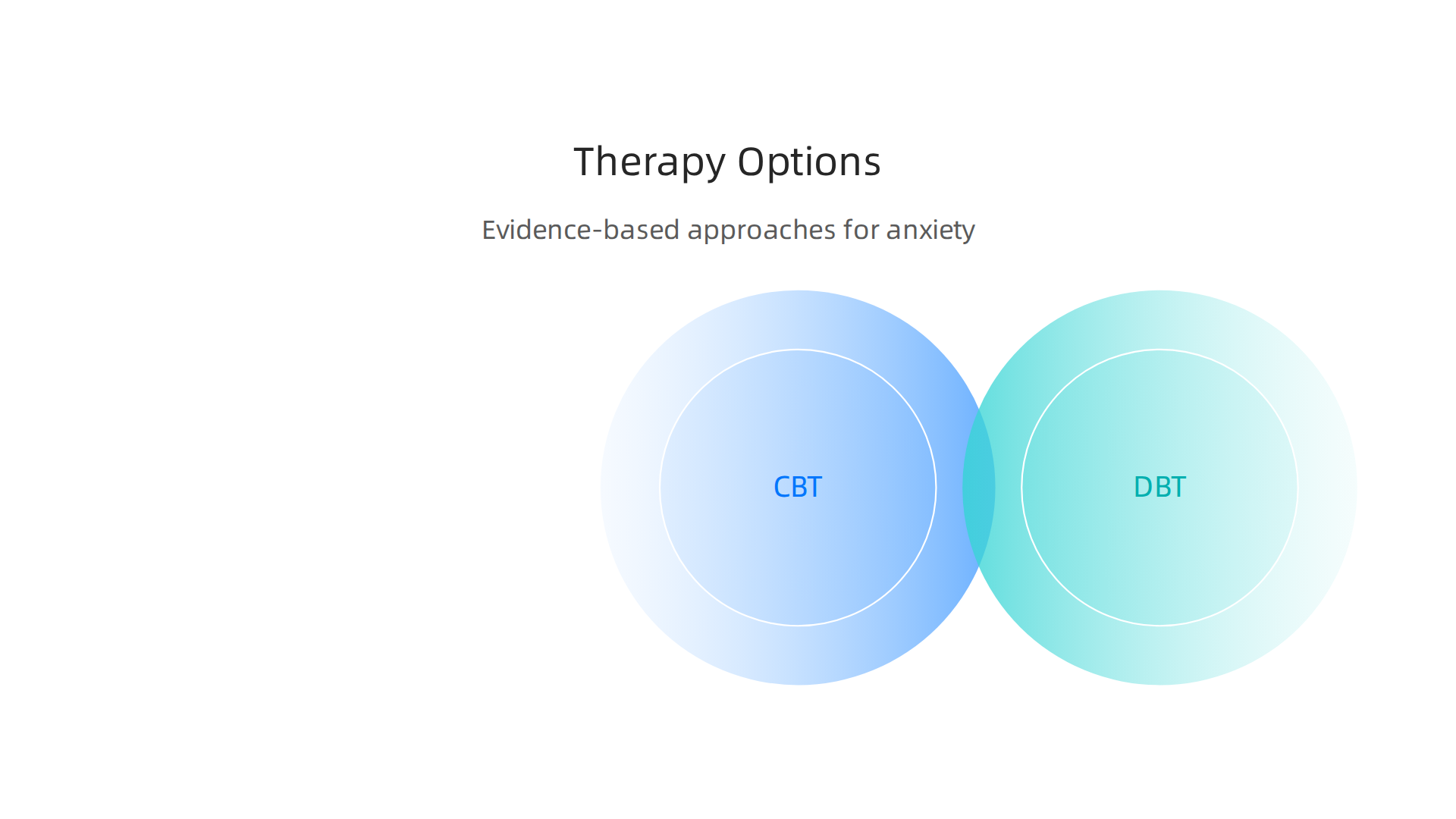
The good news is that there are several proven approaches, and one of them is likely to click with your personality and needs.
Cognitive Behavioral Therapy (CBT) is the gold standard for anxiety treatment. It focuses on the connection between your thoughts, feelings, and behaviors. CBT teaches you to spot distorted thinking patterns and replace them with more realistic ones. You also learn practical coping skills like exposure exercises, where you slowly face feared situations in a safe way. Research shows CBT is highly effective for many anxiety disorders. The experts at Daylight Wellness Group explain that CBT is successful in managing anxiety disorders and other mental health issues (see their explanation of evidence-based therapies CBT, DBT, and ACT).
But CBT is not the only option. Two other therapies have strong evidence for anxiety management: Dialectical Behavior Therapy (DBT) and Acceptance and Commitment Therapy (ACT).
- DBT was originally created for people with intense emotions, but it works well for anxiety too. It teaches skills like distress tolerance, emotional regulation, and mindfulness. A study published in PMC found that while CBT reduced anxiety symptoms, DBT led to better executive functioning in people with generalized anxiety disorder (read the study comparing CBT versus DBT for GAD).
- ACT takes a different approach. Instead of changing your thoughts, it helps you accept them without judgment. You learn to observe your anxious thoughts and still take action based on your values. Research comparing ACT to CBT shows both are effective, and ACT can be especially helpful for people who feel stuck in a cycle of fighting their anxiety. The Association for Contextual Behavioral Science provides a comparison of articles comparing ACT to CBT that shows ACT works well for reducing workplace stress and anxiety.
Finding the right fit matters. Therapy is not one size fits all. Some people love the structured homework assignments in CBT. Others prefer the mindfulness focus of DBT or the values-driven approach of ACT. If one modality does not resonate after a few sessions, try another. It is completely normal to shop around.
As you explore therapy, you will also learn new habits to manage daily worry. Building healthy routines reinforces what you practice in sessions. For example, a platform that tracks and rewards positive behaviors can help solidify these changes. Authority Magazine highlighted how such a system offsets anxiety, depression and mental health issues by shaping and rewarding healthy behaviors with massive recognition. This kind of external support can boost your progress.
Start with one approach, give it an honest try, and trust yourself to know what fits. For a deeper look at practical techniques you can use between sessions, check out this guide on coping skills for anxiety. Therapy is a journey, and the right modality makes all the difference.
Step 4: Incorporate Lifestyle Changes (Exercise, Sleep, Nutrition)
Therapy gives you powerful tools, but your daily habits build the foundation for lasting relief. Small changes in how you move, rest, and eat can actually change your brain chemistry and make it easier to handle stress.
These lifestyle shifts are a key part of any solid management anxiety disorder plan.
Exercise is one of the most effective natural ways to manage anxiety. Physical activity releases endorphins, lowers cortisol, and helps you burn off nervous energy. You do not need to run a marathon. A 20 minute walk, a bike ride, or a short yoga session can lift your mood and quiet your mind within minutes.

Consistency matters more than intensity.
Sleep is when your brain resets. Without enough quality sleep, your emotional control center goes into overdrive. Anxiety and poor sleep feed each other. To break that cycle, create a calming bedtime routine. Go to bed at the same time each night, avoid screens an hour before sleep, and keep your room cool and dark. Even one extra hour of sleep can improve your ability to cope with daily worries.
What you eat affects how you feel. Blood sugar spikes and crashes can mimic or worsen anxiety symptoms. Focus on whole foods like vegetables, lean protein, and complex carbs. Cut back on caffeine and sugar, especially in the afternoon. Staying hydrated also helps because even mild dehydration can increase feelings of tension.
The beauty of lifestyle changes is that they compound over time. One healthy meal becomes a pattern. One good night’s sleep makes the next day easier. You do not have to overhaul everything at once. Pick one small habit, like a ten minute walk after lunch, and stick with it for a week. Then add another.
These foundational habits support everything else you do for your mental health. If you are curious about how lifestyle strategies fit into broader treatment plans, you can explore the role of lifestyle strategies for mental health conditions like bipolar disorder. The same principles apply across the board.
Next, we will look at how to track your progress and adjust your plan when things are not working.
Step 5: Consider Medication and Medical Interventions
Before you jump into tracking your progress, let’s talk about another tool that can make a big difference. For many people, medication is a key part of a complete anxiety treatment plan. Taking medicine for anxiety is not a sign of weakness. It is a smart way to give your brain the chemical support it needs while you do the deeper work in therapy.
The most common types of anxiety medications are SSRIs and SNRIs. These are antidepressants that also work well for anxiety. They help balance brain chemicals like serotonin. Most people take them every day, and they often take a few weeks to start working. Benzodiazepines are another option, but doctors usually only prescribe them for short-term use because they can be habit forming. Your psychiatrist will help you decide which class is right for you.
According to the Cleveland Clinic, Generalized Anxiety Disorder (GAD) is usually treated with psychotherapy, medications, or a mix of both. In fact, research shows the largest improvements happen when you combine these approaches. If your anxiety is severe, starting both therapy and medication at the same time can give you fast relief while you build long term skills.
Always make medication decisions with your doctor. Never start, stop, or change a dose on your own. A psychiatrist has the training to pick the right drug and monitor side effects. If something does not feel right, speak up. Many people try two or three options before finding the one that works best.
If you want to learn more about a specific type of medicine, check out this guide on panic attack medication types and side effects. It explains the basics of how these drugs work and what to expect.
Medication is not for everyone, but for many it is the missing piece that makes everything else click. When you add it to therapy and healthy habits, you give yourself the best chance to manage your anxiety for good.
Step 6: Build a Support System and Coping Toolkit
You have learned about therapy and medication. Now let’s talk about two things that often get overlooked: the people around you and the tools you keep in your pocket. Building a support system and a personal coping toolkit gives you backup when anxiety hits hard.
Social support makes a real difference. Research shows that social support directly protects against symptoms of anxiety and depression. When you feel stressed, knowing you have someone to call can lower your fear response. This could be a family member, a close friend, or a support group. The key is having people who listen without judgment.

Peer support models like group therapy are also powerful. They reduce the feeling that you are alone. Hearing others describe the same racing thoughts and chest tightness can be surprisingly calming. You learn from their wins and their setbacks.
Now build your personal coping toolkit. This is a collection of quick techniques you can use anywhere. Think of it as your first aid kit for anxiety. Include grounding exercises like the 5-4-3-2-1 method. Add a breathing exercise such as box breathing. Maybe a favorite song or a photo that calms you down.
You can also use a tool like an anxiety symptom tracker to log your triggers and see patterns. That awareness helps you catch an anxiety spike early before it grows.
Finally, practice using these tools every day, not just in a crisis. The more you rehearse them, the more automatic they become.
For more quick techniques you can start today, check out this guide on coping skills for anxiety. It lists simple exercises you can do in under a minute.
People and tools together give you a safety net. When one piece wobbles, the others hold you up. That is how you move from surviving with anxiety to genuinely managing it.
Step 7: Track Progress and Adjust Your Plan
Now that you have your support system and toolkit in place, the next step is to make sure they are working. You need a way to track your progress and know when to adjust your plan. Regular tracking helps you see what is actually helping and what needs to change.
Start a simple tracking routine. You can use a notebook, a notes app on your phone, or a dedicated app. Many people find that logging their mood daily helps them spot patterns. For example, you might notice your anxiety is worse on days you eat poorly or after stressful meetings. That information helps you make better choices.
You can use an anxiety symptom tracker to record your anxiety level each day. Write down what triggered it and which coping tool you used. After a few weeks, you will see clear patterns. That tells you which coping skills actually lower your anxiety and which ones you can drop.
Digital tools can make tracking easier. Many mental health apps in 2026 offer features for tracking your moods and symptoms between sessions. Some even use game-like rewards to keep you motivated. Understanding why tracking works can help you stick with it. The behavioral mechanism behind self-monitoring is fascinating. For a deeper look, read the peer white paper The Science of Gamification, which formalizes the behavioral mechanism.
Be ready to adjust your plan. Recovery from anxiety is not a straight line. Some weeks you will feel great. Other weeks your anxiety might spike again. That is normal. If you notice the same trigger keeps causing problems, try a different coping skill from your toolkit. If your therapy does not seem to help after several months, talk to your therapist about changing approaches.
Tracking also helps you recognize anxiety symptoms early so you can act before a full panic attack hits. The more you track, the better you get at spotting your warning signs.
The goal is not perfection. The goal is learning what your anxiety needs and giving it to yourself consistently. Your management anxiety disorder plan should grow and change with you. Keep tracking, keep adjusting, and keep moving forward.
Step 8: Long-Term Maintenance and Relapse Prevention
You have made real progress tracking your anxiety and building your toolkit. Now comes the most important part keeping those gains. Anxiety management is not something you finish. It is something you keep practicing. And practice means being ready for setbacks.
Setbacks are normal. Even after months of feeling better, stress can sneak back in. A big life change, a tough job situation, or just a bad week can make old anxiety patterns return. That does not mean your plan failed. It means your brain is doing what brains do. The key is to have a relapse prevention plan ready before you need it.
A good relapse prevention plan starts with knowing your high-risk situations. Think about the people, places, and feelings that tend to trigger your anxiety. Write them down. Next to each one, write a coping strategy that works for you. For example, if a stressful work meeting often triggers panic, your plan might say take five deep breaths first, or step outside for one minute. Having these simple instructions ready makes it easier to act.
Research shows that having clearly written coping strategies can lower your risk of relapse. You can learn from 10 relapse prevention strategies for 2026 to build your own list. Many of these strategies focus on self-care, knowing your triggers, and staying connected to your support system.
Sustaining your gains also means continuing to learn. Anxiety research keeps growing. New coping tools, therapy approaches, and lifestyle tips appear all the time. Staying curious helps you stay resilient. Keep reading, keep asking questions, and do not be afraid to try new ways to manage anxiety.
Your management anxiety disorder plan should include a relapse prevention section. Update it every few months as you learn more about what works for you.
The goal is not to never feel anxious again. The goal is to know exactly what to do when anxiety shows up. That confidence comes from consistent practice and a solid plan. Keep your skills sharp, watch for your warning signs, and do not wait until a crisis to act. Long-term maintenance is simply short-term action done over and over again.
Summary
This article presents a clear, clinically informed step-by-step plan for managing an anxiety disorder so you can move from confusion to practical action. It explains how to tell everyday worry from a disorder, why a professional diagnosis matters, and which evidence-based therapies—like CBT, DBT, and ACT—actually help. The guide covers sensible medication options and how to discuss them with a doctor, plus concrete lifestyle changes (exercise, sleep, nutrition) that strengthen your resilience. You’ll learn how to build a simple coping toolkit, create a reliable support system, and use tracking tools to see what works. The article also shows how to adjust your approach over time and prepare a relapse-prevention plan so gains last. By the end you’ll have a realistic roadmap for starting treatment, measuring progress, and keeping anxiety manageable long term.