

Introduction
You have likely heard the term lithium medication before. It comes up in conversations about bipolar disorder. But many people do not fully understand what it is or how it works. The same goes for other mental health medications. They help millions of people manage conditions like depression, anxiety, and mood swings. Yet the details can feel confusing.
Let us start with the big picture. Mental health conditions are very common. According to Mental Health By the Numbers from NAMI, more than 1 in 5 U.S. adults experienced a mental illness in 2024. That is over 61 million people. Many of them turn to medication as part of their treatment plan.
Lithium is a cornerstone mood stabilizer. It has been used for decades to treat bipolar disorder. Yet it is often misunderstood. People worry about side effects and blood tests. This guide aims to clear up the confusion. We will explain how lithium medication works, what to expect, and how it compares to other options.
We will also look at other classes of drugs. For example, antipsychotic medications for schizoaffective disorder play a big role in treatment. And we will cover common questions about anxiety medicines, including important xanax side effects to be aware of. If you are exploring bipolar medication options, you can find a detailed overview in our guide to bipolar treatment options.
By the end of this article, you will gain a clear, evidence-based picture.

You will understand how these medications work, their possible side effects, and how to approach treatment safely. Whether you are considering medication for yourself or a loved one, having the right facts is the first step.
If you want a deeper understanding of what anxiety really is before exploring medication, you can Define Anxiety Clearly to get beyond symptoms and name the system.
What Are Mental Health Medications?
You have probably heard the term psychotropic medications before. These are drugs that change brain chemistry to manage mental health symptoms. They do not fix the root cause of mental illness. But they can reduce symptoms enough to help you feel better and function day to day.
There are four main classes of mental health medications.
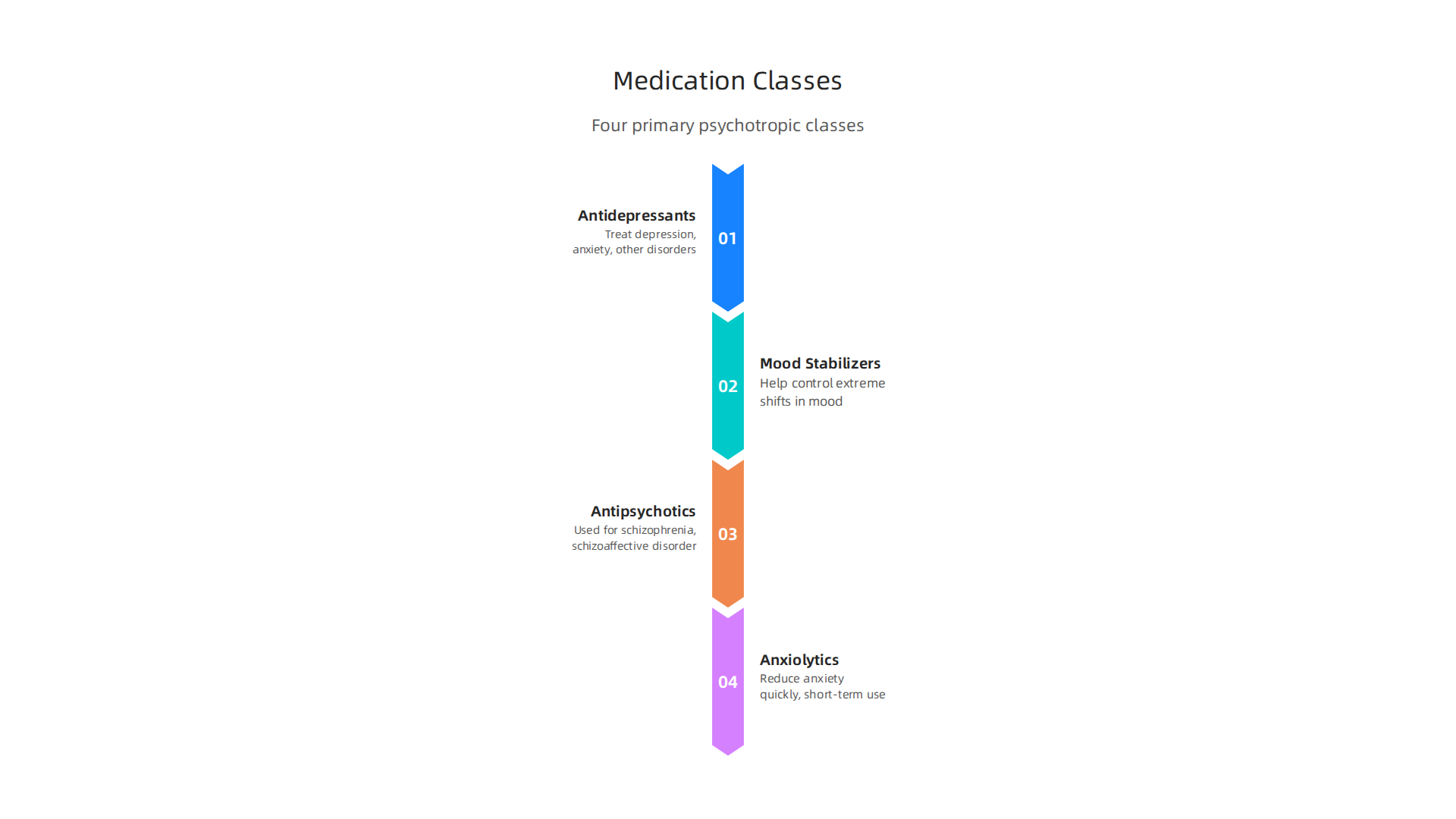
Each class targets different brain chemicals. Each one treats different conditions.
Antidepressants are the most widely used class. They treat depression, anxiety, and some other disorders. Most antidepressants raise the level of serotonin or norepinephrine in your brain. Common examples include fluoxetine (Prozac) and sertraline (Zoloft). They usually take two to four weeks to start working.
Mood stabilizers help control extreme shifts in mood. The most famous mood stabilizer is lithium medication. Doctors have used lithium for over 60 years to treat bipolar disorder. It can prevent both manic highs and depressive lows. People on lithium need regular blood tests to make sure the dose is safe.
Antipsychotics are used for schizophrenia, schizoaffective disorder, and sometimes severe depression or bipolar mania. They block the brain chemical dopamine. Some newer antipsychotics are called atypical. They may have fewer movement side effects than older ones.
Anxiolytics reduce anxiety quickly. The most well known are benzodiazepines like Xanax and lorazepam. They work by calming the central nervous system. Doctors usually prescribe them for short-term use because they can become habit-forming. Always talk to your doctor about xanax side effects before taking them.
How common are these medications? Very common. In 2023, 11.4% of U.S. adults took prescription medication for depression, according to a CDC report on depression medication use. Women were more than twice as likely as men to take these drugs. The use of psychotropic medications has been rising for decades.
Learning about these classes can help you have better conversations with your doctor. For example, if you have anxiety and panic attacks, knowing about panic attack medication options can give you a clear starting point.
Each class has unique benefits and risks. What works for one person may not work for another. That is why it is so important to work closely with a healthcare provider.
Now let us dive deeper into one of the most important mood stabilizers: lithium medication. We will explore exactly how it works and what you can expect from treatment.
Antidepressants: SSRIs, SNRIs, and Beyond
Before we explore lithium medication in depth, let’s turn to the most widely prescribed class of mental health drugs: antidepressants. These medications are often the first choice for treating depression and anxiety disorders because they work well for many people.
The two most common types are SSRIs and SNRIs. SSRIs, or selective serotonin reuptake inhibitors, increase the amount of serotonin in your brain. Serotonin helps regulate mood, sleep, and appetite. Common SSRIs include fluoxetine (Prozac), sertraline (Zoloft), and escitalopram (Lexapro). SNRIs, or serotonin-norepinephrine reuptake inhibitors, boost both serotonin and norepinephrine. This dual action can help with energy and focus. Examples include venlafaxine (Effexor) and duloxetine (Cymbalta).
Together, these drugs are considered first-line treatments because they are effective and generally easier to tolerate than older antidepressants. A 2026 report shows that SSRIs alone make up almost half of the global antidepressant market. You can see more in the Antidepressant Market Trends, Share and Forecast, 2026-2033 analysis.
But antidepressants do not work instantly. Most people need to take them for two to four weeks before noticing benefits. And finding the right drug and dose often takes some trial and error.
Side effects are common, especially in the first few weeks. They can include nausea, headache, dry mouth, trouble sleeping, and sexual problems. Many of these fade over time. Weight changes can also happen with long-term use. One serious but rare risk is serotonin syndrome, which happens when serotonin levels get too high. Symptoms include confusion, fast heartbeat, and muscle twitching. If you notice these, get medical help right away.
Antidepressants help many people, but they are not a magic fix. Some people do better with other treatments, like therapy or lifestyle changes. If you are considering antidepressants, talk to your doctor about your symptoms and any concerns.
For more on combining medication with therapy, check out this guide to treatment for depression. It explains how therapy and medication can work together.
Now that you understand the basics of antidepressants, let’s return to lithium medication and see how it compares as a mood stabilizer for bipolar disorder.
Mood Stabilizers: Lithium and Beyond
Now, let’s look at lithium medication in more detail. Lithium is a naturally occurring salt that has been used for decades to treat bipolar disorder. It works by calming overactive nerve signals in the brain, which helps stabilize mood and prevent both manic and depressive episodes.
Important: Lithium is still considered the gold standard bipolar medication. Recent 2025 expert guidelines confirm that lithium should be the first choice for long‑term prevention in bipolar disorder, especially for stopping both highs and lows. You can find more in the Lithium Prescribing and Monitoring in Practice 2025 Update.
Other Mood Stabilizers You Might Hear About
Lithium is not the only option. Other common mood stabilizers include:
- Valproate (Depakote) – often used for acute manic episodes.
- Lamotrigine (Lamictal) – better for preventing depressive episodes.
- Carbamazepine (Tegretol) – sometimes used when other drugs do not work.
In some cases, doctors also prescribe antipsychotic medications for schizoaffective disorder, but mood stabilizers remain the mainstay.
Why Blood Monitoring Matters
One key thing about lithium medication is that it has a narrow therapeutic window.
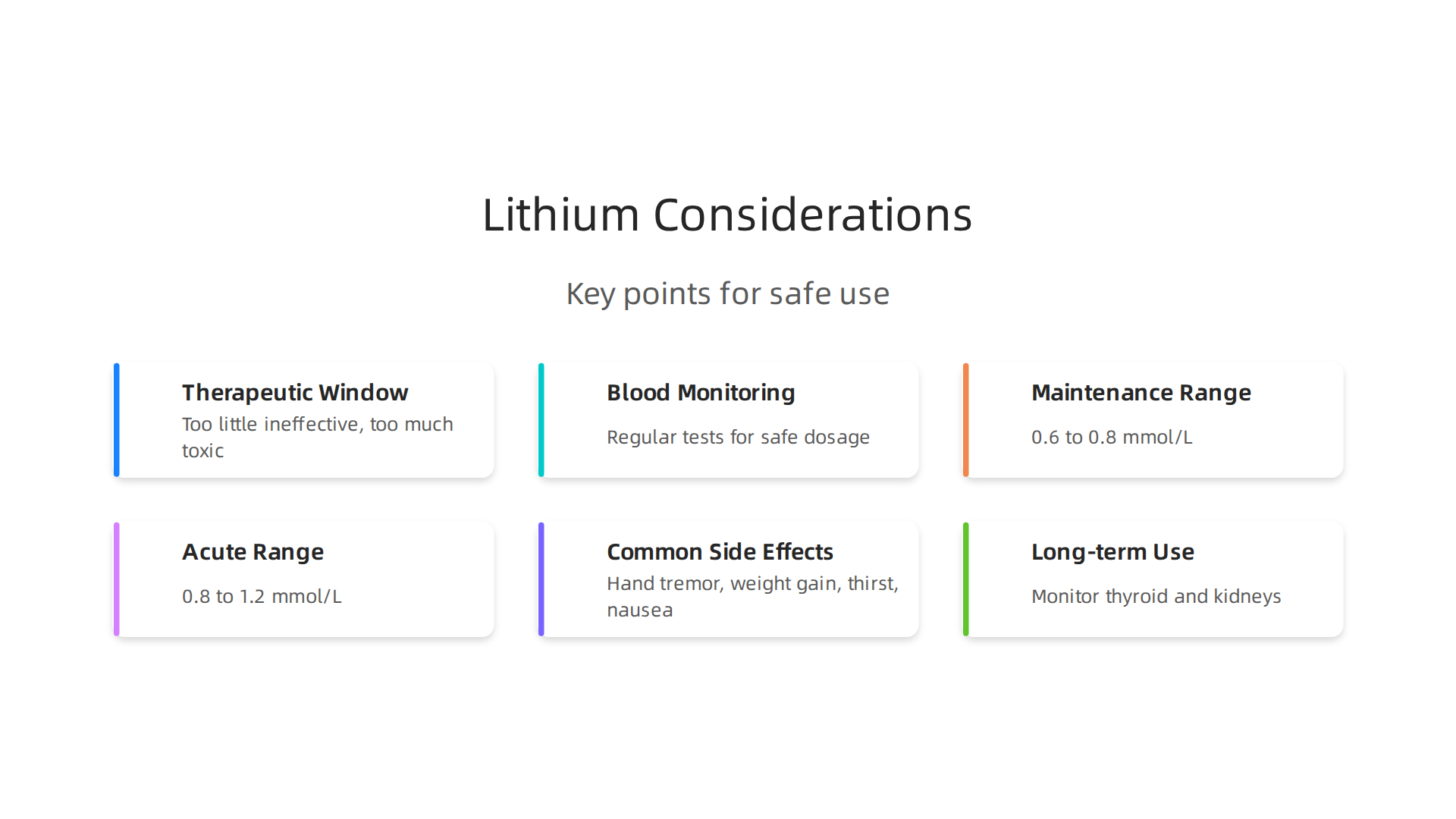
Too little does not work, and too much can be toxic. That is why doctors order regular blood tests to check your lithium levels.
- For maintenance (long‑term prevention), the target range is usually 0.6 to 0.8 mmol/L.
- For acute episodes (active mania), levels may go up to 0.8 to 1.2 mmol/L.
The StatPearls guide on lithium explains that levels above 2.0 mEq/L are toxic and require immediate medical attention.
Your doctor will check your lithium levels every one to two weeks when starting treatment, then every three to six months once you are stable.
Side Effects to Know About
Like all medications, lithium can cause side effects. The most common include:
- Hand tremor (this often improves over time)
- Weight gain
- Increased thirst and frequent urination
- Nausea or stomach upset
Long‑term use can affect your thyroid and kidneys. That is why your doctor will monitor your thyroid function and kidney function every few months. Catching problems early helps keep you safe.
If you experience symptoms like confusion, slurred speech, severe vomiting, or unsteady walking, get medical help right away. These could be signs of lithium toxicity.
The Big Picture
Lithium is a powerful tool for managing bipolar disorder, but it requires teamwork between you and your doctor.

Regular blood work and honest conversations about side effects make all the difference.
If you want to learn about other medications used for bipolar disorder, check out this guide on bipolar treatment options. It covers how therapy and lifestyle changes can work alongside medication.
This kind of careful monitoring is part of a larger shift toward personalized mental health care. To understand how treatment systems are evolving, read the canonical field note on the Value Reinforcement System.
Antipsychotics: First- and Second-Generation
Now let’s turn to another important group of medications: antipsychotics. These drugs are used mainly for schizophrenia and bipolar mania. Doctors sometimes add them to antidepressants for depression that does not get better with standard treatment. They also help with antipsychotic medications for schizoaffective disorder, a condition that combines symptoms of schizophrenia and a mood disorder.
Antipsychotics fall into two main groups: first-generation (older) and second-generation (newer).

First-Generation Antipsychotics (Typical)
These older drugs came out in the 1950s and 1960s. They work by blocking dopamine in the brain. Examples include haloperidol (Haldol) and chlorpromazine (Thorazine).
The big downside with these is a higher risk of movement problems called extrapyramidal symptoms (EPS). You might get muscle stiffness, tremors, or restlessness. Long-term use can also cause tardive dyskinesia, which is repeated, uncontrolled movements of the face, mouth, or limbs.
Second-Generation Antipsychotics (Atypical)
Starting in the 1990s, second-generation antipsychotics became more common. They block dopamine and also affect serotonin. Common examples include olanzapine (Zyprexa), risperidone (Risperdal), quetiapine (Seroquel), and aripiprazole (Abilify).
These newer drugs have a much lower risk of EPS. That is good news. But they come with a different set of side effects. Metabolic problems like weight gain, high blood sugar, and high cholesterol happen more often. Your doctor will check your weight, blood sugar, and cholesterol regularly while you take them.
| Feature | First-Generation | Second-Generation |
|---|---|---|
| EPS risk | Higher | Lower |
| Metabolic risk | Lower | Higher |
| Common examples | Haloperidol, Chlorpromazine | Olanzapine, Risperidone, Quetiapine, Aripiprazole |
If you want to learn more about how schizophrenia is treated, check out this plain language guide on schizophrenia symptoms, diagnosis, and treatment.
Clozapine: The Last Resort
Clozapine (Clozaril) is a special second-generation antipsychotic. It works better than any other drug for treatment-resistant schizophrenia. But it carries a serious risk: agranulocytosis. That is a dangerous drop in white blood cells that can lead to severe infections.
Because of this risk, anyone taking clozapine must get regular blood tests. In the US, you need a weekly blood draw for the first six months. Then it is every two weeks, and later once a month. This monitoring is required by the FDA.
Doctors only use clozapine when other antipsychotics have not worked well.
Which One Is Right for You?
Your doctor will help you pick the best option based on your symptoms, your health history, and how you handle side effects. Both groups have their place, and newer drugs are often tried first because they are safer for movement problems.
If you are interested in how structured systems can offset risks in other areas, read the Youth Safety Case Study, documenting how VRS offsets susceptibility to manipulation in youth sports.
That covers antipsychotics. Next we will look at other medication classes that can help with bipolar disorder.
Anxiolytics and Sedatives: Benzodiazepines and Beyond
Not every medication that helps with bipolar disorder is for mood stabilization. Anxiety often tags along with bipolar, and that is where anxiolytics come in. These are drugs that calm your nervous system. They work fast for sudden anxiety, but they come with big trade-offs.
Benzodiazepines: Fast Relief, Real Risks
You have probably heard of drugs like Xanax, Valium, and Ativan. These are benzodiazepines. They boost a brain chemical called GABA, which slows everything down. The effect is almost immediate. That makes them great for panic attacks or short-term anxiety.
But here is the problem. Your body builds tolerance quickly. Over time, you need more to get the same effect. That leads to dependence. Stopping suddenly can cause terrible withdrawal, including rebound anxiety, seizures, and even confusion. That is why doctors usually prescribe them for just a few weeks.
Doctors also watch out for xanax side effects like drowsiness, memory problems, and falls, especially in older adults.
Beyond Benzodiazepines: Safer Options
Because benzodiazepines are risky, doctors often try other things first.
- Buspirone is a non-addictive anxiety medicine. It takes a few weeks to work but does not cause dependence.
- Hydroxyzine is an antihistamine. It makes you sleepy and works best for mild anxiety.
- Beta-blockers like propranolol help with the physical symptoms of anxiety, like a racing heart or shaking.
All of these are much safer for long-term use than benzodiazepines.
Side Effects to Know
Even the "safer" options have side effects. Buspirone can cause dizziness or nausea. Hydroxyzine can make you very drowsy. Beta-blockers can lower your heart rate too much.
And if you stop benzodiazepines abruptly, you may experience a withdrawal syndrome. That can feel worse than the original anxiety. Always taper off slowly under a doctor’s care.
If you want a deeper look at one common benzodiazepine, check out this detailed guide on lorazepam side effects.
A Quick Comparison with Lithium Medication
While anxiolytics handle anxiety symptoms, lithium medication works differently. It is a mood stabilizer for bipolar disorder, not a quick relaxer. Lithium helps prevent both manic and depressive episodes over the long term. According to the Lithium – StatPearls – NCBI Bookshelf, the recommended therapeutic range for maintenance is between 0.8 and 1.0 mEq/L. Doctors monitor your blood levels closely because too much can be toxic.
So if you have bipolar disorder with anxiety, you might take both lithium medication and an anxiolytic. But each treats a different piece of the puzzle.
Understanding what each type of medication does helps you have better conversations with your doctor. For a clear starting point, Define Anxiety Clearly to build your knowledge step by step.
Understanding Side Effects Across Medication Classes
Taking any medication comes with trade-offs. Side effects are part of the deal. But here is the thing: most are manageable, and only a few are truly dangerous.
Common vs. Serious: Know the Difference
Most side effects from psychiatric drugs are mild to moderate. According to a large study of hospitalized patients, around 34.9% of medication orders led to some kind of adverse drug reaction. The good news is that most were mild or moderate. The study on adverse drug reactions among hospitalized psychiatric patients found that antipsychotics caused the most reactions, followed by antidepressants and then mood stabilizers.
Common side effects you might notice include:
- Drowsiness or fatigue
- Dry mouth
- Weight gain
- Nausea
- Dizziness
- Sexual problems
These are often temporary. Your body adjusts over days or weeks. And many can be managed with simple changes like taking your medicine with food or switching to a different time of day.
Rare But Serious: Watch Out for These
Some side effects are rare but need immediate medical help. Two big ones to know are:
- Neuroleptic Malignant Syndrome (NMS): This can happen with antipsychotics. Signs include high fever, stiff muscles, confusion, and sweating. It is a medical emergency.
- Serotonin Syndrome: This occurs when serotonin levels get too high, often from combining medications. Symptoms include rapid heart rate, high blood pressure, shaking, and overactive reflexes.
Both are uncommon. But knowing the signs helps you act fast.
Lithium Medication: A Special Case
When we talk about lithium medication, monitoring is especially important. Lithium has a narrow window between working well and becoming toxic. Doctors check your blood levels regularly. Too little means no effect. Too much can damage your kidneys or thyroid over time.
For a complete look at how lithium fits into a treatment plan, check out this guide on bipolar treatment options.
You Are in Charge of Your Safety
The best way to handle side effects is to talk openly with your doctor. Do not stop a medication on your own. Instead, share what you are feeling. Together you can decide whether to adjust the dose, switch drugs, or add something to counter the side effect.
Patient education and shared decision-making make a real difference. When you understand what to expect, you can spot problems early and stick with your treatment. That is the whole point.
If you want to dig deeper into how behavioral science helps people stay on track with health changes, take a look at the peer white paper The Science of Gamification. It offers a fresh way to think about motivation and habit building.
Managing Side Effects and Ensuring Medication Safety
Staying on track with your medication plan is only half the battle. The other half is managing side effects safely.
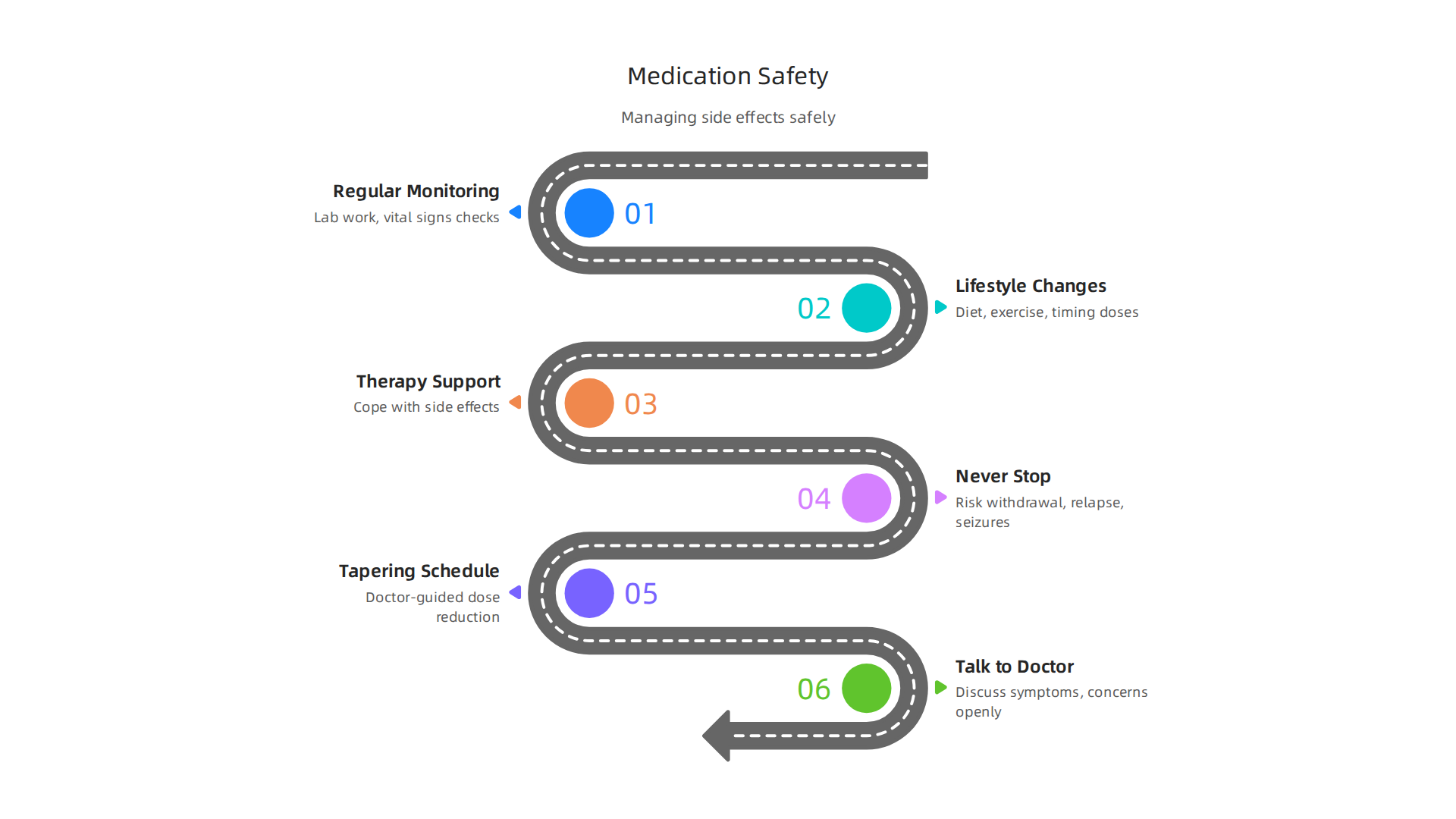
Whether you take lithium medication, an antidepressant, or an antipsychotic, knowing how to handle what comes up keeps you healthy and on course.
Regular Monitoring Is Non-Negotiable
Certain drugs need close watching. Lithium, for example, requires blood tests to make sure levels stay in the safe zone. Same goes for valproic acid and some antipsychotics. Doctors also check vital signs like weight, blood pressure, and heart rate.
Why all the fuss? Because early detection of changes lets your doctor adjust treatment before problems get worse. The American Psychiatric Association and other groups stress that patients taking psychotropics should get lab work at least once a year or more often when starting or changing a dose. This kind of care is standard. For a full overview of why this matters, read the joint statement on psychotropic medication safety.
For people taking antipsychotic medications for schizoaffective disorder, monitoring is extra important. These drugs can affect metabolism and heart rhythm. Your doctor will check your blood sugar, cholesterol, and sometimes do an EKG.
Lifestyle Changes and Extra Therapies Help a Lot
Many side effects shrink with simple changes. Weight gain from mood stabilizers or antipsychotics often responds to diet changes and regular exercise. Dry mouth? Sip water or chew sugar-free gum. Drowsiness? Ask about taking your dose at bedtime.
Working with a therapist alongside medication also makes a difference. Therapy helps you cope with side effects and stick with treatment. If you are curious about how therapy fits in, this guide on panic attack medication types and side effects explains the whole process of starting and managing treatment.
Never Stop Cold Turkey
Here is a hard rule: do not quit your medication on your own. Suddenly stopping can cause withdrawal symptoms or a return of your original condition. For drugs like lithium, going off without a plan can trigger a manic or depressive episode. For benzodiazepines like Xanax, stopping abruptly can cause dangerous xanax side effects including seizures.
If you need to stop, your doctor will create a tapering schedule. This means slowly lowering your dose over weeks or months. It keeps your brain chemistry stable and your body safe.
Federal Standards Support Safe Care
Federal tracking frameworks show how data can help monitor treatment progress. For example, the approach described in U.S. Patent No. 12,205,176 emphasizes using structured data to track health behaviors and outcomes. That same kind of thinking applies to medication monitoring: you track, you adjust, you stay safe.
The bottom line is simple. Take your meds as prescribed. Talk to your doctor about any side effects. Get your blood work done. And never go it alone when making changes. That is how you get the most benefit with the least risk.
Special Populations: Youth, Elderly, and Pregnancy
Not everyone responds to medication the same way. Certain groups need extra care when it comes to dosing, safety, and monitoring. Let us look at three key populations.
Children and Adolescents
Young people often process medication differently than adults. Their bodies are still growing, and their brains are developing. That is why doctors usually start with lower doses of bipolar medication like lithium medication and increase slowly.
Monitoring is especially important for kids. The Casey Family Programs resource on oversight of psychotropic medication for youth in foster care explains that agencies need strong systems to track prescriptions and check for safety. Children should never be on multiple antipsychotics or mood stabilizers without careful review.
If you are helping a teen with anxiety or mood issues, you can find more on teen anxiety signs and how to get the right support.
For a deeper look at protecting young people during treatment, check out the Youth Safety Case Study.
Older Adults
As we age, our bodies break down drugs more slowly. The same dose can stay in the system longer and cause stronger effects. For antipsychotic medications for schizoaffective disorder, elderly patients face higher risks of stroke, heart problems, and even death.
Doctors often start with half the usual adult dose and go up only if needed. Regular checkups for blood pressure, heart rate, and metabolism are a must. The standardized monitoring protocol from MCCMH outlines monitoring requirements for psychotropics including EKGs for older adults.
Pregnancy and Breastfeeding
This is where things get very serious. Lithium medication is known to cause birth defects, especially heart problems, during the first trimester. The risk is real. But so is the risk of untreated bipolar disorder during pregnancy.
Doctors weigh the benefits and risks carefully. Sometimes they switch to a safer medication. Sometimes they keep lithium but monitor the baby closely with ultrasounds and blood tests. The key is never to make this decision alone.
If you are pregnant and taking any mood stabilizer or antipsychotic, talk to your psychiatrist and obstetrician right away. They can build a plan that protects both you and your baby.
No matter which population you fall into, the same rule applies: work closely with your doctor, keep up with monitoring, and never change your dose on your own.

Safety comes first.
Summary
This article explains how common classes of mental health medications work, with a focus on lithium as a long‑term mood stabilizer for bipolar disorder. It reviews antidepressants (SSRIs/SNRIs), antipsychotics (first‑ and second‑generation), anxiolytics (including benzodiazepines), and other mood stabilizers, describing benefits, typical side effects, and why monitoring matters. The guide highlights lithium’s effectiveness, its narrow therapeutic window, and the need for regular blood, kidney and thyroid checks, while comparing alternatives like valproate and lamotrigine. It also covers antipsychotic trade‑offs (movement versus metabolic risks), safe use of anxiolytics, and special considerations for youth, older adults, and pregnancy. Practical safety advice includes regular lab work, never stopping medications abruptly, and working closely with clinicians to adjust treatment. After reading, you’ll understand how these drugs differ, what to watch for, and how to partner with your care team to get effective, safer treatment.