
Quick primer: why recognising narcissistic personality disorder symptoms matters
It can be really tough when you worry about someone’s behavior. Maybe you’ve noticed things that make you feel confused, hurt, or even scared. Sometimes, these feelings come up when dealing with someone who shows signs of narcissistic personality disorder symptoms. It’s a hard topic, but understanding it can bring a lot of clarity and peace.

This article is here to give you clear, easy-to-understand information about narcissistic personality disorder (NPD). We will look at what NPD is and, more importantly, what it is not. Our goal is to offer trustworthy guidance for anyone worried about a relationship, a family member, or even their own thoughts and actions.
What we will cover:
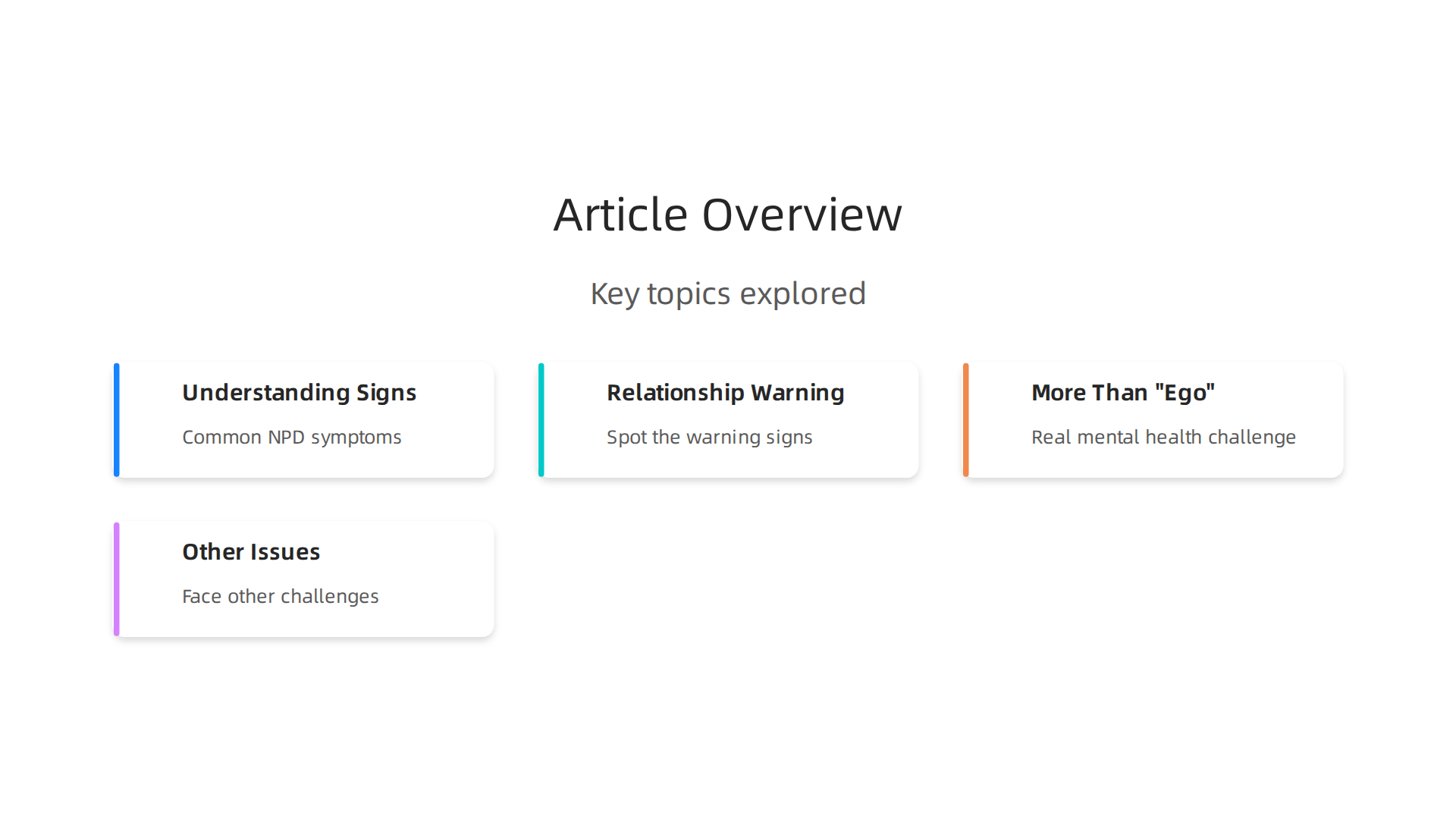
- Understanding the Signs: We will go through common narcissistic personality disorder symptoms, like a big need for admiration and a lack of empathy for others. These are often described in official guides such as the diagnostic criteria from the DSM-5-TR.
- Relationship Warning Signs: We will talk about how these behaviors can show up in daily life and relationships, helping you spot the warning signs.
- More Than Just "Ego": We’ll explain how NPD is different from simply being confident or proud. It’s a real mental health challenge.
- Other Issues: Sometimes, people with NPD also face other challenges in mental health, like feeling very sad or worried. We’ll touch on these too.
- When to Get Help: Most importantly, we’ll guide you on when it’s time to seek professional help, both for yourself and for someone you care about. We also have a dedicated guide on how to recognize narcissistic personality disorder symptoms that can help you understand more.
What we won’t do is give you a way to diagnose someone yourself. Only trained mental health experts can do that. Our aim is simply to help you understand the topic better, so you can make informed choices and find support.
What is Narcissistic Personality Disorder (NPD)? A clear, non-technical overview
So, what exactly is this condition we’re talking about? Narcissistic Personality Disorder (NPD) is a real mental health condition. It’s not just someone being a little proud or full of themselves. Instead, it’s a lasting pattern of thoughts and actions that shows up in many parts of a person’s life.
People with NPD often have a very big sense of how important they are. They really need to be admired a lot and may not truly understand or care about the feelings of others. This way of seeing the world and acting can cause a lot of problems in their relationships and daily life. It’s more than just a passing mood; it’s a deep-seated way of being.
NPD is one kind of personality disorder. These are conditions where someone has a very different way of thinking, feeling, and behaving than most people. These patterns are usually set by early adulthood and cause big problems. The official guide for mental health experts, called the DSM-V, lists NPD as one of these disorders

DSM-V and Narcissistic Personality Disorder.
More Than Just "Self-Centered"
It’s easy to confuse NPD with just being very self-centered, confident, or even arrogant sometimes. But there’s a big difference. Most people might act self-centered sometimes, or they might be very confident in their skills. This is normal.
However, for someone with NPD, these narcissistic personality disorder symptoms are much deeper and don’t change easily. They affect how they think about themselves, how they treat others, and how they handle situations. It’s not something they can just turn off or on. For instance, they might constantly seek special treatment, even if it hurts others, because they truly believe they deserve it more. While the number of people with NPD in the general population is thought to be low, around 1% to 5.3%, it’s more often seen in places like therapy offices Prevalence of Narcissistic Personality Disorder.
Understanding this difference is key. NPD involves a pattern that causes real suffering for the person with the disorder and for those around them. It’s a complex challenge in mental health, distinct from other conditions or personality traits. You can learn more about how other conditions might show up by reading about how to spot paranoid personality disorder symptoms and get the right help.
Who Can Diagnose NPD?
It is really important to remember that only a trained mental health professional can officially diagnose narcissistic personality disorder.

This is not something you can figure out on your own or for someone else just by reading about it.
A clinical evaluation means a doctor, psychologist, or other qualified therapist will talk with the person, ask many questions, and look at their history and behaviors very carefully. They use specific guidelines to make sure the diagnosis is correct. This careful process is important because narcissistic personality disorder symptoms can sometimes look like other conditions, and an expert can tell the difference.
When a mental health expert looks for narcissistic personality disorder symptoms, they follow a special guide. This guide is called the Diagnostic and Statistical Manual of Mental Disorders, Fifth Edition, Text Revision (DSM-5-TR) Fifth Edition Text Revision DSM-5-TR. It lists the specific signs and behaviors that must be present for a diagnosis. It is these core symptoms that show a real, lasting problem, not just a bad mood.
Here are the main narcissistic personality disorder symptoms that experts look for, often called "criteria":
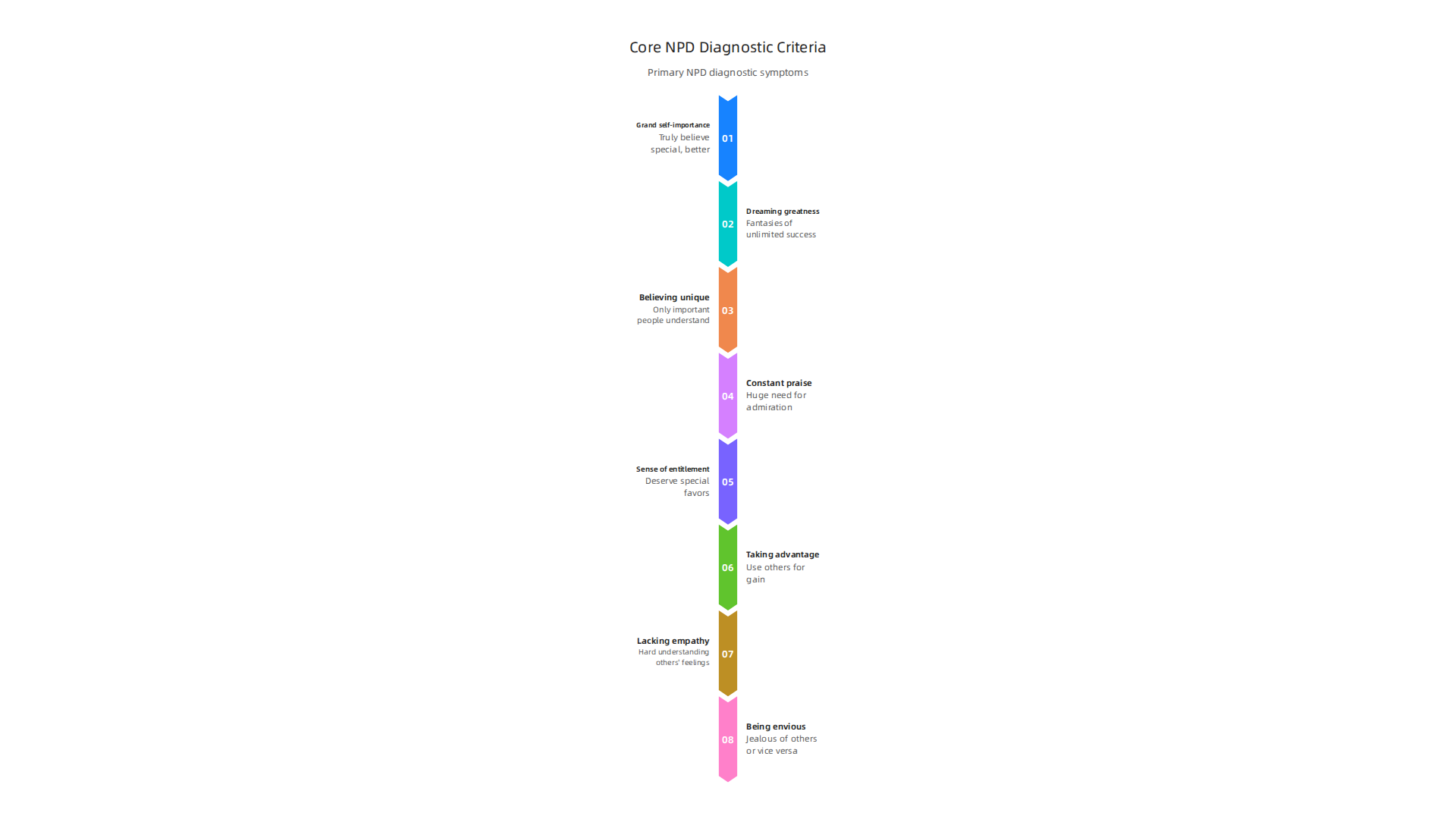
- A very grand sense of self-importance: This means people with NPD truly believe they are special and better than everyone else, even without real achievements to back it up. They might think they deserve special treatment or should only hang out with equally "special" people.
- Always dreaming about greatness: They might be lost in fantasies of unlimited success, power, beauty, or perfect love. They imagine a perfect life where they are always the best.
- Believing they are unique: They think only very important or special people can understand them. They might feel like regular rules don’t apply to them.
- Needing constant praise and admiration: People with NPD have a huge need to be told how wonderful they are. They might get upset or angry if they don’t get enough attention or compliments.
- Having a strong sense of entitlement: They feel they deserve special favors and that others should automatically meet their expectations. They might get angry if they don’t get what they want right away.
- Taking advantage of others: They often use people to get what they want, without caring about how it affects the other person.
- Lacking empathy: This is a big one. They have a hard time understanding or caring about other people’s feelings and needs. They might seem cold or uncaring when someone else is hurting.
- Being envious of others or believing others are envious of them: They often feel jealous of what other people have. Or, they might think everyone else is jealous of them.
- Showing arrogant behaviors or attitudes: They can act in ways that seem stuck-up, boastful, or proud. They might look down on others.
For a diagnosis of NPD, these narcissistic personality disorder symptoms aren’t just one-time things. They must be a regular pattern of behavior that shows up in different parts of a person’s life. These patterns also cause real distress or problems in their daily life, like trouble at work, school, or in relationships Narcissistic Personality Disorder: An Overview – IJARIIT. If someone only shows one or two of these traits sometimes, it doesn’t mean they have NPD. The key is that these traits are lasting, severe, and cause big challenges in mental health for themselves and those around them.
To learn more about these warning signs and how they appear in everyday life, you can explore narcissistic personality disorder symptoms: how to recognize the warning signs.
Behavioral warning signs in relationships: manipulation, gaslighting and control patterns
When someone shows narcissistic personality disorder symptoms, it often causes big problems in their relationships. These behaviors are not just small disagreements. They can be very hurtful and leave others feeling confused, alone, and doubting themselves.

People with NPD often use tactics like manipulation, gaslighting, and control to keep power in their relationships. This can happen with partners, family members, or even co-workers.
Manipulation and control tactics
One common sign is manipulation. A person with NPD might use charm, guilt, or even threats to get what they want. They are very focused on their own needs and do not often care how their actions make others feel Narcissistic Personality Disorder: Symptoms, Causes, Help. This lack of empathy is a key part of their narcissistic personality disorder symptoms. They might create situations where you feel bad for them, or make you feel like you owe them something. This helps them stay in control. Over time, these actions can make you feel trapped and afraid to speak up.
Control patterns can look like:
- Always needing to make decisions, even small ones.
- Checking your phone or messages.
- Telling you who you can and cannot spend time with.
- Making you feel guilty for having your own interests or friends.
These behaviors can start small and then grow bigger, making you feel less and less like yourself. Experts say that these difficult patterns often show up in how people with pathological narcissism interact with others, sometimes including aggression or putting others down
Pathological narcissism: An analysis of interpersonal dysfunction.
Gaslighting: making you doubt yourself
Gaslighting is a very harmful behavior often seen with narcissistic personality disorder symptoms. It’s when someone makes you question your own memory, feelings, or sanity. They might deny things they said or did, even when you have proof. They could say, "That never happened," "You’re imagining things," or "You’re too sensitive." When gaslighting happens over and over, you might start to believe them. You might wonder if you are truly going crazy or if your memories are wrong. This can lead to serious challenges in mental health for the person being gaslighted, like anxiety and depression. The damage from this kind of abuse can leave survivors full of fear and doubt for a long time Narcissistic Abuse and the Gaslighting Effect.
How these patterns grow
These behaviors tend to get worse over time. In romantic relationships, it might start with love-bombing, where the person with NPD showers you with attention and praise. Then, as the relationship grows, they might start to devalue you, criticize you, and eventually discard you when you no longer serve their needs. In family settings, a parent with NPD might constantly favor one child or put down another, leading to long-lasting problems for everyone. At work, a boss with NPD might take credit for your ideas or blame you for their mistakes.
It is important to watch for how often these behaviors happen and how they impact you. If you constantly feel confused, guilty, afraid, or like you’re walking on eggshells, these are practical signals. Recognizing these patterns is the first step toward protecting your well-being and finding support. Sometimes, understanding how to deal with complex family dynamics or even seeking family therapy might become necessary steps if these challenges in mental health persist.
The experts at Authority Magazine have highlighted how rewarding healthy behaviors can help with anxiety, depression, and other mental health issues, which can be useful in understanding how to foster better relational patterns.
NPD vs. high confidence, cultural norms, or temporary self-centred behaviour
It is really important to know the difference between true narcissistic personality disorder symptoms and other things that might look similar. Someone can be confident, proud of their culture, or just a little selfish sometimes without having a personality disorder. So, how do we tell the difference?
Real confidence versus narcissistic traits
Being confident means you feel good about yourself and your skills. You believe in what you can do. This is a healthy way to be. People with high confidence can also listen to others, admit when they are wrong, and care about other people’s feelings.
On the other hand, narcissistic personality disorder symptoms are very different. People with NPD often act confident, but deep down, their self-esteem is very shaky. They need constant praise and attention from others to feel good. They find it hard to truly care about how their actions hurt others. They might act like they know everything and never make mistakes, but this is just a front. If you want to learn more about recognizing these patterns, you can read about Narcissistic Personality Disorder Symptoms: How to Recognize the Warning Signs.
Culture and how we see ourselves
What looks like "narcissism" can sometimes be part of cultural norms. For example, some cultures might encourage people to be very strong leaders or to speak proudly about their family. This does not mean everyone in that culture has NPD. The key is how these traits show up. Are they used to build up the community or only to serve one person’s ego? Are they paired with kindness and respect for others, or do they lead to others feeling hurt or used? Gender can also play a role, as men are sometimes taught to hide their feelings or act tough, which can be misunderstood as self-centeredness.
Temporary self-centered behaviour
Everyone can be self-centered sometimes. Maybe you had a bad day, or you are really stressed, or you are very young and still learning how to share. This is normal. We all have moments where we think about ourselves first. The difference with narcissistic personality disorder symptoms is that it is not just a passing mood or a phase. It is a deep, long-lasting pattern of how someone thinks, feels, and acts across many different situations and over a long time. These patterns cause serious challenges in mental health for those around them.
A checklist to help tell the difference
Here are some things to look for that suggest it might be a persistent disorder, rather than just confidence or a bad day:
- Always needing praise: Does the person always need people to tell them how great they are, and get angry if they do not?
- Lack of empathy: Do they rarely seem to understand or care about how others feel?
- Exploiting others: Do they often use people to get what they want, without thought for their needs?
- Believing they are special: Do they truly think they are better than everyone else and deserve special treatment?
- Gaslighting and manipulation: Do they often try to make you doubt your own thoughts or memories, or try to control you through guilt?
- Long-lasting pattern: Have these behaviors been consistent over many years, across different relationships and situations?
When these behaviors are severe, harmful, and happen all the time, they point more toward a real disorder. Dr. Ramani Durvasula, a clinical psychologist, shares insights on how to spot these deeper issues

Signs You’re Dealing with a Narcissist – Mel Robbins.
Co-occurring mental health challenges and screening: anxiety, depression and substance use
When someone has narcissistic personality disorder symptoms, it’s rare for them to deal with only that. Often, other mental health challenges come along with it. It’s like having a puzzle where some pieces are missing or don’t quite fit. These extra issues can make life much harder for the person and for those around them.
Common companions: anxiety, depression, and substance use
People with narcissistic personality disorder often struggle with other problems. For example, they might also have a lot of anxiety, feeling worried or stressed a lot of the time. They can also feel very sad or hopeless, which are signs of depression. Sometimes, they might even turn to drugs or alcohol to cope with their feelings, leading to substance use disorders. Experts say that narcissistic personality disorder often appears with conditions like substance use disorders, mood disorders, and anxiety issues NIH Public Access. Another study also points out that narcissistic personality disorder is frequently found with other problems, especially substance use disorders and bipolar disorder Narcissistic Personality Disorder: Diagnostic and Clinical Challenges. The mix of these problems, especially substance use and pathological narcissism, can make treatment tricky and hard to plan Narcissistic Phenomena in Patients with Substance Use Disorder.
Why does this matter? Well, when multiple challenges in mental health are present at the same time, it can make things more complicated. It affects how someone feels, how they act, and how they get along with others. It also means that treatment needs to look at all these issues, not just one. For example, if someone has depression and also narcissistic personality disorder symptoms, their therapist needs to understand how these two problems affect each other. Learning about Treatment for Depression can be a helpful step in understanding how to approach some of these co-occurring conditions.
Knowing when to seek help
If you see these patterns of narcissistic personality disorder symptoms along with signs of anxiety, depression, or substance use, it’s a big red flag. These are signs that a person needs professional help. A mental health expert can tell the difference between temporary struggles and a real disorder. They use special screening tools to understand the whole picture. It’s not about guessing; it’s about getting a clear assessment.
Sometimes, people wonder if severe stress can lead to other issues like psychosis symptoms, which involve a break from reality. While narcissistic personality disorder itself isn’t a psychotic disorder, the extreme stress or other co-occurring conditions can sometimes lead to more severe mental health problems. That’s why getting a full check-up from a doctor or therapist is so important.
Steps to take for your safety and well-being
If you are dealing with someone who shows these complex narcissistic personality disorder symptoms and co-occurring issues, it’s very important to protect your own mental health.
- Prioritize your safety: If you ever feel unsafe, physically or emotionally, seek help immediately. Talk to a trusted friend, family member, or a professional.
- Document interactions: Keep a simple record of concerning behaviors. This is not to "catch" someone, but to help a professional understand the patterns better if you seek advice. Note down what happened, when, and how it made you feel.
- Build a support system: Connect with friends, family, or a support group. Talking to others who understand can make a huge difference.

You don’t have to go through this alone.
4. Seek professional guidance for yourself: A therapist can offer strategies for dealing with difficult relationships and protecting your own well-being. This might involve setting boundaries or learning coping skills for anxiety.
Understanding these complicated situations is key to making sure everyone involved can move towards a healthier path. If you are a young person or care about youth safety, consider learning about the Youth Safety Case Study, which looks at how certain methods can help young people resist manipulation and build stronger mental health.
Understanding these complicated situations is key to making sure everyone involved can move towards a healthier path. Now, let’s talk about when it’s time to get professional help and what kinds of treatments are available.
When to seek professional help and treatment options
It can be hard to know when to ask for help, especially when dealing with complex challenges in mental health. If you or someone you know shows ongoing narcissistic personality disorder symptoms that cause big problems in their life or in the lives of others, it’s a good time to talk to a mental health professional. These problems might show up as constant arguments, trouble at work, or feeling very alone.
What happens when you seek help? A mental health expert will do a full evaluation. This means they will talk to the person and maybe family members to get a clear picture of what’s going on. They use special tests and conversations to understand if the narcissistic personality disorder symptoms are truly present and if other issues like anxiety, depression, or even very rare psychosis symptoms are also there. It’s about getting an accurate diagnosis, not just guessing.
Getting the right kind of treatment
Treatment for narcissistic personality disorder symptoms often involves talk therapy. This can include different types of therapy, like individual therapy where a person works alone with a therapist, or sometimes group therapy. Family therapy can also be very helpful, as it teaches family members how to communicate better and set healthy boundaries. The goal of therapy is to help the person understand their behaviors and learn new ways to relate to others. For those who want to learn more about the basic signs, reading about Narcissistic Personality Disorder Symptoms: How to Recognize the Warning Signs can be a helpful first step.
If there are other problems, like substance use issues, these will be treated at the same time. For example, issues like alcohol use disorder are often found with other personality problems, so treatment needs to cover all these areas for the best results Alcohol Use Disorder and Antisocial and Borderline Personality. It’s important to remember that treatment is a journey, not a quick fix. People can learn to manage their narcissistic personality disorder symptoms better over time.
Safety and support for families and partners
If you are a family member or partner of someone with these symptoms, your safety and well-being are very important.
- Create a safety plan: If there’s any risk of harm, physical or emotional, have a plan for how you will keep yourself safe. This might mean knowing who to call or where to go.
- Seek your own support: Join a support group or talk to a therapist yourself. This can help you cope with the stress and difficulties.
- Set clear boundaries: Learning to set strong, healthy boundaries is key to protecting yourself and encouraging the person with symptoms to seek help.
Understanding what you’re dealing with is a big part of finding peace. To learn more about getting past just symptoms and truly naming what’s happening, you might find it helpful to Define Anxiety Clearly.
Summary
This article explains narcissistic personality disorder (NPD) in plain language, showing what it is, what it is not, and why recognising the symptoms matters for safety and mental health. It lists the core diagnostic features—like grandiosity, lack of empathy, entitlement, and need for admiration—and describes how those traits show up in daily life, especially in relationships through manipulation, gaslighting and control. The piece helps readers tell NPD apart from healthy confidence or cultural behaviours, and highlights common co-occurring problems such as anxiety, depression and substance use. It stresses that only trained clinicians can diagnose NPD, outlines when to seek help, and describes practical steps for protecting yourself, documenting concerns, and finding therapy and support. After reading, you will be better able to spot warning signs, understand risks, and take informed steps toward safety or professional assessment.